Chemical Feed Tank
Chemical Feed Tank
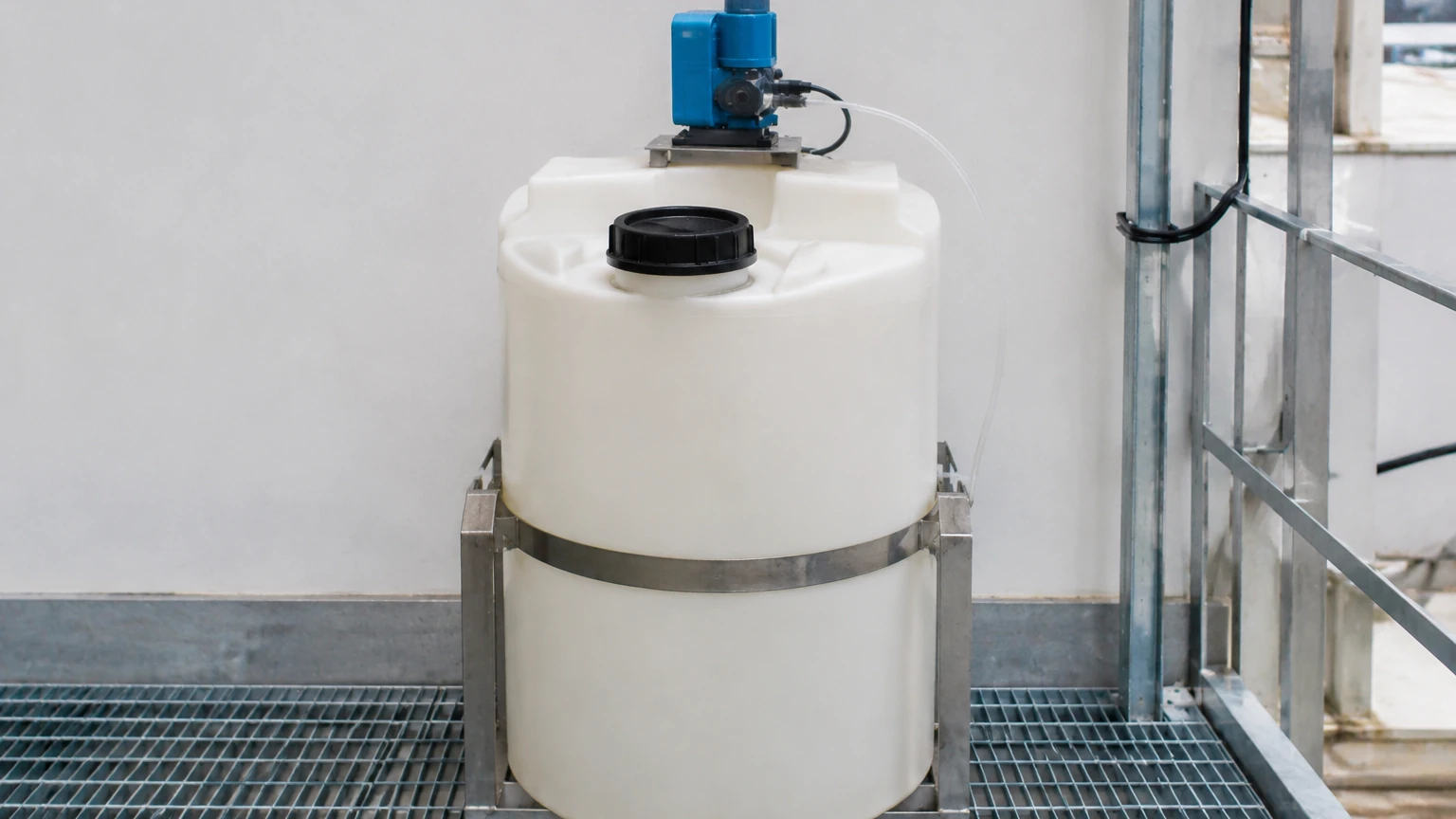
In industrial process engineering, a chemical feed tank serves as a critical reservoir for the precise storage and dispensing of liquid chemicals used in water treatment, chemical processing, and power generation. These tanks are the heart of chemical dosing systems, where maintaining an accurate inventory of reagents—such as acids, bases, coagulants, or disinfectants—is essential for process stability, safety, and regulatory compliance. Selecting the appropriate level measurement technology for a chemical feed tank requires a deep understanding of chemical compatibility, vapor behavior, and the physical constraints of the vessel.
Accurate level monitoring ensures that dosing pumps do not run dry, preventing equipment damage and process interruptions. Furthermore, it allows for automated inventory management, ensuring that replenishment occurs before the tank reaches a critical low state. This guide examines the principles of level measurement within the context of a chemical feed tank and provides engineering considerations for selecting the most reliable instrumentation.
Principles of Level Measurement for Chemical Feed Tanks
Before selecting a sensor, it is necessary to understand the physics behind the most common measurement technologies used in chemical storage applications. Each principle offers distinct advantages depending on the chemical properties and tank environment.
Ultrasonic (Non-Contact)
Ultrasonic level sensors operate on the "Time of Flight" (ToF) principle. The sensor emits a high-frequency sound pulse that travels through the air, reflects off the liquid surface, and returns to the transducer. The distance is calculated based on the speed of sound.
In a chemical feed tank, ultrasonic sensors are favored for their non-contact nature, which prevents corrosion of the sensor body. However, they are sensitive to air temperature fluctuations and heavy vapors. If the chemical in the tank produces dense fumes (such as concentrated Hydrochloric Acid), the sound waves can be attenuated or refracted, leading to inaccurate readings.
Radar (Non-Contact)
Radar level meters, particularly high-frequency 80GHz units, also use the ToF principle but utilize electromagnetic waves instead of sound. These waves are unaffected by air temperature, pressure, or the presence of vapors and fumes.
Radar is often the preferred choice for a chemical feed tank containing volatile or corrosive substances. The narrow beam angle of an 80GHz radar allows it to be installed in small tanks with internal obstructions like agitators or heaters without interference. For highly corrosive environments, the antenna is typically encapsulated in PTFE (Polytetrafluoroethylene) or PVDF (Polyvinylidene fluoride).
Hydrostatic Pressure (Contact)
Hydrostatic level transmitters measure the pressure exerted by the liquid column at the bottom of the tank. The relationship is defined by the formula $P = \rho gh$, where $P$ is pressure, $\rho$ is the density of the liquid, $g$ is gravity, and $h$ is the height of the liquid.
This method is highly reliable for vented tanks where the liquid density remains constant. In a chemical feed tank, the sensor must be constructed from materials compatible with the stored medium, such as Hastelloy-C or ceramic diaphragms, to withstand the chemical's corrosive nature.
Magnetic Level Gauges (Visual and Electronic)
Magnetic level gauges consist of a bypass chamber mounted to the side of the tank. A float containing a magnet moves with the liquid level, flipping external magnetic flags to provide a visual indication. For B2B automation, these are often equipped with reed switches or magnetostrictive transmitters to provide a 4-20mA signal to a PLC. This technology is excellent for hazardous chemicals where a secondary physical containment (the bypass chamber) and visual verification are required.
Selection Criteria for Chemical Feed Tank Instrumentation
Choosing the right instrument involves more than just selecting a technology; it requires matching the sensor to the specific chemical and tank geometry. Engineers should evaluate the following criteria:
1. Chemical Compatibility
The wetted parts of the sensor must be resistant to the chemical stored. For example, while stainless steel (316L) is standard for water, it will rapidly fail in a chemical feed tank containing 30% Hydrochloric Acid. In such cases, non-metallic materials like PVC, PP, PVDF, or PTFE-lined components are mandatory.
2. Tank Geometry and Size
Chemical feed tanks are often smaller than bulk storage tanks, frequently ranging from 200 liters (53 gallons) to 5,000 liters (1,320 gallons). Small tanks present challenges for sensors with large "dead zones" (the area near the sensor where measurement is impossible). Radar sensors typically have much smaller dead zones than ultrasonic sensors, making them better suited for compact dosing tanks.
3. Vapor and Fuming Characteristics
If the chemical is prone to outgassing or fuming, non-contact radar is superior to ultrasonic. If the tank is pressurized or under vacuum, hydrostatic or radar technologies are preferred over ultrasonic, as sound speed varies significantly with pressure changes.
4. Turbulence and Agitation
Many chemical feed tanks include agitators to keep chemicals in suspension or to aid in dilution. Turbulence on the liquid surface can scatter ultrasonic and radar signals. In these scenarios, software algorithms (false echo suppression) or the use of a stilling well can stabilize the measurement.
Comparison of Level Technologies for Chemical Feed Tanks
| Technology | Best Suited For | Limitations | Maintenance Level |
| :— | :— | :— | :— |
| Ultrasonic | Water-based chemicals, non-fuming liquids | Affected by vapors, foam, and temperature | Low (if no condensation) |
| 80GHz Radar | Corrosive acids, fuming liquids, small tanks | Higher initial cost than ultrasonic | Very Low |
| Hydrostatic | Vented tanks, viscous liquids | Requires contact; density must be constant | Moderate (requires cleaning) |
| Magnetic Gauge | Hazardous chemicals, visual check required | Potential for float sticking if liquid is dirty | Moderate (chamber flushing) |
Installation Considerations
Proper installation is as critical as sensor selection for a chemical feed tank. Failure to follow engineering best practices can lead to signal loss or physical damage to the instrument.
* Dead Zone Management: Ensure the maximum liquid level does not enter the sensor's dead zone. For a tank that is 2 meters (6.5 feet) high, a sensor with a 250 mm (10 inch) dead zone effectively reduces the usable capacity of the tank.
* Mounting Position: Sensors should be mounted away from the tank wall to avoid false reflections and away from the chemical inlet pipe to avoid interference from the filling stream.
* Venting: For hydrostatic sensors, the tank must be vented to the atmosphere to ensure the sensor measures only the liquid head pressure and not the headspace pressure.
* Material Selection: When installing sensors in a chemical feed tank, ensure that gaskets and O-rings are made of Viton or EPDM, depending on the chemical's compatibility profile.
For engineers looking to integrate these technologies into their dosing systems, it is advisable to Review product options and application support to ensure the selected hardware meets the specific chemical resistance requirements of the project.
Common Risks and Limitations
Operating a chemical feed tank involves specific risks that can impact level measurement accuracy:
1. Crystallization: Some chemicals, such as Sodium Hypochlorite or certain polymers, can crystallize on the sensor face. This is particularly problematic for ultrasonic and hydrostatic sensors. Radar is less affected but may still require periodic inspection.
2. Coating: Viscous chemicals can coat the diaphragm of a hydrostatic sensor or the float of a magnetic gauge, leading to "drift" or mechanical failure.
3. Condensation: In outdoor tanks, temperature shifts can cause condensation on the sensor face. While many modern radar sensors can "see through" light condensation, heavy droplets can cause signal attenuation.
Frequently Asked Questions (FAQ)
Q: Can I use an ultrasonic sensor for a sulfuric acid tank?
A: It depends on the concentration. For low concentrations, it may work, but concentrated sulfuric acid can produce vapors that interfere with sound waves. A radar sensor with a PTFE-coated antenna is generally a safer and more reliable choice for a chemical feed tank containing sulfuric acid.
Q: How do I measure the level if my chemical feed tank is agitated?
A: Use a stilling well (a vertical pipe inside the tank) to provide a calm liquid surface for the sensor. Alternatively, high-frequency radar with advanced signal processing can often filter out the noise caused by the agitator blades.
Q: What is the benefit of a redundant level switch?
A: In a chemical feed tank, a secondary high-level or low-level switch (like a tuning fork or float switch) acts as a safety backup. If the primary continuous transmitter fails, the switch can trigger an emergency stop to prevent tank overflow or pump cavitation.
Q: Does the color of the tank affect radar measurement?
A: No. Unlike laser-based sensors, radar and ultrasonic technologies are not affected by the color or transparency of the liquid or the tank material.
Conclusion
The reliable operation of a chemical feed tank depends on precise level monitoring. By understanding the measurement principles of ultrasonic, radar, and hydrostatic technologies, and by carefully considering chemical compatibility and tank geometry, engineers can design systems that minimize downtime and maximize safety. For comprehensive technical specifications and to explore a wide range of industrial level measurement solutions, please visit the Main Page for further engineering resources and product selection tools.