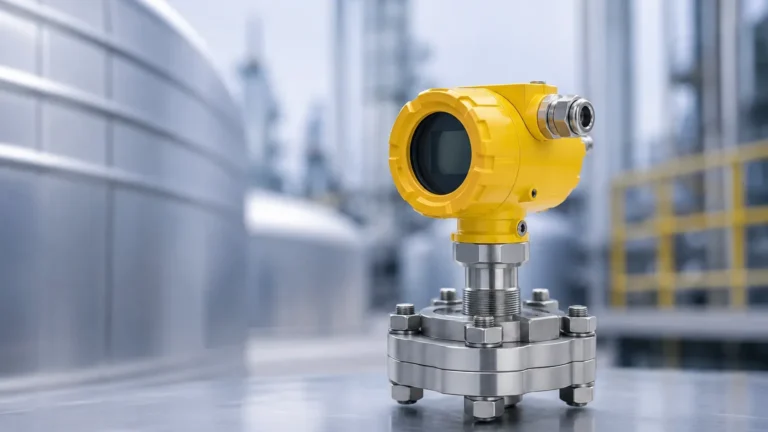
Chemical Tank Level Indicator
Chemical Tank Level Indicator
In industrial process automation, the selection of a chemical tank level indicator is a critical decision that impacts safety, environmental compliance, and operational efficiency. Chemical storage involves a diverse range of fluids, from highly corrosive acids and caustic bases to volatile solvents and viscous polymers. Each of these substances presents unique challenges to measurement instrumentation, including vapor generation, foaming, high temperatures, and the need for chemically resistant materials.
Selecting the right technology requires a deep understanding of the underlying measurement principles and how they interact with the specific properties of the chemical being monitored. This guide provides an engineering-focused overview of common level measurement technologies, selection criteria, and installation best practices for chemical applications.
Understanding Measurement Principles for Chemical Storage
Before recommending a specific instrument, it is essential to understand how different technologies detect the liquid surface or interface. In the chemical industry, four primary principles are widely utilized: radar, ultrasonic, hydrostatic, and magnetic.
1. Radar Level Measurement (Time-of-Flight)
Radar level meters use high-frequency electromagnetic waves, typically in the 26 GHz or 80 GHz range. These waves are emitted from the antenna, reflect off the liquid surface, and return to the sensor. The instrument measures the time-of-flight to calculate the distance.
* Non-Contact Radar: This is often the preferred choice for aggressive chemicals because the sensor does not touch the liquid. 80 GHz radar is particularly effective due to its narrow beam angle, which avoids internal tank obstructions like agitators or heating coils.
* Guided Wave Radar (GWR): This uses a physical probe (rod or cable) to guide the microwave signal. It is highly effective for low dielectric constant liquids or applications with heavy foam, though the probe material must be compatible with the chemical.
2. Ultrasonic Level Measurement (Sound Waves)
Ultrasonic sensors emit high-frequency sound pulses. Like radar, they measure the time it takes for the echo to return from the surface. While cost-effective, ultrasonic measurement is sensitive to the medium's vapor space. Since the speed of sound changes with air temperature and gas composition, heavy chemical vapors or high-pressure environments can lead to inaccuracies unless compensated for properly.
3. Hydrostatic Level Measurement (Pressure-Based)
This method relies on the principle that the pressure at the bottom of a tank is proportional to the liquid's height and density ($P = \rho gh$). A pressure transmitter is mounted at the bottom or submerged in the tank. For chemical tanks, "diaphragm seals" made of PTFE or Hastelloy are often used to protect the sensor from corrosion.
4. Magnetic Level Gauges (Visual and Electronic)
For high-pressure or high-temperature chemical storage, magnetic level gauges provide a robust solution. A float containing a magnet moves with the liquid level inside a bypass chamber. This magnet flips external flags for visual indication and can actuate a reed chain transmitter for a 4-20mA signal. This design provides total isolation between the process fluid and the indicator.
Key Selection Criteria for a Chemical Tank Level Indicator
When evaluating a chemical tank level indicator, engineers must look beyond basic range and accuracy. The chemical environment dictates the mechanical and electronic requirements of the device.
Material Compatibility
The "wetted parts"—any component of the sensor that comes into contact with the liquid or its vapors—must be resistant to corrosion. Common materials include:
* 316L Stainless Steel: Suitable for mild chemicals and some solvents.
* PTFE/PFA (Teflon): The gold standard for highly corrosive acids (e.g., sulfuric acid, hydrochloric acid).
* PVDF: Often used for ultrasonic transducers in caustic environments.
* Hastelloy C: Required for extreme chemical resistance where stainless steel fails.
Vapor and Foam Considerations
Many chemicals, such as hydrochloric acid or ammonia, generate dense vapors. These vapors can attenuate ultrasonic signals or cause condensation on radar antennas. In such cases, a radar meter with a PTFE drop antenna or a flushing connection is recommended to prevent build-up. For foaming liquids, Guided Wave Radar (GWR) or hydrostatic transmitters are generally more reliable than non-contact methods.
Tank Geometry and Internals
The presence of agitators, baffles, or internal ladders can create false echoes for radar and ultrasonic sensors. If the tank is narrow or has complex internals, a high-frequency (80 GHz) radar with a narrow beam (e.g., 3 degrees) is necessary to ensure the signal targets the liquid surface without interference.
Technology Selection Table
The following table compares common technologies used as a chemical tank level indicator based on typical process conditions.
| Technology | Best For | Limitations | Chemical Compatibility |
| :— | :— | :— | :— |
| Non-Contact Radar | Corrosives, high temp, vacuum | Extremely low dielectric liquids | Excellent (PTFE/PFA options) |
| Guided Wave Radar | Low dielectric, foam, bypass pipes | Probe can accumulate build-up | Good (Requires coated probes) |
| Ultrasonic | Water-based chemicals, open sumps | Vapors, foam, high pressure | Moderate (PVDF/PP) |
| Hydrostatic | Constant density liquids, vented tanks | Density changes affect accuracy | High (Diaphragm seals) |
| Magnetic Gauge | High pressure, visual monitoring | Moving parts (float) can stick | Excellent (Metal or Plastic) |
Installation and Maintenance Best Practices
Proper installation is as critical as technology selection. Even the most advanced chemical tank level indicator will fail if poorly positioned.
1. Nozzle Height and Diameter: For radar and ultrasonic sensors, the nozzle should be as short as possible. If the nozzle is too long, the signal may reflect off the nozzle walls before reaching the tank, creating a "dead zone." Typical dead zones range from 50 mm to 500 mm (2 in to 20 in) depending on the frequency.
2. Avoid the Inflow: Never install a level sensor directly under the filling inlet. The turbulence and falling liquid will cause erratic readings and may damage the probe.
3. Venting: In closed chemical tanks, ensure the tank is properly vented. Pressure build-up can affect hydrostatic sensors and change the vapor density, which impacts ultrasonic performance.
4. Grounding: Chemical tanks, especially those made of plastic (HDPE/FRP), can accumulate static charge. Ensure the instrument is properly grounded to prevent electronic interference or safety hazards in explosive atmospheres (ATEX/IECEx zones).

Critical Risks and Operating Limitations
Engineers must be aware of the "failure modes" associated with chemical level measurement:
* Crystallization and Build-up: Some chemicals, like brine or certain polymers, tend to crystallize or coat the sensor. This is particularly problematic for GWR probes and ultrasonic faces. Non-contact radar with a lens antenna is the most resistant to this issue.
* Ambient Temperature Fluctuations: For outdoor chemical parks, extreme heat can cause electronic drift. Selecting an instrument with an integrated temperature compensation circuit or a remote-mounted transmitter can mitigate this risk.
* Specific Gravity Changes: If the chemical concentration or temperature changes significantly, the density (specific gravity) will change. This directly affects hydrostatic level transmitters, leading to a linear error in level calculation. If density is not constant, radar is a safer choice.
Pre-Purchase Checklist: Information to Confirm
Before selecting a specific model from a Main Page of technical options, the following data points must be confirmed by the project team:
1. Chemical Identity: What is the exact chemical and its concentration (e.g., 98% Sulfuric Acid)?
2. Operating Range: What is the maximum and minimum height to be measured (in meters or feet)?
3. Process Conditions: What are the maximum operating pressure (bar/psi) and temperature (°C/°F)?
4. Tank Material: Is the tank carbon steel, stainless steel, or plastic (FRP/PE)?
5. Output Requirements: Is a simple 4-20mA signal sufficient, or is a digital protocol like HART, Modbus, or Profibus required?
6. Mounting Type: What is the flange size or thread type available on the tank top?
Conclusion
A reliable chemical tank level indicator is the backbone of safe chemical handling. While ultrasonic sensors offer a cost-effective solution for simple, water-based chemicals, the industry is increasingly moving toward 80 GHz radar for its superior ability to handle vapors, narrow tanks, and corrosive environments. Hydrostatic and magnetic solutions remain vital for specific high-pressure or density-stable applications.
By matching the measurement principle to the chemical's physical properties and following strict installation guidelines, facilities can reduce maintenance costs and prevent dangerous overfill or dry-run conditions. For detailed technical specifications and to compare specific instrument models for your application, you may Review product options and application support to ensure the selected hardware meets your facility's safety and accuracy standards.