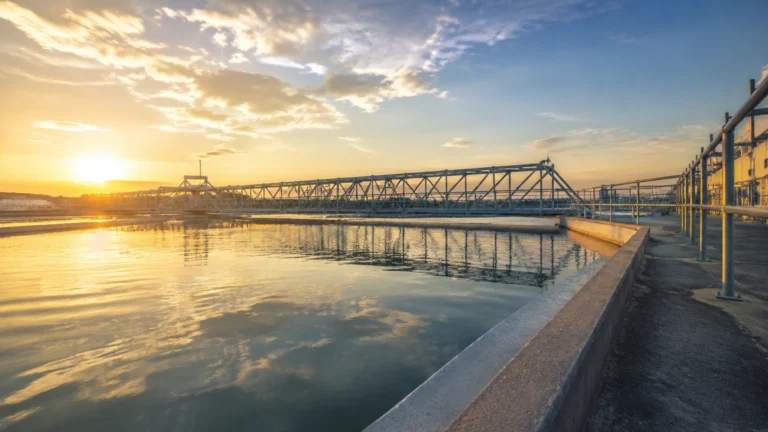
Chlorine Monitoring System
Chlorine Monitoring System
In industrial water treatment, chemical processing, and municipal sanitation, the implementation of a robust chlorine monitoring system is essential for both operational efficiency and safety. Chlorine, whether in gaseous form or as a liquid solution like sodium hypochlorite, is a highly reactive and corrosive substance. Accurate monitoring involves not only detecting gas leaks but also maintaining precise inventory control of liquid stocks through advanced level measurement technologies.
For process engineers and facility managers, selecting the right instrumentation requires an understanding of the chemical's properties and the physical principles governing measurement. This guide examines the technical aspects of level-based chlorine monitoring, comparing various sensor technologies and providing practical selection criteria for industrial applications.
Understanding the Role of Chlorine Monitoring Systems
A chlorine monitoring system serves two primary functions in a B2B environment. First, it ensures that the disinfection process—whether in a cooling tower, a wastewater treatment plant, or a food processing facility—receives a consistent and accurate dose of the chemical. Second, it manages the bulk storage of chlorine to prevent run-dry scenarios or hazardous overfills.
Because chlorine is often stored in concentrated forms, the materials used in the monitoring system must be strictly compatible with the media. Inaccurate level readings can lead to process interruptions or, in the case of pressurized liquid chlorine, significant safety risks. Consequently, the "monitoring" aspect of these systems frequently relies on high-precision level transmitters that provide real-time data to a central PLC (Programmable Logic Controller) or SCADA system.
Core Measurement Principles for Chlorine Storage
Before selecting a specific instrument, it is vital to understand the physics behind the measurement. In chlorine monitoring, three primary principles are typically employed: hydrostatic pressure, ultrasonic time-of-flight, and radar microwave emission.
Hydrostatic Pressure Principle
Hydrostatic level measurement operates on the principle that the pressure at the bottom of a vessel is directly proportional to the height of the liquid column above it. The formula used is $P = \rho \cdot g \cdot h$, where $P$ is pressure, $\rho$ (rho) is the density of the liquid, $g$ is the gravitational constant, and $h$ is the height of the liquid. For chlorine solutions, which have a specific gravity different from water, the transmitter must be calibrated to the specific density of the fluid to ensure accuracy.
Ultrasonic Time-of-Flight
Ultrasonic sensors emit high-frequency sound waves that travel through the air, reflect off the surface of the liquid chlorine, and return to the sensor. By measuring the time it takes for the pulse to return, the system calculates the distance to the liquid surface. This is a non-contact method, which is advantageous for corrosive media, though it can be affected by the presence of chlorine vapors in the head space of the tank.
Radar (Microwave) Principle
Similar to ultrasonic sensors, radar level meters use time-of-flight but employ electromagnetic microwaves instead of sound. Radar waves are largely unaffected by the gas composition, temperature, or pressure changes within the tank. This makes radar one of the most reliable methods for monitoring liquid chlorine in sealed, pressurized vessels.
Level Measurement Technologies for Chlorine Monitoring
Choosing the specific hardware for a chlorine monitoring system depends on the storage conditions (e.g., atmospheric vs. pressurized) and the physical state of the chlorine.
1. Hydrostatic Level Transmitters
Hydrostatic transmitters are often used in bulk storage tanks for sodium hypochlorite (bleach). For these applications, the sensor must be constructed from corrosion-resistant materials such as PVC, PVDF, or Hastelloy-C. Submersible versions are placed at the bottom of the tank, while external versions are mounted to a flange near the base.
2. Ultrasonic Level Sensors
Non-contact ultrasonic sensors are preferred for open-air basins or atmospheric tanks where the sensor does not come into direct contact with the liquid. They are cost-effective but require careful placement to avoid "dead zones" near the top of the tank. In a chlorine monitoring system, the sensor housing must be rated for corrosive environments to withstand the ambient fumes.
3. Radar Level Meters
For high-concentration chlorine or applications involving pressurized liquid chlorine, radar level meters provide the highest level of accuracy. 80GHz high-frequency radar is particularly effective because it can penetrate vapors and provide a precise reading even in narrow tanks or vessels with internal obstructions. For more detailed technical specifications on specific sensor models, engineers can visit the Main Page to review product options and application support.
Selection Criteria and Technical Comparison
When designing a chlorine monitoring system, the following table provides a baseline for comparing the most common level measurement technologies used in the industry.
| Feature | Hydrostatic Transmitters | Ultrasonic Sensors | Radar Level Meters |
| :— | :— | :— | :— |
| Measurement Type | Contact (Pressure) | Non-contact (Sound) | Non-contact (Microwave) |
| Accuracy | ±0.2% to ±0.5% | ±0.25% of range | Up to ±1 mm |
| Media Compatibility | Requires specific diaphragms | Excellent (No contact) | Excellent (No contact) |
| Vapor Interference | None | High (Can distort signal) | Negligible |
| Installation | Bottom or Side mount | Top mount | Top mount |
| Cost | Moderate | Low to Moderate | Higher |
Material Compatibility
Chlorine is an aggressive oxidant. When selecting a chlorine monitoring system, ensure that all wetted parts (parts in contact with the liquid or gas) are made from compatible materials. Common choices include:
* PTFE (Teflon): Excellent resistance to almost all chlorine concentrations.
* PVDF (Kynar): Widely used for sensor bodies and diaphragms in bleach applications.
* Ceramic: Often used for pressure sensor faces due to its inert nature.

Installation Considerations and Safety
Proper installation is critical to the longevity of a chlorine monitoring system. Because chlorine gas is heavier than air, any leak in a storage area will settle in low-lying spots. While level meters monitor the liquid, they must be integrated into a system that includes gas leak detectors for comprehensive safety.
1. Venting: For ultrasonic sensors, ensure the tank is properly vented. Accumulated chlorine gas can change the speed of sound, leading to measurement errors of up to 5-10% if not compensated for.
2. Mounting Position: Sensors should be mounted away from the tank inlet to avoid turbulence and false readings during filling cycles.
3. Cable Protection: Even non-contact sensors have cables. In a chlorine environment, these cables should be housed in conduit or made of chemically resistant materials like PE (Polyethylene) or FEP.
4. Redundancy: In critical water treatment applications, it is standard practice to use redundant monitoring. For example, a magnetic level gauge for visual confirmation paired with a radar transmitter for automated control.
Limitations of Chlorine Level Monitoring
While modern instrumentation is highly advanced, certain limitations remain:
* Gas Phase Changes: In pressurized liquid chlorine tanks, the transition between liquid and gas phases can create a turbulent surface, which may challenge ultrasonic sensors.
* Temperature Sensitivity: Hydrostatic pressure is affected by changes in liquid density caused by temperature fluctuations. If the storage tank is outdoors and subject to seasonal temperature swings, a temperature-compensated transmitter is necessary.
* Crystallization: Sodium hypochlorite can sometimes crystallize around sensor faces or in impulse lines. Regular inspection and cleaning protocols must be part of the maintenance schedule.
Frequently Asked Questions (FAQ)
Q: Can I use a standard stainless steel level sensor for chlorine?
A: No. Standard 304 or 316 stainless steel will corrode rapidly when exposed to chlorine. You must use specialized alloys like Hastelloy-C or plastics like PVDF and PTFE.
Q: How often should a chlorine monitoring system be calibrated?
A: For most industrial applications, an annual calibration check is recommended. However, in high-precision dosing environments, semi-annual verification against a manual dip-tape or scale is best practice.
Q: Does the concentration of the chlorine solution affect the level reading?
A: Yes, for hydrostatic sensors. A 15% sodium hypochlorite solution has a different density than a 5% solution. If the concentration changes significantly, the hydrostatic transmitter must be recalibrated to the new density.
Q: Is radar better than ultrasonic for chlorine tanks?
A: Generally, yes. Radar is more robust against the heavy vapors often found in chlorine storage, whereas ultrasonic signals can be scattered or slowed by those same vapors.
Conclusion
An effective chlorine monitoring system is the backbone of safe and efficient chemical handling in industrial processes. By understanding the principles of hydrostatic, ultrasonic, and radar measurement, engineers can select the technology that best fits their specific environment. Prioritizing material compatibility and proper installation not only extends the life of the instrumentation but also ensures the accuracy required for regulatory compliance and operational excellence. For those seeking to upgrade their current facilities or design new installations, reviewing the comprehensive range of measurement solutions available on the Main Page is a recommended next step in the procurement process.