Cip Systems for Food Industry
Cip Systems for Food Industry
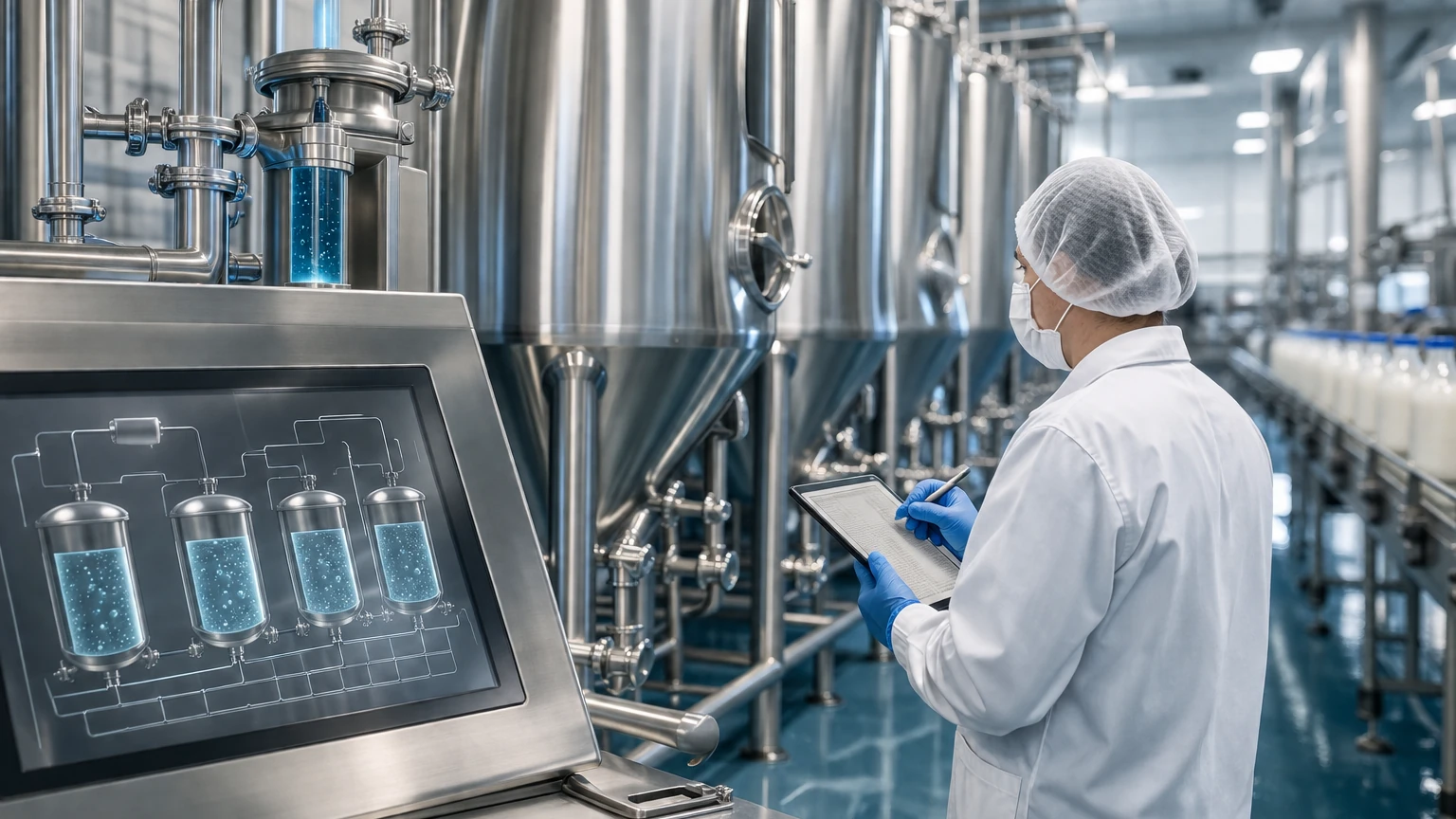
Clean-In-Place (CIP) systems for food industry applications represent the cornerstone of modern food safety and operational efficiency. By automating the cleaning of internal surfaces of pipes, vessels, process equipment, filters, and associated fittings without disassembly, these systems ensure that hygiene standards are met while minimizing downtime. In a sector where cross-contamination or bacterial growth can lead to significant public health risks and financial losses, the precision of a CIP system is paramount.
Central to the effectiveness of these systems is the accurate measurement and control of fluids—including water, detergents, and sanitizers. Level measurement instruments play a critical role in monitoring chemical concentrations, managing water recovery tanks, and preventing pump cavitation or tank overfills. This guide explores the technical requirements for level instrumentation within CIP environments and provides a framework for selecting the right technology for hygienic applications.
Measurement Principles in CIP Environments
Before selecting a level transmitter for a CIP system, it is essential to understand the physical principles that govern different measurement technologies. Each method has distinct advantages depending on the fluid properties and the physical constraints of the tank.
Hydrostatic Pressure Measurement
Hydrostatic level sensors measure the pressure exerted by a liquid column. Since pressure is directly proportional to the height of the liquid and its density, the level can be calculated using the formula: *P = ρgh* (where P is pressure, ρ is density, g is gravity, and h is height). In the food industry, these sensors must utilize flush-mounted diaphragms to prevent the buildup of food particles or bacteria in recessed areas.
Radar (Non-Contact)
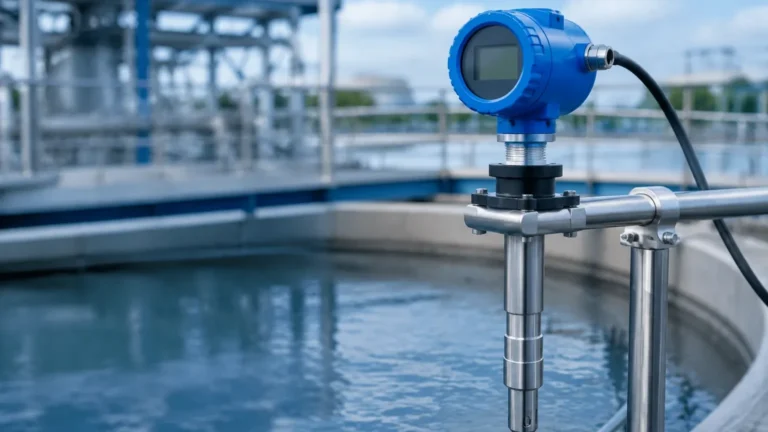
Radar level meters emit high-frequency electromagnetic pulses (typically in the 26GHz or 80GHz range). These pulses reflect off the liquid surface and return to the sensor. The distance is calculated based on the time-of-flight. Because radar does not require physical contact with the medium, it is highly hygienic and unaffected by changes in liquid density or viscosity. 80GHz radar is particularly effective in CIP systems because its narrow beam can avoid internal obstructions like spray balls or agitators.
Ultrasonic Measurement
Ultrasonic sensors use sound waves to determine the level. Like radar, this is a non-contact method. However, ultrasonic performance can be degraded by heavy steam, foam, or significant temperature fluctuations—all of which are common during the hot-wash phases of a CIP cycle. It remains a cost-effective solution for ambient temperature rinse water tanks.
Point Level Detection (Vibrating Fork)
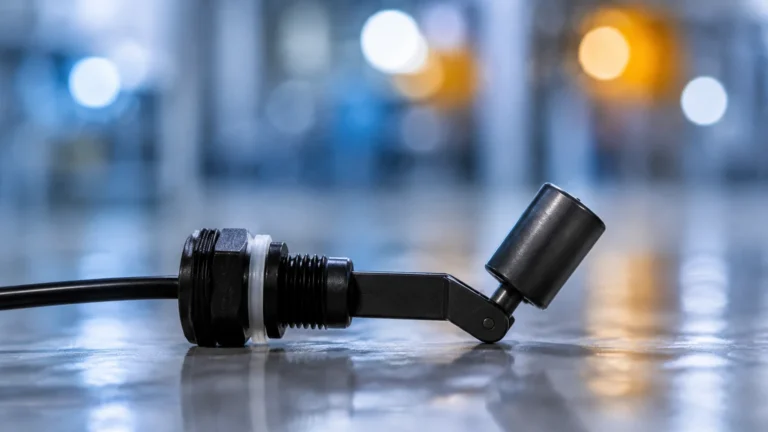
Vibrating fork switches are used for point level detection (high or low alarms). The sensor vibrates at its resonant frequency; when the fork is submerged in liquid, the frequency changes, triggering a switch. These are essential for overfill protection in chemical dosing tanks.
The Role of Level Measurement in CIP Automation
Efficiency in CIP systems for food industry operations is measured by the "TACT" parameters: Time, Action (mechanical force), Chemical (concentration), and Temperature. Level sensors contribute directly to the "Chemical" and "Time" components.
1. Chemical Dosing: CIP systems utilize concentrated caustic (sodium hydroxide) and acid (nitric or phosphoric acid). Level sensors in the concentrate day-tanks ensure that the system never runs dry, which would disrupt the cleaning cycle and potentially damage dosing pumps.
2. Water Recovery: Many modern systems include a recovery tank to store the final rinse water from one cycle to be used as the pre-rinse for the next. Accurate level monitoring allows the PLC to manage water balance, reducing overall water consumption by up to 30%.
3. Phase Separation: Level sensors, often working in tandem with conductivity sensors, help identify the interface between different fluids, ensuring that cleaning chemicals are returned to the correct storage tank rather than being flushed to the drain.
To explore specific hardware options for these applications, engineers can Review product options and application support on our Main Page.
Selection Criteria for CIP Level Sensors
Choosing the wrong instrument can lead to "dead legs" where bacteria can grow, or sensor failure due to harsh cleaning chemicals. The following table provides a comparison of technologies based on typical CIP requirements.
Technology Comparison Table
| Criteria | Hydrostatic | Radar (80GHz) | Ultrasonic | Vibrating Fork |
| :— | :— | :— | :— | :— |
| Hygienic Design | Excellent (Flush) | Superior (Non-contact) | Good | Excellent |
| Foam Resistance | Excellent | Moderate to Good | Poor | Excellent |
| Steam Resistance | Excellent | Excellent | Poor | Excellent |
| Chemical Resistance| High (with Alloy C) | High (PTFE/PFA) | Moderate | High |
| Accuracy | ±0.1% to 0.2% | ±1 mm to 2 mm | ±0.25% | N/A (Point) |
| Typical Use Case | Storage Tanks | Process Vessels | Water Tanks | Overfill Alarms |
Installation and Sanitary Considerations
In the food and beverage industry, the installation of a level sensor is just as important as the technology itself. Standard industrial fittings are insufficient; sensors must meet specific sanitary design criteria.
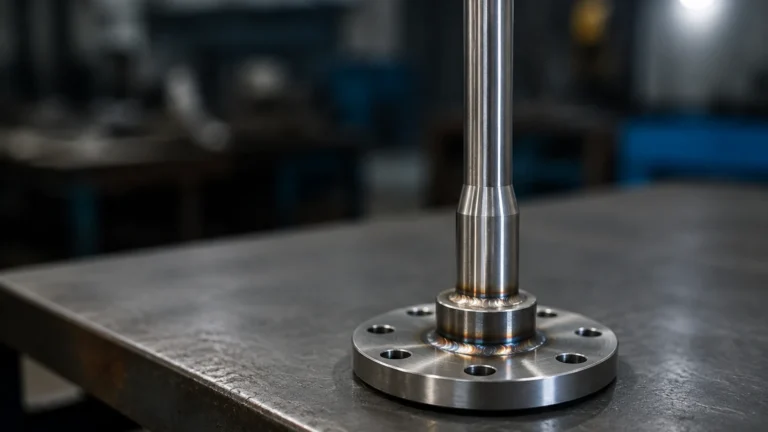
* Materials of Construction: All wetted parts must be made of non-toxic, corrosion-resistant materials. Stainless steel 316L (1.4404) is the industry standard. For highly corrosive acids used in CIP, diaphragms or radar antennas may require PFA or PTFE coatings.
* Surface Finish: To prevent microbial adhesion, wetted surfaces should have a surface roughness (Ra) of less than 0.8 μm. Electropolishing is often required to achieve this.
* Process Connections: Standard threaded connections are prohibited in hygienic zones because the threads can trap organic matter. Instead, CIP-compatible systems use Tri-clamp, Varivent, or hygienic weld-in sleeves. These connections ensure a crevice-free seal between the sensor and the tank wall.
* Mounting Position: Sensors should be mounted to allow for self-draining. For non-contact sensors like radar, the beam path must be kept clear of the spray ball's direct path to avoid signal interference during the cleaning cycle.
Common Risks and Limitations
While automation improves safety, there are inherent risks in CIP environments that must be mitigated:
* Thermal Shock: During a CIP cycle, a tank might transition from 5°C (product temperature) to 85°C (caustic wash) in a matter of seconds. Level sensors must be designed to handle rapid thermal expansion without losing calibration or suffering diaphragm fatigue.
* Vacuum Collapse: Rapid cooling of a tank after a hot wash can create a vacuum. If the level sensor is part of a sealed system, it must be rated for vacuum conditions to prevent the diaphragm from being pulled outward.
* Foam Interference: Caustic washes often generate foam. Ultrasonic sensors will often lose the signal in these conditions. Radar sensors are more robust but may require specialized signal processing algorithms to "see through" the foam to the liquid surface.
Frequently Asked Questions (FAQs)
Q: Can I use a standard industrial pressure transmitter for CIP level?
A: No. Standard transmitters often have internal cavities or threads that cannot be cleaned by the CIP process, leading to bacterial contamination. You must use a hygienic transmitter with a flush diaphragm and food-grade fill fluid (such as glycerin or FDA-approved white oil).
Q: How does temperature affect level measurement accuracy?
A: For hydrostatic sensors, temperature changes affect liquid density. If the PLC is not programmed to compensate for density changes at 80ΰC versus 20ΰC, the level reading will be inaccurate. Radar is generally unaffected by temperature changes in the vapor space.
Q: What is the best way to prevent overfilling during a CIP cycle?
A: A redundant system is recommended. Use a continuous level transmitter (like radar) for primary control and a high-level vibrating fork switch as an independent safety tie-in to the pump's emergency stop.
Conclusion
Implementing effective CIP systems for food industry applications requires a deep understanding of both the cleaning process and the instrumentation that monitors it. By selecting level sensors that prioritize hygienic design, chemical compatibility, and thermal resilience, manufacturers can ensure food safety while optimizing their resource consumption. For technical specifications and assistance in selecting the appropriate level measurement technology for your facility, please visit our Main Page for a comprehensive range of industrial solutions.