Level Switch
Level Switch
In the landscape of industrial process control, the level switch serves as a fundamental component for automation, safety, and inventory management. Unlike continuous level transmitters that provide a constant stream of data regarding the exact volume or height of a substance, a level switch is a point-level detection device. Its primary function is to identify whether a material—be it liquid, powder, or granulated solid—has reached a specific predetermined height within a vessel, tank, or pipe.
For engineers and plant operators, selecting the correct level switch is critical for preventing tank overfills, protecting pumps from dry running, and maintaining precise batching sequences. This guide explores the diverse technologies behind these instruments, their application-specific advantages, and the technical criteria necessary for successful integration into industrial environments.
Core Measurement Principles and Technologies
To select an appropriate level switch, one must first understand the physics governing different sensing methods. Each technology interacts differently with the physical properties of the media, such as density, dielectric constant, and conductivity.
Float Level Switches
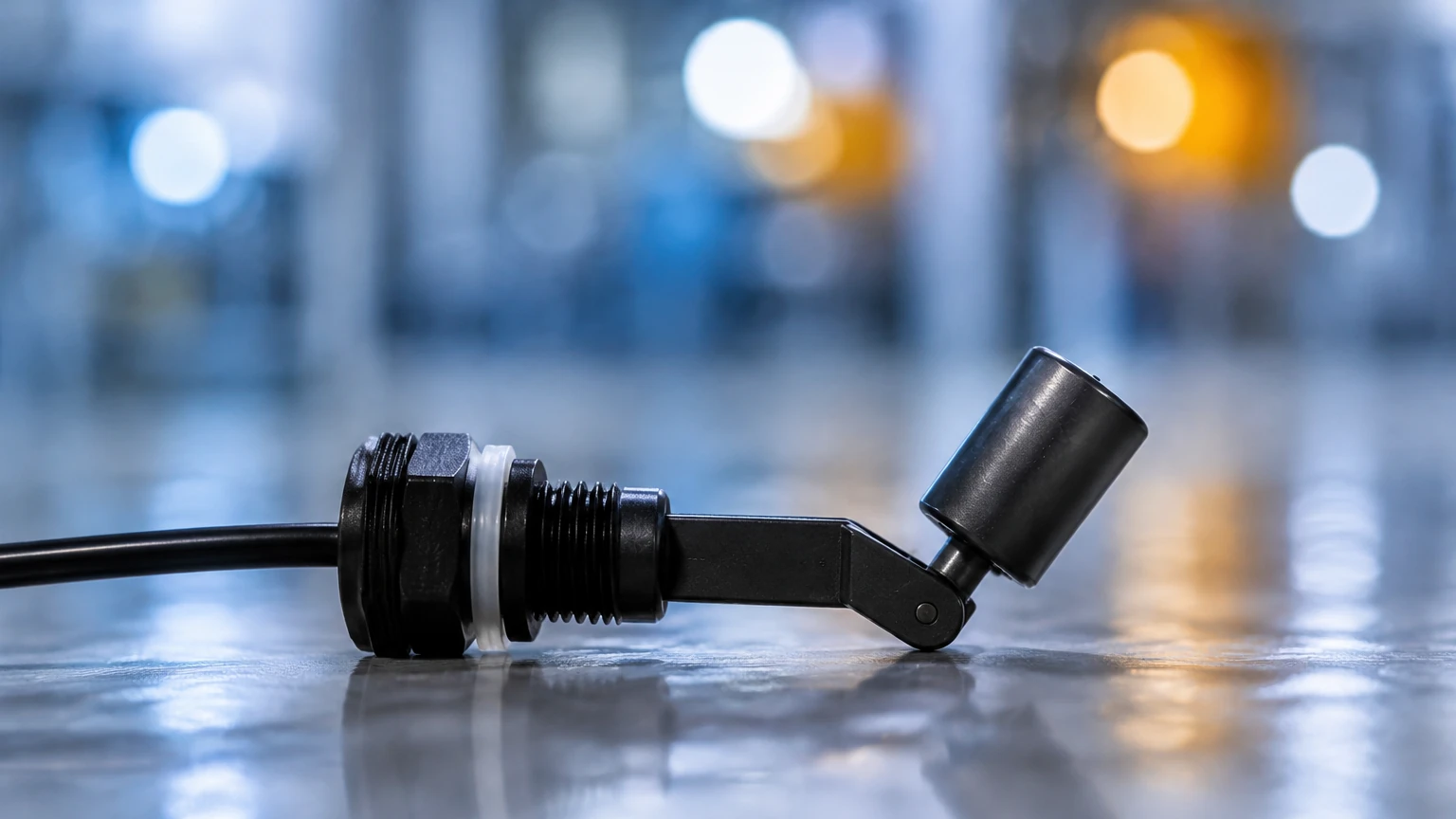
The float level switch operates on the principle of buoyancy. A float, typically made of stainless steel or plastic, contains an internal magnet. As the liquid level rises or falls, the float moves along a stem. When the float reaches a specific point, the magnetic field triggers a reed switch or a microswitch housed within the stem.
* Advantages: Simple, low cost, and requires no external power for the basic switch mechanism.
* Limitations: Moving parts are susceptible to mechanical wear and can be jammed by viscous fluids or debris.
Vibrating (Tuning Fork) Level Switches
Vibrating level switches utilize a sensing element shaped like a tuning fork, which is vibrated at its natural resonance frequency by piezoelectric crystals. When the fork is immersed in the medium, the frequency of vibration changes or the amplitude is dampened. The internal electronics detect this shift and toggle the output state.
* Advantages: Highly reliable, requires no calibration, and is largely unaffected by changes in pressure, temperature, or the dielectric constant of the material.
* Limitations: Heavy material buildup between the forks can cause false readings if not properly maintained.
Capacitance Level Switches
Capacitance switches treat the sensor probe and the tank wall as two plates of a capacitor. The material being measured acts as the dielectric. As the level rises and covers the probe, the capacitance of the system changes. Modern capacitance switches often include "coating rejection" technology to ignore material buildup on the probe.
* Advantages: No moving parts, suitable for high temperatures and pressures, and effective for both liquids and solids.
* Limitations: Requires calibration based on the specific dielectric constant of the media.
Conductivity Level Switches
Designed specifically for conductive liquids, these switches use electrodes to detect the presence of media. When the liquid touches the electrode, it completes an electrical circuit between the probe and the tank wall (or a reference electrode), triggering the switch.
* Advantages: Extremely cost-effective and simple for water-based applications.
* Limitations: Cannot be used with non-conductive fluids like oils or pure hydrocarbons.
Ultrasonic Point Level Switches
These devices use ultrasonic transducers to send sound waves across a small gap in the sensor head. When the gap is filled with liquid, the sound waves travel efficiently; when the gap is filled with air or gas, the signal is attenuated.
* Advantages: Solid-state with no moving parts, ideal for clean liquids.
* Limitations: Not suitable for aerated liquids, foam, or high-viscosity media that might bridge the gap.
Technical Selection Criteria for Industrial Applications
Choosing a level switch requires a detailed analysis of the process environment. Engineers should consult the Main Page to review specific product specifications, but the following table provides a baseline for technology comparison:
| Technology | Media Type | Viscosity Tolerance | Conductivity Required? | Typical Max Temp | Typical Max Pressure |
| :— | :— | :— | :— | :— | :— |
| Float | Clean Liquids | Low | No | 150°C (302°F) | 40 bar (580 psi) |
| Vibrating Fork | Liquids/Solids | Medium | No | 250°C (482°F) | 64 bar (928 psi) |
| Capacitance | Liquids/Solids | High | No | 400°C (752°F) | 100 bar (1450 psi) |
| Conductivity | Conductive Liquids | Low | Yes | 100°C (212°F) | 10 bar (145 psi) |
| Ultrasonic | Clean Liquids | Low | No | 135°C (275°F) | 40 bar (580 psi) |
Media Properties
* Density: Float switches require the float to be less dense than the liquid. Vibrating forks for solids require a minimum bulk density (e.g., >10 g/L) to dampen the vibration.
* Viscosity: High-viscosity materials can cause "bridging" in tuning forks or prevent floats from moving freely.
* Chemical Compatibility: The wetted parts (316L Stainless Steel, PTFE, PP, or Hastelloy) must be compatible with the process media to prevent corrosion.
Process Conditions
* Turbulence: In tanks with heavy agitation, float switches may bounce, causing "chatter" in the relay. In such cases, vibrating forks or capacitance switches are preferred.
* Foam: Some switches, like ultrasonic or capacitance, may struggle to distinguish between the liquid surface and a thick layer of foam.
Installation Best Practices and Strategic Positioning
Correct installation is as vital as technology selection. Improperly mounted switches lead to false alarms and premature mechanical failure.
1. Avoid the Fill Stream: Never install a level switch directly in the path of the incoming material flow. The force of the falling material can damage the probe or cause constant false triggering.
2. Orientation:
* Side Mounting: Ideal for high or low-level alarms. Ensure the probe is long enough to clear any internal tank wall buildup.
* Top Mounting: Common for pump control where multiple switch points are needed on a single stem (typical for float or conductivity probes).
3. Stilling Wells: In applications with high turbulence or surface ripples, installing the switch inside a stilling well (a vertical pipe) can provide a stable environment for accurate detection.
4. Wiring and Fail-Safe Modes:
* High-Level Fail-Safe: The switch is energized when the level is low and de-energizes when the level is high or if power is lost. This prevents overfills during a power failure.
* Low-Level Fail-Safe: The switch de-energizes when the level is low, protecting pumps from running dry.
Operational Limitations and Troubleshooting
While industrial level switches are robust, they are not immune to environmental challenges. Understanding these limitations is key to long-term reliability.
* Material Buildup: In applications involving slurries or sticky resins, material can accumulate on the sensor. Vibrating forks and capacitance probes with active shield technology are designed to mitigate this, but periodic cleaning may still be required.
* Electromagnetic Interference (EMI): Electronic switches (capacitance and ultrasonic) should be installed with shielded cables to prevent interference from large motors or variable frequency drives (VFDs) nearby.
* Seal Integrity: In high-pressure applications, the seal between the process connection and the electronics housing must be checked regularly. A compromised seal can lead to moisture ingress, causing short circuits.
For organizations looking to optimize their process automation, it is recommended to Review product options and application support to ensure the selected hardware aligns with specific regulatory and safety standards, such as ATEX/IECEx for hazardous zones.
Frequently Asked Questions (FAQ)
Q: Can a level switch be used for continuous monitoring?
A: No. A level switch only provides an "on/off" signal at a specific point. For continuous tracking of volume (e.g., 0-100%), a radar or ultrasonic level transmitter is required.
Q: What is the difference between NPN and PNP outputs in electronic switches?
A: This refers to the type of transistor output used in DC circuits. PNP switches provide a positive voltage output when triggered, while NPN switches provide a connection to the negative (ground) side of the circuit. The choice depends on the PLC or controller requirements.
Q: How do I handle applications with thick foam?
A: Vibrating tuning forks are generally the most reliable for ignoring foam and detecting the actual liquid surface. Capacitance switches can also be tuned to ignore foam if the dielectric difference is significant.
Q: Are there level switches for high-pressure steam applications?
A: Yes, specifically designed magnetic level gauges with integrated switches or high-temperature capacitance probes are typically used in boiler and steam drum applications where temperatures exceed 250°C.
By carefully evaluating the physical properties of the media and the mechanical constraints of the vessel, engineers can implement level switch solutions that enhance safety and operational efficiency across water treatment, chemical processing, and industrial automation sectors.