Clamp on Ultrasonic
Clamp on Ultrasonic
In the landscape of industrial process control, the ability to measure fluid dynamics and storage levels without breaching the integrity of the containment vessel is a significant advantage. Clamp-on ultrasonic technology represents a pinnacle of non-invasive instrumentation, allowing for the measurement of flow and, in specific configurations, level detection from the exterior of a pipe or tank. This technology is particularly vital in industries where process downtime is costly, or where the media is hazardous, corrosive, or high-pressure, making traditional wetted sensors impractical.
Understanding the Principles of Clamp-on Ultrasonic Technology
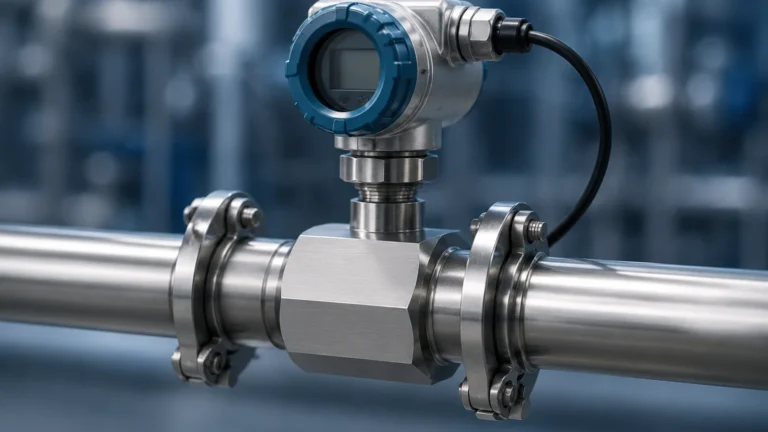
Clamp-on ultrasonic measurement relies on the propagation of high-frequency sound waves through solid and liquid media. The system typically consists of two primary components: the ultrasonic transducers (sensors) and the electronic transmitter (signal processor).
The Piezoelectric Effect
At the heart of the transducer is a piezoelectric crystal. When an electrical pulse is applied to this crystal, it vibrates at a specific frequency—usually between 0.5 MHz and 5 MHz—creating ultrasonic sound waves. Conversely, when a returning sound wave hits the crystal, it generates an electrical signal that the transmitter can interpret.
Signal Propagation and Refraction
In a clamp-on configuration, the sound wave must first travel through the transducer housing, then through a coupling agent, into the pipe or tank wall, and finally into the liquid. According to Snell’s Law, the sound wave refracts (bends) as it passes between materials with different sonic velocities. For example, the speed of sound in carbon steel is approximately 5,900 meters per second (m/s), whereas in water, it is roughly 1,480 m/s. Engineering the transducer mounting angle is critical to ensure the signal enters the fluid at the correct trajectory.
Measurement Methodologies
There are two primary methodologies used in clamp-on ultrasonic systems:
1. Transit-Time Difference: This is the most common method for clean liquids. Two transducers are mounted on the pipe. One sends a signal upstream while the other sends one downstream. The time difference between these two signals is directly proportional to the flow velocity.
2. Doppler Effect: This method is used for liquids containing suspended solids or aeration. The transducers emit a signal of a known frequency, which reflects off particles or bubbles moving with the fluid. The frequency shift of the reflected signal is used to calculate the velocity.
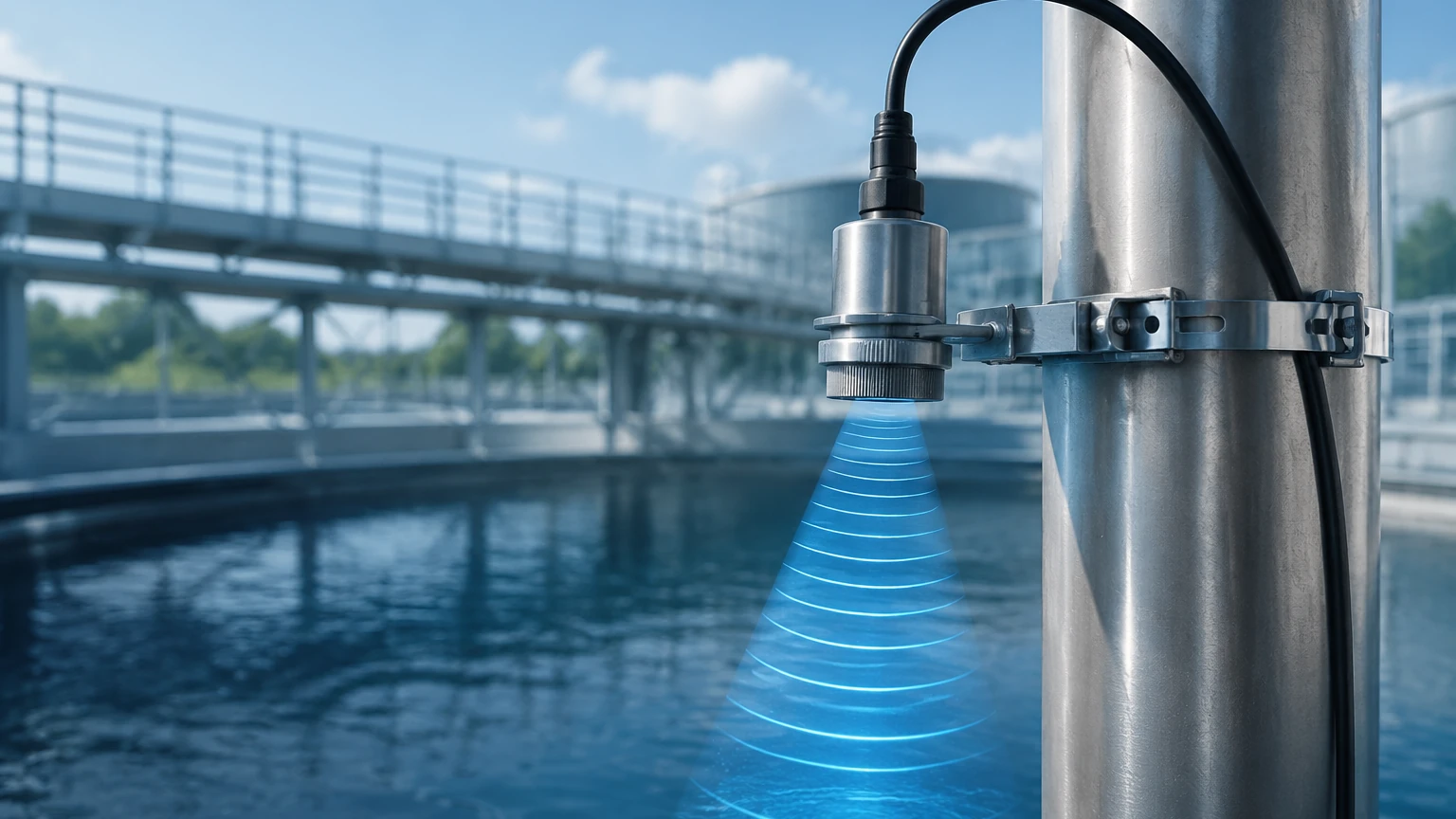
3. Pulse-Echo (Level Measurement): While less common than flow applications, clamp-on ultrasonic sensors can be used for point-level detection. By mounting a transducer to the bottom or side of a vessel, the system measures the time it takes for a pulse to reflect off the liquid-gas interface and return. This is often employed for high-level or low-level alarms on small-diameter pipes or sight glasses.
Applications in Level and Flow Measurement
While Welk specializes in a broad range of level measurement instruments, including radar and hydrostatic transmitters, clamp-on ultrasonic technology serves as a complementary solution for specific industrial challenges.
In water treatment facilities, clamp-on sensors are used to monitor chemical dosing lines where the corrosive nature of the fluid (such as sodium hypochlorite) would quickly degrade wetted sensors. In the oil and gas sector, these instruments allow for the measurement of high-pressure crude oil flow without the risk of leaks associated with cutting into the pipeline.
For level applications, clamp-on ultrasonic switches are frequently used as redundant safety systems. Because they are mounted externally, they can be installed on existing tanks without emptying them, providing an extra layer of overfill protection. For engineers looking to integrate these technologies into a broader automation strategy, visiting the Main Page provides a comprehensive overview of how non-invasive tools fit alongside traditional radar and ultrasonic level sensors.
Key Selection Criteria for Industrial Environments
Selecting the correct clamp-on ultrasonic system requires a detailed analysis of the application environment. Unlike wetted sensors, the performance of a clamp-on device is heavily dependent on the characteristics of the vessel wall.
Pipe and Tank Material
The material must be sonically conductive. Most metals (steel, stainless steel, ductile iron, copper, aluminum) and dense plastics (PVC, PE, PVDF) are excellent candidates. However, materials that are porous or have internal air pockets, such as certain types of fiberglass or concrete-lined pipes, can attenuate the signal to the point of failure.
Wall Thickness and Liners
The thickness of the wall affects the frequency required. Thicker walls generally require lower frequency transducers to penetrate the material. Furthermore, if a pipe has a liner (e.g., rubber, bitumen, or cement), it must be fully bonded to the outer wall. Any air gap between the liner and the pipe will reflect the ultrasonic signal, preventing it from reaching the liquid.
Fluid Characteristics
The liquid should ideally be homogeneous. For transit-time measurements, the concentration of solids or bubbles should be less than 2% by volume. If the fluid is a heavy slurry or highly aerated, a Doppler-based system or an alternative technology like a magnetic level gauge or radar level meter should be considered.
Installation and Calibration Best Practices
The accuracy of a clamp-on ultrasonic instrument is only as good as its installation. Because the signal must pass through multiple interfaces, minimizing signal loss is the primary goal.
1. Surface Preparation: The mounting location on the pipe or tank must be cleaned of rust, scale, and loose paint. A smooth, flat surface is required for the transducer to make full contact.
2. Coupling Agents: Since air is a poor conductor of high-frequency sound, a coupling agent (ultrasonic grease, gel, or a solid epoxy pad) must be used between the transducer face and the vessel wall to eliminate air gaps.
3. Mounting Configurations:
* V-Method: The signal bounces once off the opposite wall. This is the standard for most pipe sizes (typically 25 mm to 400 mm).
* Z-Method: The transducers are mounted on opposite sides of the pipe, and the signal passes through only once. This is used for large pipes or highly attenuating liquids.
* W-Method: The signal bounces three times. This is used for very small pipes (under 25 mm) to increase the signal path length and improve resolution.
Practical Selection Table: Clamp-on vs. Invasive Level Sensors
| Feature | Clamp-on Ultrasonic | Invasive Radar/Ultrasonic |
| :— | :— | :— |
| Installation Cost | Low (No pipe cutting/welding) | High (Requires process shutdown) |
| Maintenance | Easy (Accessible externally) | Moderate (Requires tank entry/bypass) |
| Process Pressure | No limit (Independent of pressure) | Limited by flange/seal rating |
| Accuracy | 1.0% to 3.0% of rate | 0.1% to 1.0% of span |
| Media Compatibility | Universal (No contact) | Limited by wetted material |
| Pipe/Tank Size | 10 mm to 6000 mm | Varies by probe length/range |
Limitations and Troubleshooting
Despite its versatility, clamp-on ultrasonic technology has specific limitations that engineers must account for during the design phase.
* Signal Attenuation: In very large tanks or pipes with heavy scaling, the ultrasonic signal may lose too much energy to return a reliable reading. Increasing the gain or using lower-frequency sensors can sometimes mitigate this.
* Temperature Sensitivity: The speed of sound in both the vessel wall and the liquid changes with temperature. High-quality transmitters include temperature compensation algorithms, but extreme fluctuations can still impact accuracy if not properly calibrated.
* Aeration and Turbulence: Excessive bubbles or highly turbulent flow (often found immediately downstream of a pump or valve) can scatter the ultrasonic beam. It is recommended to install sensors on straight pipe sections—ideally 10 diameters upstream and 5 diameters downstream from any disturbance.
Frequently Asked Questions (FAQ)
Q: Can clamp-on ultrasonic sensors work on plastic pipes?
A: Yes, most dense plastics like PVC, HDPE, and PP are excellent conductors of ultrasound. However, thin-walled flexible tubing may not provide enough structural rigidity for a stable signal.
Q: How often does the coupling grease need to be reapplied?
A: For permanent installations, specialized high-temperature silicone greases or solid coupling pads are used, which can last for several years. For portable check-metering, standard ultrasonic gel is sufficient but will dry out over time.
Q: Is it possible to measure the level of a vacuum-sealed tank?
A: If the sensor is mounted on the bottom of the tank (measuring the liquid column), it can work. However, if the sensor is mounted at the top looking down through a vacuum, it will fail because sound cannot travel through a vacuum. In such cases, a guided wave radar or a hydrostatic transmitter is a better choice.
Q: Does the pipe need to be full for flow measurement?
A: For transit-time and Doppler flow measurement, the pipe must be 100% full. If the pipe is partially full, the sound path will be interrupted, and the meter will report an error. For level measurement in a tank, this is not an issue.
Engineering Considerations for Long-term Reliability
When implementing clamp-on ultrasonic solutions, long-term reliability is achieved by matching the transducer frequency to the specific application. For example, a 1 MHz transducer is a "workhorse" for standard steel pipes, but a 0.5 MHz transducer might be necessary for cast iron pipes with internal cement lining due to the higher attenuation of the material.
Furthermore, environmental protection for the external transducers is paramount. In outdoor installations, sensors should be shielded from direct sunlight to prevent uneven thermal expansion of the mounting hardware, and cables should be protected by conduit to prevent damage from UV radiation or local wildlife.
By understanding these technical boundaries, process engineers can effectively deploy clamp-on ultrasonic technology as a cost-effective and safe alternative to traditional wetted measurement methods. For more detailed technical documentation and to see how these sensors integrate with industrial automation systems, professionals are encouraged to Review product options and application support at the Welk official site.