Flow Metering Skid
Flow Metering Skid
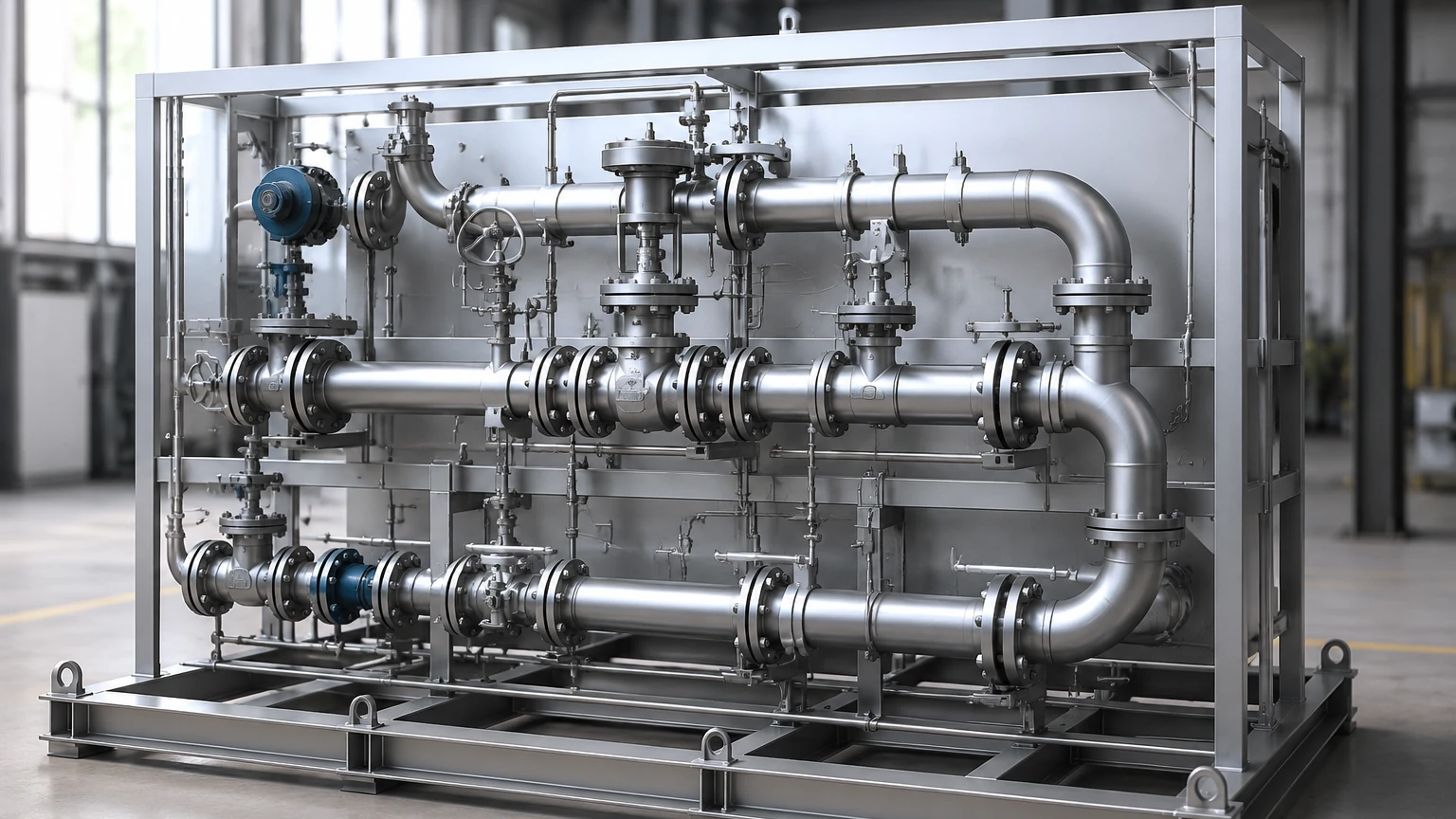
In industrial process engineering, a flow metering skid is a self-contained, modular system designed to measure the volume or mass of fluids—liquids or gases—as they are transported through a pipeline. These systems are critical for custody transfer, where the accuracy of the measurement directly impacts financial transactions between parties, as well as for internal process control in chemical plants, oil refineries, and water treatment facilities.
By integrating flow meters, valves, piping, and control instrumentation onto a single structural frame (the "skid"), engineers can ensure a factory-tested, calibrated solution that is ready for immediate field installation. This article explores the technical principles of measurement within these systems, the selection criteria for instrumentation, and the critical role that level measurement plays in supporting flow skid operations.
Measurement Principles in Skid Systems
Before selecting components for a flow metering skid, it is essential to understand the underlying physical principles used to quantify fluid movement and storage levels within the system.
Flow Measurement Principles
Flow measurement typically relies on one of several physical phenomena. Differential pressure (DP) meters use a primary element, such as an orifice plate, to create a pressure drop that is proportional to the square of the flow rate. Coriolis meters measure the mass flow directly by detecting the inertia caused by fluid moving through vibrating tubes. For many B2B applications, ultrasonic or magnetic flow meters are preferred due to their lack of moving parts and low pressure drop.
Level Measurement Principles
While the primary function of the skid is flow measurement, level measurement is often required for surge tanks, separators, or chemical injection modules integrated into the skid.
1. Radar Level Measurement (Time-of-Flight): Radar level meters emit high-frequency microwave pulses. These pulses reflect off the surface of the medium and return to the sensor. The distance is calculated based on the time it takes for the pulse to travel. Because microwaves do not require a medium for propagation, radar is highly effective in vacuums or high-pressure environments.
2. Ultrasonic Level Measurement: Similar to radar, ultrasonic sensors use sound waves. The sensor emits an acoustic pulse that reflects off the liquid surface. The time-of-flight is used to determine the level. This technology is cost-effective for water-based applications but is sensitive to air temperature and vapor density.
3. Hydrostatic Level Measurement: This principle relies on the relationship between the height of a liquid column and the pressure it exerts at the base. By measuring the pressure at the bottom of a tank, the system can calculate the liquid level based on the fluid's density.
For a comprehensive look at how these instruments are integrated into larger industrial systems, you can Review product options and application support at the Welk Main Page.
Core Components of a Flow Metering Skid
A standard flow metering skid is more than just a meter; it is a complex assembly of mechanical and electronic parts designed to work in harmony.
* Flow Meters: The primary instrument, chosen based on the fluid type and required accuracy.
* Level Sensors: Installed in associated vessels to monitor inventory or prevent pump cavitation.
* Piping and Headers: Precision-engineered runs that ensure stable flow profiles (laminar flow) before the fluid reaches the meter.
* Strainers and Air Eliminators: These protect the meters from debris and ensure that only single-phase fluid (liquid without air pockets) is measured.
* Control Valves: Used to regulate the flow rate or shut down the system in case of an emergency.
* Flow Computer/PLC: The "brain" of the skid that collects data from all sensors, performs temperature and pressure compensation, and calculates the final flow totals.
Selection Criteria for Skid Instrumentation
Choosing the right instrumentation for a flow metering skid requires a detailed analysis of the process conditions. The following table provides a comparison of common level measurement technologies used in skid-mounted tanks.
Level Instrumentation Selection Table
| Technology | Accuracy | Ideal Media | Limitations | Typical Application |
| :— | :— | :— | :— | :— |
| Radar (80GHz) | ±1 mm | Chemicals, Oils, Slurries | High cost compared to ultrasonic | Custody transfer tanks |
| Ultrasonic | ±0.25% of range | Water, Wastewater | Affected by foam and steam | Open sump monitoring |
| Hydrostatic | ±0.1% to 0.5% | Clean liquids | Sensitive to density changes | Constant density storage |
| Magnetic Gauge | Visual + Switch | Corrosive liquids | Moving parts (float) | High-pressure boilers |
When evaluating a flow metering skid for a specific project, engineers must also consider the Reynolds number of the fluid, the allowable pressure drop across the skid, and the communication protocols (e.g., Modbus, HART, or Profibus) required for the facility's central control system.
Integration of Level and Flow Data
In many skid applications, flow and level data are interdependent. For example, in a chemical dosing skid, the flow meter ensures the correct amount of chemical is being injected into a process line, while a radar level meter monitors the supply tank. If the level drops below a certain threshold, the flow computer may trigger an alarm or shut down the pump to prevent damage.
Welk provides specialized solutions for these scenarios, offering high-precision radar and ultrasonic sensors that integrate seamlessly with flow control loops. Using non-contact measurement like radar is particularly beneficial in skids handling aggressive chemicals, as it reduces maintenance requirements and prevents sensor degradation.
Installation and Engineering Considerations
The performance of a flow metering skid is heavily dependent on how it is installed and commissioned. Even the most accurate meter will provide false readings if the installation environment is not optimized.
Straight Pipe Run Requirements
Most flow meters require a specific length of straight pipe upstream and downstream to eliminate turbulence. If the skid footprint is limited, flow conditioners or vanes may be necessary to stabilize the flow profile before it enters the measurement chamber.
Level Sensor Placement
For level sensors mounted on skid tanks, the "blocking distance" or "dead zone" must be considered. This is the area immediately below the sensor where measurement is not possible. Furthermore, sensors should be positioned away from tank inlets to avoid interference from turbulent surfaces or splashing.
Environmental Factors
Skids located outdoors must be designed to withstand ambient temperature fluctuations. For ultrasonic level sensors, temperature compensation is mandatory because the speed of sound changes with air temperature. For radar units, the dielectric constant of the fluid must be high enough to reflect the microwave signal effectively.
Common Risks and Limitations
Despite their high accuracy, flow metering skids face several operational challenges:
1. Entrained Air: In liquid skids, air bubbles can cause significant over-reading in flow meters. Air eliminators are essential but must be sized correctly for the maximum flow rate.
2. Pressure Surges: Rapid valve closure can cause water hammer, which may damage sensitive flow and level instrumentation.
3. Sedimentation: In wastewater or slurry applications, solids can build up in the bottom of the skid piping or on the face of level sensors, leading to signal attenuation or total failure.
4. Calibration Drift: Over time, sensors may drift due to electronic aging or physical wear. Regular "proving" or field calibration against a master meter is required for custody transfer applications.
Frequently Asked Questions (FAQ)
Q: Why is radar preferred over ultrasonic for level measurement in chemical skids?
A: Radar is non-contact and unaffected by vapors, pressure, or temperature changes in the tank headspace. Chemicals often produce fumes that change the speed of sound, which can cause ultrasonic sensors to provide inaccurate readings.
Q: How often does a flow metering skid need to be calibrated?
A: For custody transfer, calibration (or proving) is often performed monthly or quarterly, depending on local regulations and the volume of fluid being measured. For general process control, annual calibration is usually sufficient.
Q: Can a flow metering skid handle multi-phase flow (e.g., oil and water)?
A: Standard skids are designed for single-phase flow. If multi-phase flow is expected, a separator must be included in the skid design, and separate meters must be used for the liquid and gas phases.
Q: What is the benefit of a modular skid versus field-assembled components?
A: Modular skids are assembled in a controlled factory environment, allowing for rigorous pressure testing, wiring checks, and initial calibration before they reach the site. This significantly reduces on-site construction time and minimizes the risk of installation errors.
For engineers designing or procuring a measurement system, understanding the synergy between flow and level instrumentation is key to long-term reliability. By selecting the appropriate technology and following strict installation guidelines, a flow metering skid can provide decades of accurate service in even the most demanding industrial environments.