Cls82e
Cls82e
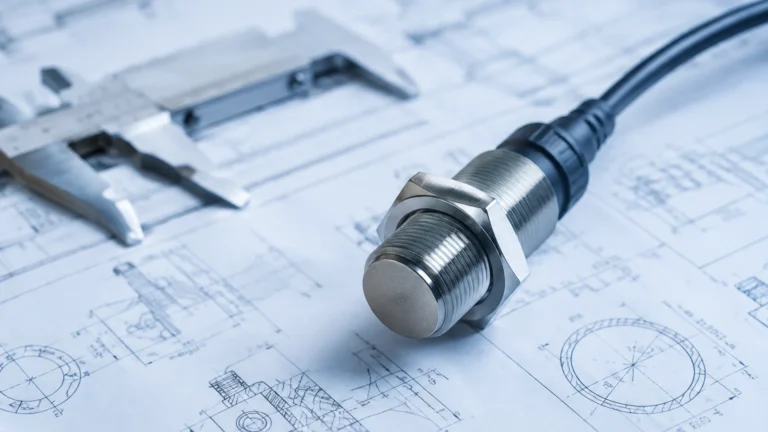
In the landscape of industrial process automation, the measurement of liquid conductivity serves as a critical indicator of concentration, purity, and chemical composition. The Cls82e is a high-end, four-electrode conductivity sensor designed specifically for applications that demand high precision across a wide dynamic range, particularly in hygienic environments. As industrial facilities increasingly move toward digital transformation, the integration of such sensors with advanced control systems becomes paramount. While level measurement remains the primary concern for volume control—often addressed by the solutions found on our Main Page—the Cls82e provides the analytical data necessary for comprehensive process management.
This article examines the technical architecture, measurement principles, and practical application of the Cls82e, offering engineering insights for its selection and maintenance in demanding B2B environments.
1. Measurement Principle: The Four-Electrode Advantage
To understand the utility of the Cls82e, one must first understand the physics of four-electrode conductivity measurement. Traditional two-electrode sensors are often limited by a phenomenon known as polarization. When a voltage is applied to a two-electrode system, ions in the liquid migrate toward the electrodes, creating a capacitive layer that adds resistance and skews the measurement, especially at high conductivity levels.
How the Four-Electrode System Works
The Cls82e utilizes a four-electrode arrangement to circumvent these limitations:
1. Current Electrodes (Outer): An alternating current is applied to the two outer electrodes. This current flows through the medium.
2. Voltage Electrodes (Inner): Two inner electrodes measure the potential drop across a specific segment of the liquid.
3. High-Impedance Measurement: Because the voltage is measured with a high-impedance circuit, virtually no current flows through the inner electrodes. This prevents the formation of a polarization layer at the measurement points.
4. Ohm’s Law Calculation: The electronics calculate the conductivity based on the known current and the measured voltage drop, independent of any fouling or polarization at the current-carrying electrodes.
This principle allows the Cls82e to cover a measurement range from 1 µS/cm to 500 mS/cm with a single sensor, a feat that would typically require multiple two-electrode sensors with different cell constants.
2. Technical Specifications and Design Features
The Cls82e is engineered for longevity in harsh process conditions. Its design reflects a focus on hygienic integrity and material compatibility.
Material Composition
* Sensor Element: Typically constructed from platinum or electropolished stainless steel 1.4435 (AISI 316L).
* Insulation: The sensor body is often made of PEEK (Polyetheretherketone), a high-performance thermoplastic known for its chemical resistance and thermal stability.
* Surface Finish: To meet hygienic standards, the surface roughness (Ra) is maintained below 0.38 µm, preventing bacterial growth and ensuring ease of cleaning.
Operating Limits
| Parameter | Metric Value | Imperial Equivalent |
| :— | :— | :— |
| Measurement Range | 1 µS/cm to 500 mS/cm | – |
| Maximum Temperature | 125°C (continuous) / 150°C (short-term) | 257°F / 302°F |
| Maximum Pressure | 17 bar at 20°C | 247 psi at 68°F |
| Pressure at Max Temp | 9 bar at 150°C | 130 psi at 302°F |
3. Digital Integration: The Memosens Technology
The "e" in Cls82e denotes its integration into the Memosens 2.0 ecosystem. This digital technology revolutionizes how sensor data is transmitted and managed.
Inductive Signal Transmission
Unlike analog sensors that use metal contacts prone to corrosion and moisture interference, the Cls82e uses an inductive coupling between the sensor head and the cable. This ensures a 100% moisture-proof connection and eliminates the risk of ground loops. The signal is digitized within the sensor head before being transmitted to the transmitter.
Data Storage and Predictive Maintenance
The Cls82e stores critical data directly in the sensor head, including:
* Calibration constants.
* Total hours of operation.
* Exposure time to extreme temperatures.
* Number of CIP (Clean-in-Place) and SIP (Steam-in-Place) cycles.
This data allows for "Plug & Play" functionality. Sensors can be calibrated in a controlled laboratory environment and then swapped into the process line without requiring field calibration. This significantly reduces downtime and improves the accuracy of the measurement.
4. Application Scenarios in Process Industries
The versatility of the Cls82e makes it a staple in several key sectors where liquid quality is as vital as the levels monitored by instruments on our Main Page.
Food and Beverage Industry
In dairy and brewery operations, the Cls82e is used for phase separation. For example, when flushing a milk line with water, the sensor detects the change in conductivity to switch valves at the precise moment the milk concentration drops. This minimizes product loss and reduces wastewater.
Life Sciences and Biotechnology
In pharmaceutical manufacturing, the sensor monitors the conductivity of purified water (PW) and water for injection (WFI). Its hygienic design ensures that it does not introduce contaminants into the process stream, while its wide range allows it to monitor both the highly resistive purified water and the more conductive cleaning solutions.
Chemical Processing
The Cls82e is employed in chemical dosing and concentration control. Its ability to withstand aggressive cleaning agents and high temperatures makes it suitable for monitoring acid and alkali concentrations in industrial processes.
5. Installation Guidelines and Best Practices
Proper installation is critical to ensuring the accuracy and response time of the Cls82e. Engineers should consider the following factors during the design phase:
Mounting Orientation
The sensor should be installed in a position where the measurement electrodes are always fully submerged in the medium. In horizontal pipes, the sensor should be mounted from the side to avoid air pockets (at the top) or sediment accumulation (at the bottom).
Flow Velocity and Turbulence
While the four-electrode design is robust, high-velocity flow or extreme turbulence can cause noise in the signal. Conversely, in very low flow conditions, the response time may lag. A moderate flow that ensures constant refreshment of the medium around the electrodes is ideal.
Hygienic Connections
For hygienic applications, the use of standard process connections such as Varivent, Tri-Clamp, or BioControl is recommended. These connections ensure a flush-mounted installation that eliminates dead legs where bacteria could proliferate.

6. Comparison with Alternative Technologies
When selecting a conductivity sensor, engineers often compare the Cls82e with two-electrode or inductive (toroidal) sensors.
| Feature | Cls82e (4-Electrode) | Two-Electrode Sensors | Inductive Sensors |
| :— | :— | :— | :— |
| Range | Wide (Low to High) | Narrow (Very Low) | Wide (Medium to Very High) |
| Accuracy | High | High (in low range) | Moderate |
| Fouling Sensitivity | Low | High | Very Low |
| Hygienic Design | Excellent | Good | Excellent |
| Typical Use | Phase separation, WFI | Pure water, Steam | Acids, Brine, Slurries |
The Cls82e is the preferred choice when the application requires high precision across a range that spans both low-conductivity product and high-conductivity cleaning chemicals.
7. Maintenance and Calibration Procedures
Despite its robust design, the Cls82e requires periodic maintenance to ensure continued accuracy. The digital nature of the sensor simplifies these tasks.
Cleaning the Sensor
Fouling on the electrodes can eventually impact the measurement if it becomes thick enough to insulate the voltage electrodes. Cleaning should be performed using non-abrasive methods. For organic deposits, a mild detergent or specialized cleaning solution is used. For scale or mineral deposits, a weak acid solution (e.g., 5% HCl) may be necessary.
Calibration Cycles
Calibration frequency depends on the severity of the process. In stable environments, annual calibration may suffice. In processes with frequent SIP cycles, quarterly checks are recommended. Using Memosens technology, the Cls82e can be calibrated against a certified standard solution in the lab. The sensor is then reconnected in the field, and the transmitter automatically recognizes the new calibration data.
8. Common Risks and Limitations
While the Cls82e is a versatile instrument, engineers must be aware of its limitations:
* Abrasive Media: Highly abrasive slurries can wear down the platinum or steel electrodes over time, changing the cell constant.
* Extreme Conductivity: For extremely concentrated acids or salts (above 500 mS/cm), an inductive sensor may be more appropriate to avoid electrode degradation.
* Electromagnetic Interference (EMI): Although Memosens is digital, the sensor cable should still be routed away from high-voltage power lines to prevent interference with the sensitive measurement electronics.
9. Frequently Asked Questions (FAQ)
Q: Can the Cls82e be used in hazardous areas?
A: Yes, when used with appropriate Memosens transmitters and barriers, the Cls82e is often certified for use in ATEX, IECEx, and FM/CSA hazardous zones.
Q: How does temperature compensation work in the Cls82e?
A: The sensor includes an integrated Pt1000 temperature sensor. Conductivity is highly temperature-dependent, so the internal electronics or the transmitter apply a compensation algorithm (usually a linear coefficient or a non-linear curve for pure water) to provide a standardized reading at 25°C.
Q: What is the lifespan of a Cls82e sensor?
A: In clean, non-corrosive applications, the sensor can last for many years. In harsh hygienic processes with daily SIP cycles, the lifespan is typically determined by the degradation of the PEEK body or the electrode seals, often ranging from 1 to 3 years.
10. Conclusion
The Cls82e represents a pinnacle of conductivity measurement technology, combining the physical advantages of the four-electrode principle with the digital efficiency of Memosens. For industrial operators, it provides a reliable means of monitoring process quality and ensuring hygienic compliance. When integrated alongside the robust level measurement solutions available on our Main Page, the Cls82e forms a critical part of a comprehensive process control strategy, enabling greater efficiency, reduced waste, and guaranteed product safety.