Fmr30b
Fmr30b
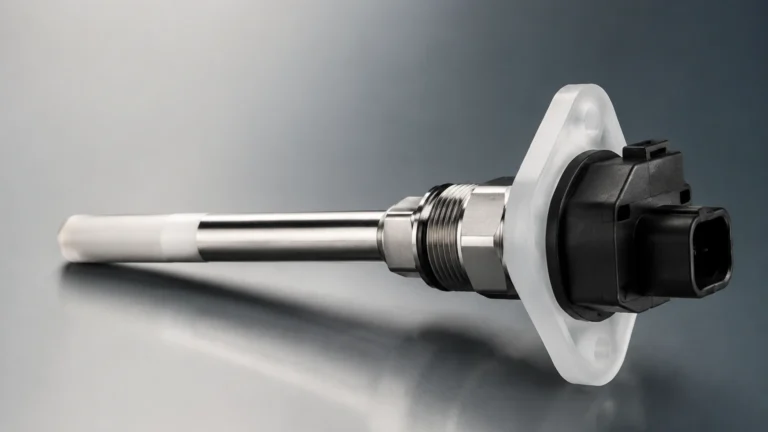
In the landscape of industrial process automation, the demand for precision, reliability, and compact design has led to significant advancements in radar level measurement. The FMR30B represents a specific class of high-frequency radar sensors—specifically 80 GHz Frequency Modulated Continuous Wave (FMCW) technology—designed to meet the rigorous requirements of water treatment, chemical processing, and general industrial applications. As a compact radar sensor, the FMR30B is often evaluated by plant engineers for its ability to provide non-contact level measurement in environments where space is limited and accuracy is paramount.
Understanding the technical nuances of the FMR30B, its measurement principles, and its operational boundaries is essential for successful integration into a process control system. This guide provides a detailed technical overview of 80 GHz radar technology as applied in instruments like the FMR30B, offering practical insights for selection, installation, and maintenance.
Measurement Principles of 80 GHz Radar
The FMR30B operates on the Frequency Modulated Continuous Wave (FMCW) principle. Unlike older pulse-based radar systems that measure the time-of-flight of a single microwave pulse, FMCW radar transmits a continuous electromagnetic signal. The frequency of this signal increases linearly over time, creating what is known as a "sweep" or "chirp."
When the transmitted signal hits the surface of the medium (liquid or solid), it is reflected back to the sensor’s antenna. Because the transmitter is constantly changing its frequency, there is a distinct frequency difference between the signal currently being emitted and the signal that has just been received after reflection. This frequency shift ($Δf$) is directly proportional to the time delay, and therefore, the distance to the product surface.
The Advantage of 80 GHz
The move to the 80 GHz frequency band, utilized by the FMR30B, offers several distinct advantages over traditional 6 GHz or 26 GHz radar systems:
1. Narrow Beam Angle: Higher frequencies allow for a much tighter focus of the radar signal. An 80 GHz sensor can achieve a beam angle as narrow as 3° to 6°, even with a small antenna. This minimizes reflections from tank walls, internal ladders, or agitators.
2. Smaller Antenna Size: The wavelength of an 80 GHz signal is approximately 3.75 mm. Because antenna size is inversely proportional to frequency for a given beam width, 80 GHz sensors can be manufactured with very small process connections (e.g., 1-inch or G1 threads) while maintaining high signal focus.
3. Improved Accuracy: The wider bandwidth available at 80 GHz allows for better signal processing and higher resolution, typically resulting in accuracy levels of ±2 mm or better.
Key Technical Specifications and Performance
When evaluating the FMR30B for a specific application, engineers must consider the core performance metrics that define its operational window. While specific configurations vary, the following parameters are characteristic of this technology class:
* Measuring Range: Typically up to 15 meters for liquid applications, though this can vary based on the dielectric constant of the medium.
* Process Temperature: Standard models often handle ranges from -40°C to +80°C. High-temperature variants may extend this, but the FMR30B is generally positioned for standard process conditions.
* Process Pressure: Designed for atmospheric or low-pressure vessels, usually ranging from -1 bar to +3 bar (approx. -14.5 to 43.5 psi).
* Output Signals: Standard 4-20 mA HART is common, along with digital options like Bluetooth for commissioning via mobile devices.
* Accuracy: ±2 mm (0.08 in) under reference conditions.
For those requiring a broader range of industrial level measurement instruments, including radar, ultrasonic, and hydrostatic solutions, reviewing the Main Page of a professional manufacturer provides a comprehensive look at available hardware configurations.
Application Suitability and Selection Criteria
The FMR30B is versatile, but its selection should be driven by the specific physical properties of the application.
Liquid Level Measurement
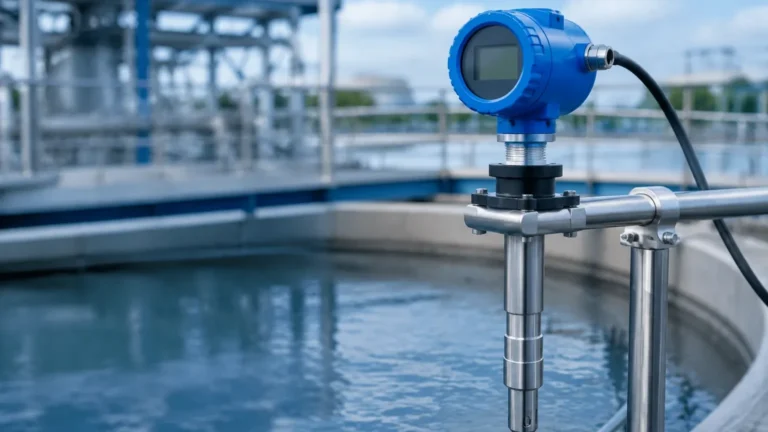
In water and wastewater applications, the FMR30B excels due to its non-contact nature. It is unaffected by changes in density, temperature, or pressure. It is ideal for storage tanks, pump stations, and open channels. In the chemical industry, it is suitable for small buffer tanks containing acids or alkalis, provided the materials of construction (typically PVDF or PBT) are chemically compatible.
Solid Level Measurement
While 80 GHz radar is effective for solids, the FMR30B is primarily optimized for liquids. For large silos or high-dust environments, larger 80 GHz radar units with specialized lenses and higher power outputs are usually preferred. However, for small plastic pellets or grain hoppers with a range under 10 meters, the FMR30B can be a cost-effective solution.
Selection Table: Radar Frequency Comparison
| Feature | 6 GHz Radar | 26 GHz Radar | 80 GHz (FMR30B Type) |
| :— | :— | :— | :— |
| Beam Angle | Wide (approx. 20-30°) | Medium (approx. 8-12°) | Narrow (3-6°) |
| Antenna Size | Large (6-10 inches) | Medium (2-4 inches) | Small (1 inch / 25mm) |
| Vessel Internals | Highly sensitive | Moderately sensitive | Low sensitivity |
| Condensation | High resistance | Moderate resistance | High resistance (with lens) |
| Accuracy | ±5-10 mm | ±3-5 mm | ±1-2 mm |
| Typical Use | Heavy foam/turbulence | General purpose liquids | Narrow tanks/high precision |
Installation Best Practices
Proper installation is the most critical factor in ensuring the long-term reliability of an FMR30B sensor. Despite the narrow beam angle, certain geometric rules must be followed.
1. Nozzle Mounting: The antenna should ideally extend slightly below the bottom of the mounting nozzle to prevent "ringing" or internal reflections within the nozzle. If the nozzle is very long, a nozzle extension or a specific software-based "mapping" of the nozzle reflection is required.
2. Distance from Wall: Even with a narrow beam, the sensor should not be mounted directly against the tank wall. A minimum distance of 200 mm from the wall is generally recommended to avoid interference from weld seams or scale buildup.
3. Avoiding the Center: In cylindrical tanks with domed or conical roofs, avoid mounting the sensor in the exact center. The center of the tank can act as a parabolic reflector, concentrating unwanted noise and multiple reflections back to the sensor.
4. Obstructions: Ensure the signal path is clear of agitators, heating coils, or fill streams. If an obstruction is unavoidable, the 80 GHz beam's narrow profile makes it easier to "aim" the signal past the obstacle.
5. Alignment: The sensor should be mounted perpendicular to the liquid surface. For solids, an alignment swivel may be necessary to point the beam at the angle of repose.

Limitations and Environmental Factors
While the FMR30B is a robust instrument, it is not a universal solution for every process challenge. Engineers should be aware of the following limitations:
* Dielectric Constant (εr): Radar depends on the reflection of waves. Materials with a very low dielectric constant (e.g., certain liquefied gases or pure hydrocarbons with εr < 1.4) may not reflect enough energy for a reliable signal. In these cases, a guided wave radar or a larger antenna may be required.
* Heavy Foam: While 80 GHz radar can penetrate light foam, extremely thick or dense foam (like that found in some fermentation processes) can absorb the radar signal entirely, leading to signal loss.
* Heavy Dust and Build-up: In solids applications, heavy dust can attenuate the high-frequency signal. Furthermore, if the medium is sticky and builds up on the sensor face, the signal may be degraded. The FMR30B’s flat-face lens design helps minimize buildup, but it is not immune to extreme coating.
* Vacuum Applications: While the sensor can operate in a vacuum, the physical seals of the FMR30B must be checked against the specific vacuum levels of the process to prevent air ingress or sensor damage.
Maintenance and Troubleshooting
One of the primary benefits of the FMR30B is its low maintenance requirement due to the lack of moving parts. However, if issues arise, they usually manifest in one of three ways:
1. Loss of Echo: Often caused by extreme foam, a very low dielectric medium, or the sensor being tilted away from the surface. Check the alignment and the "signal strength" or "amplitude" via the HART interface.
2. Fixed Value Output: If the sensor output stays at a constant level regardless of actual tank level, it is likely locked onto a "false echo" from an internal tank structure. Performing a new "False Echo Suppression" or "Map" will allow the sensor to ignore the static reflection.
3. Inaccurate Readings at the Top of the Tank: This is often related to the "dead zone" or "blocking distance." Ensure the maximum fill level does not enter the near-field range of the antenna (typically the first 50-100 mm from the sensor face).
Frequently Asked Questions (FAQs)
Q: Can the FMR30B be used for custody transfer?
A: Generally, no. While the FMR30B is highly accurate (±2 mm), custody transfer applications usually require specialized high-precision gauges with accuracies of ±0.5 mm and specific regulatory certifications.
Q: Is it possible to configure the FMR30B without a handheld communicator?
A: Yes, many modern versions of this sensor class include integrated Bluetooth modules, allowing configuration via a smartphone or tablet using a dedicated app. This is particularly useful for sensors mounted in hard-to-reach locations.
Q: How does the FMR30B handle condensation on the lens?
A: The 80 GHz signal has a relatively short wavelength, which can be affected by water droplets. However, the FMR30B typically features a convex or flat-face PTFE/PVDF lens that encourages droplets to run off. In most applications, condensation does not significantly impact measurement unless it forms a continuous, thick film.
Q: What is the power requirement for the device?
A: It is typically a 2-wire loop-powered device, requiring a DC supply of 10.5V to 35V, depending on the load resistance and whether it is used in a hazardous area.
Conclusion
The FMR30B represents a significant step forward in making high-frequency radar measurement accessible for standard industrial applications. Its combination of a narrow beam, compact footprint, and the inherent reliability of the FMCW principle makes it a preferred choice for modern plant upgrades. By adhering to proper installation guidelines and understanding the dielectric properties of the measured medium, engineers can achieve highly accurate and maintenance-free level monitoring.
For further technical details on selecting the right level measurement technology for water treatment, chemical, or oil and gas applications, professionals are encouraged to Review product options and application support to ensure the chosen solution aligns with specific process requirements and safety standards.