Cm442r
Cm442r
In the landscape of industrial process automation, the ability to centralize data from multiple sensors into a single, manageable interface is critical for operational efficiency. The cm442r is a multichannel transmitter designed specifically for DIN rail mounting, serving as a sophisticated digital hub for liquid analysis and level measurement applications. Unlike field-mounted transmitters that are housed in ruggedized enclosures for direct exposure to the elements, the cm442r is optimized for control cabinet integration, providing a compact and modular solution for complex monitoring tasks.
For engineers and system integrators, understanding the technical nuances of the cm442r is essential when designing systems that require high precision and multi-parameter tracking. This guide explores the operational principles, integration strategies, and selection criteria for implementing the cm442r in industrial environments.
Measurement Principles and Signal Processing
The cm442r operates as a signal converter and controller. Its primary function is to interface with digital sensors—most notably those utilizing Memosens technology—and translate their raw data into standardized industrial signals such as 4-20 mA, HART, Modbus, or PROFIBUS.
Digital Communication Architecture
The core principle behind the cm442r is its digital-to-digital or digital-to-analog processing capability. By using digital sensors, the system eliminates the signal interference and impedance issues common with traditional analog cables. The cm442r recognizes the connected sensor automatically, retrieving calibration data and sensor history stored within the sensor head itself. This "plug-and-play" functionality significantly reduces commissioning time and minimizes the risk of human error during setup.
Multichannel Logic
The "442" designation typically refers to its capacity to handle multiple channels. In a standard configuration, the cm442r can manage two sensor inputs simultaneously. This allows for the monitoring of two different points or two different parameters (such as level and pH, or dual-redundant level measurements) through a single device. The internal logic of the transmitter allows for mathematical calculations between channels, such as differential measurement or average value calculation, which is vital for complex tank geometries or open-channel flow monitoring.
Integration with Level Measurement Technologies
While the cm442r is frequently associated with liquid analysis (pH, conductivity, dissolved oxygen), its role in level measurement is increasingly important in integrated process control. When paired with high-performance sensors from a Main Page of industrial instrumentation, the cm442r acts as the central processing unit for level data.
Synergy with Radar and Ultrasonic Sensors
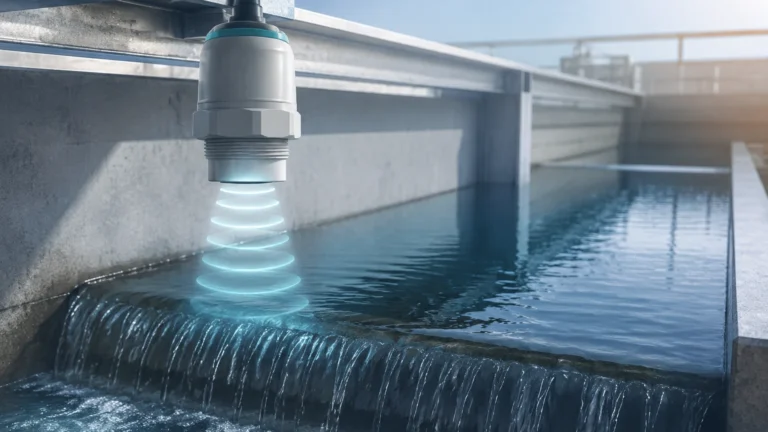
In applications involving radar level meters or ultrasonic level sensors, the cm442r can serve as the secondary display and control unit. While the sensors themselves often have onboard processing, the cm442r provides:
* Remote Visualization: Placing the display at eye level on a control cabinet door or within a rack.
* Relay Logic: Utilizing the transmitter’s built-in relays to trigger pumps or alarms based on level thresholds.
* Data Logging: Storing historical level data for compliance and process optimization.
Hydrostatic and Pressure Integration
For hydrostatic level transmitters, the cm442r can process the 4-20 mA signal and apply linearization tables to convert pressure readings into accurate volume or mass measurements. This is particularly useful for non-linear tanks, such as horizontal cylindrical vessels or tanks with conical bottoms.
Technical Specifications and Selection Criteria
Choosing the correct configuration of the cm442r requires a detailed understanding of the I/O requirements and the communication protocol of the existing PLC (Programmable Logic Controller) or SCADA system.
| Feature | Specification Details |
| :— | :— |
| Mounting Type | DIN Rail (TS35) |
| Input Channels | 1 or 2 digital sensor inputs |
| Output Options | 4-20 mA, HART, PROFIBUS DP, Modbus TCP/RTU, EtherNet/IP |
| Supply Voltage | 100 to 230 V AC or 24 V DC |
| Enclosure Rating | IP20 (Internal cabinet use) |
| Operating Temperature | -20°C to +60°C (-4°F to 140°F) |
| Display | Backlit graphic display with menu-driven operation |
Selection Considerations
1. Protocol Compatibility: Ensure the cm442r version matches the site’s communication backbone. For modern plants, EtherNet/IP or Modbus TCP is often preferred for high-speed data transfer.
2. Power Supply: Verify if the control cabinet provides 24V DC or if the transmitter needs to pull directly from the AC mains.
3. Expansion Modules: The cm442r is modular. If additional relays or current outputs are needed, confirm that the housing has sufficient slots for hardware expansion.
Installation and Commissioning Guidelines
Proper installation of the cm442r is critical for long-term reliability. Because it is an IP20-rated device, it must be installed in a clean, dry environment, typically inside a NEMA 4X or IP66 rated control cabinet if the site is outdoors or in a wash-down area.
Wiring Best Practices
* Separation of Cables: Keep high-voltage power lines separate from low-voltage sensor cables to prevent electromagnetic interference (EMI).
* Shielding: Use shielded twisted-pair cables for digital communication lines. Ensure the shield is grounded at the transmitter end to drain induced noise.
* Terminal Torque: Ensure all screw terminals are tightened to the manufacturer's specified torque (typically 0.5 to 0.6 Nm) to prevent loose connections caused by vibration.
Commissioning Steps
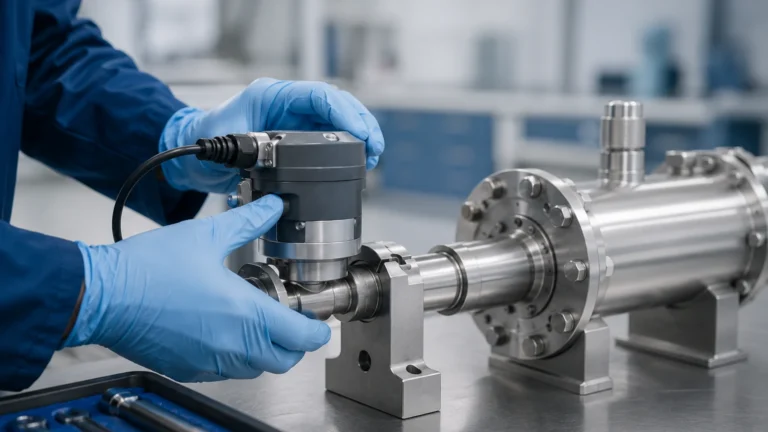
1. Mounting: Snap the device onto the DIN rail and ensure the locking tabs are engaged.
2. Sensor Connection: Connect the digital sensors. The cm442r should display the sensor type and serial number immediately upon power-up.
3. Basic Setup: Configure the units of measure (e.g., meters, millimeters, or liters) and set the zero/span points for the measurement range.
4. Output Mapping: Assign the measured values to the 4-20 mA outputs or the digital bus registers.
5. Relay Testing: Manually trigger the relays to ensure that pumps, valves, or sirens respond correctly to the control logic.

Operational Risks and Limitations
While the cm442r is a robust instrument, certain environmental and operational factors can limit its performance. Engineers must account for these risks during the design phase.
* Environmental Heat: Since the cm442r is often packed tightly with other electronics on a DIN rail, heat dissipation can be an issue. Ensure adequate spacing (at least 10mm or 0.4 inches) between devices or install cabinet cooling fans if the internal temperature exceeds 50°C.
* Firmware Compatibility: When replacing older sensors, ensure the cm442r firmware is updated to support the latest sensor versions. Incompatibility can lead to "Sensor Communication Error" codes.
* Cybersecurity: For versions using EtherNet/IP or Modbus TCP, the transmitter becomes a node on the industrial network. It is essential to implement network segmentation and firewalls to prevent unauthorized access to process parameters.
Maintenance and Troubleshooting
The cm442r features advanced self-diagnostics that follow the NAMUR NE107 standard, categorizing errors into "Failure," "Check Function," "Out of Specification," and "Maintenance Required."
Common Troubleshooting Scenarios
* Display is Blank: Check the power supply voltage at the terminals. If using DC power, verify the polarity.
* Intermittent Signal: This is often caused by a damaged sensor cable or moisture ingress in the sensor connector. Inspect the Memosens coupling for corrosion or debris.
* Inaccurate Readings: Verify that the sensor is not fouled. If the sensor is clean, perform a field calibration through the cm442r menu interface.
Frequently Asked Questions (FAQs)
Q: Can the cm442r be used with analog 4-20 mA sensors?
A: The standard cm442r is designed for digital sensors. However, specific input modules are available that allow the integration of analog signals, effectively turning the device into a universal data concentrator.
Q: What is the maximum cable distance between the sensor and the cm442r?
A: For digital Memosens sensors, the maximum cable length is typically 100 meters (330 feet). For longer distances, signal repeaters or a transition to a wireless bridge may be required.
Q: Does the cm442r support data logging?
A: Yes, the device includes an internal data logger that can record values, calibration events, and error logs. This data can often be exported via an SD card or accessed through the digital communication bus.
Q: Is the cm442r suitable for hazardous areas?
A: The transmitter itself is typically installed in the non-hazardous "safe area." However, it can interface with sensors located in hazardous zones (Ex-rated) if appropriate intrinsic safety barriers or isolated inputs are utilized according to local electrical codes.
For further technical details on integrating these controllers with specific level measurement hardware, or to request a customized OEM solution, please refer to the Main Page for our complete product catalog and engineering support resources.