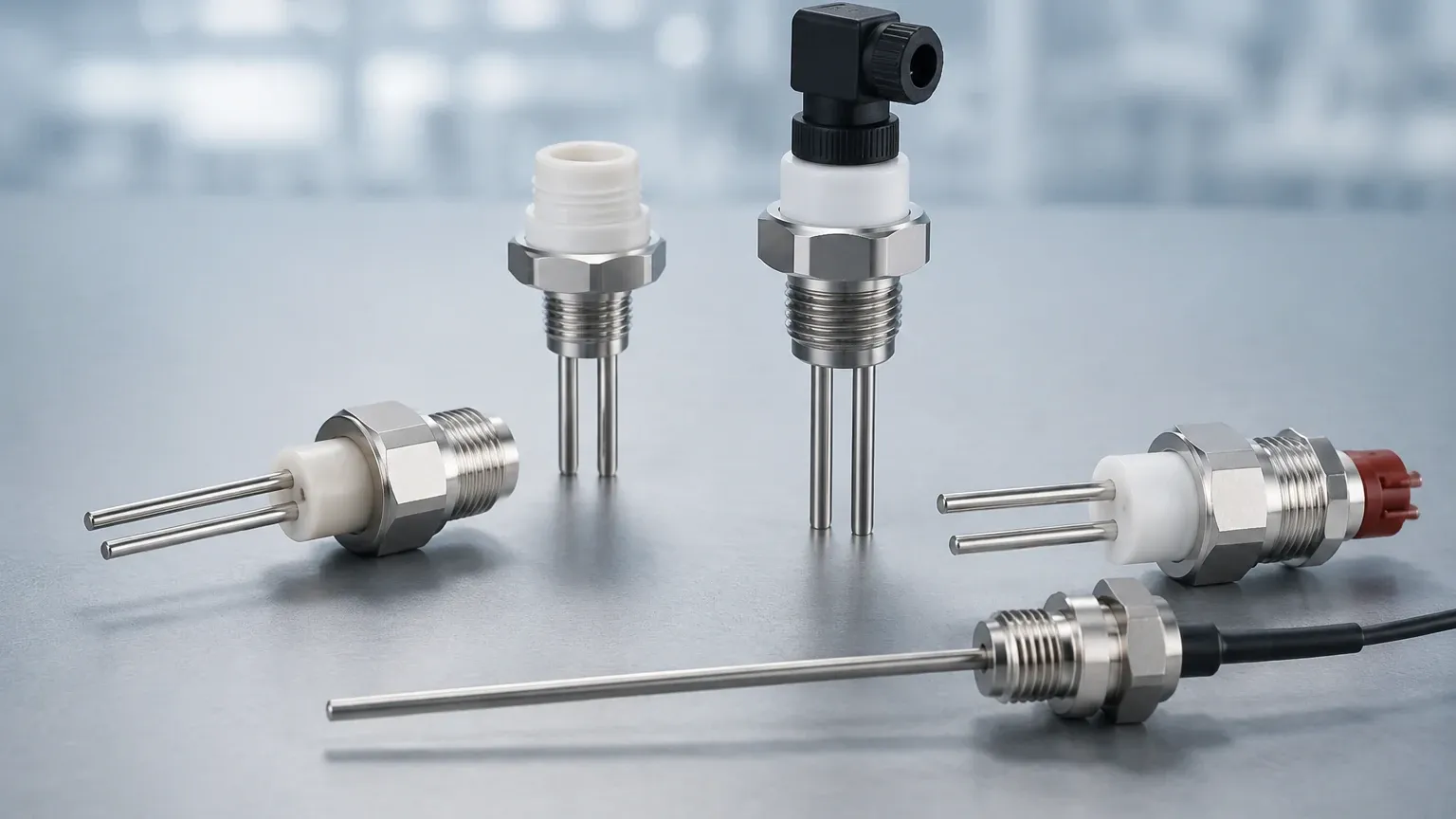
Conductive Level Switch
Conductive Level Switch
In the field of industrial process control, the conductive level switch remains one of the most reliable and cost-effective methods for point-level detection in conductive liquids. Unlike continuous measurement technologies such as radar or ultrasonic sensors, the conductive level switch is designed specifically to detect the presence or absence of a liquid at a predetermined height. This technology is widely utilized in water treatment, chemical processing, and the food and beverage industry due to its simplicity, lack of moving parts, and ease of integration into automated systems.
Understanding the Measurement Principle
The operation of a conductive level switch is based on the electrical conductivity of the process medium. Conductivity is the measure of a material's ability to allow the flow of an electric current. In this application, the liquid itself acts as a conductor to close an electrical circuit.
The Electrical Circuit
A basic conductive level system consists of a power supply, a controller (relay unit), and at least two electrodes. One electrode acts as the "reference" or ground, while the other acts as the "sensing" probe. When the liquid level rises and touches both electrodes, a low-voltage electrical circuit is completed. The controller detects the resulting current flow and switches an internal relay to signal a high level, trigger an alarm, or start/stop a pump.
AC vs. DC Current
Professional industrial conductive level switches almost exclusively use a low-voltage Alternating Current (AC) for the sensing circuit. Using Direct Current (DC) would lead to electrolysis, causing the electrodes to corrode rapidly and potentially leading to the buildup of gasses or chemical changes in the liquid. AC prevents these issues by constantly reversing the polarity of the electrodes, ensuring long-term stability and probe integrity.
Sensitivity Requirements
For the switch to function, the liquid must have a minimum level of conductivity, typically measured in microsiemens per centimeter (µS/cm). Most industrial controllers allow for sensitivity adjustment, enabling the system to distinguish between the actual liquid level and residual moisture or foam on the probes. Standard thresholds usually start at 5 µS/cm, though specialized high-sensitivity units can detect liquids with even lower conductivity.
Key Components and Design Variations
A conductive level switch system is typically comprised of three main elements: the electrode probe, the mounting head, and the control relay.
1. Electrodes (Probes): These are the conductive rods that extend into the vessel. They are often made of stainless steel (SS304 or SS316L) for general applications, while materials like Titanium, Hastelloy, or Monel are used for highly corrosive environments. The length of the rods determines the switching points.
2. Insulation: To prevent short-circuiting, the electrodes are partially covered with an insulating material, such as Polypropylene (PP), PTFE (Teflon), or Kynar. Only the tips or specific exposed sections are active in the sensing process.
3. The Mounting Head: This component secures the probes to the tank or vessel. It can be threaded (e.g., G1", NPT) or flanged. In non-metallic tanks, the head must provide a connection for a dedicated reference electrode.
4. The Controller/Relay: This is the "brain" of the system. It provides the excitation voltage to the probes and monitors the current. Modern controllers often feature time delays to prevent "chatter" caused by surface turbulence.
Practical Selection Criteria
Choosing the correct conductive level switch requires an analysis of the fluid properties and the vessel environment. The following table provides a general guideline for selection based on common industrial parameters.
| Parameter | Consideration | Recommendation |
| :— | :— | :— |
| Fluid Conductivity | Must be > 5 µS/cm | Use for water, acids, alkalis; avoid for oils/distilled water. |
| Number of Points | High, Low, and Ground | Multi-rod probes (up to 5 rods) for complex control logic. |
| Temperature | Process heat limits | Standard probes up to 100°C; specialized up to 150°C. |
| Pressure | Vessel internal pressure | Standard up to 10 bar (1 MPa); high-pressure up to 40 bar. |
| Vessel Material | Conductive vs. Insulating | Metal tanks can act as ground; plastic tanks need a ground rod. |
| Coating Tendency | Viscous or sticky fluids | Use PTFE-coated rods to minimize false triggers. |
For detailed technical specifications and to explore specific model variations, engineers should consult the Main Page of the manufacturer’s technical catalog.
Installation Considerations and Best Practices
Proper installation is critical to the longevity and accuracy of a conductive level switch. Failure to follow engineering best practices often leads to false positives or premature probe failure.
Mounting Position
Probes are typically mounted vertically from the top of the tank. This allows the rods to be cut to the exact length required for specific switching levels. Horizontal mounting is possible with short probes but is generally discouraged in applications where sediment or scale might bridge the gap between the probe and the tank wall.
Grounding and Reference Electrodes
In a metallic tank, the tank wall itself can serve as the reference (ground) electrode. The controller’s ground terminal is connected directly to the tank. However, in plastic, fiberglass, or lined tanks, a dedicated ground rod must be installed. This rod must be longer than the longest sensing rod to ensure a constant return path for the electrical circuit.
Electrode Spacing and Turbulence
In applications with high turbulence or agitation, probes may swing and touch each other, causing a short circuit. In such cases, spacers (insulating discs) should be installed every 500 mm to 1000 mm along the length of the rods. Alternatively, the probes can be installed inside a stilling well—a perforated pipe that dampens surface movement while allowing the liquid to reach the probes.
Cutting and Adjusting Rods
One of the primary advantages of the conductive level switch is its flexibility. Most stainless steel rods can be cut to length on-site. When cutting, ensure the insulation is stripped back by approximately 10 mm to 20 mm at the tip to provide a clean contact surface. The cut ends should be deburred to prevent the accumulation of debris.
Limitations and Forbidden Applications
While highly effective, the conductive level switch is not a universal solution. Engineers must be aware of its physical and chemical limitations:
* Non-Conductive Fluids: This technology will not work with hydrocarbons, oils, fats, or pure distilled/deionized water. These fluids have high electrical resistance and cannot complete the circuit.
* Coating and Fouling: If the liquid leaves an insulating coating (such as wax or certain polymers) on the electrodes, the switch will fail to detect the liquid. Conversely, if the liquid leaves a conductive bridge between the probe and the ground, it may cause a permanent "high level" signal.
* Explosive Environments: While intrinsically safe barriers can be used, conductive probes involve an electrical circuit within the tank. In highly volatile environments, non-contact methods like ultrasonic or radar may be preferred unless the system is specifically certified for hazardous zones.
* Electrolysis Risk: As mentioned, always ensure the controller uses AC. Using a DC-based DIY circuit in an industrial setting will lead to probe degradation and potential safety hazards.
Application Case Studies
1. Pump Control in Wastewater Sumps
A common use for a multi-rod conductive level switch is "pump-down" control. A three-rod system is used: one for ground, one for the "start pump" level (high), and one for the "stop pump" level (low). This configuration prevents the pump from cycling too frequently and ensures the sump does not overflow.
2. Boiler Water Level Detection
Conductive probes are standard in steam boilers for low-water cut-off (LWCO) safety functions. Because boiler water contains dissolved solids, it is sufficiently conductive. The probes can withstand the high temperatures and pressures of the boiler environment, providing a fail-safe mechanism to prevent dry firing.
3. Food and Beverage Batching
In the production of fruit juices or milk-based products, conductive switches provide high-level alarms for mixing tanks. The stainless steel probes are easy to clean and can be supplied with hygienic tri-clamp fittings to meet food safety standards.
Frequently Asked Questions (FAQ)
Q: What is the minimum conductivity required for a conductive level switch?
A: Most standard industrial controllers require a minimum conductivity of 5 to 10 µS/cm. For reference, typical tap water is around 50 to 800 µS/cm, making it easily detectable.
Q: Can I use a conductive level switch for diesel or gasoline?
A: No. Petroleum-based fuels are non-conductive. For these applications, a float switch, capacitive sensor, or hydrostatic pressure transmitter is required.
Q: How do I handle foam on the surface of the liquid?
A: Foam can sometimes trigger a conductive switch if the foam itself is conductive. To mitigate this, reduce the sensitivity setting on the controller or use a probe with a longer insulated section so that only the submerged tip triggers the relay.
Q: Can the probes be cleaned?
A: Yes. Regular maintenance involves wiping the probes to remove scale or biological growth. If the probes are severely pitted or corroded, they should be replaced to ensure reliable electrical contact.
Conclusion
The conductive level switch remains a foundational tool in industrial level measurement. Its lack of moving parts translates to high reliability and low maintenance costs, provided the medium is conductive and the probes are correctly specified for the chemical environment. By understanding the relationship between fluid conductivity and electrode material, and by following strict installation guidelines regarding grounding and spacing, process engineers can implement a robust point-level control solution.
For those seeking to integrate these sensors into a larger automation framework or requiring customized OEM/ODM probe configurations, visiting the Main Page provides access to comprehensive technical support and product selection tools tailored to specific industrial requirements.