Conflict Minerals Policy Statement
Conflict Minerals Policy Statement
In the modern industrial landscape, the ethical sourcing of raw materials is as critical as the technical precision of the instruments produced. For manufacturers of high-performance level measurement solutions, such as radar level meters and ultrasonic sensors, the supply chain is complex and global. A formal conflict minerals policy statement serves as a foundational document, outlining a company's commitment to ensuring that the minerals used in its products—specifically tantalum, tin, tungsten, and gold (3TG)—do not finance or benefit armed groups in conflict-affected and high-risk areas, such as the Democratic Republic of the Congo (DRC) and its adjoining countries.
For B2B procurement officers and process engineers, understanding a manufacturer's stance on conflict minerals is essential for corporate social responsibility (CSR) compliance and risk mitigation. This article explores the intersection of ethical sourcing and industrial instrumentation, providing a guide to evaluating a conflict minerals policy statement while detailing the technical principles of the level measurement technologies affected by these regulations.
Understanding Conflict Minerals in Industrial Instrumentation
Industrial level meters are sophisticated electronic devices. To achieve the accuracy required in chemical processing, water treatment, and oil and gas applications, these instruments rely on high-grade components. The "3TG" minerals are ubiquitous in electronics:
* Tantalum: Used primarily in high-performance capacitors found in the circuit boards of radar and ultrasonic transmitters.
* Tin: The primary component of solder used to join electronic components to printed circuit boards (PCBs).
* Tungsten: Often used in electrical contacts and specialized alloys for high-temperature applications.
* Gold: Essential for plating connectors and switch contacts to prevent corrosion and ensure reliable signal transmission over long service lives.
Because these minerals are vital to the functionality of automated level control systems, a robust conflict minerals policy statement is necessary to verify that these materials are sourced from smelters and refiners that have been audited by third-party programs, such as the Responsible Minerals Assurance Process (RMAP).
Core Principles of Level Measurement Technology
Before selecting an instrument based on its compliance profile, it is necessary to understand the measurement principles that dictate its internal composition and application suitability. The three most common technologies in industrial automation are radar, ultrasonic, and hydrostatic measurement.
Radar Level Measurement (FMCW and Pulse)
Radar level meters operate on the Time of Flight (ToF) principle. They emit high-frequency electromagnetic waves (typically in the 26 GHz or 80 GHz range). These waves travel to the surface of the medium, reflect, and return to the sensor.
* FMCW (Frequency Modulated Continuous Wave): The transmitter emits a continuous signal with a constantly changing frequency. The difference in frequency between the emitted and received signal is proportional to the distance.
* Pulse Radar: The transmitter sends short microwave pulses and measures the time interval until the echo is received.
Radar instruments require complex microwave oscillators and signal processors, which utilize tantalum capacitors and gold-plated high-frequency connectors.
Ultrasonic Level Measurement
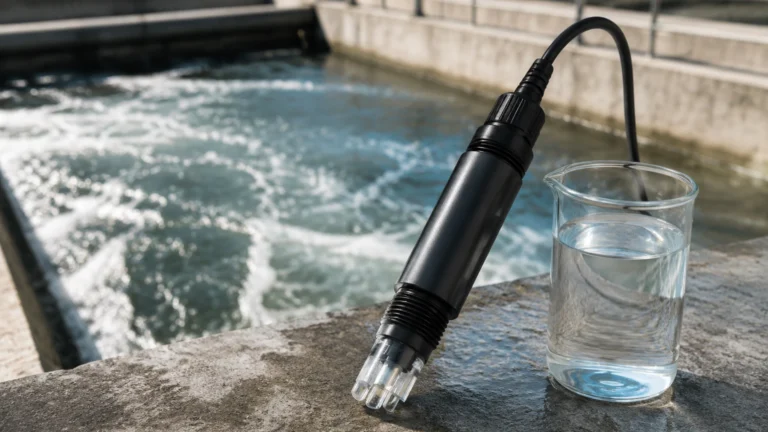
Ultrasonic sensors also use the ToF principle but utilize sound waves instead of electromagnetic waves. A piezoelectric crystal inside the transducer converts electrical energy into mechanical pulses. These pulses bounce off the liquid or solid surface and return to the transducer. The distance is calculated based on the speed of sound, which must be compensated for temperature variations.
Hydrostatic Level Measurement
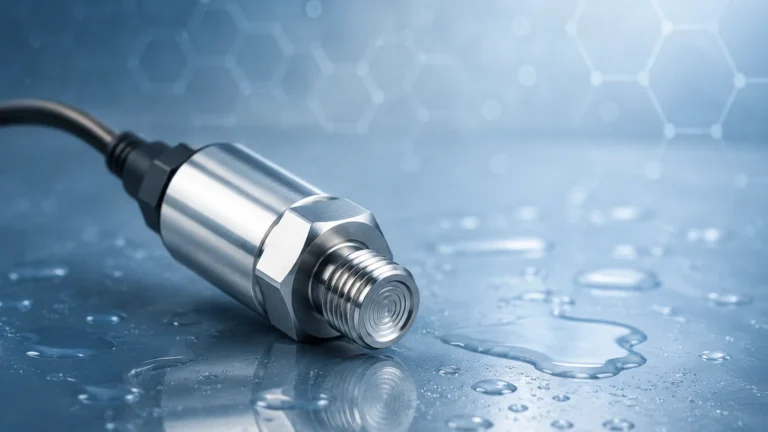
Hydrostatic transmitters measure the pressure exerted by a liquid column at a specific point. The principle is based on the formula $P = \rho gh$, where $P$ is pressure, $\rho$ is the density of the liquid, $g$ is gravity, and $h$ is the height of the liquid. These sensors often use stainless steel or ceramic diaphragms. While they contain fewer microelectronics than radar units, their internal transducers and signal conditioners still require compliant 3TG minerals for their circuitry.
Developing a Robust Conflict Minerals Policy Statement
A comprehensive conflict minerals policy statement should not merely be a declaration of intent; it must outline actionable steps. When reviewing a supplier's policy, look for the following five pillars:
1. Commitment to OECD Guidelines: The policy should explicitly state adherence to the "OECD Due Diligence Guidance for Responsible Supply Chains of Minerals from Conflict-Affected and High-Risk Areas."
2. Supplier Requirements: Suppliers must be required to conduct their own due diligence and provide evidence of the origin of the 3TG minerals they provide.
3. Use of Standardized Reporting: The policy should mention the use of the Conflict Minerals Reporting Template (CMRT), developed by the Responsible Minerals Initiative (RMI), to facilitate the transfer of information through the supply chain.
4. Continuous Improvement: A commitment to periodically auditing the supply chain and working with suppliers to move away from non-compliant smelters.
5. Transparency: The statement should be publicly accessible, providing stakeholders with clear insight into the company's sourcing ethics.
Technical Comparison and Selection of Level Meters
When choosing a level measurement solution, engineers must balance technical requirements with compliance and reliability. The following table provides a practical selection guide for common industrial technologies.
| Technology | Principle | Typical 3TG Usage | Ideal Application | Max Range (Metric/Imperial) |
| :— | :— | :— | :— | :— |
| 80 GHz Radar | FMCW | High (Complex PCBs) | Narrow tanks, agitated liquids | 120m (393 ft) |
| Ultrasonic | Sound Waves | Moderate (Transducers) | Water/Wastewater, open channels | 15m (49 ft) |
| Hydrostatic | Pressure | Low (Signal conditioning) | Deep wells, vented tanks | 200m (656 ft) |
| Magnetic Gauge | Buoyancy | Very Low (Switches/Links) | High-pressure boilers | 6m (20 ft) |
| Level Switch | Vibration/Float | Low (Relays/Contacts) | Overfill protection | N/A |
For detailed specifications and to Review product options and application support, consulting the manufacturer's technical documentation is recommended.
Supply Chain Due Diligence and Compliance Standards
Compliance with a conflict minerals policy statement involves a process known as the Reasonable Country of Origin Inquiry (RCOI). Manufacturers must engage with their direct suppliers to trace the minerals back to the smelter level.
In the B2B sector, this is often a prerequisite for doing business with major international firms, particularly those listed on U.S. stock exchanges subject to Section 1502 of the Dodd-Frank Wall Street Reform and Consumer Protection Act. Similarly, the EU Conflict Minerals Regulation (Regulation (EU) 2017/821) imposes due diligence requirements on EU importers of tin, tantalum, tungsten, and gold.
By maintaining a strict policy, manufacturers ensure that their products—ranging from simple level switches to advanced radar transmitters—are not only technically superior but also ethically produced.

Installation Considerations for Industrial Level Sensors
Proper installation is vital to ensure that the high-quality, ethically sourced components within a level meter perform as intended. Regardless of the technology, several universal factors must be considered:
* Blocking Distance (Dead Zone): For radar and ultrasonic sensors, there is a minimum distance near the sensor face where measurements cannot be taken. For a typical ultrasonic sensor, this might be 0.25m to 0.5m (10 to 20 inches).
* Beam Angle: Radar and ultrasonic signals spread as they travel. Installers must ensure the beam does not hit internal tank obstructions like ladders or agitators. An 80 GHz radar typically offers a much narrower beam (approx. 3°) compared to a 26 GHz unit (approx. 8° or more).
* Mounting Position: Sensors should generally be mounted at least 200mm (8 inches) away from the tank wall to prevent interference from wall reflections.
* Environmental Protection: In chemical or oil and gas applications, ensure the housing material (often 316L stainless steel or plastic) is compatible with the process vapors.
Limitations and Challenges
While a conflict minerals policy statement is a powerful tool, it faces practical limitations:
* Supply Chain Depth: Some manufacturers are 10 or more tiers removed from the actual mines, making 100% traceability a significant logistical challenge.
* Smelter Cooperation: Not all smelters globally participate in third-party audit programs, which can limit the pool of compliant suppliers.
* Technological Necessity: Currently, there are no viable substitutes for 3TG minerals in high-frequency electronics that offer the same level of reliability and miniaturization.
FAQs: Conflict Minerals and Level Measurement
Q: What is a CMRT?
A: The Conflict Minerals Reporting Template (CMRT) is a free, standardized reporting template developed by the Responsible Minerals Initiative (RMI) that facilitates the transfer of information through the supply chain regarding mineral country of origin and the smelters and refiners being utilized.
Q: Does a conflict minerals policy apply to all level meters?
A: Yes, if the instrument contains any of the four 3TG minerals, the policy applies. Since almost all modern level meters contain electronic components or solder, they fall under the scope of due diligence.
Q: How often is the conflict minerals policy statement updated?
A: Most reputable manufacturers review and update their policy and supplier data annually to reflect changes in the supply chain and updated smelter lists from the RMI.
Q: Can I request a conflict minerals report for a specific part number?
A: Yes, B2B customers frequently request CMRTs for specific product lines to satisfy their own corporate compliance requirements.
Conclusion
Ethical sourcing is a critical component of modern industrial engineering. A clear and factual conflict minerals policy statement provides the transparency necessary for B2B partners to trust the integrity of their supply chain. By combining these ethical standards with a deep understanding of measurement principles—whether using radar, ultrasonic, or hydrostatic technology—companies can provide reliable, accurate, and cost-effective solutions for global industrial automation. For more information on compliant instrumentation and technical support, visit the Main Page.