Conveyor Weighing System
Conveyor Weighing System
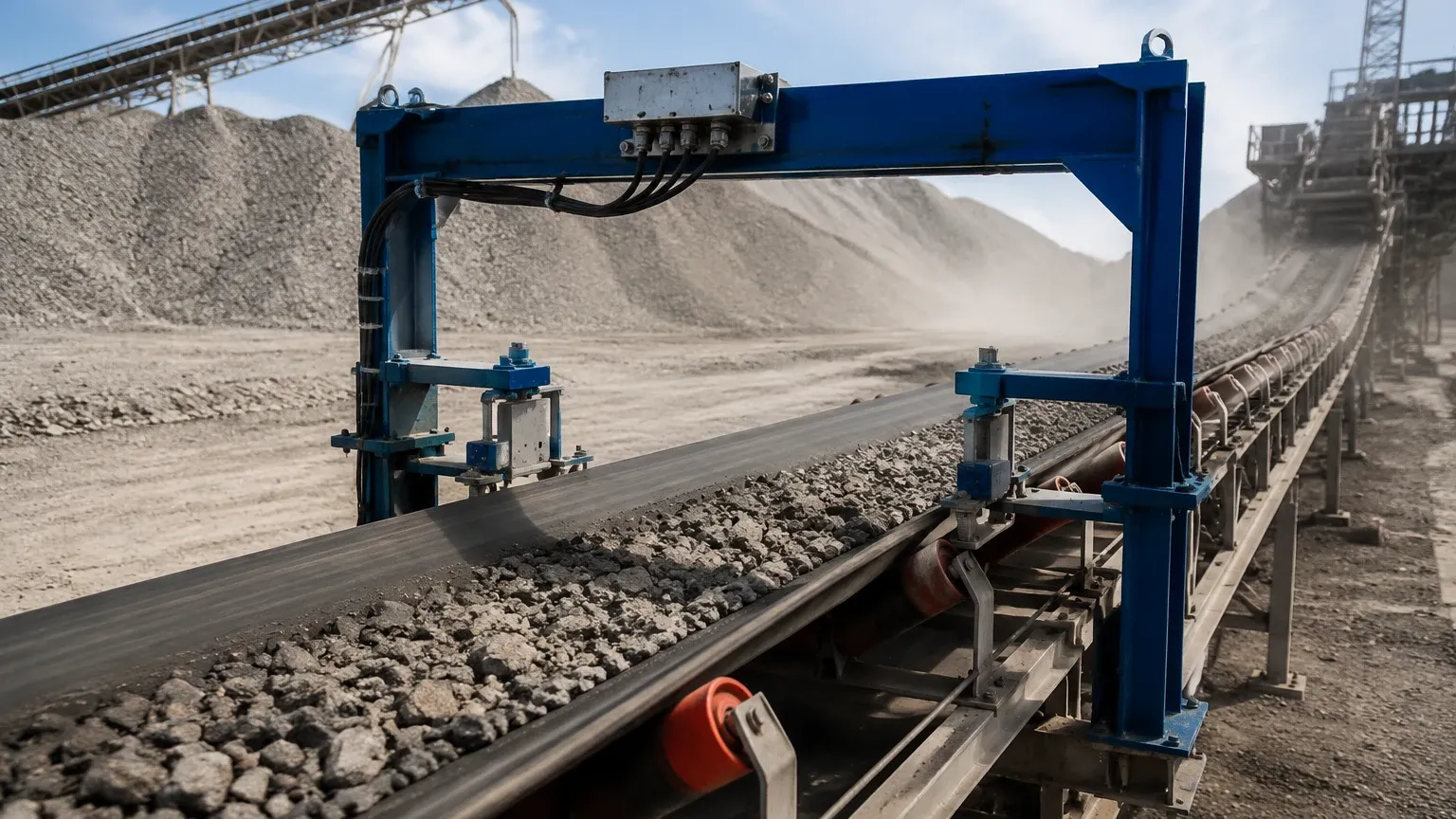
In the landscape of industrial bulk material handling, the ability to accurately measure the flow of materials in real-time is essential for process control, inventory management, and trade. A conveyor weighing system, commonly referred to as a belt scale, provides a continuous measurement of the mass flow rate and totalized mass of material as it moves along a conveyor belt. Unlike static weighing, which requires a process to stop, these systems integrate seamlessly into moving production lines, making them indispensable in mining, agriculture, cement production, and power generation.
While level measurement instruments—such as those found on the Main Page of specialized manufacturers—monitor the volume of material stored in silos and hoppers, conveyor weighing systems provide the dynamic data of material in transit. Together, these technologies form a complete picture of material balance within a facility.
Principles of Conveyor Weighing Technology
The fundamental principle behind a conveyor weighing system is the measurement of two distinct variables: the weight of the material on a specific section of the belt and the speed at which the belt is moving. By multiplying these two variables, the system calculates the flow rate.
The Mathematical Foundation
The instantaneous flow rate (Q) is calculated using the formula:
Q = q × v
Where:
* q is the linear load (weight of material per unit length of the belt, e.g., kg/m).
* v is the belt speed (e.g., m/s).
To determine the total mass (M) delivered over a period of time, the system integrates the flow rate over that interval:
M = ∫ Q dt
The Measurement Process
1. Weight Sensing: As material passes over the weigh bridge, it exerts a downward force on one or more load cells. These load cells convert the mechanical force into an electrical signal (typically millivolts).
2. Speed Sensing: A speed sensor, usually a digital encoder or a friction-driven wheel mounted on the return belt or a tail pulley, monitors the velocity of the conveyor.
3. Integration: The electronic integrator (the "brain" of the system) receives signals from both the load cells and the speed sensor. It filters out noise, applies calibration factors, and calculates both the current flow rate (tonnes per hour) and the totalized weight (total tonnes).
Essential Components of a Belt Scale System
A robust conveyor weighing system consists of four primary sub-assemblies, each critical to the overall accuracy of the measurement.
1. The Weigh Bridge
This is the mechanical structure installed within the conveyor frame. It replaces one or more standard idlers with "weigh idlers." The bridge is designed to support the belt and material while isolating the vertical force of the load to be measured by the load cells. High-quality bridges are designed to be rigid and resistant to torque to ensure that only the vertical component of the weight is captured.
2. Load Cells
Most modern systems use strain-gauge load cells. These are precision transducers that change their electrical resistance when subjected to pressure. In a conveyor environment, load cells must be hermetically sealed (often IP68 or IP69K rated) to withstand dust, moisture, and temperature fluctuations. Depending on the accuracy required, a system may use one, two, or four load cells.
3. Speed Sensor (Tachometer)
Accuracy is highly dependent on knowing the exact speed of the belt. Relying on the motor's RPM is often inaccurate due to belt slippage or stretching. A dedicated speed sensor provides a pulse train proportional to the belt travel. For high-precision applications, the sensor is ideally placed on a non-driven pulley or a dedicated trailing wheel to avoid errors caused by slip.
4. Digital Integrator
The integrator is the user interface and processing unit. It provides local displays of flow rate and totals, and it communicates with plant-wide PLC or SCADA systems via 4-20mA loops, Modbus, Profibus, or Ethernet/IP. Advanced integrators include features for automatic zero-tracking and electronic calibration.
Selection Criteria for Industrial Applications
Choosing the right conveyor weighing system requires an analysis of the conveyor's physical characteristics and the required measurement precision. The following table provides a general guideline for selection based on application needs.
| Feature | Low-Accuracy / Process Control | High-Accuracy / Custody Transfer |
| :— | :— | :— |
| Typical Accuracy | ±1.0% to ±2.0% | ±0.125% to ±0.25% |
| Number of Idlers | Single Idler | Multi-Idler (2 to 4 or more) |
| Load Cell Type | Single Point / S-Beam | High-Precision Compression/Tension |
| Belt Speed | Up to 2.0 m/s (approx. 400 fpm) | Up to 5.0+ m/s (approx. 1000+ fpm) |
| Calibration Method | Static Weights / Electronic | Material Test / Chain Calibration |
| Common Use Case | Feeding a crusher or mill | Loading ships, railcars, or trucks |
Material Considerations
* Bulk Density: Materials with low bulk density (e.g., wood chips) require more sensitive load cells compared to high-density materials (e.g., iron ore).
* Moisture Content: If the material's moisture content varies significantly, the weighing system will measure the total weight (material + water). In these cases, a separate moisture analyzer may be required to calculate dry weight.
Installation and Engineering Best Practices
Even the most expensive conveyor weighing system will fail to provide accurate data if it is installed incorrectly. The conveyor itself becomes part of the scale, and its mechanical condition is paramount.
1. Location on the Conveyor
The weigh bridge should be located in a section of the conveyor where belt tension is most stable and consistent.
* Avoid Feed Points: Do not install the scale too close to the loading point. The material needs at least 2 to 3 meters (6 to 10 feet) to settle and stop bouncing before it reaches the weigh zone.
* Avoid Curves: Scales should be installed on a straight, horizontal, or consistently inclined section. Vertical curves (concave or convex) within the weigh zone will cause significant errors due to varying belt tension.
2. Idler Alignment
Precision alignment is the single most important factor in belt scale installation. The weigh idler and at least two idlers before and after the scale (the "scale area") must be perfectly aligned in both the horizontal and vertical planes. Misalignment by as little as 0.5 mm (0.02 inches) can result in measurable errors.
3. Belt Tension
High belt tension can "lift" the belt off the weigh idlers, leading to under-registration. Conversely, a slack belt can cause sagging, leading to over-registration. Gravity take-ups (counterweights) are preferred over screw take-ups because they maintain a constant belt tension regardless of temperature or load.
Integrating Weighing with Level Measurement
In a complete bulk handling facility, conveyor weighing systems and level meters (such as ultrasonic or radar sensors) work in tandem. While the conveyor weighing system measures the rate of material *entering* or *leaving* a storage vessel, level instruments monitor the *inventory* within that vessel.
For example, in a cement plant, a radar level meter provides the volume of clinker in a silo. However, since the bulk density of clinker can change depending on particle size and aeration, the volume measurement alone might not provide the exact tonnage. By cross-referencing the level data with the totalized weight from the conveyor weighing system, engineers can calculate the actual bulk density and ensure the silo is neither overfilled nor unexpectedly empty.
Welk’s range of industrial level measurement instruments, which can be reviewed for technical specifications on their Main Page, provides the necessary static data to complement the dynamic data provided by belt scales. This integration is vital for automated inventory reconciliation and preventing process bottlenecks.
Limitations and Environmental Factors
Conveyor weighing systems operate in some of the harshest industrial environments, and several factors can degrade their performance:
* Wind and Weather: On outdoor conveyors, wind can exert downward or upward pressure on the belt, which the load cells interpret as material weight. Wind shields or covers are often required for high-accuracy systems. Rain and snow also add weight that must be accounted for.
* Vibration: Heavy machinery (crushers, screens) located near the scale can introduce mechanical noise into the load cell signal. Integrators use digital filtering to mitigate this, but mechanical isolation is always the best first step.
* Belt Stiffness: Thick, heavy, or cold belts are resistant to bending. This stiffness can prevent the belt from fully contacting the weigh idlers when the belt is empty or lightly loaded, making "zero calibration" difficult.
* Material Buildup: Dust and debris accumulating on the weigh bridge add "dead weight." Regular cleaning and the use of self-cleaning bridge designs are necessary to maintain the zero point.
Frequently Asked Questions (FAQs)
Q: How often should a conveyor weighing system be calibrated?
A: For process control (1-2% accuracy), a monthly zero calibration and a quarterly span calibration are usually sufficient. For high-accuracy or trade-certified systems, weekly zero checks and monthly physical material tests may be required.
Q: Can a belt scale be used on an inclined conveyor?
A: Yes, but the angle of the incline must be constant across the weigh zone. The integrator must be programmed with the exact angle of the conveyor to calculate the true vertical component of the weight (Weight = Measured Force / Cosine of the Angle).
Q: What is the difference between a "zero" and a "span" calibration?
A: A Zero Calibration is performed with the belt running empty to account for the weight of the belt and idlers. A Span Calibration uses a known weight (test weights, a test chain, or a known material sample) to ensure the system correctly calculates the mass at higher loads.
Q: Why is my scale reading inaccurately even after calibration?
A: The most common causes are mechanical: material buildup under the weigh bridge, a seized idler in the scale area, or changes in belt tension. Check that the belt is tracking centrally; if the belt moves off-center, the load distribution on the load cells changes, leading to errors.
Q: How do I choose between a single-idler and a multi-idler scale?
A: Single-idler scales are shorter and easier to install, suitable for lower accuracy needs or space-constrained areas. Multi-idler scales average the weight over a longer distance, which minimizes the negative effects of belt tension and vibration, allowing for much higher accuracy.
By understanding these principles and following strict installation guidelines, industrial operators can ensure their conveyor weighing system provides the reliable data necessary for efficient plant operation. For further information on integrating these systems with storage monitoring, consulting technical resources for level measurement remains a critical step in system design.