What Is a Coke Oven
What Is a Coke Oven
In the realm of heavy industry and metallurgy, the coke oven stands as a critical piece of infrastructure, bridging the gap between raw coal and the high-grade steel required for global construction and manufacturing. Understanding what is a coke oven requires a deep dive into the thermal processing of coal, the structural engineering of high-temperature refractory materials, and the precise instrumentation required to manage such a volatile environment.
A coke oven is essentially a large-scale industrial furnace designed to heat coal in the absence of oxygen, a process known as destructive distillation or carbonization. This process removes volatile components—such as water, coal gas, and coal tar—leaving behind a high-carbon material known as coke. Coke is indispensable in the blast furnace process, where it serves as both a fuel and a reducing agent to convert iron ore into molten iron.
Understanding the Fundamentals of Coke Production
To answer the question of what is a coke oven in a modern industrial context, one must look at the "recovery" coke oven. Unlike historical "beehive" ovens that allowed volatile gases to escape into the atmosphere, modern recovery ovens capture these gases for use as fuel or for the extraction of valuable chemical by-products.
The primary objective of a coke oven is to produce coke with specific physical and chemical properties, including high strength and low impurity levels (sulfur and ash). This is achieved by heating bituminous coal to temperatures ranging from 1,000°C to 1,100°C (approximately 1,832°F to 2,012°F). Because coal burns in the presence of air, the oven must be perfectly sealed to ensure that the coal is baked rather than combusted.
The Structural Components of a Coke Oven Battery
Coke ovens are rarely operated in isolation. Instead, they are arranged in a series known as a "coke oven battery." A single battery may contain anywhere from 20 to 100 individual ovens. Each oven is a narrow, tall chamber, typically 12 to 18 meters long, 4 to 8 meters high, and only 0.4 to 0.6 meters wide. This narrow design ensures that heat can penetrate the coal mass efficiently from the side walls.
Refractory Lining
The interior of a coke oven is lined with silica bricks or other refractory materials. These materials must withstand extreme thermal stress and chemical erosion for decades. The thermal expansion of these bricks is a critical engineering factor; once a coke oven battery is heated to its operating temperature, it is rarely allowed to cool down, as the resulting contraction would cause the refractory structure to crumble.
Heating Flues and Regenerators
Between the individual oven chambers are heating flues. These flues burn gas (often recycled coke oven gas) to provide the heat necessary for carbonization. Below the ovens are regenerators, which are heat exchangers that recover waste heat from the flue gases to preheat the incoming combustion air, significantly increasing the thermal efficiency of the plant.
Charging and Discharging Infrastructure
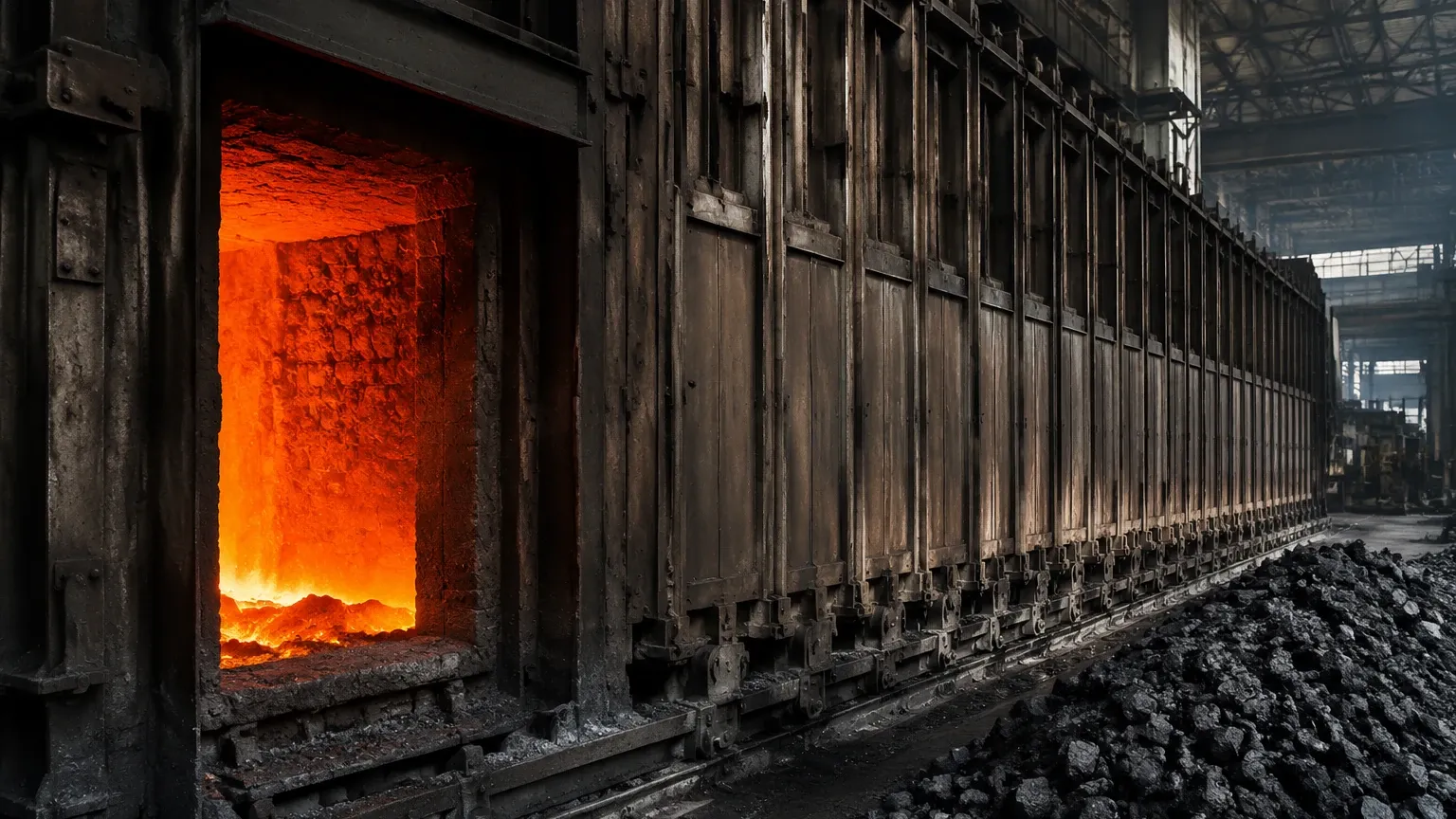
At the top of the oven are charging holes through which coal is dropped into the chamber. At either end are heavy, refractory-lined doors. Once the coking process is complete, these doors are removed, and a massive "pusher machine" drives a ram through the oven to eject the red-hot coke into a quenching car.
The Coking Process: Step-by-Step
The operation of a coke oven follows a rigorous cycle that typically lasts between 15 and 20 hours, depending on the oven width and the desired coke quality.
1. Charging: Coal is prepared by crushing and blending different grades to achieve the desired consistency. A larry car (a specialized charging vehicle) moves along the top of the battery and drops the coal blend into the empty, hot oven.
2. Leveling: Once the coal is in the oven, a leveling bar on the pusher machine levels the coal pile to ensure uniform heating and to leave space at the top for gas collection.
3. Carbonization: The oven is sealed, and heating begins. As the coal temperature rises, it passes through a plastic stage (around 350°C to 500°C), where it softens and fuses. As volatile matter is driven off, the mass re-solidifies into a porous, carbon-rich structure.
4. Pushing: When the volatile matter has been fully evolved, the doors are opened. The pusher ram pushes the incandescent coke out of the oven.
5. Quenching: The hot coke (over 1,000°C) must be cooled immediately to prevent it from burning in the air. This is done in a quenching tower using either water (wet quenching) or inert gas (dry quenching).
Critical Role of Level Measurement in Coking Operations
In the high-stakes environment of a coke plant, precise level measurement is vital for safety, environmental compliance, and process efficiency. Industrial level measurement instruments, such as those found on the Main Page of specialized manufacturers, are deployed across several stages of the coking process.
Coal Bunker Monitoring
Before coal enters the oven, it is stored in massive bunkers. Monitoring the level of coal in these bunkers is essential to ensure a continuous supply to the larry cars. High-level alarms prevent overfilling, which could lead to structural damage or equipment failure.
By-Product Tank Management
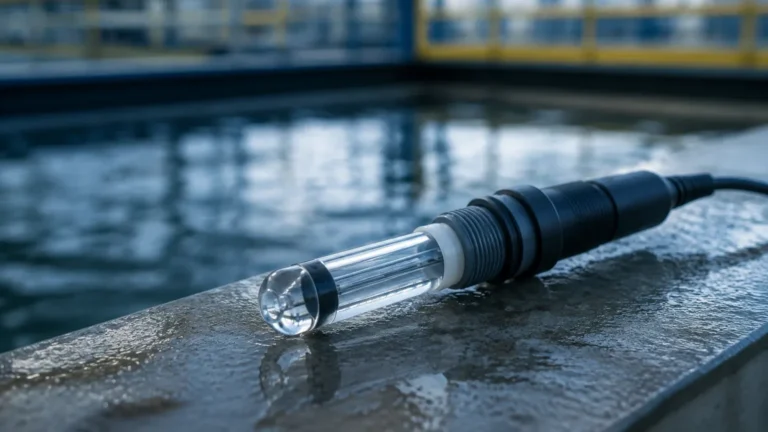
The gases evolved during carbonization are cooled and processed to extract tar, ammonia, and light oils (BTX). These liquids are stored in tanks where level sensors must handle corrosive chemicals and varying densities. For instance, hydrostatic level transmitters or magnetic level gauges are often used to monitor the interface between water and coal tar.
Quenching Water Systems
Wet quenching requires vast amounts of water. Level sensors in the quenching sumps and storage tanks ensure that the system always has sufficient volume to cool the hot coke. Failure to quench the coke properly can result in fires in the storage wharf or conveyor systems.
Level Measurement Technologies and Selection Criteria
Selecting the right instrumentation for a coke plant requires an understanding of the measurement principles and the limitations of each technology in harsh environments.
| Technology | Principle of Operation | Suitability for Coke Plants | Key Advantage |
| :— | :— | :— | :— |
| Radar (FMCW) | High-frequency electromagnetic waves reflect off the material surface. | Excellent for coal bunkers and tar tanks. | Non-contact; unaffected by dust or vapor. |
| Ultrasonic | Sound waves reflect off the surface; time-of-flight is measured. | Good for water treatment and sumps. | Cost-effective for non-volatile liquids. |
| Hydrostatic | Measures pressure exerted by the liquid column at the bottom. | Ideal for pressurized by-product tanks. | Reliable for liquids with consistent density. |
| Magnetic Gauge | A float with magnets moves a visual indicator outside a chamber. | Used for hazardous chemical storage. | Safe visual local indication with no power needed. |
| Level Switches | Mechanical or electronic triggers at specific points. | Essential for high/low-level safety alarms. | High reliability for spill prevention. |
Measurement Principles and Recommendations
For solid coal measurement in bunkers, 80GHz Radar Level Meters are the industry standard. The high frequency allows the signal to penetrate heavy dust and focus on the material surface even when the angle of repose (the slope of the coal pile) is steep.
In by-product processing, where liquids like ammonia liquor or tar are present, Hydrostatic Level Transmitters provide a rugged solution. However, if the liquid is highly corrosive or prone to coating the sensor, a non-contact radar or a magnetic level gauge is preferred to reduce maintenance requirements.
Installation and Maintenance in Harsh Environments
The environment surrounding a coke oven is one of the most challenging for electronic instrumentation. High temperatures, corrosive gases, and abrasive dust can quickly degrade sensors if not properly installed.
Heat Shielding and Cooling
Instruments mounted near the top of the oven or near the discharge gates must be protected from radiant heat. Cooling jackets (water or air-cooled) are often necessary to keep the internal electronics of a radar or ultrasonic sensor within their operating temperature range (typically below 80°C).
Dust and Vapor Management
In coal bunkers, dust can accumulate on the face of a sensor, potentially blocking the signal. Using sensors with a purging connection—where compressed air is used to blow dust off the lens—is a critical installation consideration. For tanks containing volatile gases, explosion-proof (Ex-rated) housings are mandatory.
Calibration and Redundancy
Due to the critical nature of coke production, many facilities employ redundant level measurement. For example, a coal bunker might use a continuous radar sensor for process control and a separate vibrating fork or rotary paddle switch for a redundant high-level alarm.
Frequently Asked Questions (FAQs)
Q: Why is coal heated without air in a coke oven?
A: If air were present, the coal would simply burn to ash. Heating it without air (anaerobic conditions) allows the volatile gases to escape while leaving the carbon structure intact, creating coke.
Q: How long does a coke oven battery last?
A: With proper maintenance and continuous heating, a well-built silica-brick coke oven battery can operate for 25 to 40 years. Cooling the battery down is usually avoided as it causes irreversible damage to the refractory bricks.
Q: What is the difference between green coke and metallurgical coke?
A: "Green coke" usually refers to petroleum coke that has not yet been calcined. Metallurgical coke, produced in the coke ovens described here, is specifically engineered for use in steel-making blast furnaces.
Q: Can any coal be used in a coke oven?
A: No. Only specific "coking coals" (bituminous coals with certain plastic properties) can be used. Engineers often blend different types of coal to achieve the specific strength and chemistry required by the blast furnace.
Q: How does level measurement improve safety in coke plants?
A: It prevents the overfilling of coal bunkers (which can cause structural collapses) and ensures that hazardous by-products like coal tar and ammonia are contained within safe tank levels, preventing environmental spills and fires.
Conclusion
Defining what is a coke oven involves more than just describing a furnace; it involves understanding a complex chemical and thermal process that is vital to the global steel industry. From the structural integrity of the refractory bricks to the precision of the level measurement instruments used to monitor the flow of materials, every aspect of a coke oven battery must be optimized for durability and efficiency. For engineers and plant managers, selecting the right measurement solutions—whether they be radar, ultrasonic, or hydrostatic—is a foundational step in ensuring the long-term success of the coking operation. For more information on selecting the appropriate instrumentation for these demanding applications, you may Review product options and application support to find the most reliable technologies for industrial level monitoring.