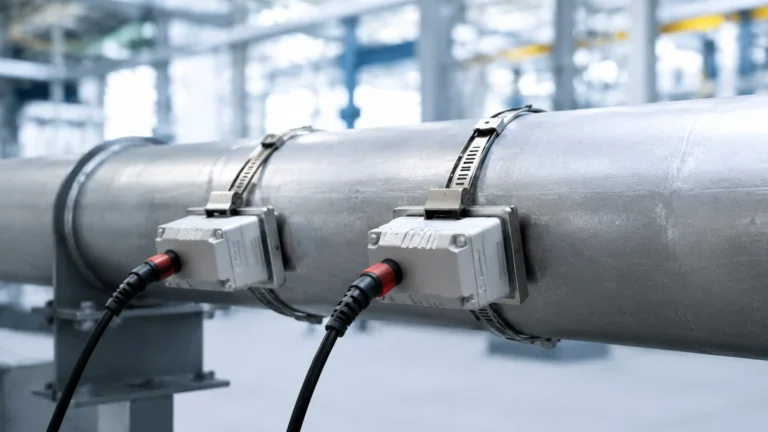
Coriolis Flow Meter Emerson
Coriolis Flow Meter Emerson
In the landscape of industrial process control, the Coriolis flow meter represents the pinnacle of precision for measuring mass flow, density, and temperature. When engineers search for a "Coriolis flow meter Emerson," they are typically referring to the Micro Motion brand, which pioneered the commercial application of the Coriolis principle. Understanding the technical nuances, selection criteria, and installation requirements of these instruments is essential for achieving the high-accuracy benchmarks required in chemical processing, oil and gas, and pharmaceutical manufacturing.
This guide provides a comprehensive technical overview of Coriolis technology, its relationship to industry-standard Emerson solutions, and how these flow measurements integrate into broader process monitoring systems, including level measurement strategies available through our Main Page.
Measurement Principle of Coriolis Flow Meters
Before evaluating specific models like those from Emerson, it is critical to understand the physics governing the device. Unlike volumetric flow meters (such as ultrasonic or turbine meters), a Coriolis meter measures mass flow directly by utilizing the Coriolis effect.
The Coriolis Effect in Instrumentation
The meter consists of one or more vibrating tubes, usually driven by an electromagnetic drive coil. When a fluid (liquid or gas) flows through these vibrating tubes, it induces a Coriolis force. This force acts in opposition to the vibration, causing the tubes to twist or undergo a phase shift.
1. Oscillation: The drive coil causes the tubes to oscillate at their resonant frequency.
2. Phase Shift: As fluid enters the meter, its momentum resists the upward motion of the tube at the inlet and the downward motion at the outlet. This creates a measurable time delay, or phase shift, between the inlet and outlet sides of the tube.
3. Mass Flow Calculation: This phase shift is directly proportional to the mass flow rate ($ ṁ $). The relationship is defined by the formula:
$$ ṁ = FC ⋅ ( Δt – Δt_0 ) $$
Where $ FC $ is the flow calibration factor, $ Δt $ is the measured time delay, and $ Δt_0 $ is the time delay at zero flow.
4. Density Measurement: The resonant frequency of the tube vibration changes based on the mass of the fluid inside the tube. By measuring this frequency, the meter calculates the fluid's density in real-time.
5. Temperature: Integral RTDs (Resistance Temperature Detectors) measure the tube temperature to compensate for changes in tube elasticity and provide process temperature data.
Why Professionals Specify Coriolis Flow Meter Emerson Solutions
Emerson’s Micro Motion division is often the baseline for Coriolis technology due to several proprietary advancements. When professionals evaluate a Coriolis flow meter Emerson provides, they are looking for specific performance indicators:
* Smart Meter Verification (SMV): This allows for the internal diagnostics of the meter's health without interrupting the process or removing the meter from the line. It verifies that the sensor tubes have not been affected by erosion, corrosion, or pitting.
* MVD (Multi-Variable Digital) Technology: Emerson’s digital signal processing reduces noise and provides faster response times, which is critical in batching applications where every millisecond of valve control matters.
* High Turndown Ratios: These meters often maintain accuracy (typically ±0.1% or better for liquids) across a wide range of flow rates, often exceeding a 100:1 turndown ratio.
Practical Selection Criteria
Choosing the correct Coriolis meter requires balancing the physical properties of the process fluid with the mechanical constraints of the piping system. The following table outlines the primary considerations for different tube geometries commonly found in the Emerson catalog and similar high-end industrial meters.
Table 1: Coriolis Tube Geometry Comparison
| Feature | Bent Tube (U-Shape/F-Series) | Straight Tube (T-Series) | Dual Tube Design | Single Tube Design |
| :— | :— | :— | :— | :— |
| Sensitivity | Extremely High | Moderate | High | Moderate |
| Pressure Drop | Higher due to bends | Minimal | Moderate | High |
| Cleanability | Challenging (pockets) | Excellent (CIP/SIP) | Moderate | Excellent |
| Air/Gas Tolerance | Good | Limited | Good | Poor |
| Footprint | Large vertical/horizontal space | Compact, inline | Standard | Standard |
| Typical Accuracy | ±0.05% to ±0.1% | ±0.1% to ±0.2% | ±0.1% | ±0.5% |
Fluid Compatibility and Density
Because Coriolis meters measure mass, they are largely immune to changes in viscosity, conductivity, and flow profile (Reynolds number). However, the density of the fluid must be within the meter's calibrated range. For extremely low-density gases, specialized high-sensitivity meters are required.
Installation Considerations and Best Practices
While Coriolis meters are robust, their accuracy is highly dependent on proper installation. Unlike many other flow technologies, they do not require straight pipe runs (upstream or downstream), but they are sensitive to mechanical stress and vibration.
1. Orientation
* Liquids: The tubes should point downward (in a "flag" or "U" position) to prevent gas bubbles from becoming trapped, which can dampen the vibration and cause errors.
* Gases: The tubes should point upward to prevent liquids or condensates from collecting in the sensor.
* Slurries: Vertical installation with upward flow is preferred to ensure solids do not settle in the meter.
2. Mechanical Support and Stress
Coriolis meters must be supported by the piping, but they should not be used to support the pipe itself. Thermal expansion of the piping can exert axial stress on the meter body, shifting the zero point. Using flexible couplings or ensuring the meter is not a "fixed point" in a long piping run is essential.
3. External Vibration
Since the meter operates on the principle of oscillation, external vibrations from pumps or motors at or near the meter's resonant frequency can interfere with the measurement. High-quality meters like the Coriolis flow meter Emerson series use dual-tube designs to cancel out common-mode vibration, but isolation is still recommended.
4. Zero Calibration
Every Coriolis meter must be "zeroed" after installation. This involves filling the meter with the process fluid at process temperature and pressure, ensuring there is absolutely zero flow (using block valves), and then performing the zeroing routine via the transmitter.

Limitations and Risks
Despite their versatility, Coriolis meters are not a universal solution for every application. Engineers must account for the following risks:
* Initial Capital Expenditure: The cost of a Coriolis meter is significantly higher than that of electromagnetic or ultrasonic meters. This must be justified by the need for mass flow accuracy or density data.
* Pressure Drop: Bent-tube designs can introduce significant pressure drops in high-velocity systems. This may require upsizing the meter or increasing pump capacity.
* Entrained Gas: While modern digital processing can handle some level of entrained gas (slug flow), excessive gas in a liquid stream will cause the tubes to stop vibrating (stalling), leading to a loss of measurement.
* Size Constraints: Coriolis meters become prohibitively heavy and expensive at sizes above 10 inches (250 mm). For very high flow rates in large pipes, other technologies like ultrasonic or differential pressure may be more practical.
Integration with Level Measurement Systems
In many industrial applications, flow measurement and level measurement are used in tandem to provide a complete picture of inventory and process efficiency. For instance, in a blending tank, a Coriolis meter provides the mass of the ingredients added, while a radar level sensor or hydrostatic transmitter (details available on our Main Page) provides the total volume or head pressure.
Mass Balance Calculations: By combining the density data from a Coriolis meter with the level data from a tank, engineers can calculate the exact mass of inventory regardless of temperature-induced volume changes. This is particularly useful in the oil and gas industry for custody transfer and leak detection.
Frequently Asked Questions (FAQs)
Q: Can a Coriolis meter measure the flow of non-conductive liquids?
A: Yes. Unlike electromagnetic flow meters, Coriolis meters do not require the fluid to be conductive. They work equally well on deionized water, hydrocarbons, and chemicals.
Q: How often does a Coriolis flow meter Emerson need recalibration?
A: Most industrial Coriolis meters do not have moving parts that wear out, so the calibration remains stable for years. However, if the process is corrosive or erosive, features like Smart Meter Verification should be used annually to check for sensor degradation.
Q: Does the flow profile (laminar vs. turbulent) affect accuracy?
A: No. The Coriolis force is independent of the flow profile, meaning these meters do not require the 10D/5D straight pipe runs typically required by orifice plates or turbine meters.
Q: What is the maximum temperature a Coriolis meter can handle?
A: Standard models typically handle up to 204°C (400°F), but specialized high-temperature versions can reach up to 427°C (800°F).
Conclusion and Next Steps
Specifying a Coriolis flow meter Emerson or a similar high-performance instrument requires a deep understanding of the process fluid's behavior and the physical environment of the plant. While the accuracy and multi-variable data (mass, density, temperature) are unmatched, the success of the installation depends on managing pressure drop and mechanical stress.
Before proceeding with procurement, project teams should confirm:
1. The maximum allowable pressure drop at peak flow.
2. The presence of entrained air or potential for cavitation.
3. The availability of rigid support structures to isolate the meter from vibration.
For more information on how flow data integrates with industrial level measurement solutions, visit our Main Page to explore our range of radar, ultrasonic, and hydrostatic sensors designed for complex process automation.