Coriolis Flow Meter
Coriolis Flow Meter
In the landscape of industrial process control, the Coriolis flow meter stands as one of the most versatile and accurate instruments available. Unlike traditional volumetric flow meters that measure the space a fluid occupies, a Coriolis flow meter measures the actual mass of the fluid passing through the system. This distinction is critical in industries such as chemical processing, oil and gas, and food production, where the density of a fluid can fluctuate due to changes in temperature or pressure.
For engineers and plant managers, understanding the mechanics, advantages, and limitations of this technology is essential for optimizing process efficiency. While level measurement instruments, such as those found on the Welk Main Page, provide critical data regarding tank inventory and vessel states, the Coriolis flow meter provides the dynamic data necessary for precise dosing, blending, and custody transfer.
Measurement Principles of the Coriolis Flow Meter
The operation of a Coriolis flow meter is based on the principles of physics, specifically the Coriolis effect. This effect describes the inertial force acting on an object in motion within a rotating frame of reference. In a flow meter, this "rotation" is simulated by vibrating the internal flow tubes.
The Vibrating Tube Mechanism
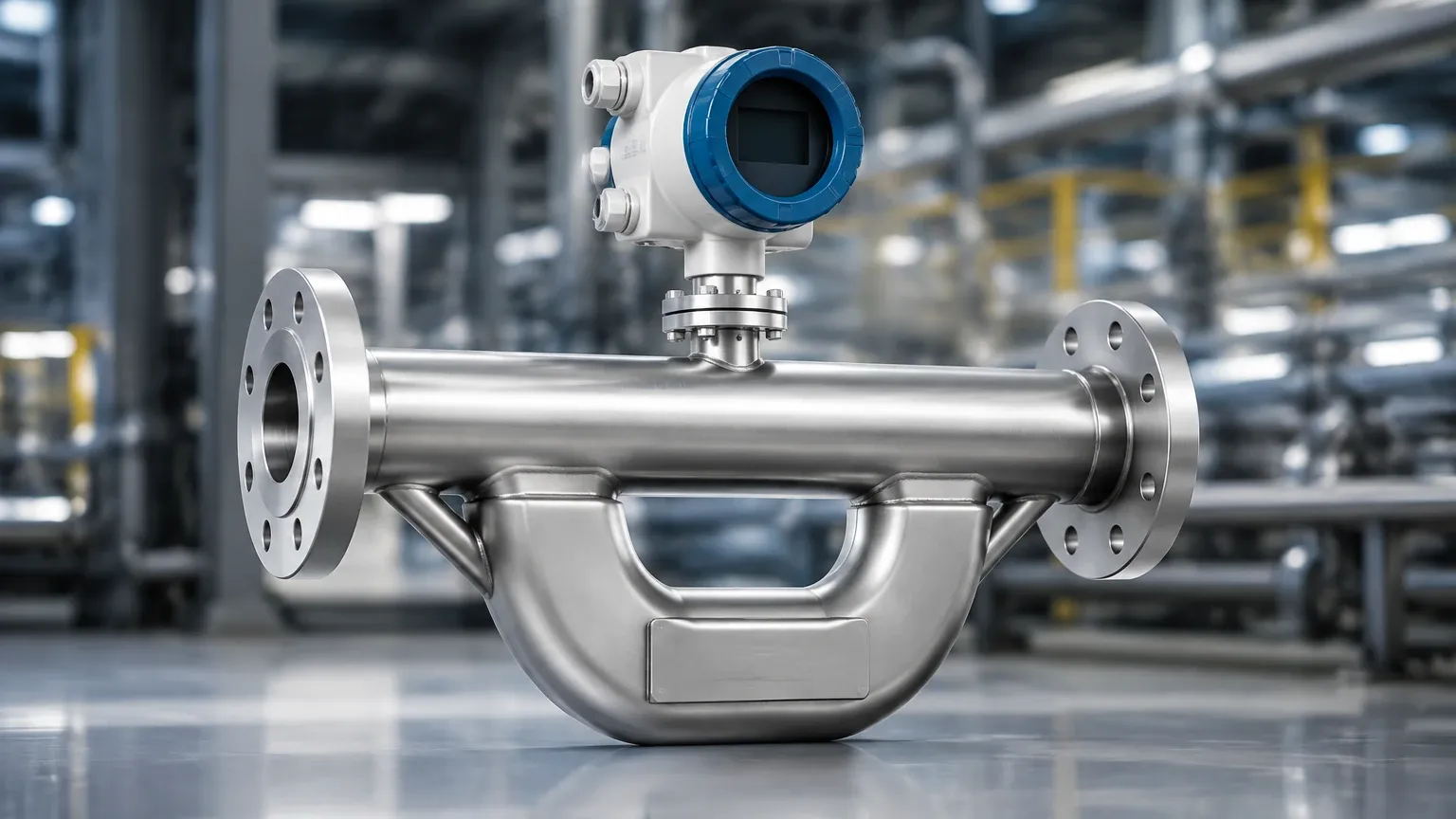
Inside the meter, one or two flow tubes are vibrated at their resonant frequency by an electromagnetic drive coil. When there is no flow, the tubes vibrate uniformly. However, when a fluid (liquid or gas) begins to flow through the tubes, the mass of the moving fluid creates an inertial force that resists the vibration.
This resistance causes the tubes to twist or distort. Because the fluid is moving toward the center of the vibration in the inlet side and away from it on the outlet side, the two sides of the tube vibrate out of phase with each other.
Phase Shift and Mass Flow
Sensors located at the inlet and outlet sections of the tube pick up these vibrations. The time delay, or "phase shift," between the two sine waves generated by these sensors is directly proportional to the mass flow rate. Because this measurement relies on inertia and mass rather than volume, it remains unaffected by changes in fluid viscosity, density, or flow profile.
Density and Temperature Measurement
In addition to mass flow, a Coriolis flow meter can simultaneously measure fluid density and temperature.
1. Density: The resonant frequency at which the tubes vibrate changes depending on the mass of the tubes plus the fluid inside them. A denser fluid increases the total mass, lowering the vibration frequency. By measuring this frequency, the meter calculates real-time density.
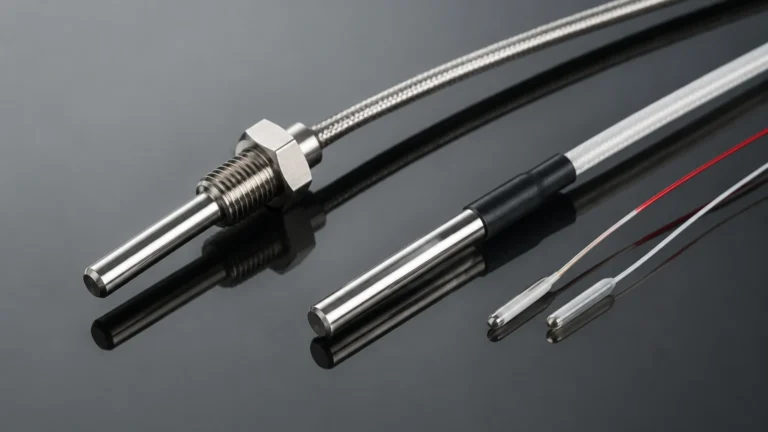
2. Temperature: Since the elasticity of the flow tubes changes with temperature, an internal Resistance Temperature Detector (RTD) is used to compensate the flow and density calculations, while also providing a secondary process output.
Key Evaluation Criteria for Selection
When selecting a Coriolis flow meter for a specific application, several technical factors must be weighed against the project requirements. Unlike simpler level measurement tools, the complexity of a Coriolis meter requires a detailed look at fluid properties and environmental conditions.
Accuracy and Repeatability
Coriolis meters are renowned for high accuracy, often reaching ±0.1% to ±0.05% for liquids and ±0.5% for gases. This makes them the gold standard for custody transfer—where fluids are bought and sold—and for high-precision chemical reactions.
Tube Geometry
The physical shape of the internal tubes impacts performance:
* U-Shaped Tubes: These are generally more sensitive and offer a wider turndown ratio (the ratio between maximum and minimum measurable flow). However, they can be more difficult to drain and may cause a higher pressure drop.
* Straight Tubes: These are easier to clean (CIP/SIP compatible) and have a lower pressure drop, making them ideal for shear-sensitive fluids or applications where clogging is a concern. They are, however, more susceptible to external vibration interference.
Material Compatibility
The wetted parts must be compatible with the process fluid. Common materials include 316L Stainless Steel for general use, Hastelloy® for corrosive chemicals, and Tantalum for extreme acids.
Selection Table: Coriolis vs. Other Technologies
| Feature | Coriolis Flow Meter | Ultrasonic (Transit Time) | Differential Pressure (DP) |
| :— | :— | :— | :— |
| Primary Measurement | Mass Flow | Velocity | Differential Pressure |
| Accuracy (Liquid) | ±0.1% | ±0.5% – 1.0% | ±1.0% – 2.0% |
| Density Output | Yes | No | No |
| Straight Run Req. | Minimal to None | High (10-20D) | High (10-20D) |
| Initial Cost | High | Moderate | Low to Moderate |
| Maintenance | Low (No moving parts) | Low | Moderate (Clogging/Leaks) |
Installation Considerations
While a Coriolis flow meter is less sensitive to flow profiles than other meters, improper installation can still lead to measurement errors or premature failure.
1. Vibration Isolation
Because the meter operates on the principle of internal vibration, external mechanical vibrations from pumps or motors can interfere with the sensors. Meters should be installed using robust supports and, if necessary, flexible couplings or vibration dampeners on the upstream and downstream piping.
2. Orientation
* Liquids: For liquid applications, the meter should ideally be installed with the tubes pointing downward (in a U-shape) to ensure the tubes remain full and to prevent gas bubbles from being trapped.
* Gases: For gas applications, the tubes should point upward to prevent condensate or liquids from collecting in the sensor.
* Flag Mounting: In vertical lines, the flow should always be upward to ensure the meter stays full of the process medium.
3. Zero Calibration
After installation and under actual process conditions (temperature and pressure), a "zero trim" must be performed. This involves filling the meter with the process fluid, ensuring there is zero flow (using isolation valves), and then calibrating the meter's baseline. This accounts for any stresses imposed on the meter by the piping.
Limitations and Operational Risks
Despite its advantages, the Coriolis flow meter is not a universal solution for every application. Engineers must be aware of specific limitations:
* Pressure Drop: The diversion of flow into two smaller tubes or through a curved path can result in a significant pressure drop (measured in bar or PSI). This must be calculated during the design phase to ensure the system pump can handle the loss.
* Entrained Gas: Small amounts of gas in a liquid stream (slug flow) can dampen the tube vibration, leading to "stalling" or inaccurate readings. While modern digital signal processing (DSP) helps mitigate this, high gas fractions remain a challenge.
* Cost and Size: Coriolis meters are significantly more expensive than magnetic or vortex meters. Additionally, for pipe sizes above 200 mm (approx. 8 inches), the meters become extremely heavy and bulky, often requiring specialized structural support.
* Material Fatigue: Over time, the constant vibration of the tubes can lead to fatigue, especially if the fluid contains abrasive solids or if the meter is operated outside its design frequency range.
Integrating Flow and Level Measurement
In a comprehensive industrial automation strategy, flow measurement and level measurement are complementary. While the Coriolis flow meter tracks the mass entering or leaving a process, level instruments—such as those detailed on the Main Page—provide the "source of truth" for total inventory within a vessel.
For example, in a chemical blending tank, a radar level meter monitors the total volume to prevent overfills, while a Coriolis meter ensures that the exact mass of each reagent is added. Comparing the integrated mass flow against the change in level (hydrostatic or ultrasonic) allows for automated leak detection and mass balance verification, ensuring process safety and regulatory compliance.
Frequently Asked Questions (FAQ)
Q: Can a Coriolis flow meter measure steam?
A: While technically possible, it is rarely recommended. The high velocity and low density of steam often result in a pressure drop that is too high for practical use. Vortex or DP meters are usually preferred for steam applications.
Q: Does the viscosity of the fluid affect the accuracy?
A: No. One of the primary benefits of the Coriolis principle is that it is immune to changes in viscosity. It can accurately measure everything from water to thick resins and polymers.
Q: How often does a Coriolis meter need recalibration?
A: Because there are no moving parts to wear out (unlike turbine meters), the calibration is very stable. Most facilities perform a verification check every 1 to 3 years, depending on the criticality of the process and local regulations.
Q: What is the typical turndown ratio?
A: Most high-quality Coriolis flow meters offer a turndown of 100:1, and some can go as high as 1000:1, though accuracy typically degrades at the very bottom end of the range.
Conclusion and Next Steps
The Coriolis flow meter is a powerhouse of precision in the industrial world. By providing direct mass flow, density, and temperature in a single device, it reduces the need for multiple sensors and simplifies complex process calculations.
Before proceeding with a purchase, project teams should confirm:
1. Fluid Phase: Is the fluid purely liquid, purely gas, or a mixture?
2. Pressure Budget: Can the process tolerate the pressure drop associated with the chosen meter size?
3. Installation Environment: Are there significant external vibrations that require specialized mounting?
4. System Integration: How will the flow data be reconciled with level data from the Main Page to ensure a complete mass balance?
By carefully evaluating these factors, engineers can ensure that the Coriolis flow meter provides reliable, long-term service in even the most demanding industrial environments.