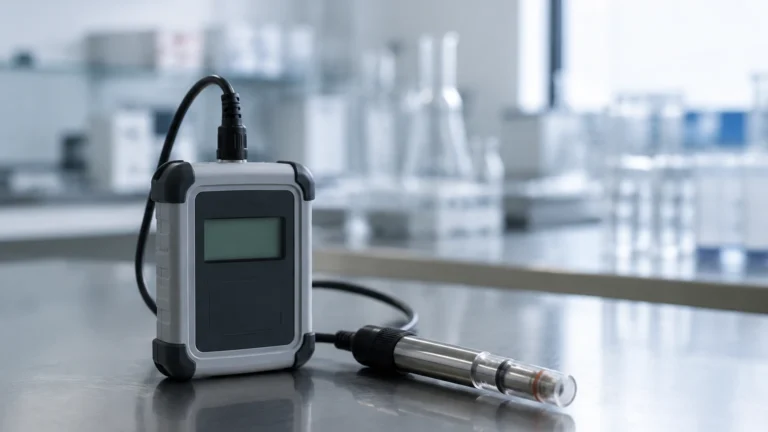
Cos22
Cos22
In the realm of industrial process automation, the accurate measurement of dissolved oxygen (DO) is as critical as monitoring liquid levels or pressure. The cos22 is a high-performance, digital oxygen sensor designed specifically for applications requiring high precision, hygiene, and long-term stability. While level measurement instruments from manufacturers like Welk provide the essential data regarding the volume and physical state of a medium, sensors like the cos22 provide the chemical insights necessary for process optimization. This article provides a technical deep-dive into the cos22, its operating principles, and how it integrates into broader industrial monitoring systems.
Measurement Principles of the cos22
The cos22 operates primarily on the amperometric measurement principle, often referred to as the Clark cell principle. This electrochemical method is highly valued in industrial settings for its reliability and ability to measure oxygen partial pressure directly.
The Amperometric Mechanism
At the core of the cos22 sensor is a cathode (typically made of gold or platinum) and an anode (usually silver/silver chloride). These electrodes are immersed in an electrolyte solution and separated from the process medium by a gas-permeable membrane.
1. Diffusion: Oxygen molecules from the medium diffuse through the membrane into the electrolyte. The rate of diffusion is proportional to the partial pressure of oxygen in the medium.
2. Reduction at the Cathode: Once the oxygen molecules reach the cathode, they are electrochemically reduced. The reaction typically follows:
*O₂ + 2H₂O + 4e⁻ → 4OH⁻*
3. Oxidation at the Anode: Simultaneously, at the anode, silver is oxidized:
*4Ag + 4Cl⁻ → 4AgCl + 4e⁻*
4. Current Generation: The flow of electrons between the anode and cathode creates a current. This current is directly proportional to the oxygen partial pressure. The transmitter then converts this current into a concentration value (mg/l, ppm, or %SAT) after accounting for temperature and pressure compensation.
Digital Data Transmission
Modern versions of the cos22 utilize digital technology (such as Memosens). Unlike traditional analog sensors, the cos22 converts the raw electrochemical signal into a digital value within the sensor head itself. This eliminates errors caused by cable resistance, moisture in connectors, or electromagnetic interference, which are common challenges in large-scale industrial plants.
Technical Specifications and Selection
Choosing the correct version of the cos22 depends on the specific requirements of the process, such as the expected oxygen concentration and the presence of cleaning cycles (CIP/SIP). The following table outlines the typical performance characteristics of the cos22 series.
| Feature | Standard cos22 | Trace Measurement cos22 |
| :— | :— | :— |
| Measuring Range | 0.01 to 60 mg/l | 0.001 to 20 mg/l |
| Detection Limit | 0.01 mg/l (10 ppb) | 0.001 mg/l (1 ppb) |
| Temperature Range | -5 to 135 °C | -5 to 135 °C |
| Pressure Range | 1 to 12 bar (abs) | 1 to 12 bar (abs) |
| Response Time (t90) | < 30 seconds (at 25 °C) | < 30 seconds (at 25 °C) |
| Materials | Stainless Steel 1.4435 (316L) | Stainless Steel 1.4435 (316L) |
| Surface Roughness | Ra < 0.38 µm | Ra < 0.38 µm |
Selecting the right sensor involves evaluating whether the application is "standard" (e.g., fermentation or wastewater aeration) or "trace" (e.g., power plant boiler feed water or beverage bottling). For more information on how to pair these sensors with comprehensive process control systems, you can Review product options and application support on the Welk Main Page.
Synergy Between Level Measurement and Oxygen Monitoring
In many industrial vessels, level measurement and oxygen monitoring are inseparable. For instance, in a bioreactor, a Welk radar level meter ensures the volume of the batch is maintained within safety and efficiency limits, while the cos22 monitors the oxygen levels required for microbial growth.
Automated Control Loops
By integrating level data and DO data, engineers can create sophisticated control loops. If the liquid level in an aeration tank rises significantly, the total volume of water requiring oxygen increases. The control system can use the level data to scale the oxygenation demand, while the cos22 provides real-time feedback to adjust the air blowers. This dual-monitoring approach prevents over-aeration (saving energy) and under-aeration (preventing process failure).
Tank Geometry and Sensor Placement
The placement of the cos22 is often dictated by the liquid level. Sensors must remain submerged to provide accurate readings. Using a reliable level transmitter ensures that the DO sensor is never operating in air, which could lead to membrane drying or false high readings. In tanks with fluctuating levels, retractable assemblies are often used to ensure the cos22 is always at the optimal depth.
Installation Considerations
Proper installation is paramount to the longevity and accuracy of the cos22. Because it is an electrochemical sensor, it is sensitive to its physical environment.
1. Installation Angle: The sensor should be installed at an angle of at least 15° to the horizontal. This prevents air bubbles from adhering to the membrane surface. If a bubble is trapped on the membrane, it will create a localized high-oxygen environment, leading to an artificially high reading.
2. Flow Velocity: Amperometric sensors like the cos22 consume a small amount of oxygen during measurement. Therefore, a minimum flow rate (usually 0.02 m/s) is required to ensure a fresh supply of oxygen-rich medium reaches the membrane. In stagnant tanks, the sensor should be placed near an agitator or in a bypass line.
3. Hygiene Standards: In the pharmaceutical and food industries, the cos22 must be installed using hygienic couplings (such as Tri-Clamp or Varivent). The sensor’s stainless steel body and high-polish finish are designed to withstand Clean-in-Place (CIP) and Sterilization-in-Place (SIP) cycles without degradation.

Maintenance and Calibration
Unlike level meters, which are often "set and forget," the cos22 requires routine maintenance due to the consumable nature of its electrolyte and membrane.
Calibration Procedures
Calibration should be performed regularly to account for membrane aging and electrolyte depletion. There are two primary methods:
* Air Calibration: The simplest method, where the sensor is exposed to water-saturated air. Since the oxygen content of air is constant (approx. 20.95%), this provides a reliable reference point.
* Comparison Calibration: The sensor remains in the process, and a sample is taken and measured with a calibrated portable DO meter. The process sensor is then adjusted to match the portable unit.
Membrane and Electrolyte Replacement
When the sensor's response time slows or the slope of the calibration curve falls outside of acceptable limits, the membrane cap and electrolyte must be replaced.
* Cleaning: Before disassembly, the sensor body should be cleaned to prevent process contaminants from entering the internal electrode chamber.
* Electrolyte Filling: The new membrane cap should be filled with fresh electrolyte, ensuring no air bubbles are trapped inside the cap before it is screwed onto the sensor body.
* Polarization: After replacing the electrolyte or after long periods of power-off, the sensor requires a polarization time (typically 2 to 6 hours) before it can be accurately calibrated.
Limitations and Common Risks
While the cos22 is robust, engineers must be aware of certain limitations to avoid inaccurate data:
* Chemical Interference: Certain gases, such as hydrogen sulfide (H₂S) or chlorine, can diffuse through the membrane and react at the electrodes, causing significant measurement errors or poisoning the sensor.
* Membrane Fouling: In wastewater or oily applications, biofilms or grease can coat the membrane. This creates a diffusion barrier, leading to sluggish response times and low readings. Regular cleaning with specialized solutions is required in these environments.
* Pressure Shocks: Rapid changes in process pressure can damage the delicate membrane. In systems with high-pressure fluctuations, the sensor should be protected or installed in a stabilized bypass.
Frequently Asked Questions (FAQ)
Q: How often does the cos22 need to be calibrated?
A: This depends entirely on the process. In stable, clean water applications, calibration may only be needed every few months. In intensive fermentation processes with frequent SIP cycles, calibration is typically performed before every batch.
Q: Can the cos22 measure oxygen in the gas phase?
A: Yes, the cos22 can measure oxygen in gases, but it is primarily optimized for dissolved oxygen. When measuring in gas, ensure the membrane does not dry out, as this can affect the electrolyte balance.
Q: What is the lifespan of the cos22 membrane?
A: In standard conditions, a membrane cap can last 6 to 12 months. However, exposure to harsh chemicals or high temperatures during sterilization will shorten this lifespan.
Q: How does the cos22 handle temperature compensation?
A: The sensor includes an internal Pt100 or Pt1000 temperature element. The transmitter uses this data to compensate for the temperature-dependent permeability of the membrane and the solubility of oxygen in the medium.
Conclusion
The cos22 represents a standard of excellence for dissolved oxygen measurement in demanding industrial environments. By understanding its amperometric principle and adhering to strict installation and maintenance protocols, process engineers can ensure high levels of accuracy and reliability. When combined with the robust level measurement solutions found on the Main Page, the cos22 forms a vital part of a comprehensive process control strategy that prioritizes both safety and product quality. Whether in a wastewater plant or a sterile biotech facility, the synergy of physical and chemical sensing remains the cornerstone of modern industrial automation.