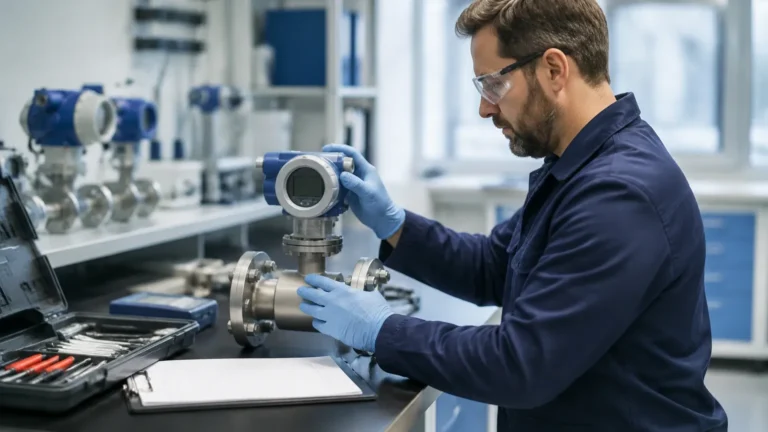
Cpa111
Cpa111
In the landscape of industrial process automation, the ability to monitor liquid characteristics without interrupting production is a critical requirement for operational efficiency. The Cpa111 refers to a specialized class of retractable assemblies designed primarily for the insertion and removal of sensors—such as pH, ORP, or conductivity probes—into tanks, pipes, and pressurized vessels. While level measurement instruments ensure the volume and safety of the stored medium, analytical assemblies like the Cpa111 provide the necessary hardware interface to monitor the chemical composition of that medium.
For engineers and plant operators, understanding the mechanical principles, material compatibility, and installation requirements of the Cpa111 is essential for maintaining high-precision measurement loops. This guide explores the technical foundations of these assemblies and their integration within broader process control systems, including their relationship with level monitoring technologies available on the Main Page.
Measurement Principles and Mechanical Function
The fundamental principle of a retractable assembly like the Cpa111 is the isolation of the sensor from the process medium during maintenance or calibration. Unlike fixed-mount sensors, which require the tank to be drained or the pipe flow to be stopped for sensor replacement, a retractable assembly uses a mechanical stroke mechanism to move the sensor between a "service" position and a "measuring" position.
The Retraction Mechanism
In the measuring position, the sensor is submerged at a specific immersion depth within the process liquid. When maintenance is required, the operator (or a pneumatic actuator) retracts the sensor into a rinse chamber. This chamber is isolated from the process by internal seals or a ball valve mechanism. Once the sensor is retracted, it can be cleaned, calibrated, or replaced while the process remains under pressure and in operation.
Sealing and Safety
Safety is a paramount concern in the design of the Cpa111. The assembly typically employs a redundant sealing system. Primary seals prevent the process medium from leaking into the rinse chamber, while secondary seals ensure that no medium escapes to the external environment. Many versions include a safety lock that prevents the sensor from being retracted or inserted if the process pressure exceeds safe limits or if the assembly is not correctly locked into place.
Technical Specifications and Selection Criteria
Selecting the correct configuration of a Cpa111 assembly requires a deep dive into the chemical and physical properties of the process medium. Because these assemblies are in direct contact with potentially corrosive or high-temperature liquids, material selection is the most critical factor.
Material Options
Common materials for the wetted parts of the Cpa111 include:
- Stainless Steel (1.4404 / 316L): Suitable for standard industrial water treatment and non-corrosive chemical applications.
- PVDF (Polyvinylidene Fluoride): Used for highly corrosive media, such as acids and bases, where metallic components would degrade.
- Alloy C22: Reserved for extreme chemical environments where even high-grade stainless steel is insufficient.
Pressure and Temperature Ratings
The mechanical integrity of the assembly must be matched to the process conditions. Standard Cpa111 units are often rated for pressures up to 10 bar (145 psi) and temperatures up to 140°C (284°F). However, these ratings are interdependent; as temperature increases, the maximum allowable pressure typically decreases, especially in plastic-wetted versions.
| Feature | Stainless Steel Version | PVDF Version |
| :— | :— | :— |
| Max. Pressure | 10 bar at 20°C | 6 bar at 20°C |
| Max. Temperature | 140°C | 100°C |
| Immersion Depth | 70 mm to 700 mm | 70 mm to 700 mm |
| Process Connection | Flange, G 1¼", NPT | Flange, G 1¼" |
| Cleaning Ports | G 1/8" or G 1/4" | G 1/8" or G 1/4" |
Integration with Level Measurement Systems
In practical engineering, analytical measurements and level measurements are intrinsically linked. A Cpa111 assembly holding a pH probe is only effective if the probe is sufficiently submerged in the liquid. If the liquid level drops below the immersion depth of the assembly, the sensor will "run dry," leading to erroneous readings and potential damage to the sensor membrane.
Synergy with Level Meters
To prevent dry-running, process tanks are equipped with level measurement instruments such as radar level meters or ultrasonic sensors. These devices provide real-time data to the control system (PLC/DCS). If the level falls below a pre-set threshold, the system can trigger an automated retraction of the Cpa111 to protect the sensor.
Furthermore, in applications involving foaming liquids or multi-phase separation, combining the analytical data from a Cpa111 with the interface level data from a magnetic level gauge or a guided wave radar ensures that the sensor is measuring the correct liquid phase. For comprehensive solutions in tank monitoring, engineers often consult the Main Page to select level transmitters that complement their analytical assemblies.
Installation Considerations
Correct installation of the Cpa111 is vital for both measurement accuracy and the longevity of the seals. Several factors must be evaluated during the design phase:
1. Mounting Angle: While these assemblies can often be mounted in various orientations, a minimum angle of 15° to the horizontal is usually recommended to ensure that the internal electrolyte of the pH sensor remains in contact with the pH-sensitive glass membrane.
2. Immersion Length: The assembly must be long enough to reach the representative flow of the medium but not so long that it creates excessive mechanical stress or vibration within the pipe.
3. Flow Velocity: In pipeline installations, the assembly should be positioned where the flow is stable. High-velocity or turbulent flow can cause "chatter" in the retractable arm, leading to premature wear of the O-rings.
4. Accessibility: Since the primary purpose of the Cpa111 is to facilitate maintenance, there must be sufficient clearance around the assembly to allow for the full stroke of the retraction and for a technician to access the sensor head.

Limitations and Operational Constraints
Despite its versatility, the Cpa111 has specific limitations that must be managed:
- Abrasive Media: If the process liquid contains high concentrations of abrasive solids, the sliding seals of the assembly may wear out quickly. In such cases, hardened seal materials or specialized flushing cycles are required.
- Crystallizing Liquids: Media that crystallize or harden when stagnant can jam the retraction mechanism. Regular flushing through the integrated rinse ports is mandatory in these applications.
- Manual vs. Automatic: Manual versions require operator intervention for every cleaning cycle. In large-scale plants, pneumatic versions are preferred, though they introduce additional complexity in terms of air supply and control solenoids.
Maintenance and Troubleshooting
A proactive maintenance schedule for the Cpa111 ensures process safety and data reliability. The most common maintenance task is the replacement of O-rings and gaskets.
Common Issues and Solutions
- Leaking from the Rinse Port: This usually indicates a failure of the primary process seal. The assembly should be retracted immediately and the seals replaced.
- Difficulty in Retraction: This is often caused by a buildup of scale or chemical deposits on the immersion tube. Increasing the frequency of the cleaning cycles or using a more aggressive cleaning agent through the rinse ports can resolve this.
- Sensor Drift: While often a sensor issue, it can be caused by a clogged rinse chamber that prevents the sensor from being properly cleaned during its maintenance cycle.
Frequently Asked Questions (FAQ)
Q: Can the Cpa111 be used in hazardous areas?
A: Yes, provided the assembly is constructed from conductive materials (like stainless steel) and is properly grounded to prevent electrostatic discharge. Pneumatic versions are often preferred in explosive atmospheres as they eliminate the need for electrical components at the measurement point.
Q: What is the standard stroke length for these assemblies?
A: Stroke lengths vary depending on the model, but they typically range from 36 mm to over 100 mm. The stroke must be sufficient to fully withdraw the sensor into the rinse chamber and clear the isolation valve.
Q: How often should the seals be replaced?
A: Seal life depends entirely on the aggressiveness of the medium and the frequency of operation. In standard water applications, seals may last 12-24 months. In hot, acidic chemical processes, they may require replacement every 3-6 months.
Q: Is it possible to automate the cleaning process?
A: Absolutely. By using a pneumatic Cpa111 in conjunction with a transmitter that has cleaning control functions, the system can automatically retract the sensor, flush it with water or a cleaning agent, and re-insert it at scheduled intervals.
Conclusion
The Cpa111 retractable assembly is a cornerstone of modern liquid analysis, providing a robust and safe interface for sensor management in demanding B2B industrial environments. By allowing for maintenance without process downtime, it significantly reduces the total cost of ownership for analytical measurement loops. When integrated with reliable level measurement technologies, such as those found on the Main Page, it forms a comprehensive monitoring solution that ensures both process quality and operational safety. Engineers should prioritize material compatibility and installation geometry to maximize the performance of these essential industrial components.