What Does a Water Electrolyzer Do
What Does a Water Electrolyzer Do
In the transition toward sustainable energy and industrial decarbonization, hydrogen has emerged as a critical energy carrier. At the heart of hydrogen production lies a specific piece of electrochemical equipment: the water electrolyzer. Understanding what does a water electrolyzer do is essential for engineers and project managers involved in power-to-gas applications, chemical processing, and renewable energy storage.
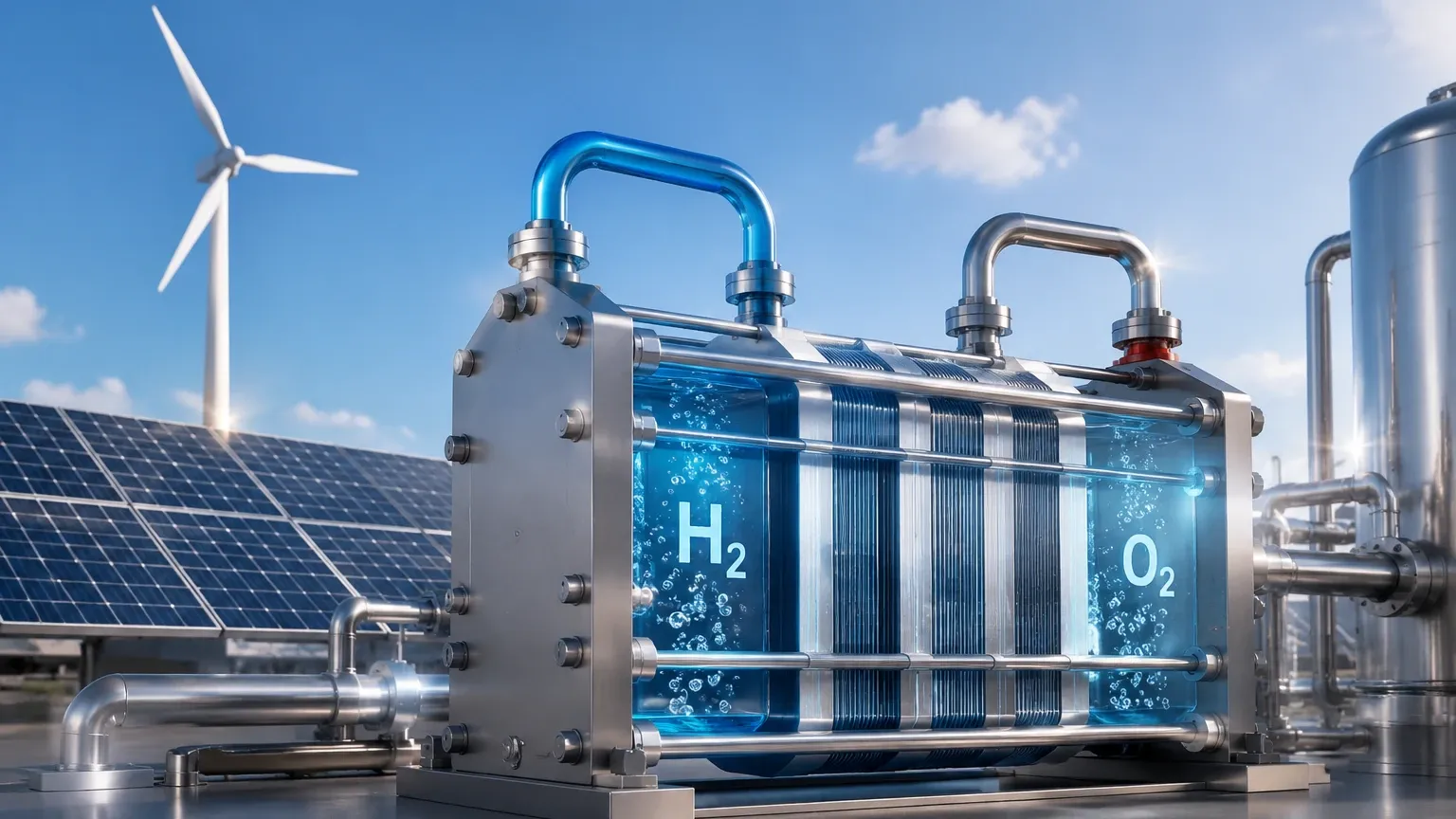
A water electrolyzer is a device that utilizes electricity to split water ($H_2O$) into its constituent elements: hydrogen ($H_2$) and oxygen ($O_2$). This process, known as electrolysis, allows for the production of high-purity hydrogen which can be used as a fuel or an industrial feedstock. When the electricity used in this process is sourced from renewable energy like wind or solar, the resulting hydrogen is classified as "green hydrogen."
The Fundamental Principle of Water Electrolysis
To answer what does a water electrolyzer do in technical terms, one must look at the electrochemical reaction occurring within the unit. An electrolyzer consists of a cathode (negative electrode), an anode (positive electrode), and an electrolyte.
When a direct current (DC) is applied, the following reactions take place:
1. At the Cathode: Electrons are consumed, and water molecules are reduced to produce hydrogen gas and hydroxide ions (in alkaline systems) or protons (in PEM systems).
2. At the Anode: Water is oxidized to produce oxygen gas, releasing electrons back into the circuit.
3. The Role of the Electrolyte: The electrolyte serves as the medium that allows ions (such as $OH^-$ or $H^+$) to move between the electrodes while preventing the produced hydrogen and oxygen gases from mixing. Mixing these gases creates a highly explosive environment, making precise process control and level monitoring vital for safety.
Types of Water Electrolyzers and Their Applications
While the basic goal remains the same, different technologies are employed depending on the scale, purity requirements, and operational dynamics of the facility.
1. Alkaline Electrolyzers (AEL)
Alkaline electrolysis is the most mature and widely used technology. It typically uses an aqueous solution of potassium hydroxide (KOH) or sodium hydroxide (NaOH) as the electrolyte. These systems are known for their long operational lifetimes and lower capital costs because they do not require precious metal catalysts.
2. Proton Exchange Membrane (PEM) Electrolyzers
PEM electrolyzers use a solid polymer membrane that conducts protons. This technology allows for a more compact design and can handle fluctuating power inputs from renewable sources much more effectively than alkaline systems. PEM units produce high-purity hydrogen at high pressures, reducing the need for external compression.
3. Anion Exchange Membrane (AEM) Electrolyzers
AEM is a newer technology that attempts to combine the benefits of alkaline and PEM systems. It uses a solid membrane but can operate with non-noble metal catalysts, potentially offering a cost-effective path to high-efficiency hydrogen production.
4. Solid Oxide Electrolyzer Cells (SOEC)
SOECs operate at high temperatures (typically 700°C to 850°C). They utilize steam instead of liquid water. Because of the thermal energy input, the electrical efficiency is significantly higher, making them ideal for integration with industrial processes that produce waste heat.
The Critical Role of Level Measurement in Electrolyzer Systems
In an industrial electrolyzer plant, the "stack" where the reaction occurs is only one part of the system. The Balance of Plant (BoP) includes water treatment, gas-liquid separators, electrolyte storage tanks, and cooling systems. Precise level measurement is non-negotiable in these auxiliary systems.
What does a water electrolyzer do if its water supply is interrupted or its separators overflow? It fails, often catastrophically. Monitoring the levels of deionized water, KOH solutions, and the interface in gas-liquid separators ensures the system operates within safe parameters. For engineers seeking reliable instrumentation for these environments, the Main Page of professional measurement providers offers a range of technologies suited for high-pressure and corrosive hydrogen applications.
Measurement Technologies for Electrolyzer Systems
When selecting instrumentation for a water electrolyzer project, several technologies are commonly utilized based on the specific vessel and fluid properties.
Radar Level Meters
Non-contact radar (80GHz) is increasingly preferred for gas-liquid separators. Because hydrogen is a very light gas, it does not interfere with the radar signal. Radar sensors provide high accuracy (±1 mm) and are unaffected by the high pressures (often up to 30-50 bar) and temperatures found in PEM or alkaline stacks.
Ultrasonic Level Sensors
Ultrasonic sensors are effective for atmospheric deionized water storage tanks. They are cost-effective and easy to install. However, they are generally not recommended for pressurized vessels or environments where the gas composition (like high concentrations of $H_2$) significantly alters the speed of sound.
Hydrostatic Level Transmitters
Hydrostatic sensors measure the pressure exerted by the liquid column. These are frequently used in electrolyte circulation tanks. In pressurized electrolyzers, differential pressure (DP) transmitters are required to compensate for the overhead gas pressure.
Magnetic Level Gauges
For visual confirmation of the electrolyte level, magnetic level gauges are a staple in alkaline electrolysis plants. They provide a clear, mechanical indication that is independent of power supply, serving as a critical safety backup.
Selection Table for Level Instruments in Water Electrolysis
| Component | Fluid Type | Recommended Technology | Key Benefit |
| :— | :— | :— | :— |
| Feed Water Tank | Deionized Water | Ultrasonic or Radar | Non-contact, low maintenance |
| Gas-Liquid Separator | Water + $H_2$ or $O_2$ | Guided Wave or 80GHz Radar | Accurate under pressure and turbulence |
| Electrolyte Storage | KOH / NaOH Solution | Hydrostatic or Magnetic Gauge | Corrosion resistance, reliable density-based measurement |
| Cooling Water Loop | Process Water | Pressure/Level Transmitter | Integrated system monitoring |
| Waste Water/Drain | Mixed Effluent | Ultrasonic | Cost-effective for open-air sumps |
Installation and Safety Considerations
When installing level measurement equipment in a water electrolyzer facility, several technical factors must be addressed:
1. Material Compatibility: Electrolyte solutions like KOH are highly caustic. Wetted parts of sensors must be made from compatible materials such as 316L Stainless Steel, PTFE, or Hastelloy.
2. Hazardous Area Certification: Hydrogen is highly flammable (Group IIC). All electronic instruments must have appropriate explosion-proof or intrinsically safe certifications (e.g., ATEX, IECEx).
3. Pressure Ratings: Many modern electrolyzers operate at elevated pressures to facilitate storage. Sensors must be rated for the maximum allowable working pressure (MAWP) of the vessel.
4. Gas Tightness: Hydrogen is the smallest molecule and can leak through even microscopic gaps. Process connections (flanges or threads) must be precision-machined and properly sealed to prevent gas loss and fire hazards.
Limitations and Challenges
While understanding what does a water electrolyzer do is straightforward, operating one at scale presents challenges:
* Water Purity: Electrolyzers require extremely high-purity water (low conductivity). Impurities can poison the catalysts or cause scaling on the electrodes. Level sensors in the water treatment stage help ensure a steady supply of deionized water.
* Dynamic Response: In green hydrogen plants, the power supply from renewables is inconsistent. Level control systems must be responsive enough to handle rapid changes in gas production rates without causing trips in the separators.
* Foaming: In alkaline systems, the movement of gas through the liquid can sometimes cause foaming. This can lead to "false highs" in certain level measurement technologies, making non-contact radar with advanced signal processing a superior choice.
Frequently Asked Questions (FAQs)
Q: How much water does a water electrolyzer consume?
A: Theoretically, it takes approximately 9 liters of water to produce 1 kilogram of hydrogen gas. In practice, due to system inefficiencies and cooling requirements, the consumption is often 10 to 12 liters per kg of $H_2$.
Q: Can a water electrolyzer run on sea water?
A: Standard electrolyzers cannot run directly on sea water because the chloride ions produce toxic chlorine gas at the anode instead of oxygen, which also corrodes the electrodes. Sea water must be desalinated and deionized before entering the electrolyzer.
Q: Why is level control so important in the separator tanks?
A: If the liquid level in the separator is too low, hydrogen gas could enter the oxygen stream (or vice versa), creating an explosive mixture. If the level is too high, liquid can be carried over into the gas processing equipment, potentially damaging compressors or dryers.
Q: What is the typical lifespan of an industrial electrolyzer?
A: Alkaline electrolyzers typically last 60,000 to 90,000 operating hours, while PEM stacks usually range between 40,000 and 60,000 hours before a stack overhaul or replacement is required.
Conclusion
Defining what does a water electrolyzer do involves more than just describing a chemical reaction; it involves understanding a complex system where electricity, chemistry, and mechanical engineering intersect. As the world moves toward a hydrogen-based economy, the reliability of these systems depends heavily on the precision of the instruments that monitor them. From the initial water feed to the final gas separation, accurate level measurement ensures that the process of splitting water remains safe, efficient, and productive. For those designing or maintaining these critical systems, selecting the right measurement technology is the first step toward operational excellence.