Cps77e
Cps77e
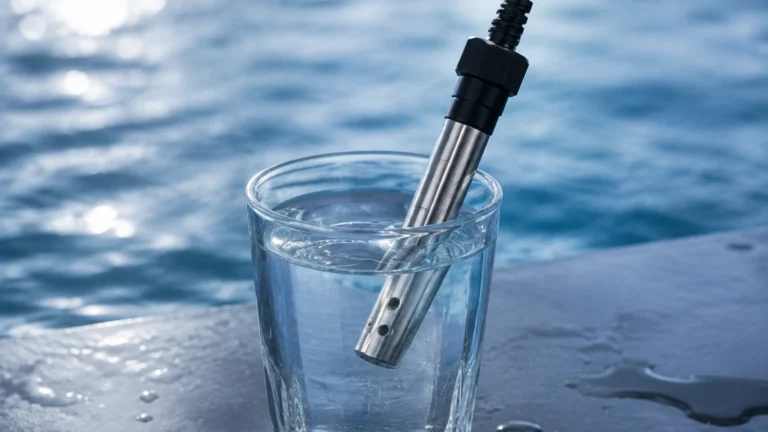
In the demanding landscape of hygienic process industries, the transition from traditional glass-based pH measurement to more robust, glass-free alternatives has significantly enhanced operational safety and efficiency. The cps77e is a prominent example of this evolution, utilizing Ion-Selective Field Effect Transistor (ISFET) technology to provide reliable liquid analysis in environments where glass breakage is a critical risk. This guide explores the technical foundations of the cps77e, its integration into process automation, and how it complements other critical instrumentation such as level measurement systems.
Understanding ISFET Measurement Principles
To appreciate the utility of the cps77e, one must first understand the fundamental difference between traditional potentiometric glass electrodes and ISFET sensors. Traditional pH electrodes rely on a thin glass membrane that develops a potential proportional to the hydrogen ion concentration in the medium. While accurate, these membranes are fragile and susceptible to physical damage, which can lead to product contamination in food and pharmaceutical production.
The Semiconductor Approach
The cps77e operates on the ISFET principle. Instead of a glass membrane, the sensor utilizes a semiconductor chip. The chip features a gate that is sensitive to hydrogen ions (H+). When the sensor is immersed in a liquid, the H+ ions accumulate at the gate surface, creating an electrical potential. This potential directly influences the current flowing through the transistor (the drain-source current).
By measuring the changes in this current, the transmitter can determine the pH value of the medium with high precision. Because the sensing element is a solid-state chip embedded in a high-performance polymer (typically PEEK), the risk of breakage is virtually eliminated. This makes the cps77e an ideal choice for "glass-free" production zones.
Technical Advantages of the Cps77e
The cps77e is designed specifically for hygienic and sterile applications. Its construction and communication protocol offer several distinct advantages for industrial operators:
1. Break Resistance: The absence of a glass bulb allows the sensor to be used directly in production lines without the fear of glass shards entering the product stream. This is essential for compliance with Hazard Analysis and Critical Control Points (HACCP) protocols.
2. Memosens 2.0 Technology: The cps77e incorporates digital Memosens technology. This system converts the analog measurement signal into a digital signal within the sensor head itself. The data is then transmitted inductively to the transmitter. This eliminates issues related to moisture, corrosion, and electromagnetic interference that often plague traditional high-impedance analog cables.
3. CIP/SIP Stability: The sensor is designed to withstand frequent Cleaning-in-Place (CIP) and Sterilization-in-Place (SIP) cycles. It can endure temperatures up to 135°C (275°F) without losing its calibration or structural integrity.
4. Fast Response Times: ISFET sensors generally respond faster to pH changes than glass electrodes, particularly at lower temperatures. This allows for tighter process control in dynamic chemical reactions.
The Synergy Between pH and Level Measurement
In most industrial process tanks, pH measurement is rarely an isolated requirement. It is almost always part of a broader instrumentation strategy that includes the monitoring of volume and mass. For engineers designing these systems, the interaction between analytical sensors like the cps77e and level measurement instruments is a key consideration.
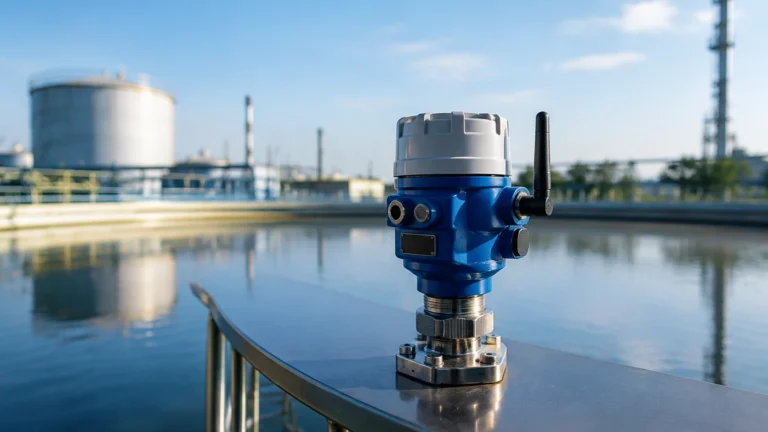
For instance, in a chemical dosing tank, the pH sensor monitors the reaction state, while a radar or ultrasonic level meter ensures the tank does not overflow or run dry. High-quality level measurement solutions, such as those found on the Main Page of industrial instrumentation catalogs, provide the necessary data to automate the refill cycles that keep the pH within the desired range.
When level and pH instruments are integrated into a single control loop, the reliability of the level data is paramount. If a level transmitter fails to detect the liquid surface accurately, the cps77e might be left exposed to air, leading to sensor dehydration and measurement drift. Conversely, accurate level data ensures that the analytical sensors remain properly submerged at all times.
Selection Criteria: ISFET vs. Glass Electrodes
Choosing between the cps77e and a traditional glass electrode depends on several process factors. The following table provides a comparison to assist in the selection process:
| Feature | ISFET (Cps77e) | Glass pH Electrode |
| :— | :— | :— |
| Material | PEEK / ISFET Chip | Glass Membrane |
| Breakage Risk | Negligible | High |
| Hygienic Suitability | Excellent (Glass-free) | Requires protective housing |
| Temperature Range | Up to 135°C | Up to 140°C+ (Special glass) |
| Installation Angle | Any (Including horizontal) | Typically > 15° from horizontal |
| Response Time | Very Fast | Fast to Moderate |
| Storage | Must be kept wet | Must be kept wet |
Operators should prioritize the cps77e when the process involves high-vibration environments, food production where glass is prohibited, or applications requiring horizontal installation where a glass electrode's internal electrolyte would not maintain contact with the membrane.
Installation and Mounting Guidelines
Proper installation is critical to the longevity and accuracy of the cps77e. Unlike glass electrodes, which must be mounted at an angle of at least 15° to ensure the internal buffer solution stays in contact with the membrane, the ISFET sensor can be mounted in any orientation. However, there are still several best practices to follow:
Location and Flow
The sensor should be installed in a location where the medium is well-mixed. In pipelines, the sensor should ideally be placed in a vertical pipe with an upward flow to ensure the pipe is always full. If installed in a horizontal pipe, the sensor should be mounted on the side (3 o'clock or 9 o'clock position) to avoid air bubbles at the top or sediment at the bottom.
Mounting Assemblies
The cps77e typically uses standard hygienic threads (such as G 1" or NPT 3/4"). It is often used in conjunction with retractable assemblies. These assemblies allow the sensor to be removed for cleaning or calibration without interrupting the process. This is particularly useful in applications where the ISFET chip might become coated with proteins or fats, which can slow the response time.
Grounding and Interference
While Memosens technology significantly reduces the risk of electrical interference, the sensor should still be installed in a grounded system. This is especially true when working alongside high-frequency level measurement devices, such as guided wave radar, to ensure that no ground loops affect the digital communication between the sensor and the transmitter.

Maintenance and Calibration in Hygienic Applications
One of the primary benefits of the cps77e's digital nature is the ease of maintenance. Memosens sensors store calibration data directly in the sensor head. This allows for "Lab-to-Process" calibration:
1. Lab Calibration: A technician can calibrate the sensor in a controlled laboratory environment using standard buffer solutions.
2. Hot Swapping: The calibrated sensor is then taken to the field and swapped with the sensor currently in the process.
3. Automatic Recognition: Once connected to the Memosens cable, the transmitter automatically recognizes the new calibration data, and the measurement resumes immediately.
For the cps77e, maintenance also involves checking the ISFET chip for physical deposits. In food and beverage applications, organic coatings can form on the chip surface. Regular cleaning with appropriate detergents—often integrated into the CIP cycle—is necessary to maintain the sensor's fast response time.
Technical Specifications
| Specification | Detail |
| :— | :— |
| Measurement Range | pH 0 to 14 |
| Process Temperature | -15 to 135 °C (5 to 275 °F) |
| Process Pressure | Max. 11 bar (abs) at 100 °C (160 psi at 212 °F) |
| Materials | Sensor body: PEEK; Seals: EPDM (FDA compliant) |
| Connection | Memosens plug-in head |
| Approvals | ATEX, FM, CSA, IECEx (for hazardous areas) |
| Hygienic Certificates | EHEDG, 3-A, USP Class VI |
Limitations and Environmental Constraints
While the cps77e is a versatile tool, it is not a universal solution for every pH application. There are specific limitations to consider:
* Light Sensitivity: ISFET chips are inherently sensitive to light. While the cps77e is designed to minimize this, extreme exposure to direct, intense light during calibration or in transparent piping can cause temporary measurement fluctuations.
* Chemical Compatibility: While PEEK and EPDM are highly resistant to many chemicals, they may not be suitable for extremely aggressive solvent mixtures or highly concentrated oxidizing acids. Always check the chemical compatibility of the wetted materials with the specific process medium.
* Dehydration: Like all pH sensors, the ISFET chip must remain hydrated. If the sensor is left in a dry tank for extended periods, it will require rehydration in a buffer solution or water before it can provide accurate readings.
Frequently Asked Questions (FAQs)
Q: How often does the cps77e need to be calibrated?
A: Calibration frequency depends entirely on the process conditions. In stable, clean environments, calibration may only be needed once a month. In aggressive CIP/SIP environments, weekly or even daily checks may be required. The Memosens technology provides diagnostic data (such as operating hours and temperature peaks) to help predict when calibration is necessary.
Q: Can the cps77e replace a glass electrode in an existing installation?
A: Yes, provided the transmitter is compatible with Memosens digital sensors. The physical mounting is often identical to standard 120mm or 225mm glass electrodes, making the mechanical transition straightforward.
Q: Is the cps77e suitable for use in hazardous areas?
A: Yes, the sensor is available with various explosion-protection approvals (ATEX, FM, etc.), making it suitable for use in zones where flammable gases or dust may be present.
Q: What happens if the ISFET chip gets scratched?
A: While the PEEK body is very durable, the ISFET chip itself can be damaged by abrasive solids in the medium. If the chip is physically scratched, the sensor will likely experience significant drift or failure and will need to be replaced.
Conclusion
The cps77e represents a critical advancement for industries where product purity and safety are non-negotiable. By moving away from glass and embracing digital ISFET technology, operators can achieve more resilient pH monitoring with reduced maintenance overhead. When combined with reliable level measurement instruments—which serve as the backbone of tank inventory management—the cps77e ensures that both the quantity and quality of the process medium are precisely controlled. For further information on selecting the right level measurement technology to pair with your analytical sensors, visit our Main Page for comprehensive product guides and application support.