Cryogenic Pressure Transducer
Cryogenic Pressure Transducer
In the specialized field of industrial instrumentation, the cryogenic pressure transducer stands as a critical component for monitoring fluids at extremely low temperatures. Cryogenic applications typically involve temperatures below -150°C (-238°F), extending down to absolute zero. These environments are common in the processing, storage, and transport of liquefied gases such as nitrogen (LIN), oxygen (LOX), argon (LAR), and liquefied natural gas (LNG).
Measuring pressure in these conditions requires more than just a standard sensor. The physical properties of materials change significantly in extreme cold; metals can become brittle, and standard electronic components often fail. Consequently, a cryogenic pressure transducer must be engineered with specific materials and sensing technologies to maintain accuracy and reliability. This guide examines the engineering principles, selection criteria, and installation requirements for these specialized instruments.
Measurement Principles for Cryogenic Environments
To understand how a cryogenic pressure transducer functions, it is necessary to review the primary sensing technologies used to convert physical pressure into an electrical signal under extreme thermal stress.
Piezoresistive Sensing
Piezoresistive transducers utilize a silicon diaphragm with integrated resistors. When pressure is applied, the diaphragm deforms, changing the electrical resistance. In cryogenic applications, the sensing element is often isolated from the media by a stainless steel diaphragm and a specialized fill fluid that remains liquid at low temperatures. However, because silicon's resistivity is highly temperature-dependent, these sensors require sophisticated thermal compensation circuits to remain accurate across a wide temperature gradient.
Sputtered Thin-Film Technology
Sputtered thin-film sensors are often preferred for cryogenic service due to their long-term stability. In this process, strain gauges are molecularly bonded to a stainless steel diaphragm using vacuum deposition. Because there are no organic adhesives involved, the bond does not degrade or become brittle at -196°C (-320.8°F). This construction offers excellent resistance to thermal shock and vibration, which are frequent in cryogenic pumping systems.
Capacitive Sensing
Capacitive transducers measure the change in electrical capacitance between a flexible diaphragm and a fixed plate. These sensors are known for their high sensitivity and ability to measure low pressures. In cryogenic setups, they are valued for their ruggedness, though they may require more complex signal conditioning to account for the dielectric changes in the surrounding environment caused by temperature shifts.
The Relationship Between Pressure and Level Measurement
In the context of industrial automation and tank gauging, the cryogenic pressure transducer is frequently used as a hydrostatic level transmitter. For engineers managing bulk storage tanks, understanding the relationship between pressure and liquid height is essential.
According to the hydrostatic principle, the pressure at the bottom of a vessel is proportional to the height of the liquid column and the density of the fluid ($P = \rho gh$). In a cryogenic tank, two transducers (or one differential pressure transducer) are typically used:
1. High-Pressure Side: Measures the total pressure at the bottom of the tank (liquid head + gas headspace pressure).
2. Low-Pressure Side: Measures only the gas headspace pressure (vapor pressure).
By subtracting the headspace pressure from the total bottom pressure, the system determines the hydrostatic head of the liquid, which is then converted into a level or volume reading. This method is highly reliable for cryogenic liquids because it involves no moving parts inside the tank, reducing the risk of mechanical failure in the cold zone. For more information on integrated measurement systems, you can visit the Main Page of industrial level solution providers.
Key Evaluation Criteria for Selection
When specifying a cryogenic pressure transducer, engineers must evaluate several technical parameters to ensure the device is compatible with the intended process.
Material Compatibility
The wetted parts must be made of materials that retain their ductility at low temperatures. 316L Stainless Steel is the industry standard, but for highly corrosive cryogenic fluids or specialized aerospace applications, alloys like Monel or Inconel may be required. Furthermore, any seals or O-rings must be replaced with metal-to-metal seals or specialized PTFE composites that do not harden and leak.
Temperature Compensation and Range
A transducer might be rated for a process temperature of -196°C, but its electronics (the transmitter portion) may only be rated for -40°C to +85°C. Selecting a transducer with a "remote" or "standoff" configuration allows the sensing head to be in the cold zone while the electronics remain at ambient temperature. The "compensated temperature range" is the specific window where the manufacturer guarantees the accuracy of the device.
Accuracy and Signal Output
Industrial applications typically require an accuracy of ±0.25% to ±0.5% of the Full Scale (FS). Common signal outputs include 4-20 mA (ideal for long-distance transmission), 0-10 VDC, or digital protocols like HART and Modbus for integration into a Distributed Control System (DCS).
Practical Selection Table
| Feature | Piezoresistive | Sputtered Thin-Film | Capacitive |
| :— | :— | :— | :— |
| Cryogenic Stability | Moderate (Requires compensation) | Excellent | Good |
| Vibration Resistance | Good | Excellent | Moderate |
| Pressure Range | 0.1 to 1000 bar | 5 to 2000 bar | 0.01 to 50 bar |
| Typical Accuracy | 0.1% – 0.25% FS | 0.2% – 0.5% FS | 0.05% – 0.2% FS |
| Best Use Case | General Industrial | High-pressure/High-vibration | Low-pressure/High-precision |
Installation Considerations and Thermal Management
Proper installation is as important as the sensor technology itself. Failure to manage the thermal interface between the cryogenic fluid and the transducer can lead to catastrophic failure or significant measurement drift.
1. Impulse Piping (Standoffs): To protect the electronics, transducers are often mounted at the end of a long "impulse line" or standoff tube. The cryogenic liquid enters the tube and boils, creating a gas buffer that insulates the sensor from the extreme cold. The length of this tube must be calculated based on the ambient temperature and the thermal conductivity of the pipe material.
2. Orientation: For liquid service, the transducer should ideally be mounted below the process tap to ensure the impulse line remains filled with gas (the "gas trap" method). If the line fills with liquid that then freezes or expands, it can cause a pressure spike that damages the diaphragm.
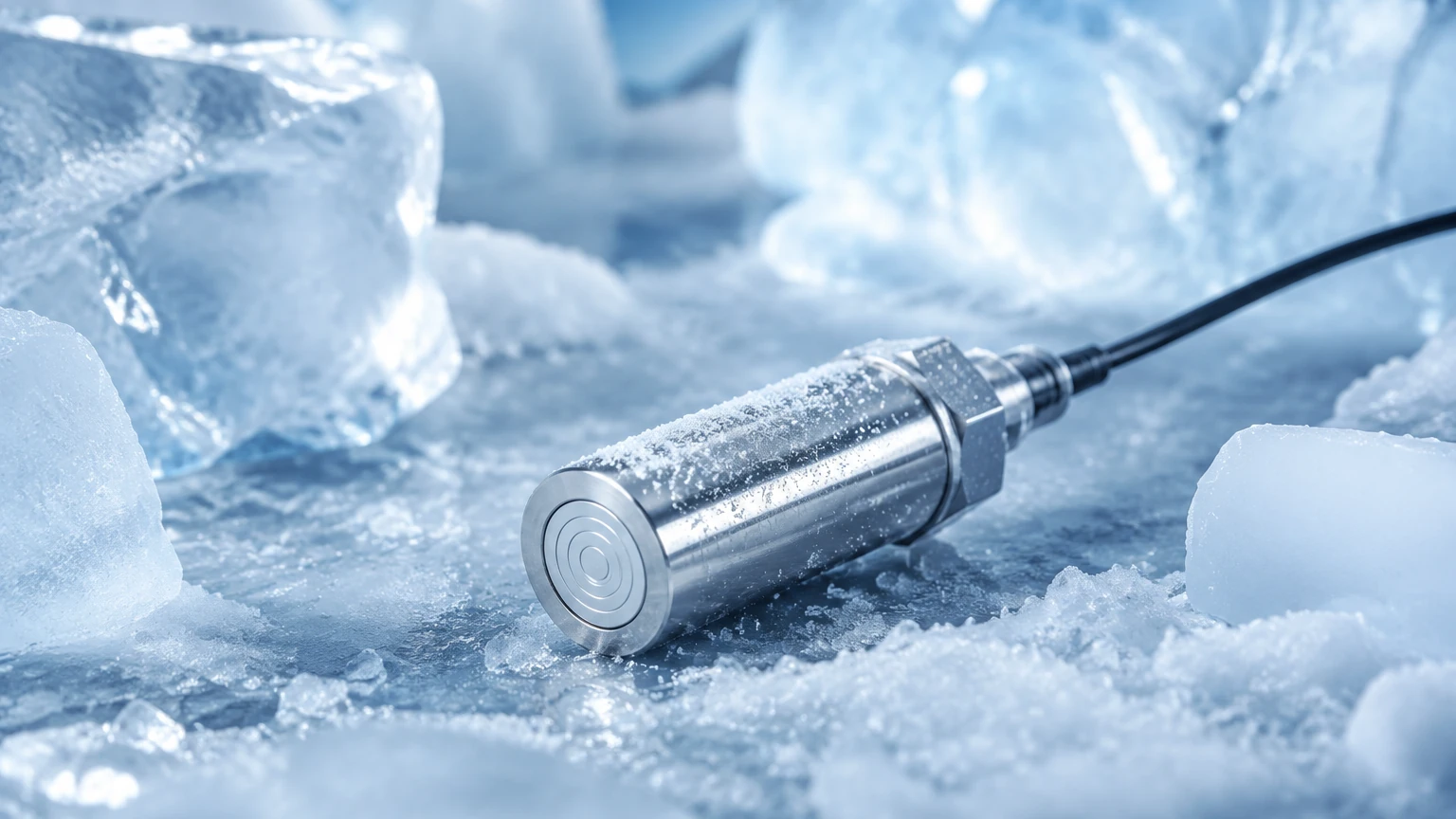
3. Moisture Protection: In cryogenic systems, any moisture in the air will immediately turn to ice upon contact with cold surfaces. If ice forms inside the pressure port of the transducer, it will block the signal or rupture the sensor. Using hermetically sealed units and ensuring dry nitrogen purges during installation is recommended.
4. Oxygen Service Cleaning: If the cryogenic pressure transducer is used for Liquid Oxygen (LOX), it must be specially cleaned and certified to be free of hydrocarbons. Any trace of oil or grease can lead to spontaneous combustion in an oxygen-rich environment.
Common Risks and Limitations
Despite their robust design, cryogenic pressure transducers face specific operational risks:
* Thermal Shock: Rapidly introducing a transducer to cryogenic temperatures can cause differential expansion between the housing and the sensing element, leading to a temporary or permanent offset in the signal.
* Signal Drift: Over time, the extreme thermal cycling (from ambient to -196°C and back) can cause the calibration to shift. Regular verification is necessary.
* Icing of the Vent: For gauge pressure transducers, the reference vent must be kept clear of ice. If the vent plugs, the sensor will begin to act like an absolute pressure sensor, leading to errors based on changes in atmospheric pressure.
Engineering Confirmation Checklist
Before finalizing a purchase or installation plan, project managers should confirm the following details with their equipment supplier:
* Media State: Is the fluid pure liquid, or is there a possibility of two-phase flow (gas and liquid)?
* Temperature Profile: What is the minimum process temperature and the maximum ambient temperature the electronics will face?
* Pressure Spikes: Will there be cryogenic pumps in the system that create high-frequency pressure pulsations?
* Certification: Are specific certifications required, such as ATEX/IECEx for explosive atmospheres (common in LNG) or Oxygen Cleanliness standards?
* Connection Type: Are NPT, BSPP, or specialized cryogenic flange connections required to ensure a leak-proof seal?
Frequently Asked Questions (FAQs)
Q: Can I use a standard industrial pressure transmitter for liquid nitrogen?
A: Generally, no. Standard transmitters use internal components, fill fluids, and seals that will fail, leak, or crack at -196°C. Only sensors specifically rated for cryogenic service should be used.
Q: What is the difference between absolute and gauge pressure in cryogenics?
A: Absolute pressure is measured relative to a full vacuum, while gauge pressure is relative to local atmospheric pressure. In many cryogenic storage applications, absolute pressure is preferred to avoid errors caused by the icing of atmospheric vent ports.
Q: How often should a cryogenic pressure transducer be calibrated?
A: Due to the harsh nature of thermal cycling, it is recommended to verify calibration annually. However, in critical applications like aerospace or high-value LNG custody transfer, semi-annual checks may be required.
Q: How do I prevent the electronics from freezing?
A: Use a standoff or siphon tube. This allows the liquid to vaporize before it reaches the sensor, creating a thermal barrier that keeps the transmitter body near ambient temperature.
Conclusion
The cryogenic pressure transducer is a sophisticated instrument that bridges the gap between extreme physics and industrial control. By selecting the appropriate sensing technology—such as sputtered thin-film for stability or piezoresistive for sensitivity—and implementing rigorous thermal management through proper installation, engineers can ensure accurate data in the most demanding cold-chain environments. For those seeking to integrate these sensors into broader level measurement systems, exploring professional product options and application support on the Main Page is a recommended next step in the engineering process.