Decarbonization of Industry
Decarbonization of Industry
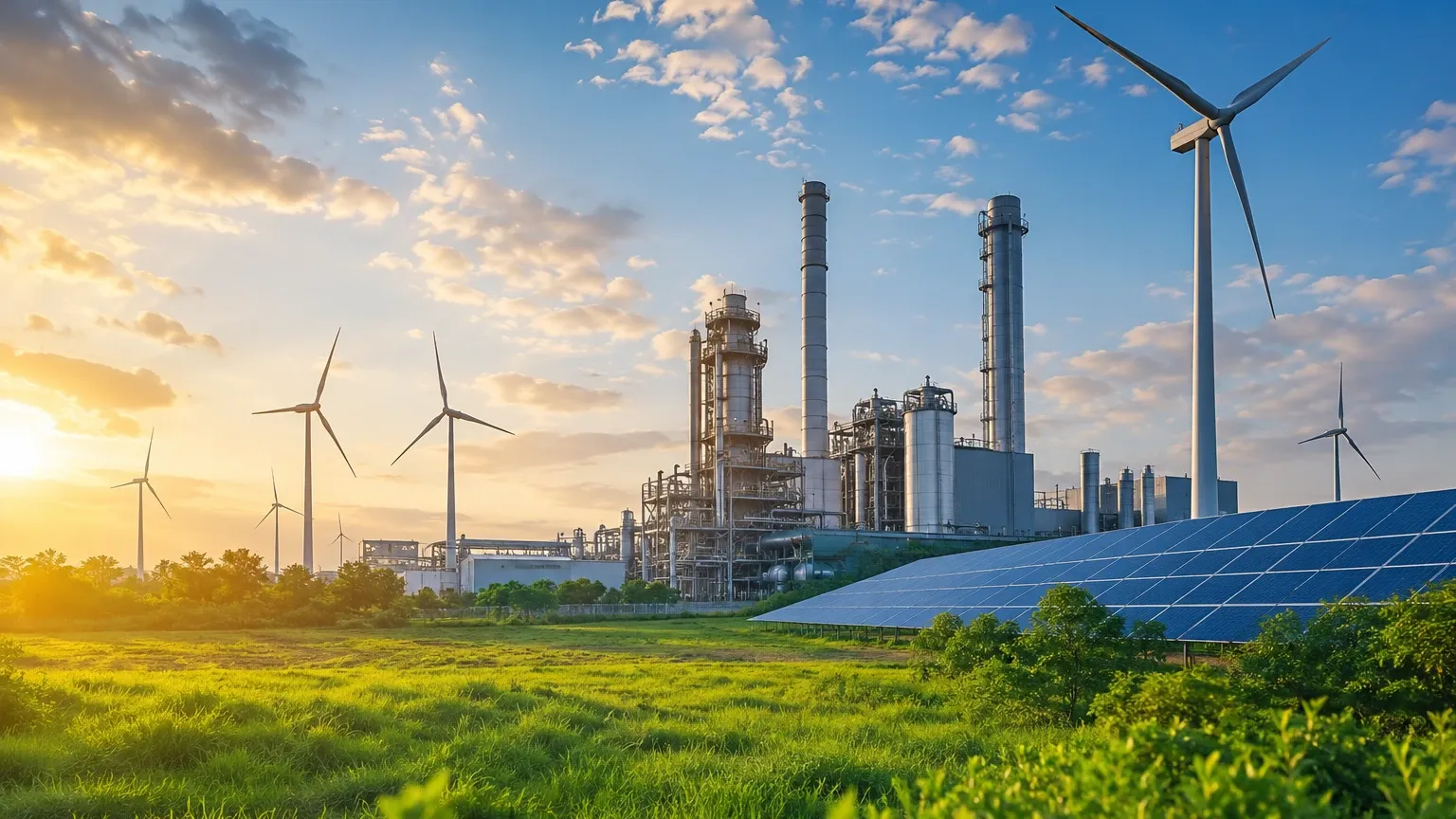
The global industrial landscape is undergoing a fundamental shift as the decarbonization of industry moves from a corporate social responsibility goal to a core operational requirement. For energy-intensive sectors—including chemical processing, oil and gas, and heavy manufacturing—reducing carbon footprints requires a multi-faceted approach: transitioning to renewable energy, improving process efficiency, and implementing carbon capture, utilization, and storage (CCUS) technologies.
Central to these efforts is the optimization of fluid and material management. Precise level measurement is a critical, yet often overlooked, component in achieving these sustainability targets. By providing accurate, real-time data on tank volumes and process interfaces, advanced instrumentation minimizes waste, prevents energy-intensive overflows, and ensures the efficient operation of equipment essential for a low-carbon economy. This guide explores the technical principles of level measurement and their strategic role in the decarbonization of industry.
The Role of Precise Level Measurement in Decarbonization
Efficiency is the first pillar of decarbonization. In industrial processes, every liter of wasted chemical or every unnecessary hour of pump operation contributes to a facility's total carbon output. Accurate level instrumentation supports decarbonization through several mechanisms:
1. Energy Optimization: Many industrial processes rely on pumps to move fluids between tanks. Inaccurate level data can lead to "short-cycling" or pumps running against closed valves, both of which consume excessive electricity. Precise level control allows for optimized pump scheduling and variable speed drive (VSD) integration.
2. Waste Reduction: Overfills in chemical storage or water treatment plants result in environmental contamination and the need for energy-intensive remediation. High-accuracy sensors ensure maximum tank utilization without the risk of spills.
3. Support for New Technologies: The transition to a hydrogen economy or the implementation of carbon capture requires specialized level monitoring for cryogenic liquids, high-pressure CO2, and chemical reagents like amines used in carbon scrubbing.
To explore the full range of instrumentation available for these applications, engineers can refer to the Main Page for detailed technical specifications and product options.
Core Level Measurement Principles
Before selecting an instrument for a decarbonization project, it is essential to understand the underlying physics of the various measurement technologies. Each principle offers specific advantages depending on the medium, pressure, and temperature of the application.
Radar Level Measurement (ToF)
Radar level meters operate on the Time-of-Flight (ToF) principle. There are two primary types: Non-contact (Pulse or FMCW) and Guided Wave Radar (GWR).
* Non-contact Radar: The sensor emits high-frequency microwave pulses (typically 26GHz or 80GHz) toward the product surface. These pulses are reflected back to the antenna. The distance is calculated based on the time it takes for the signal to return. 80GHz radar is particularly effective in decarbonization applications involving narrow tanks or internal obstructions due to its narrow beam angle.
* Guided Wave Radar (GWR): A probe guides the microwave pulse directly to the liquid surface. This is highly effective for low-dielectric liquids (like liquid CO2 or hydrocarbons) and for measuring interfaces between two different liquids.
Ultrasonic Level Measurement
Ultrasonic sensors emit high-frequency sound waves. The time taken for the echo to return from the surface of the medium determines the level. Because sound speed is affected by air temperature, these sensors include integrated temperature compensation. This technology is widely used in water treatment and open-channel flow measurement, where cost-effectiveness and non-contact operation are priorities.
Hydrostatic Level Measurement
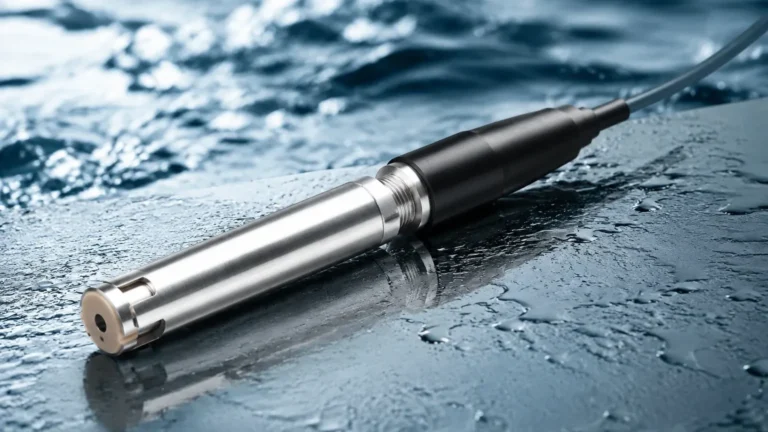
This principle relies on the relationship between the height of a liquid column and the pressure it exerts at the base of a tank ($P = \rho \cdot g \cdot h$). A pressure transmitter or submersible probe measures this force. It is a robust, reliable method for vented tanks containing liquids with a constant density. In the context of the decarbonization of industry, hydrostatic sensors are frequently used in wastewater recovery systems.
Magnetic Level Gauges
Magnetic level gauges utilize a float containing a permanent magnet that moves with the liquid level in a bypass chamber. This magnet actuates a visual indicator (flaps or rollers) on the outside of the chamber. Because they do not require power for visual indication, they are essential for safety-critical applications where manual monitoring is required during power outages.
Application Scenarios in a Low-Carbon Economy
Carbon Capture and Storage (CCS)
In CCS plants, CO2 is captured from flue gases, often using amine solvents. Level meters must monitor the levels in absorber and stripper columns. Guided Wave Radar is often preferred here because it can handle the foaming and high temperatures (up to 150°C or higher) associated with amine regeneration. Accurate level control prevents solvent carryover, which would otherwise reduce the efficiency of the carbon capture process.
Green Hydrogen Production
Electrolyzers produce hydrogen and oxygen from water. Maintaining precise water levels in the electrolyzer cells is critical for safety and efficiency. Furthermore, the storage of hydrogen—whether as a compressed gas or a cryogenic liquid—requires high-precision instrumentation that can withstand extreme pressures (up to 700 bar) or ultra-low temperatures (-253°C).
Industrial Wastewater Recycling
Decarbonization is closely linked to water stewardship. Industrial facilities are increasingly moving toward "Zero Liquid Discharge" (ZLD). This involves complex treatment cycles where ultrasonic and hydrostatic sensors monitor settlement tanks, filtration units, and chemical dosing systems to ensure that water is cleaned and reused rather than discharged.
Selection Criteria for Sustainable Operations
Choosing the right instrument requires balancing process conditions with the long-term reliability needed to maintain efficiency. The following table provides a general selection framework for common industrial fluids encountered in decarbonization projects.
| Technology | Best For | Temperature Range | Pressure Range | Limitation |
| :— | :— | :— | :— | :— |
| 80GHz Radar | Small tanks, volatile liquids, solids | -40°C to +200°C | Up to 40 Bar | High initial cost |
| Guided Wave Radar | Low dielectric liquids, interfaces | -200°C to +400°C | Up to 400 Bar | Probe buildup/fouling |
| Ultrasonic | Water, wastewater, simple liquids | -40°C to +80°C | Atmospheric | Affected by foam/vapor |
| Hydrostatic | Deep wells, vented tanks | -10°C to +80°C | N/A | Density must be constant |
| Magnetic Gauge | High-pressure boilers, oil tanks | -40°C to +400°C | Up to 160 Bar | Mechanical float failure |
Installation Considerations for Efficiency
To ensure that level measurement contributes effectively to the decarbonization of industry, proper installation is paramount. Incorrectly installed sensors provide inaccurate data, leading to the very inefficiencies the facility is trying to eliminate.
1. Blocking Distance (Dead Zone): All non-contact sensors (Radar and Ultrasonic) have a minimum distance near the sensor face where measurement is impossible. Ensure the tank's maximum fill level does not enter this zone.
2. Beam Angle and Obstructions: For radar and ultrasonic sensors, the signal spreads in a cone. Internal structures like agitators, ladders, or heating coils can create "false echoes." Using high-frequency 80GHz radar can mitigate this due to its narrower beam (often as small as 3°).
3. Stilling Wells: In tanks with high turbulence or foaming, installing the sensor inside a stilling well (a vertical pipe) can provide a calm surface for more accurate measurement.
4. Mounting Orientation: Hydrostatic sensors must be mounted away from inlet flows to avoid dynamic pressure errors. Magnetic gauges must be perfectly vertical to ensure the float moves freely.
Limitations and Risks
While advanced instrumentation is a powerful tool for the decarbonization of industry, engineers must be aware of technical limitations:
* Vapor and Gas Layers: In high-pressure CO2 storage, the heavy vapor layer can slow down the speed of sound, causing ultrasonic sensors to report incorrect levels. Radar is generally unaffected by gas layers but can be attenuated by heavy steam.
* Build-up and Scaling: In wastewater applications, minerals or biological matter can build up on probes. Non-contact radar is preferred here to reduce maintenance requirements.
* Dielectric Constant ($ε_r$): Radar relies on the difference in dielectric constant between the air and the medium. If the $ε_r$ is too low (e.g., below 1.4), the signal reflection may be too weak for standard non-contact radar, necessitating the use of Guided Wave Radar with a coaxial probe.
Frequently Asked Questions
Q: How does level measurement directly reduce CO2 emissions?
A: By preventing overflows (preventing chemical waste), optimizing pump run times (reducing electricity consumption), and enabling precise control of carbon capture processes, level measurement directly lowers the operational carbon intensity of a facility.
Q: Is radar always better than ultrasonic for industrial decarbonization?
A: Not necessarily. While radar is more versatile in high-temperature or high-pressure environments, ultrasonic sensors remain a cost-effective and reliable choice for simple water management and effluent monitoring, which are also vital parts of an industrial sustainability strategy.
Q: Can level sensors be used in hydrogen storage?
A: Yes, but they must be specifically rated for the environment. Guided Wave Radar is often used for liquid hydrogen, provided the materials (seals and probes) are compatible with cryogenic temperatures and the electronics are explosion-proof (ATEX/IECEx certified).
Q: What maintenance is required to keep sensors accurate?
A: For non-contact sensors, maintenance is minimal, usually involving a periodic check for debris on the antenna. For contact-based systems like hydrostatic or magnetic gauges, regular cleaning and inspection of the diaphragm or float are necessary to prevent drift or mechanical sticking.
Conclusion
The decarbonization of industry is a complex engineering challenge that requires precision at every level of the process. By implementing accurate level measurement solutions, industrial operators can gain the visibility needed to eliminate waste, save energy, and successfully manage the transition to greener technologies. Whether it is monitoring water for recycling or managing reagents for carbon capture, the right instrumentation is a foundational element of a sustainable industrial future. For further technical guidance and to review specific product options, please visit the Main Page.