Industrial Temperature Range Monitor
Industrial Temperature Range Monitor
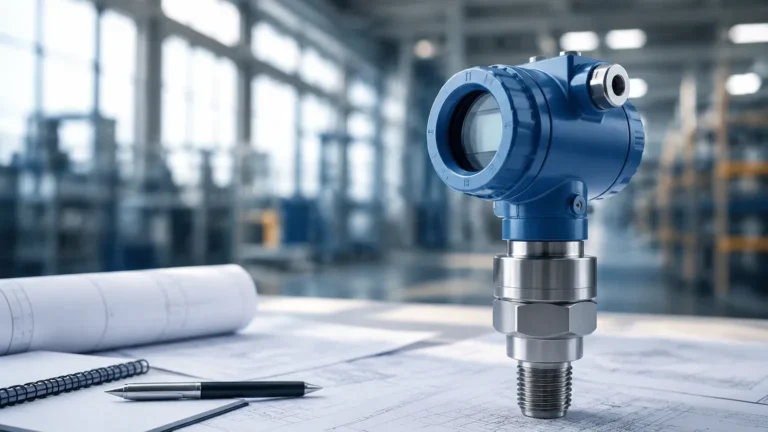
In the landscape of industrial process control, the ability to accurately track thermal fluctuations is as critical as monitoring pressure or flow. An industrial temperature range monitor serves as the primary diagnostic tool for ensuring that machinery, chemical reactions, and storage environments remain within safe and efficient operating parameters. Whether it is managing the cryogenic cooling required for liquefied gases or the extreme heat of a smelting furnace, understanding the underlying principles of temperature monitoring is essential for any engineering team.
For industries utilizing advanced level measurement solutions, temperature monitoring is not a standalone task. Thermal variations directly impact the physical properties of the media being measured, affecting the accuracy of radar, ultrasonic, and hydrostatic sensors. Therefore, selecting the right industrial temperature range monitor requires a deep dive into sensor physics, material compatibility, and integration capabilities.
Measurement Principles of Temperature Monitoring
Before selecting a monitoring system, it is vital to understand how different sensors translate thermal energy into a readable electronic signal. Most industrial systems rely on one of three primary technologies: Resistance Temperature Detectors (RTDs), Thermocouples, or Infrared (IR) sensors.
Resistance Temperature Detectors (RTDs)
RTDs operate on the principle that the electrical resistance of a metal increases as its temperature rises. Most industrial RTDs use platinum (Pt100 or Pt1000) because of its stability and linear relationship between temperature and resistance. These sensors are known for high accuracy and repeatability, making them the gold standard for applications where precise control is required within a range of -200°C to 600°C (-328°F to 1112°F).
Thermocouples
A thermocouple consists of two dissimilar metal wires joined at one end (the sensing junction). When there is a temperature gradient between the sensing junction and the reference junction, a small voltage (Seebeck effect) is generated. Thermocouples are favored for their durability and extremely wide temperature ranges, often exceeding 1700°C (3092°F). However, they are generally less accurate than RTDs and prone to drift over time due to the oxidation of the metal wires.
Infrared (IR) Pyrometers
Non-contact measurement is achieved through infrared sensors that detect the thermal radiation emitted by an object. These are essential for moving parts, hazardous materials, or extremely high-temperature surfaces where physical contact would destroy a probe. The accuracy of an industrial temperature range monitor using IR technology depends heavily on the emissivity of the target surface.
The Relationship Between Temperature and Level Measurement
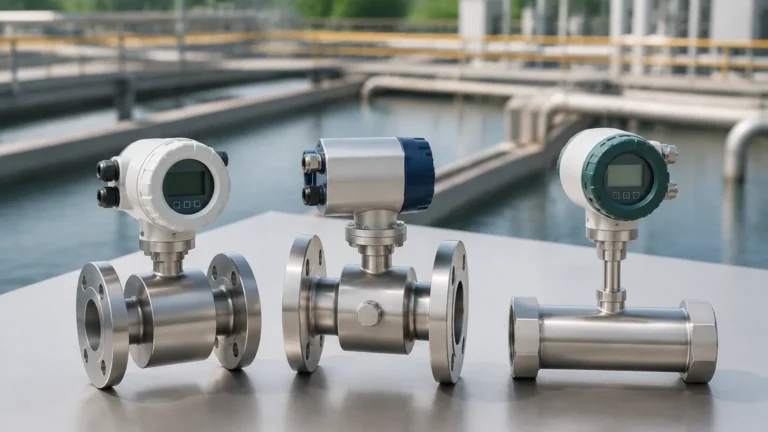
In many B2B industrial applications, temperature monitoring is integrated directly into level measurement devices. For instance, when using hydrostatic level transmitters, the density of the liquid changes with temperature. Without an integrated industrial temperature range monitor to provide compensation data, the level reading would fluctuate erroneously as the liquid expands or contracts.
Similarly, ultrasonic level sensors rely on the speed of sound, which is highly dependent on the temperature of the air or gas through which the pulse travels. A change of just 1°C can result in a significant measurement error if not corrected. Modern radar level meters and other advanced instruments found on the Welk Main Page often include internal temperature sensors to ensure that the electronics remain within their functional limits and to provide secondary process data to the PLC (Programmable Logic Controller).
Key Evaluation Criteria for Industrial Temperature Range Monitors
Selecting a monitor is not merely about the maximum heat it can withstand. Engineers must evaluate several factors to ensure long-term reliability:
1. Measurement Range: Define the absolute minimum and maximum temperatures the process will reach, including cleaning cycles (such as CIP/SIP in food and pharma) or emergency shutdown scenarios.
2. Accuracy and Precision: Determine the tolerance level. A storage tank for water may only need ±1°C accuracy, while a chemical reactor may require ±0.1°C.
3. Response Time: How quickly must the monitor react? Sensors housed in heavy-duty thermowells will have a slower response time than bare-wire thermocouples.
4. Output Signals: Most industrial monitors provide a 4-20mA analog signal, but digital protocols like HART, Modbus, or Profibus are increasingly common for transmitting multi-variable data (e.g., temperature plus diagnostic health).
5. Environmental Resistance: The housing must withstand the local environment, whether that involves corrosive salt spray, high-pressure washdowns (IP69K), or explosive atmospheres (ATEX/IECEx).
Practical Selection Table
| Feature | RTD (Pt100) | Thermocouple (Type K) | Infrared Sensor |
| :— | :— | :— | :— |
| Temperature Range | -200°C to +600°C | -200°C to +1260°C | -50°C to +3000°C |
| Accuracy | Excellent (±0.1°C) | Moderate (±1.1°C) | Variable (Emissivity dependent) |
| Stability | High (Low drift) | Low (Prone to drift) | Moderate |
| Response Time | Slow to Moderate | Fast | Very Fast (Milliseconds) |
| Cost | Moderate | Low | High |
| Best Use Case | Precision chemical processing | High-heat furnaces | Moving parts/Non-contact |

Installation Considerations and Best Practices
Correct installation is the difference between a reliable data stream and constant maintenance headaches. When installing an industrial temperature range monitor, consider the following:
Insertion Depth
To avoid errors caused by heat conduction along the sensor stem (stem loss), the probe must be inserted deep enough into the process media. A general rule of thumb is an insertion depth of at least 10 times the diameter of the sensor protection tube.
Use of Thermowells
In high-pressure or corrosive environments, sensors should be installed within a thermowell. This allows the sensor to be removed for calibration or replacement without breaking the process seal or draining the tank. However, ensure that the gap between the sensor and the thermowell wall is minimized (often using thermal paste) to maintain response speed.
Wiring and Interference
Temperature signals, especially from thermocouples, are very low voltage and susceptible to electromagnetic interference (EMI). Use shielded, twisted-pair cabling and keep signal wires away from high-voltage power lines. Utilizing a head-mounted transmitter to convert the signal to 4-20mA at the source is the most effective way to prevent signal degradation over long distances.
Limitations and Common Risks
While robust, an industrial temperature range monitor is not infallible. Understanding its limitations prevents unexpected failures:
* Calibration Drift: All sensors drift over time. RTDs drift less than thermocouples, but both require periodic validation against a known standard.
* Vibration Damage: In heavy industrial environments, constant vibration can cause mechanical fatigue in the sensor wires. In such cases, vibration-resistant thin-film RTDs are preferred over wire-wound versions.
* Chemical Compatibility: The sheath material (316 Stainless Steel, Hastelloy, or Ceramic) must be compatible with the process fluid. A mismatch can lead to rapid corrosion and sensor failure.
* Self-Heating: In RTDs, the current passed through the sensor to measure resistance generates a small amount of heat. If the excitation current is too high, the sensor will report a temperature higher than the actual process value.
Frequently Asked Questions (FAQ)
Q: How often should I calibrate my industrial temperature range monitor?
A: Most industrial standards recommend annual calibration. However, in critical safety applications or high-drift environments (like high-heat furnaces), semi-annual or quarterly checks may be necessary.
Q: Can I use a standard temperature monitor in a vacuum?
A: Yes, but heat transfer in a vacuum occurs only through radiation and conduction through the mounting point. This significantly slows down the response time of contact sensors.
Q: What is the difference between a 2-wire, 3-wire, and 4-wire RTD?
A: 2-wire RTDs are the least accurate because they cannot compensate for the resistance of the lead wires. 3-wire is the industrial standard, providing a balance of cost and accuracy by compensating for lead resistance. 4-wire provides the highest precision by completely eliminating the effect of lead wire resistance.
Q: Why is my infrared monitor giving inconsistent readings on shiny metal?
A: Shiny metals have low emissivity, meaning they reflect infrared energy from the surrounding environment rather than emitting their own. You may need to apply a non-reflective coating or use a multi-wavelength pyrometer designed for metals.
Conclusion
An industrial temperature range monitor is a foundational element of modern process automation. By selecting the appropriate technology—whether it be the precision of an RTD or the ruggedness of a thermocouple—and ensuring proper installation, facilities can achieve higher yields and safer operations. When integrated with advanced level measurement systems, such as those available on the Welk Main Page, these monitors provide the comprehensive data necessary for sophisticated industrial control. Always consult with a technical specialist to confirm that the chosen sensor materials and output protocols align with your specific environmental and regulatory requirements.