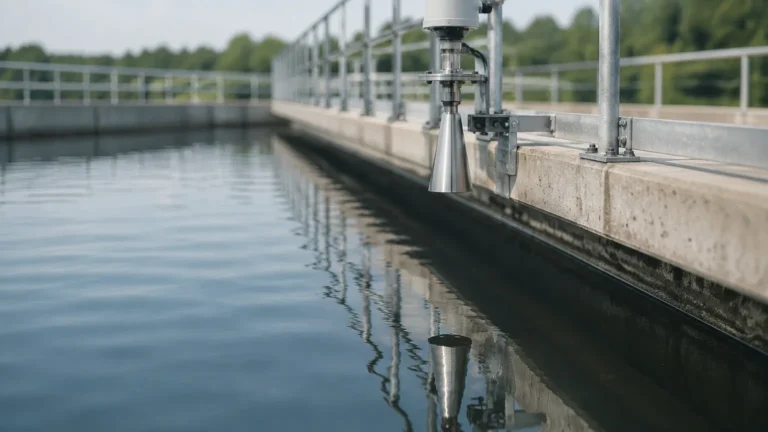
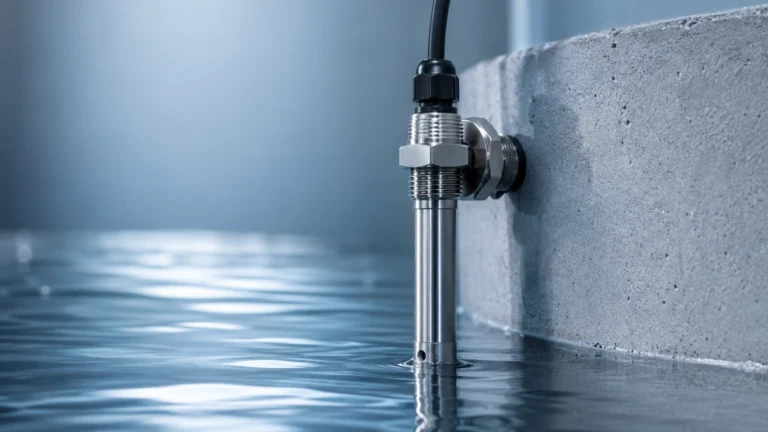
Deltabar Pmd75b
Deltabar Pmd75b
Differential pressure (DP) measurement remains a cornerstone of industrial process control, particularly in level measurement applications for pressurized vessels. The Deltabar PMD75B represents a sophisticated evolution in this technology, utilizing a piezoresistive sensor and a modular design to address the rigorous demands of the oil and gas, chemical, and water treatment industries. For engineers and plant operators, understanding the functional mechanics and application boundaries of the Deltabar PMD75B is essential for ensuring long-term measurement stability and process safety.
As a practical engineering reference, this article explores the underlying physics of differential pressure level measurement, the specific technical attributes of the PMD75B, and the critical selection criteria required for successful deployment in complex industrial environments.
Measurement Principles of Differential Pressure
Before evaluating the specific features of the Deltabar PMD75B, it is necessary to understand the hydrostatic principle that governs its operation. In level measurement, a DP transmitter calculates the height of a liquid by measuring the pressure exerted by the liquid column due to gravity.
The Hydrostatic Equation
The fundamental relationship used is:
P = ρ · g · h
Where:
* P is the hydrostatic pressure.
* ρ (Rho) is the density of the fluid.
* g is the acceleration due to gravity (approximately 9.81 m/s²).
* h is the height of the liquid column.
In an open tank, a simple hydrostatic transmitter at the bottom of the vessel is sufficient. However, in pressurized tanks, the gas or vapor pressure above the liquid adds to the total pressure at the bottom. To isolate the pressure exerted solely by the liquid, a differential pressure transmitter like the Deltabar PMD75B is used. It measures the difference between the "High Pressure" side (bottom of the tank) and the "Low Pressure" side (top of the tank, in the vapor space). The transmitter subtracts the head pressure, leaving only the pressure proportional to the liquid level.
Sensor Technology: Piezoresistive vs. Capacitive
The PMD75B typically employs a piezoresistive sensor. This technology involves a diaphragm with integrated strain gauges. When pressure is applied, the diaphragm deforms, changing the electrical resistance of the gauges. This change is converted into an electronic signal. Piezoresistive sensors are favored for their high sensitivity and ability to handle significant overpressure events, which are common during process upsets or cleaning cycles.
Technical Specifications and Features of the Deltabar PMD75B
The Deltabar PMD75B is designed for high-end applications where accuracy and digital integration are paramount. It is part of a modular generation of transmitters that emphasizes user safety and ease of maintenance.
Key Performance Metrics
1. Accuracy: Standard accuracy often reaches ±0.05%, with ultra-high accuracy versions achieving ±0.035% of the calibrated span. This precision is vital for inventory control and custody transfer applications.
2. Measuring Ranges: The device can handle spans from as low as 0.25 mbar (25 Pa) up to 40 bar (4 MPa), making it versatile for both shallow tanks and high-pressure process reactors.
3. Long-term Stability: High-quality DP transmitters are rated for minimal drift, often less than 0.05% of the upper range limit (URL) per year, reducing the frequency of required re-calibrations.
4. Communication Protocols: It supports modern industrial communication including 4-20mA HART, PROFIBUS PA, and FOUNDATION Fieldbus. This allows for remote configuration and advanced diagnostics.
Safety and Digital Integrity
The PMD75B is frequently developed according to IEC 61508 standards for use in SIL 2/3 safety-instrumented systems. A notable feature is the "HistoROM" data management concept, which stores configuration data and event logs. If a transmitter electronics module needs replacement, the configuration can be automatically uploaded to the new module, significantly reducing downtime.
Application Scenarios in Level Measurement
While the Deltabar PMD75B is a versatile pressure instrument, its primary utility in B2B industrial contexts is level monitoring in challenging environments. For a broader look at various measurement technologies, you can Review product options and application support at the Welk main page.
Pressurized Process Vessels
In chemical reactors where nitrogen blanketing or high-pressure steam is present, the PMD75B compensates for the headspace pressure. By connecting the low-pressure side to the top of the vessel, the transmitter ensures that fluctuations in the gas phase do not register as changes in liquid level.
Distillation Columns
Level control in the bottom of distillation columns is critical for preventing pump cavitation and ensuring product purity. The high-temperature capabilities of the PMD75B, often paired with remote diaphragm seals, allow it to operate in the intense heat of refinery processes.
Filter Monitoring
Beyond level, the "differential" aspect of the PMD75B is used to monitor the pressure drop across industrial filters. A rising DP value indicates filter fouling, allowing maintenance teams to schedule cleanings before a total blockage occurs.
Selection Criteria and Comparison Table
Choosing between a DP transmitter like the PMD75B and other technologies (such as radar or ultrasonic) depends on the physical properties of the media and the vessel geometry. Below is a comparison table to assist in the selection process.
| Feature | Deltabar PMD75B (DP) | Radar (Non-Contact) | Ultrasonic | Hydrostatic (Single Probe) |
| :— | :— | :— | :— | :— |
| Best Use Case | Pressurized tanks, closed loops | Corrosive media, high precision | Water/Wastewater, open sumps | Deep wells, vented tanks |
| Media Density | Must be constant/known | Irrelevant | Irrelevant | Must be constant/known |
| Pressure Range | Up to 400 bar (Static) | Up to 160+ bar | Atmospheric | Atmospheric to 20 bar |
| Installation | Requires process piping | Top-mounted | Top-mounted | Submersible or Side-mount |
| Foam/Vapor | Unaffected | Can be affected | Highly affected | Unaffected |
| Maintenance | Impulse line cleaning | Low | Low | Periodic cleaning |

Installation and Maintenance Considerations
The accuracy of a Deltabar PMD75B is often more dependent on the quality of the installation than the instrument itself. Engineering teams must account for several physical factors during the design phase.
Impulse Line Configuration
Impulse lines connect the process vessel to the transmitter.
* Gas Applications: The transmitter should be mounted above the tapping points so that condensate drains back into the process.
* Liquid Applications: The transmitter should be mounted below the tapping points to ensure the lines remain full of liquid and air bubbles can escape upward.
Wet Leg vs. Dry Leg
If the vapor in the headspace of a pressurized tank condenses at ambient temperatures, a "wet leg" must be used. This involves intentionally filling the low-pressure impulse line with a compatible liquid (often the process fluid or a silicone oil). This creates a constant head pressure on the low side that must be accounted for during the transmitter's zero-calibration. If the vapor does not condense, a "dry leg" is used, leaving the low-pressure line filled with gas.
Manifold Valves
A 3-valve or 5-valve manifold is essential for any PMD75B installation. These manifolds allow the transmitter to be isolated from the process for maintenance and enable "zeroing" the instrument under static pressure by equalizing the high and low sides.
Limitations and Alternative Technologies
Despite its precision, the Deltabar PMD75B is not a universal solution. Engineers should be aware of the following limitations:
1. Density Sensitivity: Since DP transmitters measure weight, any change in the liquid's density (due to temperature fluctuations or concentration changes) will result in a level error. If the density varies significantly, a multivariable transmitter or a non-contact radar system may be preferable.
2. Clogging and Viscosity: High-viscosity liquids or slurries can clog the small-diameter impulse lines. In these cases, the PMD75B should be used with diaphragm seals, which provide a large sensing surface and isolate the instrument from the process media via a capillary system.
3. Vacuum Conditions: While the PMD75B can measure in vacuum, the fill fluids within the diaphragm seals or the wet legs must be carefully selected to ensure they do not boil off or outgas under low pressure.
For applications involving simple water storage or non-pressurized chemical tanks, an ultrasonic level sensor or a standard hydrostatic transmitter might offer a more cost-effective alternative while maintaining sufficient accuracy.
Frequently Asked Questions (FAQ)
Q: Can the Deltabar PMD75B be used for flow measurement?
A: Yes. By measuring the pressure drop across a primary element like an orifice plate or Venturi tube, the PMD75B can calculate the flow rate of liquids, gases, or steam using the square root extraction function built into its electronics.
Q: What is the significance of the "B" in PMD75B?
A: The "B" typically denotes the latest generation of the device, which includes enhanced digital features, improved Bluetooth connectivity for commissioning via mobile apps, and refined safety diagnostics compared to the legacy PMD75 models.
Q: How often should the PMD75B be calibrated?
A: While the device has excellent long-term stability, industry standards usually suggest a verification every 1 to 2 years. In critical safety loops (SIL), the proof-test interval is defined by the safety manual and the specific risk requirements of the plant.
Q: Does temperature affect the reading?
A: Yes, temperature can affect both the density of the process fluid and the electronics of the sensor. The PMD75B includes internal temperature compensation to correct for sensor drift, but process-level density changes must be compensated for in the control system (PLC/DCS).
By adhering to these engineering principles and installation guidelines, the Deltabar PMD75B provides a robust and highly accurate solution for the most demanding level measurement tasks in modern industry. For further technical data on level measurement sensors and industrial automation, visiting the Main Page provides access to a comprehensive range of instrumentation solutions tailored for global industrial applications.