Deslagging
Deslagging
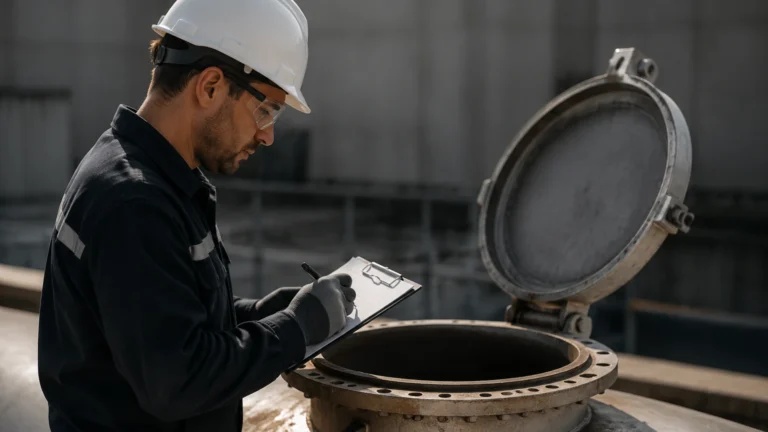
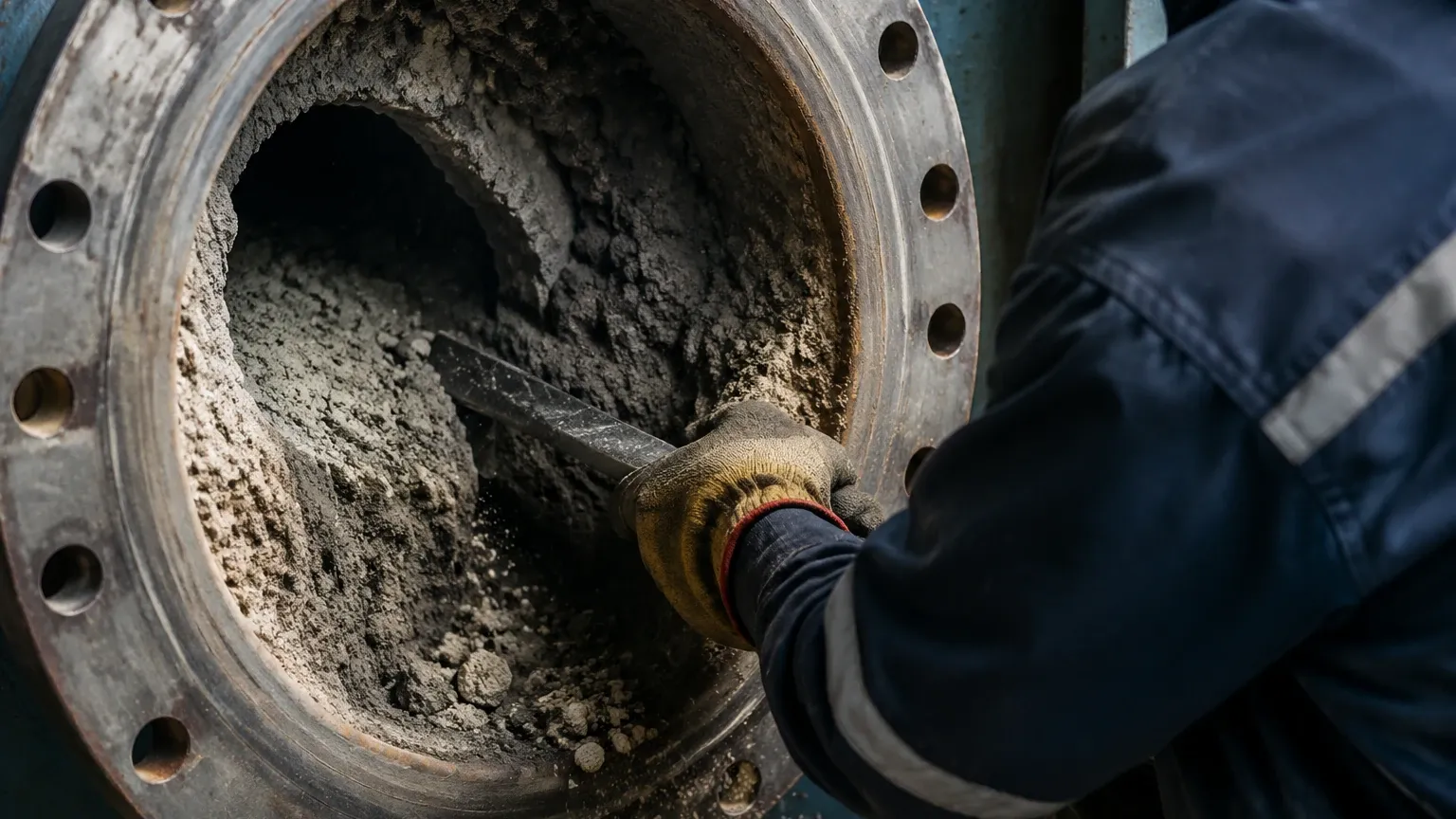
In heavy industrial operations, particularly those involving high-temperature combustion or metal smelting, the management of byproduct materials is a critical factor in maintaining operational continuity. Deslagging refers to the systematic removal of slag—a glass-like byproduct consisting of metal oxides and silicon dioxide—from furnaces, boilers, incinerators, and smelting vessels. While the term is often associated with the physical act of cleaning, modern industrial deslagging is a highly automated process that relies heavily on precise level measurement and control systems to ensure safety and efficiency.
Effective deslagging prevents the accumulation of residue that can lead to equipment fouling, reduced heat transfer efficiency, and catastrophic structural failure. To manage these systems, engineers must understand the interface between the material being processed and the waste being generated. This guide explores the technical requirements of deslagging systems, the measurement principles used to monitor them, and the selection criteria for instrumentation in these demanding environments.
The Role of Level Measurement in Deslagging Systems
Deslagging is rarely a standalone process; it is integrated into the broader material handling and waste management lifecycle. Whether in a coal-fired power plant or a municipal waste-to-energy facility, slag must be collected in hoppers, cooled (often in water-filled tanks), and transported via conveyors or pumps to storage silos.
Level measurement instruments serve as the "eyes" of the deslagging automation system. They perform several vital functions:
1. Overfill Prevention: Slag hoppers and settling tanks have finite capacities. If the level of slag or ash exceeds these limits, it can back up into the combustion chamber or damage the discharge mechanisms.
2. Process Optimization: Continuous level monitoring allows the system to trigger deslagging cycles based on actual accumulation rather than fixed timers. This reduces wear and tear on mechanical scrapers and conveyors.
3. Pump Protection: In wet deslagging systems, level sensors ensure that pumps do not run dry, which could lead to cavitation and mechanical seal failure.
4. Inventory Management: For facilities that sell slag as a construction aggregate, accurate level data in storage silos is essential for logistics and commercial reporting.
For engineers looking to integrate these sensors into their facility, reviewing comprehensive technical data on the Main Page of instrumentation providers is a necessary step in the design phase.
Measurement Principles for Deslagging Applications
Selecting the right technology for deslagging monitoring requires an understanding of the physical properties of the slag (temperature, abrasiveness, and dielectric constant) and the environmental conditions (dust, steam, and vibration).
Radar Level Measurement (Non-Contact)
Radar transmitters, particularly those operating at high frequencies (e.g., 80 GHz), are the preferred choice for many deslagging applications. They work on the Time-of-Flight (ToF) principle, emitting a microwave signal that reflects off the surface of the slag and returns to the sensor.
* Advantages: Radar is unaffected by the heavy dust and high temperatures common in dry deslagging hoppers. High-frequency radar has a narrow beam angle, allowing it to avoid internal obstructions like structural braces or agitators.
* Limitations: Slag with a very low dielectric constant may reflect signals poorly, requiring specialized high-sensitivity antennas.
Ultrasonic Level Measurement
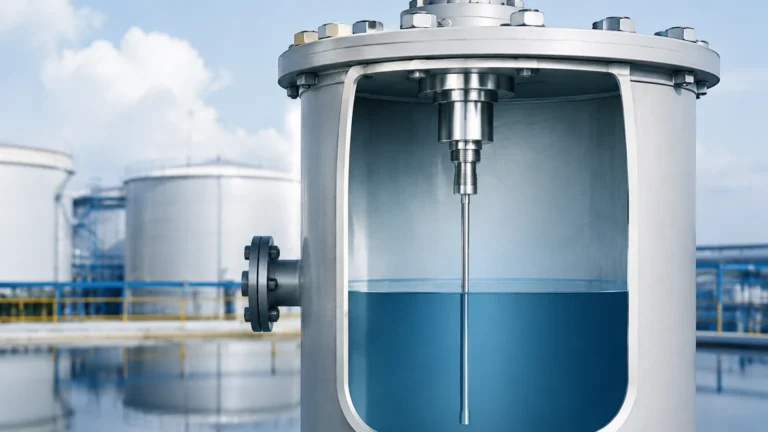
Ultrasonic sensors use sound waves to measure the distance to the material surface. These are frequently used in wet deslagging systems where slag is quenched in water tanks.
* Advantages: Cost-effective for liquid-level monitoring in settling tanks.
* Limitations: Ultrasonic waves are highly sensitive to temperature fluctuations and steam. In the hot, vapor-heavy environment of a quench tank, the speed of sound changes, which can lead to significant measurement errors unless the sensor is temperature-compensated.
Hydrostatic Pressure Transmitters
In wet deslagging, hydrostatic transmitters measure the pressure exerted by the column of liquid and slag slurry.
* Principle: The pressure at the bottom of the tank is proportional to the height of the liquid multiplied by its density.
* Considerations: Because slag slurries have variable densities, hydrostatic sensors must be calibrated carefully. Abrasion-resistant diaphragms (often ceramic) are required to withstand the gritty nature of the slag.
Point Level Switches
For simple high/low alarm functions, point level switches are used as a secondary safety layer. Common types include rotary paddle switches for dry slag and tuning fork switches for slurries.
Selection Criteria and Comparison Table
When designing a deslagging control loop, the choice of instrument depends on the specific phase of the process. The following table provides a comparison of technologies based on typical deslagging environments.
| Feature | Radar (80 GHz) | Ultrasonic | Hydrostatic | Rotary Paddle |
| :— | :— | :— | :— | :— |
| Application | Dry Slag Hoppers | Quench Tanks | Slurry Sumps | High-Level Alarm |
| Temperature Range | Up to 200°C (higher with cooling) | Up to 80°C | Up to 100°C | Up to 150°C |
| Dust Resistance | Excellent | Poor | N/A (Submerged) | Good |
| Steam Resistance | Excellent | Poor | N/A | Moderate |
| Maintenance | Low (No moving parts) | Moderate | Moderate (Cleaning) | High (Mechanical wear) |
| Accuracy | ±2 mm | ±10 mm | ±0.5% of span | N/A (Point level) |
Installation Considerations in Harsh Environments
Deslagging environments are among the most hostile in industrial processing. To ensure long-term reliability of level instruments, several installation best practices must be followed:
1. Thermal Protection
Slag exiting a furnace can exceed 1,000°C. Even if the sensor is mounted at a distance, radiant heat can damage electronics. The use of cooling jackets (water or air-cooled) and heat-resistant stand-offs is mandatory for sensors mounted directly above slag discharge points.
2. Dust and Build-up Prevention
In dry deslagging, fine ash and slag dust can accumulate on the sensor face. For radar and ultrasonic units, air purging systems should be installed. A continuous stream of clean, compressed air across the antenna or transducer face prevents build-up and ensures the signal path remains clear.
3. Mounting Angles and Beam Path
Slag does not always settle into a flat surface; it often forms "cones" or "rat-holes." Radar sensors should be mounted in a position where the beam is perpendicular to the expected slope of the material to maximize signal return. Furthermore, the sensor must be positioned away from the fill stream to avoid false readings caused by falling debris.
4. Abrasive Protection
For contact-based sensors, such as hydrostatic transmitters or level switches, the sensing element must be constructed from hardened materials. Slag is highly abrasive; standard stainless steel components may erode quickly. Ceramic diaphragms or tungsten-carbide coatings are often utilized to extend service life.
Limitations and Operational Challenges
Despite advancements in technology, deslagging monitoring faces inherent challenges. One primary limitation is the "dielectric shift" in slag. As the chemical composition of the fuel or ore changes, the reflectivity of the slag can vary, potentially requiring recalibration of radar systems.
In wet deslagging, the presence of foam on the surface of the quench water can absorb ultrasonic signals, leading to a "loss of echo." In such cases, radar or guided wave radar (GWR) is often a more robust alternative, as microwaves penetrate foam more effectively than sound waves.
Finally, mechanical vibration from heavy-duty scrapers and conveyors can affect the stability of sensitive electronics. Remote-mounted electronics, where the sensing head is separated from the transmitter via a cable, can help isolate the delicate components from the physical stress of the deslagging machinery.
Frequently Asked Questions (FAQs)
Q: How often should deslagging level sensors be calibrated?
A: In stable processes, annual calibration is usually sufficient. However, if the source material (e.g., the type of coal or waste being burned) changes frequently, quarterly checks are recommended to account for changes in material density or dielectric properties.
Q: Can I use a laser level sensor for deslagging?
A: Laser sensors provide high precision but are generally unsuitable for deslagging due to the high concentration of dust and steam, which scatters the laser beam. Radar is a more reliable non-contact alternative in these conditions.
Q: What is the benefit of 80 GHz radar over 26 GHz radar in slag hoppers?
A: The 80 GHz radar has a much narrower beam (typically 3 to 4 degrees). This allows the signal to pass through narrow openings and avoid reflecting off the walls of the hopper or internal support structures, providing a much cleaner and more accurate signal.
Q: How do I handle measurement in a tank with a mechanical scraper?
A: The sensor should be mounted in a "dead zone" where the scraper does not pass, or the control system must be programmed to ignore the signal during the brief moment the scraper passes through the sensor's beam path (known as false signal suppression).
Conclusion
Modern deslagging is an essential component of industrial efficiency, transforming a hazardous waste-handling task into a controlled, automated process. By selecting the appropriate level measurement technology—whether it be high-frequency radar for dry hoppers or robust hydrostatic sensors for wet sumps—operators can significantly reduce downtime and maintenance costs.
As industrial requirements become more stringent, the integration of smart sensors into deslagging systems will continue to evolve. For technical specifications and assistance in selecting the right instrument for your specific application, please refer to the Main Page for detailed product support and engineering guidelines.