Ethernet-apl
Ethernet-apl
In the landscape of industrial automation and process control, the demand for high-speed data transmission from the field level to the enterprise level has never been greater. Ethernet-APL (Advanced Physical Layer) represents a significant technological leap, bridging the gap between traditional fieldbus systems and modern Ethernet-based architectures. For industries such as water treatment, chemical processing, and oil and gas, where level measurement is critical, Ethernet-APL provides a standardized, high-performance communication layer that supports intrinsic safety and long-distance connectivity.
This article examines the technical principles of Ethernet-APL, its application in level measurement instruments, and the practical considerations engineers must address when selecting and installing this technology. For a comprehensive overview of available instrumentation and technical support, professionals can refer to the Main Page of our product catalog.
Understanding the Principles of Ethernet-APL
Ethernet-APL is not a new protocol but rather a specialized physical layer for Ethernet. It is based on the IEEE 802.3cg (10BASE-T1L) standard, specifically adapted for the requirements of the process industry. The core objective is to enable the use of Ethernet in hazardous areas and across large industrial sites where traditional Ethernet (Cat 5/6) cabling is impractical.
1. Two-Wire Technology and Power Delivery
Unlike standard Ethernet, which requires four or eight wires, Ethernet-APL operates over a single balanced twisted pair. This 2-wire system carries both data and power to the field device. This is achieved through Power over Data Line (PoDL) technology, which simplifies wiring and reduces installation costs by utilizing existing fieldbus type A cabling in many retrofit scenarios.
2. Communication Speed
Ethernet-APL provides a full-duplex communication speed of 10 Mbit/s. While this is slower than gigabit Ethernet used in IT environments, it is approximately 300 times faster than traditional HART communication and significantly faster than PROFIBUS PA or Foundation Fieldbus. This bandwidth allows for the transmission of not only the primary process variable (e.g., liquid level) but also high-resolution diagnostic data, device health parameters, and complex echo curves from radar level meters.
3. Intrinsic Safety (2-WISE)
One of the most critical aspects of Ethernet-APL is its support for intrinsic safety. The 2-WISE (2-Wire Intrinsically Safe Ethernet) concept, defined in IEC 60079-47, simplifies the design and certification of intrinsically safe loops. It allows for a "plug-and-play" approach to hazardous area installations, where the power limits are pre-defined, eliminating the need for complex entity parameter calculations for every device combination.
Ethernet-APL in Level Measurement Applications
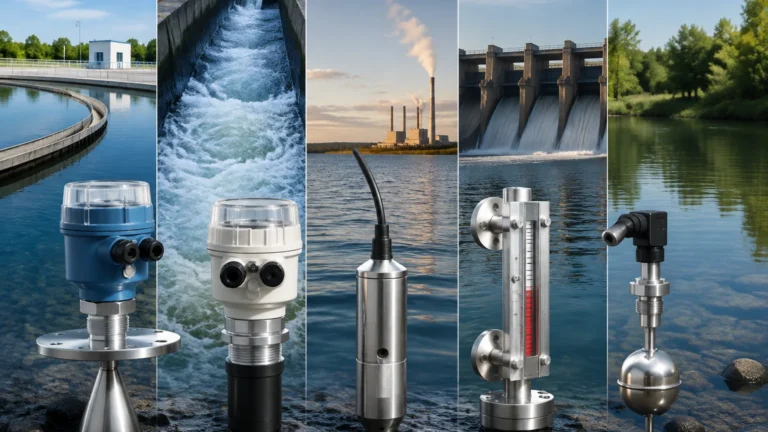
Level measurement instruments, such as radar level meters, ultrasonic sensors, and hydrostatic transmitters, generate a wealth of data that legacy systems often struggle to transmit efficiently. Ethernet-APL transforms how these devices integrate into the control system.
Radar Level Meters
Modern 80 GHz radar level meters produce complex signal profiles to distinguish between the actual material surface and internal tank obstructions. With Ethernet-APL, these high-resolution echo curves can be transmitted to the control room in real-time. This allows for remote troubleshooting and precise calibration without the need for on-site technicians to connect local display units in hazardous zones.
Ultrasonic Level Sensors
In water and wastewater applications, ultrasonic sensors are often deployed across large facilities. The ability of Ethernet-APL to cover distances up to 1,000 meters (3,280 feet) on the trunk line makes it ideal for connecting remote pump stations or open channel flow measurements to a centralized PLC or SCADA system.
Hydrostatic and Pressure Transmitters
For hydrostatic level measurement, Ethernet-APL ensures that temperature compensation data and pressure sensor health are monitored continuously. The high-speed link ensures that fast-changing levels in pressurized vessels are captured with minimal latency, improving the accuracy of inventory management and overfill protection systems.
Selection Criteria for Ethernet-APL Instruments
When evaluating level measurement solutions for an Ethernet-APL network, engineers should consider the following technical factors:
| Criteria | Requirement | Importance |
| :— | :— | :— |
| Network Topology | Trunk and Spur | Determines the physical layout and number of switches required. |
| Power Consumption | < 500mW to 1W | Critical for ensuring the APL switch can power all connected spurs. |
| Hazardous Area Rating | Ex ia / Ex eb | Must match the zone requirements of the installation site. |
| Protocol Support | PROFINET, EtherNet/IP, OPC UA | Ethernet-APL is protocol-agnostic; ensure the device supports your controller's language. |
| Cable Type | Fieldbus Type A (Shielded) | Essential for maintaining signal integrity and meeting distance specs. |
Installation and Topology Considerations
Ethernet-APL follows a specific topology designed to balance distance and power distribution. Understanding these limits is essential during the FEED (Front-End Engineering Design) phase.
Trunk and Spur Configuration
* The Trunk: The main line connecting the control room or power switch to the field switches. It can reach lengths of up to 1,000 meters (1 km). The trunk typically carries higher power and data loads.
* The Spur: The connection from the field switch to the individual level meter. Spurs are limited to 200 meters (656 feet) and are usually intrinsically safe (Ex ia).
Cabling Requirements
While Ethernet-APL is designed to work on existing Type A fieldbus cables, the quality of the cable impacts the maximum achievable distance. Shielding is mandatory to protect the 10 Mbit/s signal from electromagnetic interference (EMI) common in industrial environments. For new installations, using optimized Ethernet-APL certified cables is recommended to ensure long-term reliability.
Power Budgeting
Each Ethernet-APL field switch has a limited power budget. Engineers must calculate the total current draw of all connected level transmitters. While most modern radar and ultrasonic sensors are designed for low power consumption, high-accuracy instruments with integrated heaters or extensive local displays may require closer scrutiny of the power budget.

Comparison: Ethernet-APL vs. Legacy Protocols
To understand the value proposition of ethernet-apl, it is helpful to compare it against the technologies it is intended to augment or replace.
| Feature | HART (4-20mA) | PROFIBUS PA | Ethernet-APL |
| :— | :— | :— | :— |
| Data Rate | 1.2 kbit/s | 31.25 kbit/s | 10 Mbit/s |
| Wiring | 2-wire | 2-wire | 2-wire |
| Power over Wire | Yes | Yes | Yes |
| Intrinsic Safety | Yes | Yes | Yes (2-WISE) |
| Protocol | HART | PROFIBUS | Multiple (PROFINET, etc.) |
| Diagnostics | Basic/Slow | Moderate | Advanced/Real-time |
Technical Limitations and Challenges
Despite its advantages, Ethernet-APL is not a universal solution for every application. Engineers should be aware of the following limitations:
1. Switch Infrastructure: Unlike 4-20mA systems that connect directly to I/O cards, Ethernet-APL requires specialized field switches. This adds a layer of networking hardware that must be managed and maintained.
2. Distance Constraints: While 1,000 meters is significant, it is less than the distance achievable with some fiber optic solutions. For extremely large-scale facilities, a combination of fiber backbones and Ethernet-APL spurs may be necessary.
3. Legacy Integration: Integrating Ethernet-APL devices into an older DCS (Distributed Control System) that does not support industrial Ethernet protocols may require costly gateway conversions.
Frequently Asked Questions (FAQ)
Q: Can I use my existing HART cabling for Ethernet-APL?
A: In many cases, yes. If the existing cable is a shielded twisted pair (Fieldbus Type A), it can support Ethernet-APL. However, the maximum distance may be reduced if the cable quality is poor or if there are too many splices.
Q: Does Ethernet-APL replace the need for a PLC?
A: No. Ethernet-APL is a physical layer for communication. You still need a controller (PLC or DCS) to process the data and execute control logic. However, it allows the PLC to communicate much more efficiently with the field devices.
Q: Is Ethernet-APL suitable for submersed hydrostatic level sensors?
A: Yes, provided the sensor head or the transmitter housing is equipped with an Ethernet-APL interface. The 2-wire nature is particularly beneficial for submersed applications where cable diameter and flexibility are important.
Q: How does 2-WISE simplify hazardous area installation?
A: 2-WISE provides a set of universal parameters for voltage, current, and power. If both the power source (switch) and the device (level meter) are 2-WISE certified, they are guaranteed to be compatible and safe without the need for the manual loop calculations required by traditional IS (Intrinsically Safe) standards.
Conclusion and Implementation
Ethernet-APL is a foundational technology for the transition to Industry 4.0 in the process sector. By providing a high-speed, 2-wire, intrinsically safe communication path, it allows level measurement instruments to deliver their full potential in terms of accuracy and diagnostics. When planning an upgrade or a new facility, selecting instruments that support this physical layer ensures that the infrastructure remains relevant for decades to come.
For technical specifications on radar, ultrasonic, and hydrostatic level instruments compatible with modern digital architectures, please visit our Main Page to review product options and application support. Our engineering team is available to assist with selecting the correct technology for your specific industrial environment, ensuring reliable and cost-effective level measurement solutions.