Devices to Measure Pressure
Devices to Measure Pressure
In the landscape of industrial automation and process control, devices to measure pressure serve as critical components for ensuring safety, efficiency, and accuracy. While pressure measurement is a broad field, its application in level sensing—specifically hydrostatic level measurement—is one of the most common and reliable methods used across industries such as water treatment, chemical processing, and oil and gas. Understanding the underlying physics and the various technologies available is essential for selecting the correct instrument for a specific application.
Fundamental Principles of Pressure Measurement
Before selecting an instrument, it is necessary to understand the three primary types of pressure measurement: gauge, absolute, and differential.
1. Gauge Pressure: This is measured relative to the local atmospheric pressure. It is the most common type of measurement in open tanks.
2. Absolute Pressure: This is measured against a perfect vacuum. It is typically used in applications where atmospheric pressure fluctuations would significantly impact the process accuracy.
3. Differential Pressure (DP): This measures the difference between two pressure points. In level measurement, DP is used for pressurized (closed) vessels to cancel out the influence of the gas or steam pressure above the liquid.
The Hydrostatic Principle
In the context of level measurement, many devices to measure pressure operate on the hydrostatic principle. This principle states that the pressure at a specific depth in a static liquid is directly proportional to the height of the liquid column above it. The relationship is defined by the formula:
P = ρ × g × h
* P = Hydrostatic pressure
* ρ (rho) = Density of the liquid
* g = Gravitational acceleration (approximately 9.81 m/s²)
* h = Height of the liquid column
By measuring the pressure at the bottom of a tank and knowing the density of the fluid, the height (level) can be calculated with high precision. This method is widely favored because it is unaffected by foam, surface turbulence, or the dielectric constant of the material.
Types of Devices to Measure Pressure in Industrial Level Applications
Industrial applications require robust hardware capable of withstanding corrosive chemicals, extreme temperatures, and mechanical stress. The following are the primary categories of pressure-based level measurement instruments.
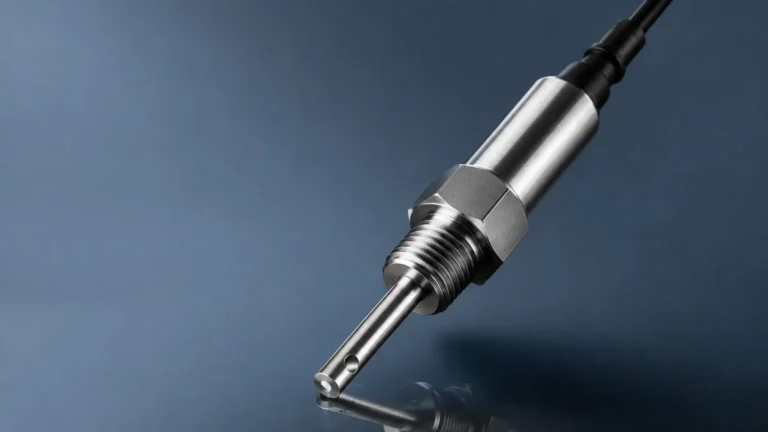
1. Submersible Hydrostatic Level Transmitters
These devices consist of a pressure sensor (usually piezoresistive or ceramic) housed in a waterproof stainless steel casing. The sensor is lowered into the liquid via a specialized cable. The cable contains a vent tube that allows the sensor to compensate for changes in atmospheric pressure, ensuring that the measurement reflects only the liquid's weight.
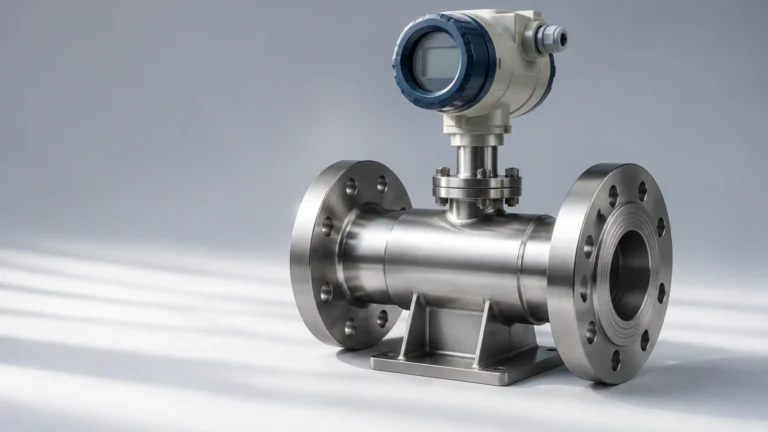
2. Flange-Mounted Pressure Transmitters
For tanks where internal access is limited or where the liquid is highly viscous, flange-mounted transmitters are used. These are bolted directly to the side of the tank near the bottom. A diaphragm seal separates the process fluid from the sensor element, preventing clogging or chemical damage to the internal electronics.
3. Differential Pressure (DP) Transmitters
In closed or pressurized tanks, a single pressure reading at the bottom would include the pressure of the gas blanket above the liquid. A DP transmitter uses two ports: one connected to the bottom (high-pressure side) and one to the top (low-pressure side) of the vessel. The device subtracts the top pressure from the bottom pressure, leaving only the hydrostatic pressure of the liquid.
4. Electronic Pressure Sensors (Piezoresistive vs. Capacitive)
* Piezoresistive Sensors: These utilize a silicon or metal diaphragm with strain gauges. When pressure is applied, the diaphragm deforms, changing the electrical resistance. They are highly sensitive and cost-effective.
* Ceramic Capacitive Sensors: These use a ceramic diaphragm that acts as one plate of a capacitor. Pressure changes the distance between the plates, altering the capacitance. These are exceptionally durable and resistant to chemical corrosion and mechanical overpressure.
Selection Criteria for Pressure Measurement Instruments
Selecting the right devices to measure pressure requires a thorough analysis of the process environment. Engineers should evaluate the following criteria:
| Feature | Submersible Transmitter | Flange-Mounted Transmitter | DP Transmitter |
| :— | :— | :— | :— |
| Tank Type | Open wells, sumps, reservoirs | Open or closed tanks | Pressurized vessels |
| Media Type | Water, wastewater, thin oils | Chemicals, slurries, viscous fluids | Steam, gases, chemicals |
| Installation | Top-entry (suspended) | Side-entry (bolted) | Dual-port piping |
| Maintenance | Easy to pull out | Requires tank draining/bypass | Complex piping maintenance |
| Accuracy | 0.25% to 0.5% FS | 0.1% to 0.25% FS | High (up to 0.075% FS) |
Media Compatibility and Material Selection
The wetted parts of the instrument must be compatible with the process fluid. While 316L stainless steel is standard, aggressive chemicals may require Hastelloy C, Tantalum, or PTFE coatings. For seawater or brine applications, Titanium is often the preferred housing material for submersible sensors.
Temperature and Pressure Range
Pressure sensors are sensitive to temperature shifts. High-quality devices include internal temperature compensation. For extremely high-temperature applications (above 100°C / 212°F), capillary tubes or cooling spacers are used to protect the transmitter electronics from the heat. To explore specific hardware configurations for these environments, you can Review product options and application support on the Welk main page.
Installation and Calibration Considerations
Proper installation is as critical as the choice of instrument. Incorrect mounting can lead to measurement drift or premature failure.
* Venting: For gauge pressure and submersible sensors, the vent tube must remain unobstructed. If moisture enters the vent tube, it can block atmospheric compensation or damage the electronics. Desiccant filters are recommended in humid environments.
* Zero-Point Calibration: After installation, the device should be zeroed to account for the mounting position. In DP systems, "zero-trimming" ensures that the transmitter reads zero when the tank is empty, even if there is residual pressure in the impulse lines.
* Impulse Lines: For DP transmitters, impulse lines should be sloped to prevent gas bubbles or sediment from being trapped, which would create false pressure readings.
* Turbulence Protection: In tanks with agitators or high inflow rates, submersible sensors should be installed inside a stilling well (a perforated pipe) to prevent the sensor from swinging and to dampen mechanical noise.

Limitations and Common Challenges
While pressure-based measurement is versatile, it has specific limitations that must be addressed during the engineering phase.
1. Density Variations: Since hydrostatic pressure depends on density, any change in the fluid's density (due to temperature changes or mixing of different fluids) will result in a level error. If the density is not constant, a secondary measurement or a temperature-compensated calculation is required.
2. Clogging and Buildup: In wastewater or slurry applications, solids can accumulate on the diaphragm. Using flush-diaphragm designs or large-diameter seals can mitigate this risk.
3. Overpressure Events: Sudden pressure spikes (water hammer) can permanently deform the sensor diaphragm. Selecting a device with a high overpressure rating (e.g., 3x or 4x the nominal range) is a necessary safeguard.
Industrial Applications and Use Cases
Water and Wastewater Management
In deep wells and lift stations, submersible hydrostatic sensors are the standard choice. They provide a continuous 4-20mA or RS485 Modbus signal that allows for automated pump control. The ability to measure levels in depths exceeding 100 meters (328 ft) makes them superior to ultrasonic sensors in narrow boreholes.
Chemical Processing
In chemical storage, flange-mounted transmitters with PTFE diaphragms allow for the measurement of acids and bases without risking instrument corrosion. The side-mount configuration allows for easy inspection without entering the tank.
Oil and Gas
Differential pressure transmitters are used in separators and pressurized storage spheres. These devices must often be explosion-proof (ATEX/IECEx certified) and capable of handling high static pressures while measuring very small changes in liquid level.
Frequently Asked Questions (FAQ)
Q: Can I use a standard pressure gauge for level measurement?
A: Yes, a pressure gauge can indicate level if the dial is calibrated in units of height (meters or feet) based on a specific density. However, for automation, an electronic transmitter is required to send data to a PLC or SCADA system.
Q: How often should devices to measure pressure be calibrated?
A: In stable environments, annual calibration is standard. In harsh chemical processes or high-cycle applications, semi-annual checks are recommended to account for potential sensor drift.
Q: What is the difference between a pressure transmitter and a pressure transducer?
A: Generally, a transducer provides a raw voltage output (e.g., 0-10V), while a transmitter includes signal conditioning to provide a regulated current loop (4-20mA) or digital output, which is more resistant to electrical noise over long distances.
Q: Does the shape of the tank affect the pressure reading?
A: No. Hydrostatic pressure is only dependent on the vertical height of the liquid, not the volume or the shape of the vessel. However, to calculate *volume* from the pressure reading, the tank geometry must be programmed into the control system.
Summary of Technical Specifications
When specifying devices to measure pressure for a project, ensure the following technical data is confirmed:
* Measuring Range: The maximum expected height of the liquid.
* Output Signal: 4-20mA, HART, Modbus, or Profibus.
* Process Temperature: The continuous and peak temperature of the media.
* Accuracy Class: Usually expressed as a percentage of the Full Scale (FS).
* Ingress Protection: IP68 for submersible, IP65/67 for external transmitters.
By carefully matching the sensor technology to the physical properties of the process, engineers can implement a level measurement solution that provides years of reliable service with minimal maintenance. For detailed technical datasheets and selection guides, refer to the Main Page for professional-grade industrial level instruments.