Diesel Fuel Level Sensor
Diesel Fuel Level Sensor
In industrial operations, diesel fuel represents both a critical utility and a significant operational expense. Whether powering emergency backup generators for data centers, fueling heavy machinery on construction sites, or managing bulk storage for logistics fleets, the ability to monitor fuel volume with precision is essential. A reliable diesel fuel level sensor provides the data necessary for inventory management, leak detection, and the prevention of unauthorized fuel removal.
Selecting the appropriate sensing technology requires an understanding of the physical properties of diesel fuel and the specific environmental conditions of the storage vessel. This guide explores the primary measurement principles used in modern fuel management and provides an engineering framework for technology selection.
Measurement Principles for Diesel Fuel
Diesel fuel level measurement can be categorized into contact and non-contact methods. Each principle interacts differently with the fluid's dielectric constant, density, and vapor pressure.
Hydrostatic Pressure Measurement
Hydrostatic level transmitters operate on the principle that the pressure at the bottom of a tank is directly proportional to the height of the liquid column above it. The relationship is defined by the formula:
*P = ρ × g × h*
Where *P* is pressure, *ρ* (rho) is the density of the diesel, *g* is the gravitational constant, and *h* is the height of the liquid.
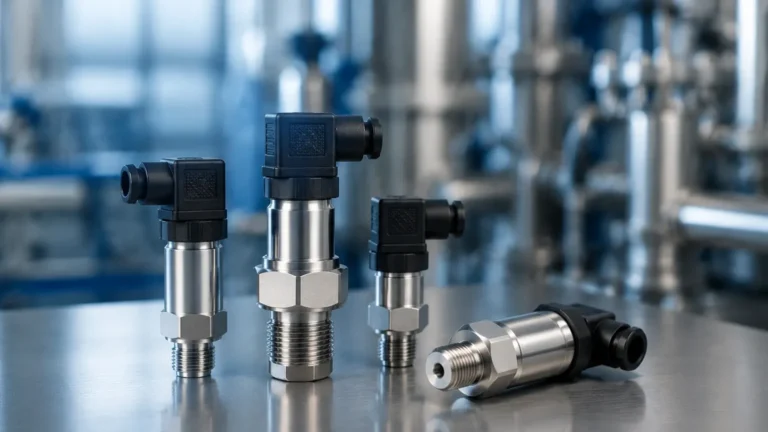
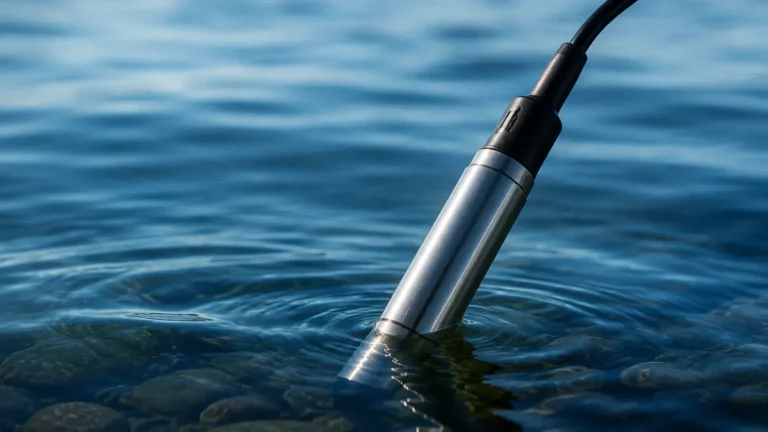
For diesel fuel, which typically has a density ranging from 0.82 to 0.85 kg/L (depending on the grade and temperature), the sensor must be calibrated to the specific gravity of the fuel. These sensors are usually submersible probes or externally mounted pressure transducers. They are favored for their simplicity and reliability in vented tanks.
Capacitive Level Sensing
Capacitance sensors treat the fuel tank like a capacitor. The sensor probe acts as one electrode, and the tank wall (if metallic) acts as the second. Diesel fuel serves as the dielectric material. As the fuel level rises and falls, the total capacitance of the system changes because the dielectric constant of diesel (approximately 2.1) is significantly higher than that of air (1.0).
This technology is highly effective for continuous monitoring in smaller tanks or vehicle fuel systems. However, it requires recalibration if the fuel composition changes significantly or if there is substantial water contamination, as water has a much higher dielectric constant (approx. 80) which will skew the readings.
Ultrasonic (Non-Contact) Measurement
Ultrasonic sensors emit high-frequency sound pulses that reflect off the surface of the diesel fuel. By measuring the time-of-flight (the duration between emission and reception), the sensor calculates the distance to the fuel surface.
Because they do not touch the fuel, ultrasonic sensors are immune to the corrosive effects of fuel additives. However, they can be affected by the "vapor space" in the tank. Diesel vapors and temperature fluctuations can change the speed of sound, potentially introducing errors if the sensor does not feature integrated temperature compensation.
Radar Level Measurement
Radar sensors, specifically Frequency Modulated Continuous Wave (FMCW) or pulsed radar, use electromagnetic waves instead of sound. Radar is considered the gold standard for industrial fuel storage. Since electromagnetic waves are not affected by air temperature, pressure, or vapors, radar provides sub-millimeter accuracy.
For diesel applications, 80 GHz high-frequency radar is often preferred because it can penetrate foam and ignore internal tank obstructions like ladders or heating coils. Guided Wave Radar (GWR) is another variation where the signal travels down a probe, making it ideal for narrow tanks or fuels with low dielectric constants.
Magnetic Float Level Gauges
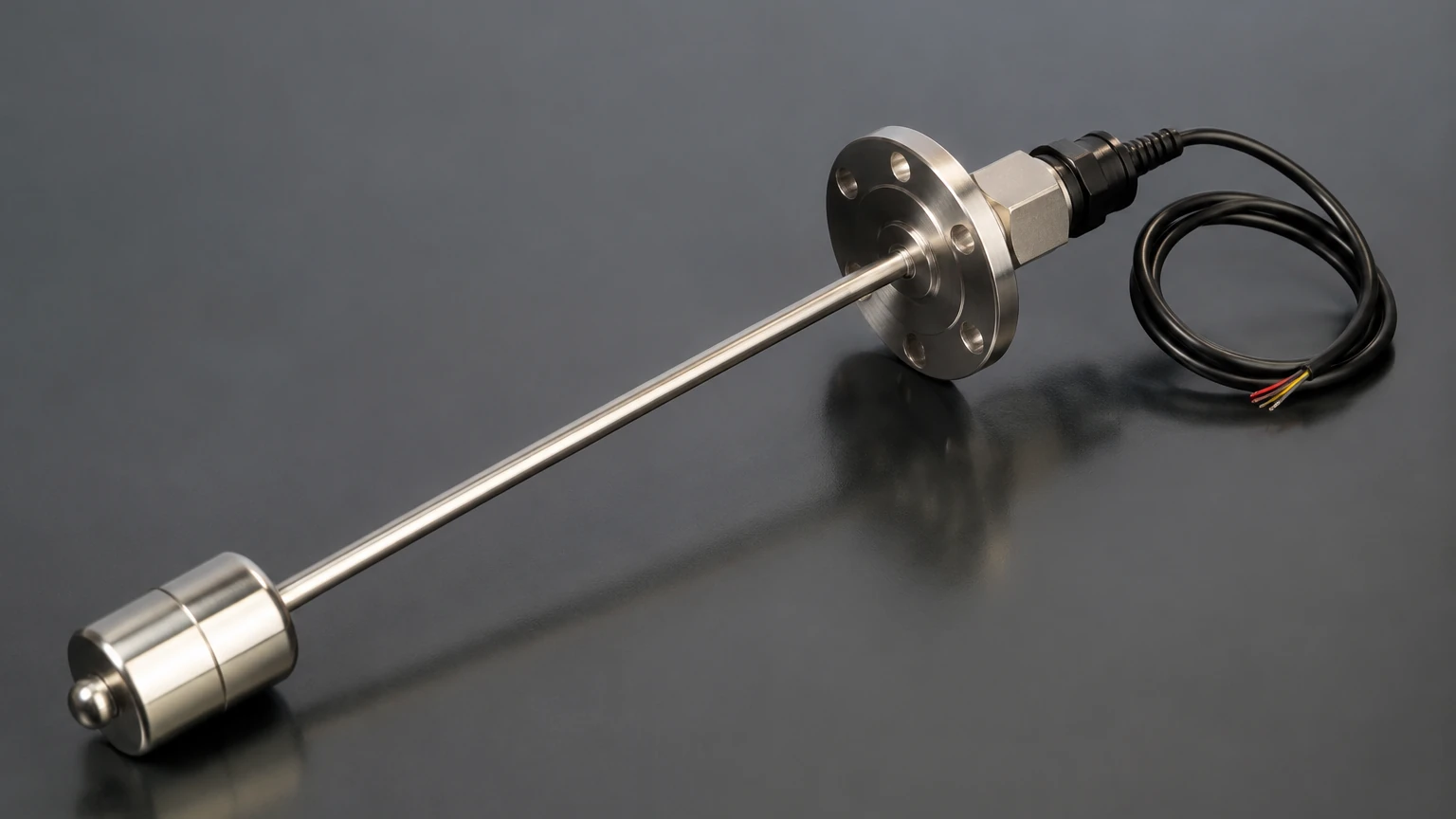
Magnetic level gauges utilize a float containing an internal magnet that moves along a bypass chamber or a guide tube. As the float moves with the fuel level, it triggers magnetic switches or interacts with a magnetostrictive wire to provide a level reading. This is a robust mechanical solution that provides local visual indication and can be paired with a transmitter for remote monitoring.
Technology Selection Criteria
Choosing the right diesel fuel level sensor involves balancing accuracy requirements against the physical constraints of the installation site. The following table compares the most common technologies used in industrial diesel applications.
| Technology | Typical Accuracy | Installation Type | Best For | Main Limitation |
| :— | :— | :— | :— | :— |
| Hydrostatic | ±0.5% to 0.1% | Submersible / Bottom | Deep tanks, vented vessels | Sensitive to density changes |
| Capacitance | ±1% | Top-mount probe | Vehicle tanks, small gensets | Affected by water in fuel |
| Ultrasonic | ±0.25% | Non-contact (Top) | Standard storage tanks | Affected by heavy foam/vapors |
| Radar (FMCW) | ±1mm to 2mm | Non-contact (Top) | High-accuracy inventory | Higher initial cost |
| Magnetic Float | ±5mm | Side-mount / Top | Local visual monitoring | Moving parts can wear |
Installation Considerations for Diesel Tanks
To ensure the longevity and accuracy of a diesel fuel level sensor, several installation factors must be addressed:
1. Venting and Pressure: Most diesel storage tanks are vented to the atmosphere. However, if the tank is pressurized or under vacuum, hydrostatic sensors must use a differential pressure arrangement or a vented cable to compensate for the headspace pressure.
2. Turbulence and Stilling Wells: In tanks where fuel is frequently pumped in at high flow rates, turbulence can cause erratic readings for float-based or ultrasonic sensors. Installing the sensor inside a stilling well (a vertical pipe with holes to equalize the level) can stabilize the liquid surface.
3. Tank Geometry: For non-linear tanks (such as horizontal cylindrical tanks), the sensor electronics or the linked PLC must be programmed with a strapping table to convert the measured height into actual volume (liters or gallons).
4. Dead Zones: Non-contact sensors (ultrasonic and radar) have a "dead zone" or "blocking distance" directly beneath the sensor face where measurements cannot be taken. Ensure the sensor is mounted high enough to account for the maximum fill level.
5. Grounding: Diesel fuel is a hydrocarbon that can accumulate static charge during high-speed pumping. Proper grounding of the sensor and the tank is a critical safety requirement to prevent spark hazards.
Limitations and Environmental Factors
While modern sensors are highly advanced, diesel fuel presents specific challenges that can impact performance:
* Temperature-Induced Density Shifts: Diesel expands as it warms. A hydrostatic sensor measuring weight might show a consistent reading, while the actual volume (height) has increased. High-end systems use multi-point temperature probes to calculate "Net Standard Volume" at 15°C (59°F).
* Paraffin Precipitation (Waxing): In extremely cold climates, paraffin wax in the diesel can precipitate out of the fuel. This can coat contact-based probes (capacitance or floats), leading to mechanical failure or signal drift.
* Foaming: During high-speed refueling, diesel tends to foam. Ultrasonic sensors may struggle to get a clear return signal from foam, whereas radar is generally more capable of penetrating it to find the liquid surface.
* Microbial Growth: Water condensation at the bottom of diesel tanks can lead to the growth of "fuel bugs" (bacteria and fungi). This sludge can clog the diaphragms of hydrostatic sensors if they are placed too close to the tank floor.
Frequently Asked Questions (FAQ)
Q: How often should a diesel fuel level sensor be calibrated?
A: For inventory and fiscal applications, annual calibration is recommended. For general monitoring of backup generators, a check every two years is usually sufficient, provided there is no evidence of signal drift.
Q: Can a single sensor detect both fuel level and the presence of water?
A: Yes, certain magnetostrictive sensors use two floats: one that floats on diesel and another weighted specifically to float on the water layer at the bottom. Alternatively, capacitive sensors can be tuned to detect the sharp change in dielectric constant when water is present.
Q: Is an explosion-proof rating necessary?
A: While diesel has a higher flash point than gasoline, most industrial regulations (such as ATEX or IECEx) require sensors used in fuel storage to be intrinsically safe or explosion-proof, especially if the tank is located in a confined space where vapors might accumulate.
Q: What is the best output signal for remote monitoring?
A: The 4-20mA current loop is the industrial standard for reliability over long distances. For modern digital integration, RS485 (Modbus RTU) or HART protocols allow the sensor to transmit additional diagnostic data, such as internal temperature and signal strength.
Technical Support and Solutions
Selecting the right instrumentation is a balance of technical requirements and budget constraints. For a comprehensive range of industrial measurement technologies, including radar, ultrasonic, and hydrostatic options tailored for fuel management, you can Review product options and application support to find the specific hardware that fits your infrastructure.
By understanding the measurement principles and the environmental variables of diesel storage, engineers can implement a monitoring solution that reduces waste, ensures equipment readiness, and provides accurate data for long-term operational planning.