Diesel Tank Level Gauge
Diesel Tank Level Gauge
In industrial environments, the management of diesel fuel is a critical operation that impacts backup power reliability, logistics efficiency, and environmental safety. Whether utilized for emergency generators in data centers or as a primary fuel source for heavy machinery, diesel requires precise monitoring to prevent operational downtime and hazardous overfill incidents. Selecting a diesel tank level gauge involves understanding the physical properties of the fuel, the geometry of the storage vessel, and the specific requirements of the automation system it serves.
Diesel fuel presents unique challenges for level measurement. It is a hydrocarbon with a specific gravity typically ranging from 0.82 to 0.85, and it is classified as a flammable liquid. Furthermore, diesel can produce vapors, and in outdoor installations, it is subject to temperature-induced volume changes. This guide provides a technical overview of the measurement principles, selection criteria, and installation practices for modern diesel level monitoring.
Core Measurement Principles for Diesel Monitoring
Before selecting an instrument, engineers must understand the underlying physics of how different gauges interact with the fluid. The most common technologies for a diesel tank level gauge include hydrostatic, ultrasonic, radar, and magnetic bypass systems.
Hydrostatic Pressure Measurement
Hydrostatic level transmitters operate on the principle that the pressure at the bottom of a tank is directly proportional to the height of the liquid column above it. The formula used is $P = \rho \cdot g \cdot h$, where $P$ is pressure, $\rho$ is the density of the diesel, $g$ is gravity, and $h$ is the height of the liquid.
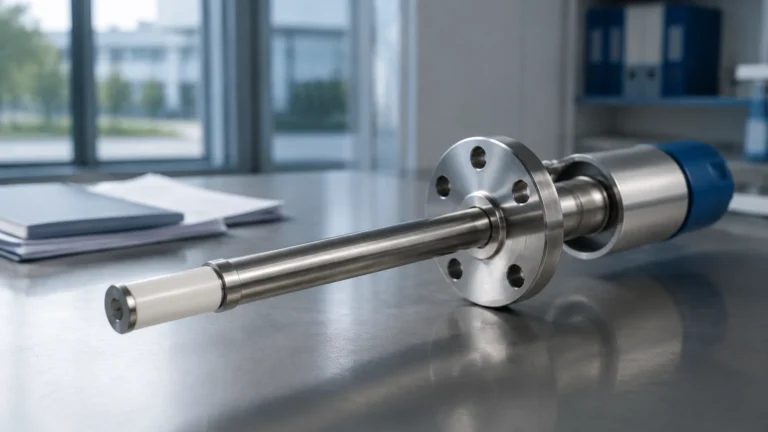
Because diesel density changes with temperature, high-precision hydrostatic systems often include integrated temperature compensation. These sensors are typically submersible or externally mounted via a flange at the tank's base. They are favored for their reliability in deep tanks and underground storage tanks (USTs).
Ultrasonic (Non-Contact)
Ultrasonic sensors emit high-frequency sound pulses that reflect off the surface of the diesel and return to the transducer. The device measures the "time-of-flight" to calculate the distance. This is a non-contact method, meaning the sensor does not touch the fuel, reducing the risk of corrosion or buildup. However, ultrasonic waves can be affected by heavy vapors or foam on the liquid surface, which may attenuate the signal.
Radar (FMCW and Pulse)
Radar level meters use electromagnetic waves rather than sound. Frequency Modulated Continuous Wave (FMCW) radar is increasingly common for diesel applications due to its high accuracy (up to ±1 mm). Unlike ultrasonic waves, radar signals are unaffected by temperature fluctuations, vacuum, or the presence of diesel vapors. This makes radar the preferred choice for high-value inventory management where precision is paramount.
Magnetic Level Gauges
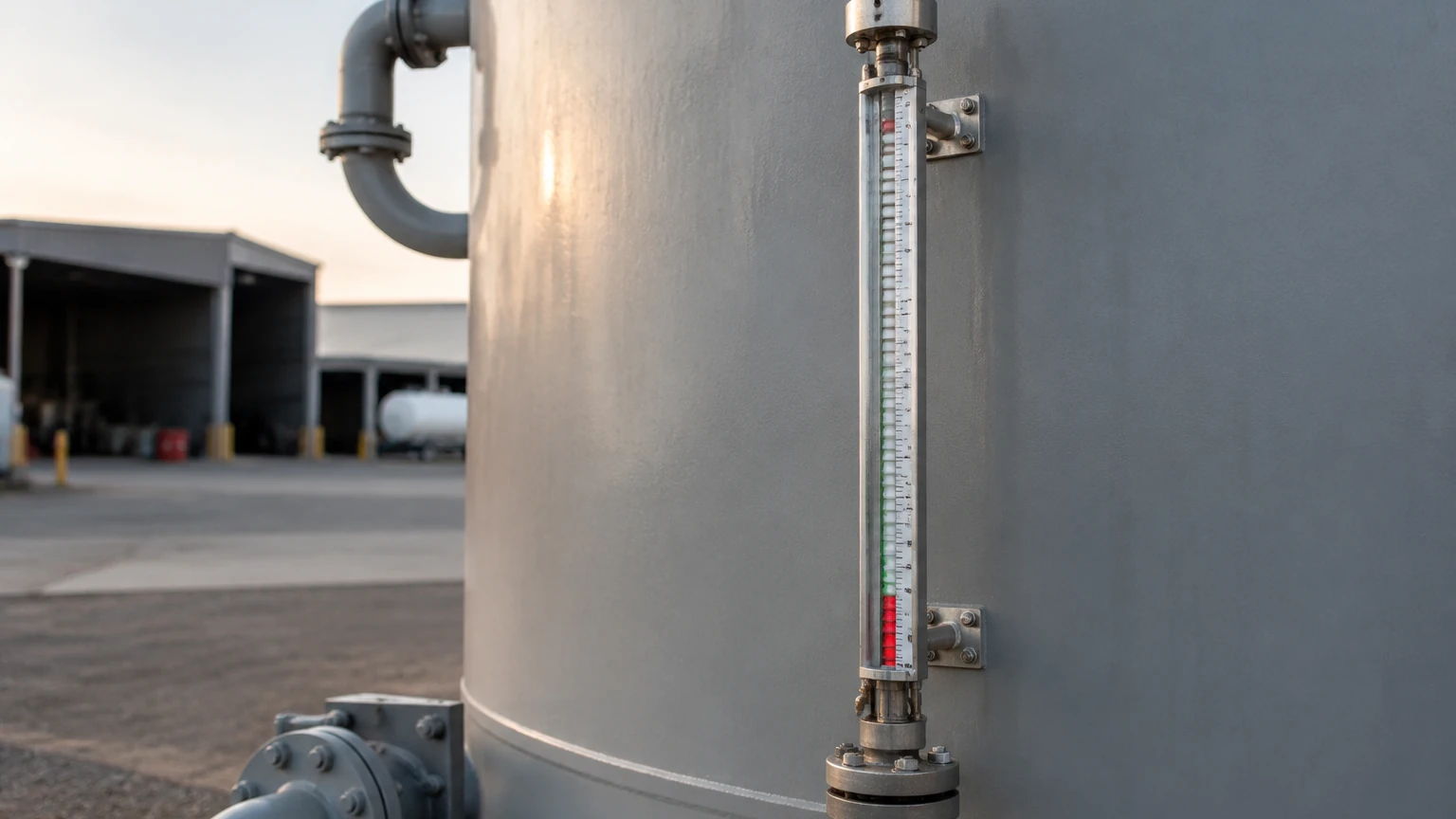
For visual indication combined with electronic transmission, magnetic level gauges utilize a float containing a high-intensity magnet. This float moves inside a bypass chamber mounted to the side of the tank. As the float rises and falls, it flips magnetic flags on an external scale and can simultaneously trigger a reed chain transmitter for remote monitoring. This provides a mechanical failsafe that remains functional even during power outages.
Selecting the Right Diesel Tank Level Gauge
Choosing the appropriate instrument requires a balance between budget, required accuracy, and the physical constraints of the installation. For comprehensive product specifications and technical support across these technologies, engineers can Review product options and application support to find the optimal match for their specific site requirements.
Selection Criteria Table
| Technology | Accuracy | Typical Range | Best Use Case |
| :— | :— | :— | :— |
| Hydrostatic | ±0.25% to 0.5% | 1m – 200m | Deep underground tanks, vented vessels |
| Ultrasonic | ±0.25% of range | 0.25m – 15m | Small to medium above-ground tanks |
| Radar (80GHz) | ±1 mm | 0.1m – 30m | High-precision inventory, tall narrow tanks |
| Magnetic Bypass | ±5 mm | 0.3m – 6m | Visual local indication, high-pressure tanks |
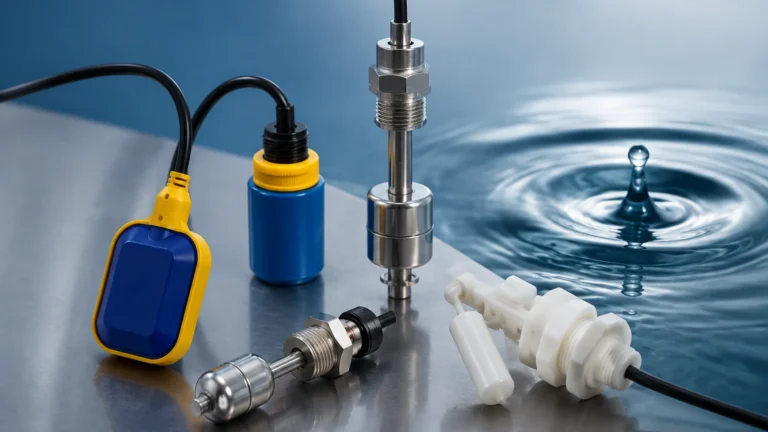
| Float Switch | N/A (Point level) | Fixed | Overfill protection, low-level alarms |
Key Evaluation Factors
1. Tank Geometry: Tall, narrow tanks benefit from 80GHz radar due to its narrow beam angle, which avoids internal obstructions like ladders or heating coils.
2. Environmental Rating: Since diesel is flammable, the gauge must often carry ATEX, IECEx, or UL certifications for hazardous locations (Class I, Div 1 or 2).
3. Output Signal: Most industrial systems require a 4-20mA HART signal, though Modbus RTU or wireless protocols (LoRaWAN/NB-IoT) are becoming popular for remote fuel depots.
Installation and Engineering Considerations
Proper installation is as critical as the choice of technology. Even the most accurate diesel tank level gauge will provide erroneous data if mounted incorrectly.
Mounting Position
For top-mounted sensors (Radar and Ultrasonic), the device should be placed away from the tank wall to prevent signal interference from side-wall reflections. Typically, the sensor should be located at 1/6th to 1/4th of the tank diameter from the wall. It must also be positioned away from the fuel inlet to avoid turbulence and false readings during filling operations.
Stilling Wells
In tanks where significant turbulence or foaming occurs, a stilling well (a vertical pipe with vent holes) can be installed. The level gauge is then mounted inside this pipe. The stilling well acts as a mechanical filter, providing a calm surface for the sensor to measure, which is particularly useful for radar and ultrasonic technologies.
Dead Zones (Blocking Distance)
Every non-contact sensor has a "dead zone" or "blocking distance" directly beneath the transducer where it cannot measure. If the tank is filled into this zone, the sensor will report an error or a "full" reading prematurely. Engineers must ensure the sensor is mounted high enough (perhaps using a nozzle or standpipe) so that the maximum fuel level never enters this zone.
Limitations and Common Risks
While modern instrumentation is robust, there are specific risks associated with diesel storage that must be mitigated:
* Condensation: In outdoor tanks, temperature swings cause moisture to condense on the sensor face. While radar is less affected, ultrasonic sensors can lose signal if water droplets block the transducer. Some high-end radar units feature PTFE drip-off lenses to shed condensation.
* Density Shifts: If using a hydrostatic diesel tank level gauge, the system must be calibrated for the specific gravity of the diesel being used. If the fuel grade changes (e.g., winter vs. summer blends), the density may shift slightly, leading to a small percentage of error if not compensated.
* Tank Bulging: Large, horizontal cylindrical tanks can "bulge" or change shape slightly when full. This alters the volume-to-height relationship. For accurate volume reporting (liters/gallons), a strapping table (tank map) should be programmed into the level transmitter or the PLC.
Frequently Asked Questions (FAQ)
Q: Can I use the same gauge for diesel and biodiesel?
A: Generally, yes, but you must check material compatibility. Biodiesel can be more aggressive toward certain elastomers (O-rings) than standard petro-diesel. Ensure the wetted parts are 316L stainless steel, FKM (Viton), or PTFE.
Q: How do I handle foaming during high-speed filling?
A: Foaming can scatter ultrasonic and radar signals. The best solution is to use a stilling well or a guided wave radar (GWR), where the signal is directed along a physical probe, making it immune to surface foam.
Q: Is a mechanical gauge sufficient for a backup generator tank?
A: While a mechanical float gauge provides a local reading, most modern building codes and insurance policies require electronic monitoring with high/low alarms to ensure the generator never runs dry and to prevent environmental contamination from overfills.
Q: What is the maintenance requirement for these gauges?
A: Non-contact radar requires very little maintenance. Hydrostatic sensors should be checked annually for sediment buildup if the diesel is not well-filtered. Magnetic gauges should have their chambers flushed periodically to remove any paraffin or sludge deposits.
Conclusion
Selecting a diesel tank level gauge is a foundational step in ensuring the integrity of fuel management systems. By prioritizing measurement principles like radar for precision or hydrostatic for deep-tank reliability, and adhering to strict installation standards, facilities can achieve high levels of accuracy and safety. For those seeking specific hardware configurations or customized OEM solutions, visiting the Main Page provides access to a wide range of industrial-grade level measurement instruments designed for the rigors of diesel fuel applications.