Mosens
Mosens
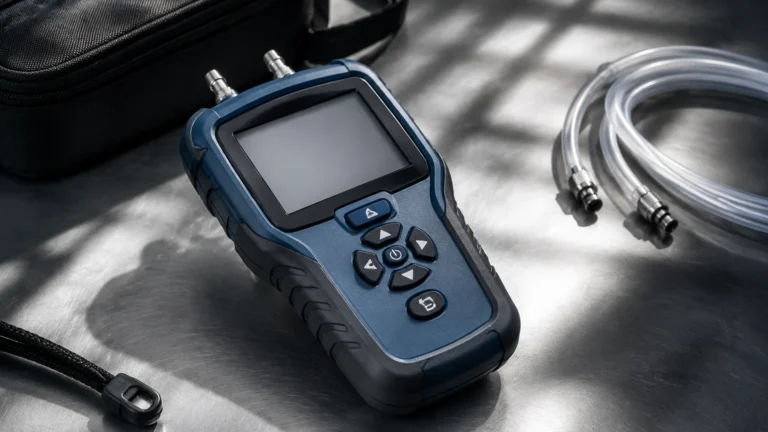
In the landscape of industrial automation and process control, the demand for high-precision level measurement has led to the development of specialized sensing technologies. Mosens sensors represent a category of industrial instruments designed to provide reliable data in challenging environments. Whether managing liquid levels in a chemical reactor or monitoring solids in a silo, understanding the technical nuances of these sensors is essential for engineering teams. This guide explores the principles, applications, and selection criteria for Mosens-style sensors and how they integrate into broader industrial systems.
Selecting the right instrumentation requires a deep dive into the physics of measurement. For those evaluating a wide range of industrial solutions, it is helpful to Review product options and application support to ensure the chosen technology aligns with specific site requirements.
Understanding the Technology Behind Mosens Sensors
Mosens technology is primarily centered on non-contact measurement principles, most commonly utilizing ultrasonic or radar waves to determine the distance between the sensor face and the material surface. In a B2B context, these sensors are valued for their ability to provide continuous level monitoring without coming into physical contact with the media. This is particularly critical when dealing with corrosive, viscous, or abrasive substances that would otherwise degrade a contact-based probe.
High-performance sensors in this category are often equipped with advanced signal processing algorithms. These algorithms are designed to filter out "noise"—such as false echoes from tank internal structures like agitators, ladders, or weld seams—ensuring that the output signal reflects the true level of the product. This capability is what distinguishes professional-grade Mosens sensors from entry-level proximity switches.
Key Measurement Principles: Ultrasonic vs. Radar
To make an informed decision, engineers must understand the two primary measurement principles employed by high-end level sensors.
1. Ultrasonic Measurement (Time-of-Flight)
Ultrasonic sensors operate by emitting high-frequency sound pulses (typically between 20 kHz and 200 kHz). These pulses travel through the air, hit the surface of the medium, and reflect back to the sensor. The sensor measures the time interval between emission and reception.
* Formula: Distance = (Speed of Sound × Time) / 2
* Consideration: Since the speed of sound is affected by air temperature, quality Mosens ultrasonic sensors include integrated temperature compensation to maintain accuracy across varying thermal conditions.
2. Radar Measurement (FMCW and Pulse)
Radar sensors use electromagnetic waves, typically in the microwave frequency range (e.g., 6 GHz, 26 GHz, or 80 GHz). Unlike sound waves, radar waves do not require a medium to travel and are largely unaffected by air temperature, pressure, or vacuum conditions.
* Pulse Radar: Sends a short microwave pulse and measures the travel time.
* FMCW (Frequency Modulated Continuous Wave): Transmits a continuous signal with a changing frequency. The difference in frequency between the transmitted and received signal is proportional to the distance.
Comparative Analysis and Selection Criteria
When choosing between different sensor models, a technical comparison is necessary to match the device to the application. The following table provides a reference for the selection process:
| Feature | Ultrasonic Sensors | Radar Level Meters | Hydrostatic Transmitters |
| :— | :— | :— | :— |
| Measurement Type | Non-contact | Non-contact | Contact (Pressure-based) |
| Media Type | Liquids and Solids | Liquids and Solids | Liquids only |
| Accuracy | ±0.25% of range | ±1 mm to ±5 mm | ±0.1% to ±0.5% span |
| Max Range | Up to 15m (49 ft) | Up to 120m (393 ft) | Dependent on cable length |
| Pressure Limit | Low (Atmospheric) | High (Up to 40+ bar) | High (Submersible) |
| Effect of Steam | Significant interference | Minimal interference | No interference |
| Cost | Cost-effective | Higher investment | Moderate |
Selecting a Mosens-compatible solution involves evaluating the dielectric constant (Dk) of the material for radar or the acoustic reflectivity for ultrasonic. For materials with low Dk values, such as oils or plastic pellets, high-frequency radar is often the preferred choice due to its stronger signal reflection.
Industrial Application Scenarios
Mosens sensors and their equivalents from manufacturers like Welk are deployed across various sectors where accuracy is non-negotiable.
Water and Wastewater Treatment
In open-channel flow measurement and lift station monitoring, ultrasonic sensors are the industry standard. They are used to measure the level of water behind a weir or flume to calculate flow rates. The non-contact nature prevents fouling from debris and sewage.
Chemical Processing
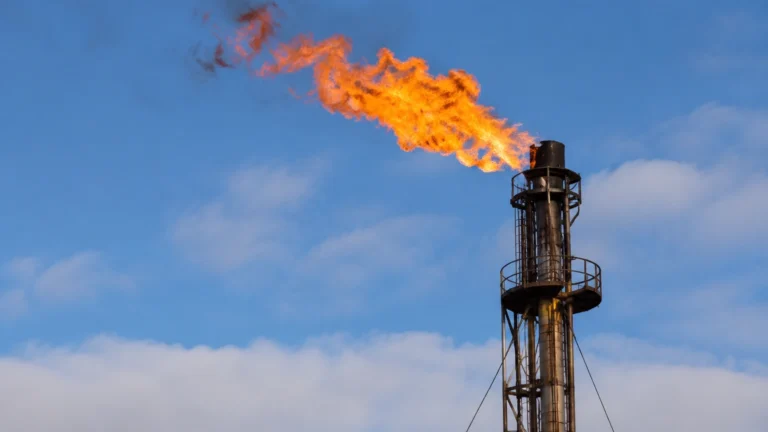
Chemical tanks often contain aggressive acids or bases. A radar-based Mosens sensor with a PTFE (Teflon) coated antenna provides the necessary chemical resistance while delivering precise data to the PLC (Programmable Logic Controller). This ensures that tanks are neither overfilled nor run dry, protecting downstream pumps.
Food and Beverage
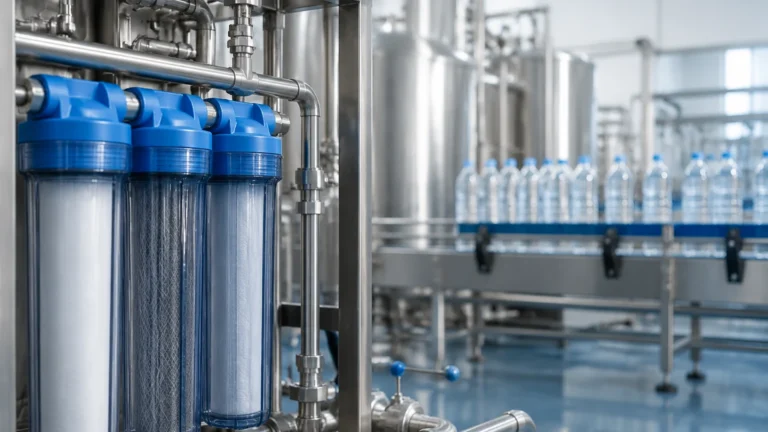
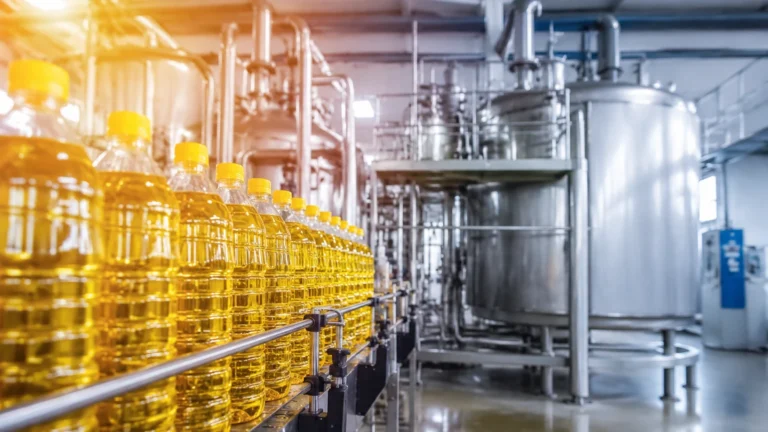
Hygiene is paramount in food production. Sensors with stainless steel housings and tri-clamp fittings allow for CIP (Clean-In-Place) processes. Because these sensors do not touch the product, there is zero risk of cross-contamination between batches.

Installation Best Practices for Optimal Performance
Even the most advanced Mosens sensor will fail to perform if installed incorrectly. Engineering teams should adhere to the following guidelines during the commissioning phase:
1. Avoid the Dead Zone: Every non-contact sensor has a "blocking distance" or dead zone directly beneath the sensor face where measurement is impossible. Ensure the maximum expected liquid level does not enter this zone.
2. Vertical Alignment: The sensor must be mounted perfectly perpendicular to the liquid surface. A tilt of even a few degrees can cause the signal to reflect away from the receiver, resulting in signal loss.
3. Nozzle Geometry: If mounting the sensor on a pipe nozzle, the nozzle should be as short and wide as possible. Internal welds or burrs inside the nozzle can create parasitic reflections.
4. Positioning Away from Inflow: Do not install the sensor directly above the point where the tank is filled. Turbulent surfaces and air bubbles from the inflow will scatter the signal.
5. Cable Shielding: To prevent EMI (Electromagnetic Interference) from high-power motors or VFDs (Variable Frequency Drives), use shielded twisted-pair cabling and ensure proper grounding at the controller end.
Limitations and Environmental Factors
While Mosens sensors are robust, they are not universal solutions. Certain environmental factors can limit their effectiveness:
* Heavy Foam: Thick, dense foam can absorb ultrasonic and radar signals, leading to a "lost echo" condition. In such cases, a hydrostatic level transmitter or a guided wave radar (GWR) might be more appropriate.
* Vacuum Conditions: Ultrasonic sensors cannot operate in a vacuum because sound waves require a medium (air/gas) to travel. Radar is the only non-contact option for vacuum tanks.
* Dust and Steam: While radar penetrates dust and steam easily, heavy steam can attenuate ultrasonic signals by changing the density of the air, leading to measurement errors.
* Surface Turbulence: Rapidly agitating liquids can scatter the signal. This can often be mitigated by using a stilling well—a vertical pipe that dampens the surface movement around the sensor.
Frequently Asked Questions (FAQ)
Q: How do I calibrate a Mosens sensor for a specific tank height?
A: Most modern sensors are calibrated via a 4-20mA loop, HART protocol, or a local display. You define the "Zero" point (usually the bottom of the tank) and the "Span" point (the 100% full level). The sensor then scales its output linearly between these two points.
Q: Can Mosens sensors be used for solids like grain or sand?
A: Yes, but with considerations. Solids often form a conical shape (angle of repose), which can deflect signals. Radar sensors with a narrow beam angle are generally better for solids as they can be aimed at a specific point on the slope.
Q: What is the typical lifespan of these industrial sensors?
A: In a stable environment with proper installation, a high-quality level sensor can last 7 to 10 years. The primary failure points are usually electronic degradation due to extreme heat or moisture ingress through poorly sealed cable glands.
Q: Does the color of the liquid affect the measurement?
A: No. Unlike optical or laser sensors, ultrasonic and radar measurements are independent of the color or transparency of the media.
For engineers and procurement officers looking to integrate these technologies into their facilities, it is recommended to consult with a professional manufacturer. You can Review product options and application support to find the exact configuration—whether radar, ultrasonic, or hydrostatic—that meets your operational parameters and budget constraints.