Differential Pressure Cell
Differential Pressure Cell
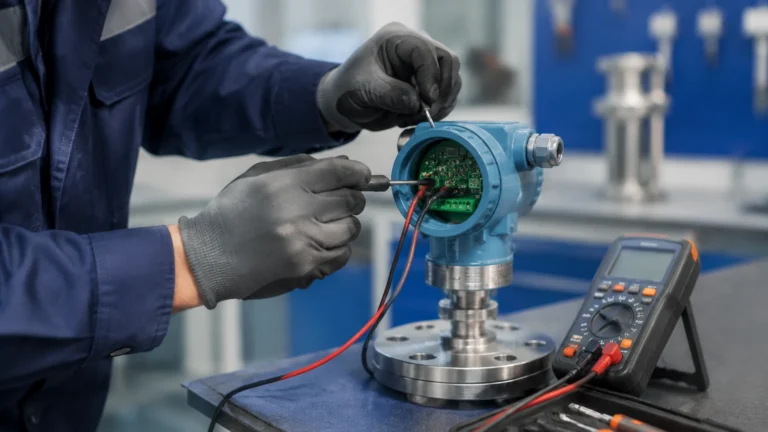
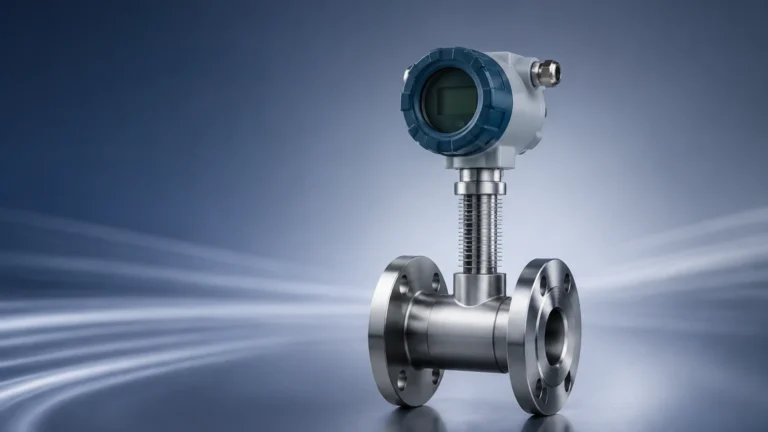
In the field of industrial process control, the differential pressure cell—often referred to as a DP cell—serves as one of the most versatile and critical instruments for measuring level, flow, and pressure. By detecting the difference between two pressure points, these devices provide essential data for managing complex liquid and gas systems in sectors ranging from water treatment to chemical processing.
As a professional manufacturer of industrial level measurement instruments, Welk provides advanced solutions that leverage the fundamental physics of pressure to deliver accurate level readings in even the most challenging environments. This guide explores the engineering principles, selection criteria, and installation requirements for the differential pressure cell in modern industrial applications.
Measurement Principles of the Differential Pressure Cell
The operation of a differential pressure cell is rooted in the hydrostatic pressure principle. To understand how a DP cell measures level, one must first understand the relationship between liquid height and pressure. The pressure exerted by a column of liquid is proportional to its height and its density, expressed by the formula:
P = ρ · g · h
Where:
* P is the hydrostatic pressure.
* ρ (rho) is the density of the liquid.
* g is the gravitational constant.
* h is the height of the liquid column.
Open vs. Closed Tank Measurement
In an open (vented) tank, level measurement is straightforward because the surface of the liquid is at atmospheric pressure. A single-ended pressure transmitter at the bottom of the tank can measure the hydrostatic head. However, in closed or pressurized vessels, the pressure in the headspace above the liquid adds to the total pressure at the bottom.
A differential pressure cell solves this by utilizing two sensing ports: the High-Pressure (HP) side and the Low-Pressure (LP) side.
1. High-Pressure Side: Connected to the bottom of the tank to measure the total pressure (hydrostatic head + headspace pressure).
2. Low-Pressure Side: Connected to the top of the tank to measure only the headspace pressure.
The DP cell subtracts the LP value from the HP value, effectively canceling out the headspace pressure and leaving only the pressure generated by the liquid height. This allows for an accurate calculation of the level regardless of whether the tank is pressurized or under vacuum.
Sensing Technologies
Modern DP cells typically utilize one of two primary sensing technologies to convert physical displacement into an electrical signal:
* Capacitive Sensing: A sensing diaphragm is positioned between two fixed capacitor plates. Pressure differences move the diaphragm, changing the capacitance, which is then converted into a 4-20mA or digital signal.
* Piezoresistive Sensing: Strain gauges are bonded to a silicon or ceramic diaphragm. As the diaphragm flexes under pressure, its electrical resistance changes proportionally.
Key Evaluation Criteria for Selection
Selecting the correct differential pressure cell requires a detailed analysis of the process conditions. Engineers must look beyond simple pressure ranges to ensure long-term reliability and accuracy. For a comprehensive look at available instrumentation, professionals often consult the Main Page of specialized manufacturers to compare technical specifications.
1. Static Pressure and Differential Range
It is vital to distinguish between the maximum static pressure the cell can withstand and the differential pressure range it is designed to measure. For example, a tank might operate at a static pressure of 40 bar (4.0 MPa), but the hydrostatic head of the liquid might only represent a differential of 500 mbar (50 kPa). The cell must be rated for the high static pressure while maintaining high sensitivity for the small differential range.
2. Material Compatibility
The wetted parts of the differential pressure cell, including the diaphragms and process connectors, must be compatible with the process fluid. While 316L stainless steel is standard, corrosive chemicals may require Hastelloy C, Monel, or Tantalum coatings. Welk offers a variety of material options to prevent chemical attack and diaphragm fatigue.
3. Temperature Effects
Process temperature affects both the density of the liquid and the physical properties of the fill fluid within the DP cell. If the process temperature fluctuates significantly, temperature-compensated transmitters are required to maintain accuracy.
Selection Summary Table
| Feature | Consideration | Recommended Specification |
| :— | :— | :— |
| Accuracy | Required precision for the process | ±0.075% to ±0.1% of span |
| Turndown Ratio | Rangeability of the device | 10:1 or higher |
| Output Protocol | Integration with control systems | 4-20mA HART, Profibus, or FF |
| Ingress Protection | Environmental exposure | IP66/IP67 or NEMA 4X |
| Hazardous Areas | Explosive atmospheres | ATEX/IECEx Intrinsic Safety or Flameproof |
Installation Considerations and Best Practices
The performance of a differential pressure cell is often determined by the quality of its installation. Improper mounting or piping can lead to measurement errors, slow response times, or frequent maintenance issues.
Impulse Piping and Manifolds
Impulse lines connect the process vessel to the DP cell. These lines should be as short as possible to minimize lag and temperature influence. A 3-valve or 5-valve manifold is essential for every installation. The manifold allows the operator to isolate the transmitter from the process, equalize the pressure for zero-checking, and bleed off trapped air or liquid without shutting down the process.
Dry Leg vs. Wet Leg
In closed tank applications, the method used for the low-pressure (top) connection depends on the nature of the gas in the headspace:
* Dry Leg: Used when the gas in the headspace will not condense at ambient temperatures. The LP line remains filled with gas.
* Wet Leg: Used when the headspace contains vapors that may condense (e.g., steam). The LP line is intentionally filled with a reference liquid (usually the process fluid or a stable glycol mix) to create a constant, known hydrostatic head that is then mathematically subtracted from the measurement.
Remote Seals (Capillary Systems)
For highly viscous, corrosive, or high-temperature fluids that could clog or damage impulse lines, remote seals are used. A flexible diaphragm at the process connection transmits pressure through a capillary tube filled with silicone oil or other transmission fluids to the differential pressure cell. While this protects the instrument, it introduces additional temperature sensitivity that must be accounted for during calibration.

Limitations and Common Risks
While the differential pressure cell is a robust tool, it is not without limitations. Understanding these risks is crucial for engineering teams during the design phase.
1. Density Sensitivity: Since DP cells measure mass-based pressure, any change in the liquid's density (due to temperature or concentration changes) will result in a level error. If density varies significantly, a second DP cell or a temperature-compensated calculation in the PLC is necessary.
2. Impulse Line Clogging: In slurry or high-solids applications, impulse lines are prone to plugging. Regular flushing or the use of diaphragm seals is required.
3. Zero Shift: High static pressures can cause a slight shift in the zero-point of the transmitter. It is a best practice to perform a "zero trim" at the actual operating static pressure during commissioning.
4. Gas Entrapment: In liquid level applications, air bubbles trapped in the impulse lines can cause erratic readings. Conversely, in gas flow applications, liquid condensate in the lines can create false pressure heads.
Frequently Asked Questions (FAQs)
Q: How often should a differential pressure cell be calibrated?
A: While modern digital transmitters are highly stable, a standard calibration check is recommended every 12 to 24 months. Critical safety loops or harsh environments may require more frequent verification.
Q: Can a DP cell be used for interface measurement?
A: Yes. If two immiscible liquids of different densities (e.g., oil and water) are in a tank, a DP cell can measure the interface level, provided the total liquid level remains above the top process connection.
Q: What is the advantage of a 5-valve manifold over a 3-valve manifold?
A: A 5-valve manifold includes two additional valves for venting or draining the impulse lines to the atmosphere, which is safer and cleaner than using the bleed screws on the transmitter body.
Q: How does ambient temperature affect the capillary tubes in remote seal systems?
A: Ambient temperature changes cause the fill fluid in the capillaries to expand or contract. If one capillary is in the sun and the other is in the shade, it creates a false differential pressure. Insulation or balanced capillary lengths are common mitigations.
Conclusion
The differential pressure cell remains a cornerstone of industrial level measurement due to its reliability and adaptability. By accurately compensating for headspace pressure and providing precise hydrostatic data, it enables safe and efficient operation in pressurized environments. For engineers and procurement specialists, selecting the right DP cell involves a careful balance of material science, pressure dynamics, and installation strategy.
To explore specific product configurations and receive technical support for your application, visit the Welk Main Page for detailed technical documentation and expert guidance on level measurement solutions.