Mine Expo Elko Nv
Mine Expo Elko Nv
The Elko Mining Expo, often referred to by industry professionals as the mine expo elko nv, stands as one of the most critical gatherings for the mining industry in the United States. Located in the heart of Nevada’s gold country, this event serves as a primary venue for engineers, site managers, and procurement specialists to evaluate the latest advancements in extraction and processing technology. Among the most vital categories of equipment showcased are industrial level measurement instruments. In the demanding environment of Nevada’s mines—ranging from open-pit gold operations to complex underground silver mines—accurate level monitoring of ore, water, chemicals, and slurries is essential for both operational efficiency and safety.
For professionals attending the mine expo elko nv, selecting the right instrumentation requires a deep understanding of measurement principles and how they interact with the harsh conditions of a mine site. This guide provides a technical overview of level measurement technologies, selection criteria, and practical installation advice tailored for the mining and industrial automation sectors.
Core Measurement Principles for Mining Instrumentation
Before selecting a device from a manufacturer's Main Page, it is necessary to understand the physics behind the primary measurement technologies used in the field. Mining applications typically involve solids (ore, tailings), liquids (process water, reagents), and slurries (thickener underflow).
1. Radar Level Measurement (Non-Contact)
Radar level meters operate on the Time-of-Flight (ToF) principle. The device emits a high-frequency electromagnetic wave (typically in the 26GHz or 80GHz range) toward the material surface. The wave reflects off the surface and returns to the sensor. The distance is calculated based on the time taken for the signal to travel at the speed of light.
* 80GHz Technology: This is increasingly preferred in mining because the higher frequency allows for a narrower beam angle. A narrower beam (often as small as 3 degrees) can avoid internal obstructions like ladders or agitators in a tank and provides a stronger reflection from uneven solid surfaces like crushed ore.
* Dielectric Constant ($ε_r$): The reliability of radar depends on the material's ability to reflect electromagnetic waves. Materials with a high dielectric constant (like water) reflect signals strongly, while those with a low dielectric constant (like dry plastic pellets or certain dry minerals) may require more sensitive electronics.
2. Ultrasonic Level Measurement
Ultrasonic sensors also use the ToF principle but employ sound waves instead of electromagnetic waves. A piezoelectric crystal inside the sensor converts electrical energy into mechanical sound pulses. These pulses bounce off the target and return to the sensor.
* Medium Dependency: Unlike radar, sound waves require a medium (air) to travel. Therefore, changes in air temperature, pressure, or the presence of heavy dust can affect the speed of sound and, consequently, the accuracy of the measurement. Most modern ultrasonic sensors include integrated temperature compensation to mitigate these effects.
3. Hydrostatic Level Measurement
This is a contact-based method used for liquids. It relies on the principle that the pressure at the bottom of a liquid column is proportional to the height of the liquid and its density ($P = ρ · g · h$).
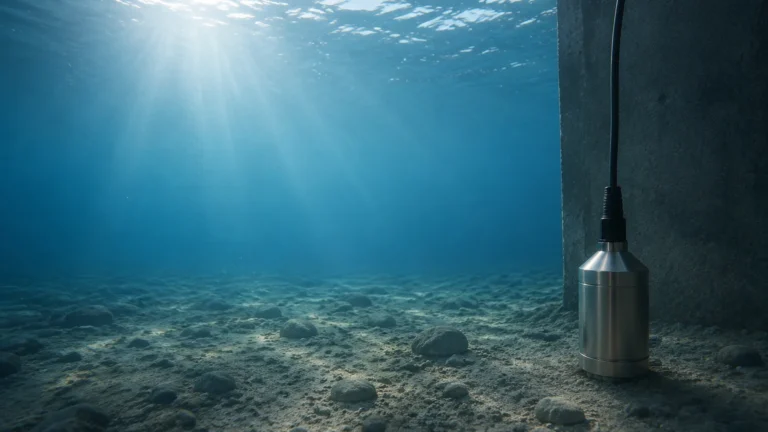
* Submersible Transmitters: In mining, hydrostatic sensors are frequently used for groundwater monitoring in boreholes or for level control in large water storage tanks. They are robust and simple to install but require the liquid density to remain relatively constant for accurate height readings.
4. Magnetic Level Gauges
Magnetic level gauges are used for visual indication and automated control in chemical storage tanks. They consist of a bypass chamber attached to the side of a vessel. Inside the chamber, a float containing a permanent magnet moves with the liquid level, flipping magnetized flaps on an external scale and triggering reed switches or transmitters.
Practical Selection Criteria for Mining Environments
When evaluating equipment at the mine expo elko nv, engineers must match the technology to the specific challenges of the application. The following table summarizes the suitability of different technologies for common mining tasks.
Selection Table: Level Technology vs. Application
| Application | Recommended Technology | Why? |
| :— | :— | :— |
| Ore Bins / Silos | 80GHz Radar | Penetrates dust; narrow beam avoids wall interference. |
| Slurry Tanks | Radar or Ultrasonic | Non-contact prevents abrasion and chemical attack on the sensor. |
| Chemical Reagents | Magnetic Level Gauge | Provides visual safety check and corrosion-resistant materials. |
| Deep Well Monitoring | Hydrostatic Transmitter | Simple, long-cable deployment; measures head pressure accurately. |
| Sump Control | Ultrasonic | Cost-effective for water-based liquids in open channels or pits. |
| Flotation Cells | Guided Wave Radar | Can distinguish between the foam layer and the liquid level. |
Installation Considerations in Harsh Mining Environments
Proper installation is as critical as selecting the correct measurement principle. In the rugged conditions found in Nevada mining operations, several factors must be addressed during the engineering phase:
1. Dead Zones (Blocking Distance): Every non-contact sensor has a "dead zone" directly beneath the sensor face where it cannot measure. For ultrasonic sensors, this is typically 0.25m to 0.6m (10" to 24"). Radar units generally have much smaller dead zones, but the sensor must still be mounted high enough to avoid contact with the material at maximum fill levels.
2. Beam Angle and Obstructions: When installing a radar or ultrasonic sensor in a narrow silo or a tank with internal baffles, the beam must be clear of these obstructions. If the beam hits a ladder or a support beam, it will create a "false echo." Modern software allows for "false echo suppression," but physical clearance is always the preferred solution.
3. Mounting Orientation: For solids measurement, the material surface is rarely flat; it forms a cone or a depression. Radar sensors should be mounted with an adjustable flange to aim the beam at the most representative part of the material surface (usually the middle of the radius of a circular silo).
4. Chemical Compatibility: For hydrostatic and magnetic sensors, the wetted materials must be compatible with the process fluid. In gold mining, where cyanide leaching is common, high-grade stainless steel (316L) or PTFE coatings are often required to prevent premature failure of the instrument.

Limitations and Environmental Challenges
No single technology is a universal solution. Understanding the limitations is key to avoiding operational downtime.
* Dust and Steam: While 80GHz radar is highly effective in dusty environments, extreme dust concentrations can eventually attenuate the signal. Ultrasonic sensors are even more susceptible, as dust particles can scatter the sound waves. In high-steam environments, such as autoclaves or heated leaching tanks, radar is the only viable non-contact option because sound waves are heavily distorted by steam density changes.
* Foam: Heavy, thick foam (common in flotation circuits) acts as an absorber for both radar and ultrasonic signals. In these cases, a Guided Wave Radar (GWR), which uses a physical probe to guide the signal, or a specialized hydrostatic setup may be necessary.
* Turbulence: In tanks with high-speed agitators, the liquid surface is constantly moving. This can cause signal "jitter." Using software damping or installing the sensor inside a stilling well (a vertical pipe that stabilizes the liquid) can resolve these issues.
The Role of Automation and Remote Monitoring
A major theme at recent mine expo elko nv events has been the integration of level data into broader Industrial Internet of Things (IIoT) frameworks. Modern level meters are no longer just local gauges; they are data points in a complex automation ecosystem.
Most high-end instruments now support 4-20mA HART, Modbus RS485, or Profibus protocols. This allows site managers to monitor tailings dam levels or reagent inventory from a central control room miles away from the actual tank. Furthermore, wireless transmission modules can be attached to hydrostatic sensors in remote boreholes, eliminating the need for expensive cabling across vast mine sites. For those looking to upgrade their current systems, reviewing the latest digital integration options on a manufacturer's Main Page is a recommended starting point.
Frequently Asked Questions (FAQ)
Q: Why is radar preferred over ultrasonic for ore silo measurement?
A: Ore silos are extremely dusty. Sound waves (ultrasonic) are easily scattered and absorbed by dust particles, leading to signal loss. Radar waves (electromagnetic) pass through dust with very little attenuation, providing a much more reliable reading.
Q: How do I handle level measurement in a tank with an agitator?
A: There are two main approaches. First, use a radar with a narrow beam angle and mount it as far from the agitator shaft as possible. Second, use the "False Echo Suppression" feature in the instrument's software to tell the sensor to ignore the reflection from the agitator blades.
Q: What maintenance is required for hydrostatic level sensors?
A: The primary maintenance task is checking for build-up or clogging around the sensor diaphragm, especially in slurries. Periodically cleaning the sensor with a soft cloth (avoiding sharp objects that could puncture the diaphragm) and re-zeroing the device will ensure long-term accuracy.
Q: Can I use a radar level meter on a plastic tank?
A: Yes. Radar waves can actually pass through plastic. In some cases, you can mount the radar sensor *above* a plastic tank and measure the level through the roof of the tank, provided the plastic is not carbon-filled or metallic-lined.
Q: What is the benefit of 80GHz radar over 26GHz radar?
A: The main benefit is the beam angle. An 80GHz radar has a much tighter beam, which means it can be used in taller, narrower tanks and is less likely to be affected by internal obstructions or buildup on the tank walls.
By focusing on these technical fundamentals and environmental considerations, mining professionals attending the mine expo elko nv can make informed decisions that improve the reliability and safety of their operations. For detailed product specifications and application support, consulting a professional manufacturer's technical resources is always the final step in the engineering process.