Olide-512s Wireless Wave to Open Capacitive Sensor Switch
Olide-512s Wireless Wave to Open Capacitive Sensor Switch
In the landscape of modern building automation and industrial hygiene control, touchless entry systems have transitioned from a luxury to a functional necessity. The olide-512s wireless wave to open capacitive sensor switch represents a specific application of proximity sensing technology designed to facilitate hands-free operation of automatic doors. While often categorized as a commercial access control component, the underlying physics of the Olide-512s shares significant commonality with industrial level measurement instruments, particularly capacitive level switches used in process automation.
To effectively implement these sensors, engineers and facility managers must understand the capacitive measurement principles, installation nuances, and the technical boundaries that differentiate commercial wave-to-open switches from heavy-duty industrial level sensors.
Measurement Principles of Capacitive Sensing
Before evaluating the specific features of the Olide-512s, it is essential to understand the core technology: capacitive sensing. A capacitor consists of two conductive plates separated by an insulating material known as a dielectric. In the context of a sensor switch, the sensor itself acts as one plate, while the surrounding environment (and the target object, such as a human hand) acts as the second plate or influences the dielectric field.
The Physics of Detection
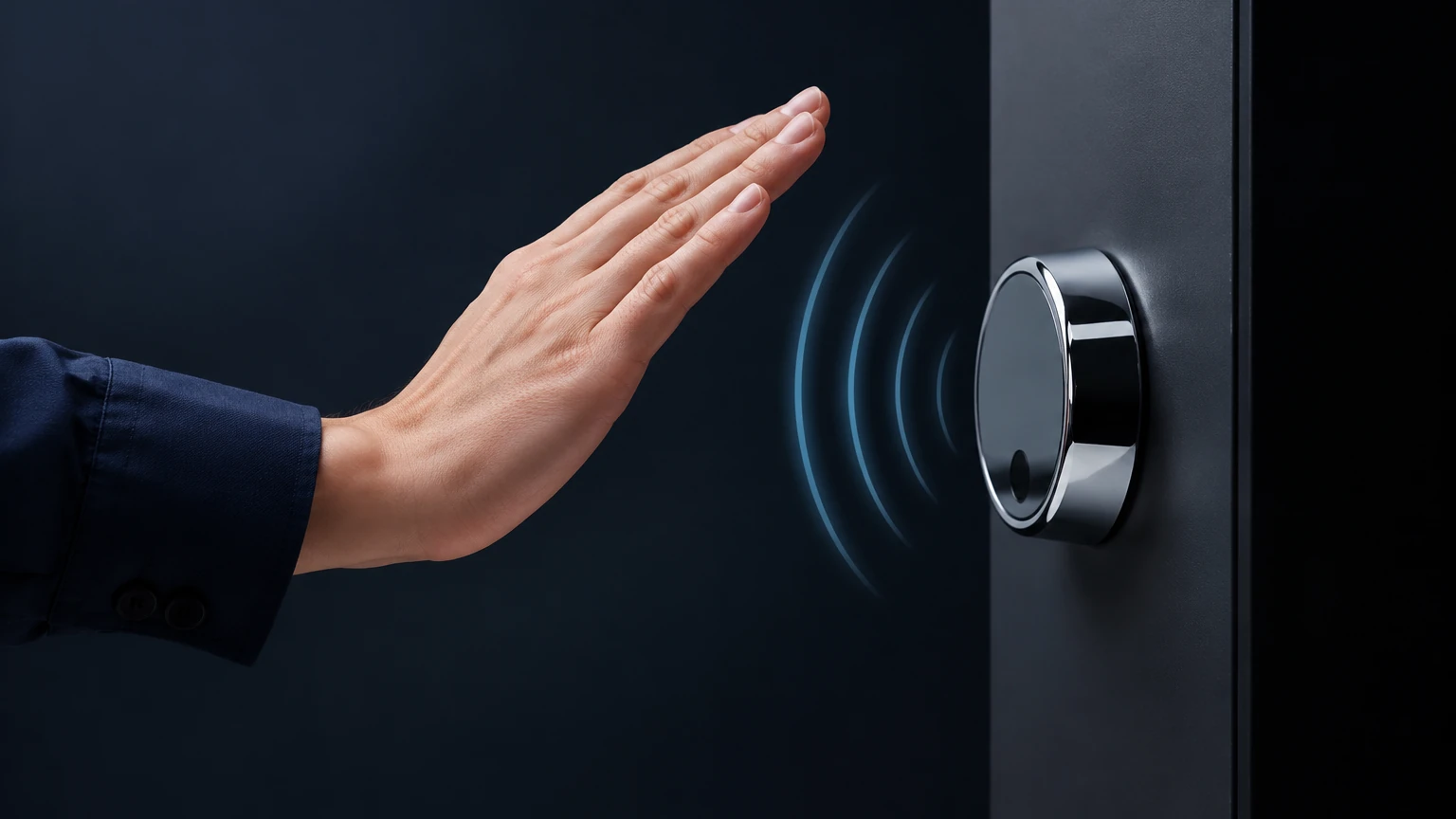
When a hand approaches the sensing face of the olide-512s wireless wave to open capacitive sensor switch, it introduces a change in the local dielectric constant. Because the human body has a significantly higher dielectric constant than air, its proximity increases the capacitance of the system. The internal circuitry of the switch detects this minute change and, once a specific threshold is crossed, triggers a relay or a wireless signal to open the door.
This principle is identical to the technology used in industrial level measurement. For instance, a capacitive level probe installed in a tank measures the change in capacitance as the liquid level rises and displaces air. Manufacturers like Welk utilize these principles to provide reliable point-level detection in both liquid and solid applications. For broader insights into how these principles are applied across various industrial sensors, you can visit the Main Page for detailed technical documentation.
Technical Specifications and Features
The Olide-512s is engineered for environments where wiring is difficult or undesirable. It typically operates on a 2.4G wireless frequency, allowing for a clean installation without the need for wall-cutting or extensive conduit runs.
Key Parameters
* Sensing Technology: Capacitive induction.
* Wireless Frequency: 2.4GHz (standard for low-interference short-range communication).
* Sensing Distance: Adjustable, typically ranging from 10 mm to 100 mm (1 cm to 10 cm).
* Power Supply: Battery-powered transmitters (often 3V) with a hard-wired or plug-in receiver.
* Response Time: Usually less than 100ms, ensuring immediate door activation.
Unlike infrared (IR) sensors, which rely on light reflection and can be affected by the color of the target or ambient light conditions, capacitive switches like the Olide-512s are generally more stable in varying lighting environments. However, they are sensitive to the material properties of the object being detected.
Practical Selection Criteria
When selecting a wave-to-open switch or an industrial level sensor, several factors must be considered to ensure long-term reliability. The following table provides a comparison between the commercial-grade Olide-512s and industrial-grade capacitive sensors often found in process control.
Selection Table: Commercial vs. Industrial Capacitive Sensors
| Feature | Olide-512s (Commercial) | Industrial Capacitive Level Switch |
| :— | :— | :— |
| Primary Target | Human hand / Proximity | Liquids, powders, or granules |
| Housing Material | ABS Plastic / Acrylic | Stainless Steel / PTFE / PVDF |
| Operating Temp | -20°C to +50°C | -40°C to +200°C (and higher) |
| Mounting | Surface mount (Wall) | Threaded (NPT/G) or Flanged |
| Output Type | Wireless (2.4G) / Dry Contact | 4-20mA / PNP/NPN / Relay |
| Ingress Protection | IP54 (Typical) | IP67 / IP68 / Explosion-proof |
Selecting the right device requires confirming the environmental conditions. For a cleanroom or a standard office, the Olide-512s is sufficient. For a chemical processing plant where the sensor may be exposed to corrosive vapors, an industrial-grade level meter from a specialized manufacturer would be required.
Installation Considerations
Successful deployment of the olide-512s wireless wave to open capacitive sensor switch depends on proper physical placement and an understanding of electromagnetic interference.
1. Mounting Surface: Avoid mounting the capacitive sensor directly onto large metal surfaces without proper insulation or spacing. Metal is highly conductive and can "blind" the sensor by creating a permanent high-capacitance state.
2. Height and Accessibility: For ADA (Americans with Disabilities Act) compliance or general ergonomics, switches are typically mounted at a height of 900 mm to 1200 mm from the floor.
3. Signal Range: While 2.4G wireless has good penetration, thick concrete walls or heavy metal shielding can reduce the effective range between the transmitter (switch) and the receiver (door controller). Always perform a signal test before final mounting.
4. Sensitivity Adjustment: Most Olide-512s units feature a potentiometer to adjust the sensing distance. It is recommended to set this to the minimum distance required for the application to avoid accidental triggers from passersby.
Limitations and Risks
While capacitive wave-to-open switches offer significant advantages in terms of hygiene and ease of installation, they are not without limitations:
* Dielectric Sensitivity: The sensor may struggle to detect hands through heavy insulated gloves, as the dielectric change is minimized.
* Moisture and Humidity: High humidity or water droplets on the sensing face can change the capacitance, potentially leading to ghost triggering. In washdown environments, sensors with higher IP ratings and moisture compensation algorithms are necessary.
* Battery Maintenance: As a wireless device, the transmitter relies on batteries. In high-traffic areas, a scheduled maintenance plan is required to prevent door failure due to power loss.
* Interference: In environments with heavy RF (Radio Frequency) noise, such as near large industrial motors or high-power Wi-Fi routers, wireless signal integrity may be compromised.
Frequently Asked Questions (FAQ)
1. Can the Olide-512s be used outdoors?
Generally, the Olide-512s is designed for indoor use. If used outdoors, it must be protected from direct rain and extreme temperature fluctuations, as moisture on the capacitive face will cause malfunctions. For outdoor industrial level sensing, we recommend specialized hydrostatic or radar-based instruments found on our Main Page.
2. How long do the batteries typically last?
Depending on the frequency of use, the batteries in the wireless transmitter typically last between 6 to 12 months. Low-power consumption circuits are integrated, but high-traffic commercial entrances will deplete batteries faster.
3. What is the difference between this and an infrared wave-to-open switch?
Infrared switches use an IR emitter and receiver to detect light bouncing off an object. They can be fooled by dark-colored clothing that absorbs IR light. Capacitive switches like the Olide-512s detect the electrical properties of the object, making them more consistent across different skin tones and clothing types, though they are more sensitive to nearby metal.
4. Can multiple switches be used in the same area?
Yes. These systems use paired codes between the transmitter and receiver, similar to a garage door opener, to ensure that one switch does not accidentally trigger a neighboring door.
Conclusion for Project Managers
Before finalizing the procurement of the olide-512s wireless wave to open capacitive sensor switch, project engineers should confirm the specific requirements of the installation site. If the project involves standard commercial door automation, the Olide-512s provides a cost-effective, aesthetic, and easy-to-install solution. However, if the requirement involves monitoring material levels within a vessel or operating in a harsh industrial environment, the transition to specialized industrial level measurement technology is necessary.
For those seeking robust solutions in level control, ranging from ultrasonic sensors to magnetic level gauges, exploring the technical resources provided by professional manufacturers like Welk is the recommended next step. Accessing comprehensive product data on the Main Page ensures that the selected technology aligns with the operational demands of the facility.
Download Olide-512s Wireless Wave to Open Capacitive Sensor Switch as a PDF