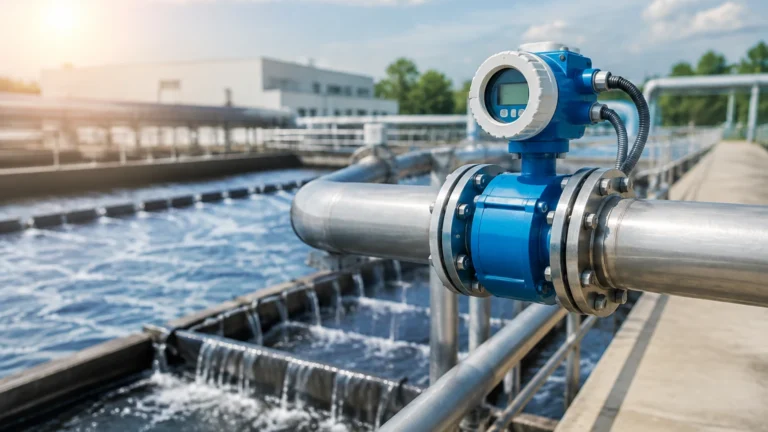
Differntial Pressure
Differntial Pressure
In the field of industrial process control, the measurement of liquid level is a fundamental requirement for safety, inventory management, and process efficiency. Among the various technologies available, differntial pressure (DP) measurement remains one of the most widely adopted methods due to its versatility and established reliability. This guide explores the principles, applications, and technical considerations for implementing differntial pressure level measurement in industrial environments.
Principles of Differntial Pressure Level Measurement
The fundamental principle behind using differntial pressure for level measurement is the relationship between the height of a liquid column and the hydrostatic pressure it exerts at the base. According to the laws of physics, the pressure at the bottom of a vessel containing liquid is directly proportional to the height of the liquid, the density of the liquid, and the force of gravity.
The basic mathematical formula used is:
P = ρ · g · h
Where:
* P is the hydrostatic pressure (measured in Pascals or Bar).
* ρ (rho) is the density of the liquid (kg/m³).
* g is the acceleration due to gravity (approximately 9.81 m/s²).
* h is the height of the liquid column (meters).
In a level measurement application, a differntial pressure transmitter measures the difference between two pressure points. By knowing the density of the fluid and the gravitational constant, the transmitter (or a control system) can calculate the height of the liquid.
Open Tank vs. Closed Tank Applications
The configuration of a differntial pressure system depends heavily on whether the process vessel is open to the atmosphere or pressurized.
1. Open Tanks
In an open tank, the surface of the liquid is exposed to atmospheric pressure. To measure the level, only the high-pressure (HP) side of the transmitter is connected to the bottom of the tank. The low-pressure (LP) side is vented to the atmosphere. In this scenario, the differntial pressure is simply the hydrostatic pressure of the liquid minus the atmospheric pressure. Since the LP side is also at atmospheric pressure, the net result is the pressure exerted by the liquid column alone.
2. Closed and Pressurized Tanks
In closed vessels, such as those found in chemical processing or oil and gas production, the space above the liquid (the vapor space) is often pressurized. This internal pressure adds to the total pressure at the bottom of the tank. If an open-vented transmitter were used, the reading would be erroneously high because it would include the gas pressure.
To compensate for this, the LP side of the differntial pressure transmitter is connected to the top of the tank. This allows the transmitter to subtract the gas pressure from the total pressure measured at the bottom, leaving only the pressure exerted by the liquid height. This subtraction process is the core function of the differntial pressure measurement in pressurized systems.
Key Components of a DP Level System
A complete differntial pressure level measurement installation typically consists of several critical components beyond the transmitter itself:
* Impulse Lines: These are small-bore pipes or tubes that carry the pressure signal from the tank taps to the transmitter. Proper sizing and routing of these lines are essential to prevent air pockets or sediment buildup.
* Manifolds: A 3-valve or 5-valve manifold is usually installed between the process and the transmitter. These allow for the isolation of the transmitter for maintenance, zero-checking, and calibration without shutting down the process.
* Remote Seals and Capillaries: In applications involving corrosive, highly viscous, or extremely hot fluids, remote seals (diaphragm seals) are used. These seals isolate the transmitter from the process fluid. The pressure is transmitted through a fill fluid (such as silicone oil) inside capillary tubes.
Selection Criteria and Technology Comparison
When selecting a level measurement technology, engineers must evaluate the specific needs of the application. While differntial pressure is a "workhorse" technology, it is important to compare it with modern alternatives like radar or ultrasonic sensors.
Selection Table: DP vs. Other Technologies
| Feature | Differntial Pressure | Radar (Non-Contact) | Ultrasonic |
| :— | :— | :— | :— |
| Measurement Type | Contacting (Pressure) | Non-contacting (TOF) | Non-contacting (TOF) |
| Accuracy | High (0.075% to 0.1% FS) | Very High (up to ±1mm) | Moderate (±0.25% FS) |
| Pressure Range | Up to 400 bar (40 MPa) | Up to 160 bar (16 MPa) | Typically < 3 bar (0.3 MPa) |
| Temperature Range | Up to 400°C (with seals) | Up to 450°C | Typically < 80°C |
| Density Sensitivity | High (Requires constant density) | None | None |
| Foam Resistance | Excellent | Moderate to Good | Poor |
| Cost | Moderate | High | Low to Moderate |
Practical Installation Considerations
Correct installation is the most significant factor in the long-term accuracy of a differntial pressure system. Engineers should adhere to the following guidelines:
1. Tapping Points
The high-pressure tap should be located at the lowest point of the desired measurement range, but high enough to avoid being buried by sludge or sediment at the bottom of the tank. The low-pressure tap must be located above the maximum expected liquid level.
2. Impulse Line Slope
Impulse lines should always be sloped to allow for the natural migration of trapped gases or liquids. For liquid measurement, the lines should slope downward from the tank to the transmitter at a minimum gradient of 1:12 (approx. 8%). This ensures that any gas bubbles can float back up into the tank.
3. Wet Leg vs. Dry Leg
In closed tanks where the vapor might condense into a liquid, the LP impulse line can fill with condensate.
* Dry Leg: Used when the vapor does not condense at ambient temperatures. The LP line remains filled with gas.
* Wet Leg: Used when the vapor is likely to condense. The LP line is intentionally filled with a reference liquid (often the process fluid or a stable glycol mix) to a known height. This constant pressure must be accounted for during the transmitter's calibration (zero suppression).
4. Environmental Protection
In cold climates, impulse lines containing water-based fluids may freeze. Heat tracing and insulation are often required to maintain the fluid in a liquid state. Conversely, for very high-temperature applications, the impulse lines provide a necessary cooling distance to protect the transmitter electronics.

Limitations and Common Risks
While robust, differntial pressure measurement has inherent limitations that must be managed:
* Density Variations: Since DP transmitters measure mass-related pressure, any change in the liquid's density will result in a level error. If a process involves varying temperatures or concentrations that change the density, the system must include compensation logic (often using a temperature sensor and a PLC calculation).
* Clogging: Impulse lines are susceptible to clogging if the process fluid contains solids or is prone to crystallization. Regular flushing or the use of remote seals can mitigate this risk.
* Capillary Temperature Drift: In systems using remote seals, long capillary tubes can be affected by ambient temperature changes. The expansion of the fill fluid can cause a "drift" in the zero reading. Using compensated capillaries or keeping capillary lengths equal on both sides can help.
* Vacuum Service: In vacuum applications, the transmitter must be mounted below the bottom tap to ensure the fill fluid in the capillaries or the process fluid in the impulse lines does not boil or pull a vacuum on the sensor diaphragm itself.
Frequently Asked Questions (FAQs)
Q: How do I handle a liquid with changing density?
A: If the density changes due to temperature, you can install a PT100 temperature sensor and use a flow/level computer to dynamically adjust the calculation. If the density changes due to composition, a DP system may not be the best choice unless a second DP transmitter is used to measure the density in real-time (density compensation method).
Q: What is the difference between Zero Suppression and Zero Elevation?
A: Zero suppression is used when the transmitter is mounted below the bottom tap, or when a wet leg is used, meaning the transmitter sees a positive pressure even when the tank is empty. Zero elevation is used when the transmitter is mounted above the bottom tap (rare in liquid service) or in specific vacuum applications where the transmitter sees a negative pressure at the zero level.
Q: Can differntial pressure be used for interface measurement?
A: Yes. If you have two immiscible liquids (like oil and water) in a tank, a DP transmitter can measure the interface level as long as the total liquid level remains above the top tap and the densities of both liquids remain constant.
Q: How often should a DP transmitter be calibrated?
A: While modern digital transmitters are very stable, a standard B2B maintenance schedule usually requires a calibration check every 1 to 2 years. However, the "zero" should be checked more frequently, especially in applications with high static pressures or extreme temperature swings.
Conclusion
Differntial pressure measurement remains a cornerstone of industrial level sensing due to its mechanical simplicity and adaptability to extreme pressures and temperatures. By understanding the underlying physics and following rigorous installation standards, engineers can achieve highly reliable results. For professionals seeking high-quality instrumentation, Welk offers a comprehensive range of solutions including radar, ultrasonic, and hydrostatic sensors tailored for diverse industrial needs.
To explore the full range of level measurement technologies and technical specifications, please visit our Main Page. Selecting the right instrument requires balancing accuracy requirements, process conditions, and maintenance capabilities to ensure long-term operational success.