Digital Mass Flow Meter
Digital Mass Flow Meter
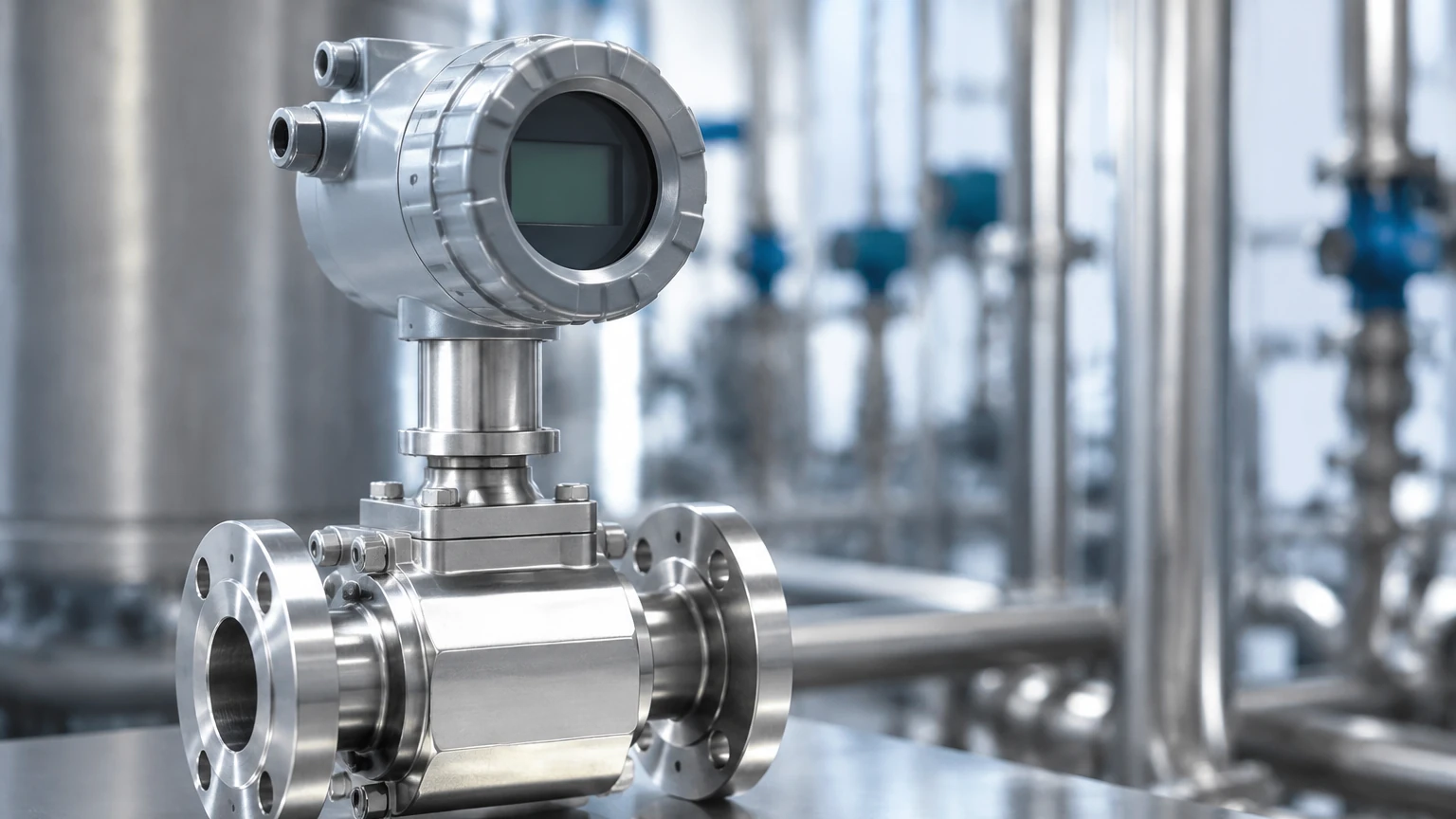
In modern industrial processing, the transition from volumetric flow measurement to mass flow measurement represents a significant leap in precision and process control. A digital mass flow meter provides the critical data required for mass balance, chemical reactions, and custody transfer by measuring the actual mass of the fluid passing through a system, independent of changes in temperature or pressure. Unlike traditional mechanical meters, digital variants incorporate advanced signal processing and communication protocols, making them essential components in automated industrial environments.
Understanding Mass Flow Measurement Principles
Before selecting a digital mass flow meter, it is essential to understand the physical principles that govern their operation. While several technologies exist, the two most prominent in industrial B2B applications are Coriolis and Thermal Dispersion.
1. The Coriolis Principle
Coriolis flow meters are considered the "gold standard" for mass flow measurement. They operate based on the Coriolis effect, which occurs when a fluid moves through a vibrating tube. The meter consists of one or two measuring tubes that are vibrated at their resonant frequency by an electromagnetic drive coil.
When a fluid enters the vibrating tubes, the mass movement induces a phase shift or "twist" in the vibration. Sensors located at the inlet and outlet of the tubes measure this time delay (delta-t). This phase shift is directly proportional to the mass flow rate. Because the vibration frequency of the tubes also changes with the density of the fluid, Coriolis meters can simultaneously provide high-accuracy density and temperature measurements. This multi-variable capability allows operators to monitor complex processes with a single instrument.
2. The Thermal Dispersion Principle
Thermal mass flow meters are primarily used for gas applications. This technology relies on the heat-transfer properties of the fluid. The sensor typically consists of two Resistance Temperature Detectors (RTDs). One sensor is a reference sensor that measures the ambient temperature of the gas, while the other is a heated sensor maintained at a constant differential temperature above the reference.
As the gas flows past the heated sensor, it carries away heat. The amount of electrical power required to maintain the fixed temperature differential is directly proportional to the mass flow rate of the gas. Since the cooling effect depends on the number of gas molecules (mass) rather than the volume, the measurement is inherently compensated for pressure and temperature changes.
Why Choose a Digital Mass Flow Meter?
In the context of industrial automation, the term "digital" refers to the transmitter's ability to process raw sensor signals into high-resolution data and communicate that data via digital industrial protocols.
* Direct Mass Measurement: Volumetric flow meters require external pressure and temperature compensation to calculate mass, which introduces cumulative errors. A digital mass flow meter measures mass directly, eliminating the need for additional sensors and complex PLC calculations.
* Enhanced Diagnostics: Digital transmitters provide real-time health monitoring. They can detect issues such as tube coating, entrained air in liquids, or sensor fouling in gases before these issues lead to process failure.
* Multi-Protocol Communication: Modern units support RS485 Modbus, HART, Profibus, and Foundation Fieldbus. This allows for seamless integration into Distributed Control Systems (DCS) and facilitates the Industrial Internet of Things (IIoT) by providing more than just flow data—such as totalized flow, density, and device status.
Key Evaluation Criteria for Selection
Selecting the right instrument requires a thorough analysis of the process conditions. Engineers should evaluate the following factors:
* Fluid State and Properties: Coriolis meters excel with liquids, slurries, and high-pressure gases. Thermal meters are generally restricted to clean, dry gases.
* Accuracy Requirements: If the application involves custody transfer or high-value chemical dosing, the 0.1% accuracy of a Coriolis meter is necessary. For compressed air monitoring or aeration control, the 1-2% accuracy of a thermal meter is often sufficient.
* Pressure Drop: Thermal meters offer a nearly unobstructed flow path, resulting in negligible pressure drop. Coriolis meters, depending on the tube shape (U-shaped vs. straight), can introduce a measurable pressure drop that must be accounted for in pump sizing.
* Turndown Ratio: This refers to the range over which the meter can measure accurately. Digital mass flow meters typically offer high turndown ratios (up to 100:1), allowing them to measure both peak demand and low-flow leakage accurately.
Practical Selection Table
| Feature | Coriolis Mass Flow Meter | Thermal Mass Flow Meter |
| :— | :— | :— |
| Primary Application | High-precision liquids, oils, chemicals | Compressed air, nitrogen, CO2, natural gas |
| Measurement Accuracy | ±0.1% to ±0.5% of rate | ±1% to ±2% of full scale |
| Fluid Types | Liquids, Slurries, High-pressure Gases | Clean, dry gases |
| Pressure Drop | Moderate to High | Very Low |
| Installation Req. | Minimal straight runs needed | Significant straight runs (15-30D) |
| Cost Profile | High initial investment | Moderate initial investment |
Installation and Maintenance Considerations
Proper installation is paramount to maintaining the laboratory-rated accuracy of a digital mass flow meter in a field environment.
Mechanical Installation
For Coriolis meters, vibration is the primary enemy. The meter should be mounted on a rigid support structure to prevent external mechanical noise from interfering with the tube's resonant frequency. In liquid applications, the meter should be installed at a low point in the piping or in a vertical "up-flow" orientation to ensure the tubes remain full and free of trapped air bubbles.
Thermal meters, conversely, are highly sensitive to the flow profile. They require significant straight pipe runs—typically 20 diameters upstream and 10 diameters downstream—to ensure a laminar flow profile. If space is limited, flow conditioners or honeycombs must be installed to eliminate turbulence.
Electrical and Digital Setup
Grounding is critical for digital instruments to prevent electromagnetic interference (EMI) from affecting the sensitive low-voltage signals from the sensors. When integrating with a control system, ensure that the communication baud rates and parity settings match the PLC/DCS configuration. For remote monitoring, many digital mass flow meters now offer Bluetooth or Wi-Fi interfaces for configuration via mobile apps, which simplifies commissioning in hard-to-reach areas.
Limitations and Common Risks
While highly capable, digital mass flow meters are not universal solutions.
1. Entrained Gas/Solids: In Coriolis meters, large amounts of entrained gas in a liquid (slug flow) can cause the tubes to stop vibrating or produce erratic readings. While digital signal processing (DSP) has improved "two-phase flow" handling, it remains a limitation.
2. Gas Composition Changes: Thermal mass flow meters are calibrated for a specific gas mixture. If the gas composition changes (e.g., a shift in the methane-to-ethane ratio in natural gas), the heat transfer characteristics change, leading to significant measurement errors unless the meter is re-calibrated or updated with the new gas profile.
3. Coating and Fouling: While these meters have no moving parts, the buildup of paraffin, scale, or moisture on the sensor probes (thermal) or tube walls (Coriolis) will eventually degrade accuracy. Regular inspection intervals should be established based on the cleanliness of the process fluid.
Integration with Level Measurement Systems
In comprehensive industrial automation, flow measurement rarely exists in isolation. It is frequently paired with level measurement technologies to provide a complete picture of inventory and process efficiency. For instance, in tank farm management, comparing the mass flow data from an inlet digital mass flow meter against the volume changes detected by high-precision radar level sensors allows for the detection of leaks or vapor losses. For engineers looking to optimize their entire measurement loop, consulting a professional manufacturer like Welk for integrated solutions is recommended. You can Review product options and application support to see how level and flow data can be synchronized for better process transparency.
Frequently Asked Questions (FAQ)
Q: Can a digital mass flow meter measure steam?
A: Coriolis meters can measure high-pressure steam, but they are often cost-prohibitive for this application. Thermal mass flow meters are generally not recommended for saturated steam because water droplets hitting the heated sensor cause measurement spikes. Vortex meters with multivariable outputs are usually the preferred choice for steam mass flow.
Q: What is the difference between "Standard" and "Actual" flow in digital meters?
A: "Actual" flow refers to the volume of fluid at the current operating temperature and pressure. "Standard" (or Normal) flow is a calculated value representing what the volume would be at a reference state (e.g., 0°C and 1.013 bar). Because a digital mass flow meter measures mass, it can provide "Standard" flow directly without needing external compensation.
Q: How often should a digital mass flow meter be calibrated?
A: For non-critical applications, a check every 2 to 3 years is common. However, for custody transfer or regulated industries (pharmaceutical/food), annual calibration is standard. Many digital meters offer "in-situ" verification, where the electronics perform a self-diagnostic to verify sensor integrity without removing the meter from the line.
Conclusion
The implementation of a digital mass flow meter is a strategic investment in process reliability and accuracy. By understanding the underlying physics—whether Coriolis or Thermal—and adhering to strict installation guidelines, industrial operators can achieve precise control over their most valuable fluid assets. As digital transformation continues to reshape the industry, the ability of these meters to provide high-fidelity data and diagnostics will remain a cornerstone of efficient manufacturing and processing.