Dissolved Oxygen Meter for Wastewater
Dissolved Oxygen Meter for Wastewater
In the management of municipal and industrial wastewater treatment plants, the measurement of dissolved oxygen (DO) is one of the most critical parameters for ensuring biological process efficiency. A dissolved oxygen meter for wastewater serves as the primary feedback mechanism for aeration systems, which often account for 50% to 70% of a facility's total energy consumption. Maintaining precise DO levels is essential not only for the health of aerobic microorganisms but also for regulatory compliance and operational cost-effectiveness.
This guide provides a technical overview of dissolved oxygen measurement technologies, selection criteria for wastewater environments, and best practices for installation and maintenance. By understanding the underlying physics and the specific demands of the wastewater industry, engineers can select the most reliable instrumentation for their process control systems.
Measurement Principles of Dissolved Oxygen Sensors
Before selecting a dissolved oxygen meter for wastewater, it is vital to understand the two primary measurement technologies used in the field: electrochemical and optical. Each has distinct operational characteristics that influence its suitability for specific stages of the treatment process.
1. Electrochemical Sensors
Electrochemical sensors are further divided into polarographic and galvanic types. Both rely on a membrane-covered probe that allows oxygen to diffuse into a cell containing an electrolyte and two electrodes.
* Polarographic Sensors: These require a constant external voltage (polarizing voltage) to be applied to the electrodes. When oxygen reaches the cathode, it is reduced, creating a current proportional to the partial pressure of oxygen. These sensors typically require a "warm-up" period of 15 to 60 minutes to stabilize the polarization before accurate readings can be taken.
* Galvanic Sensors: These use two dissimilar metals (often a lead anode and a gold or silver cathode) that create a self-polarizing potential. The reaction occurs spontaneously as soon as oxygen is present. Galvanic sensors are known for their "instant-on" capability, making them popular for portable testing, though they consume the anode material over time.
Both electrochemical types require a minimum flow of water (typically 0.3 m/s) across the membrane to prevent oxygen depletion at the sensor tip, which would otherwise result in artificially low readings.
2. Optical (Luminescence-Based) Sensors
Optical dissolved oxygen (LDO) sensors represent the modern standard for wastewater applications. They operate on the principle of fluorescence quenching. A sensor cap is coated with a luminescent dye that is excited by a blue LED. When the dye returns to its ground state, it emits red light. If oxygen molecules are present, they "quench" the luminescence, shortening the duration and intensity of the red light return. The sensor measures the phase shift or decay time, which is inversely proportional to the oxygen concentration.
Unlike electrochemical sensors, optical meters do not consume oxygen and do not require a minimum flow velocity. They are also immune to interference from common wastewater gases like hydrogen sulfide ($H_2S$).
The Role of DO Measurement in Wastewater Treatment
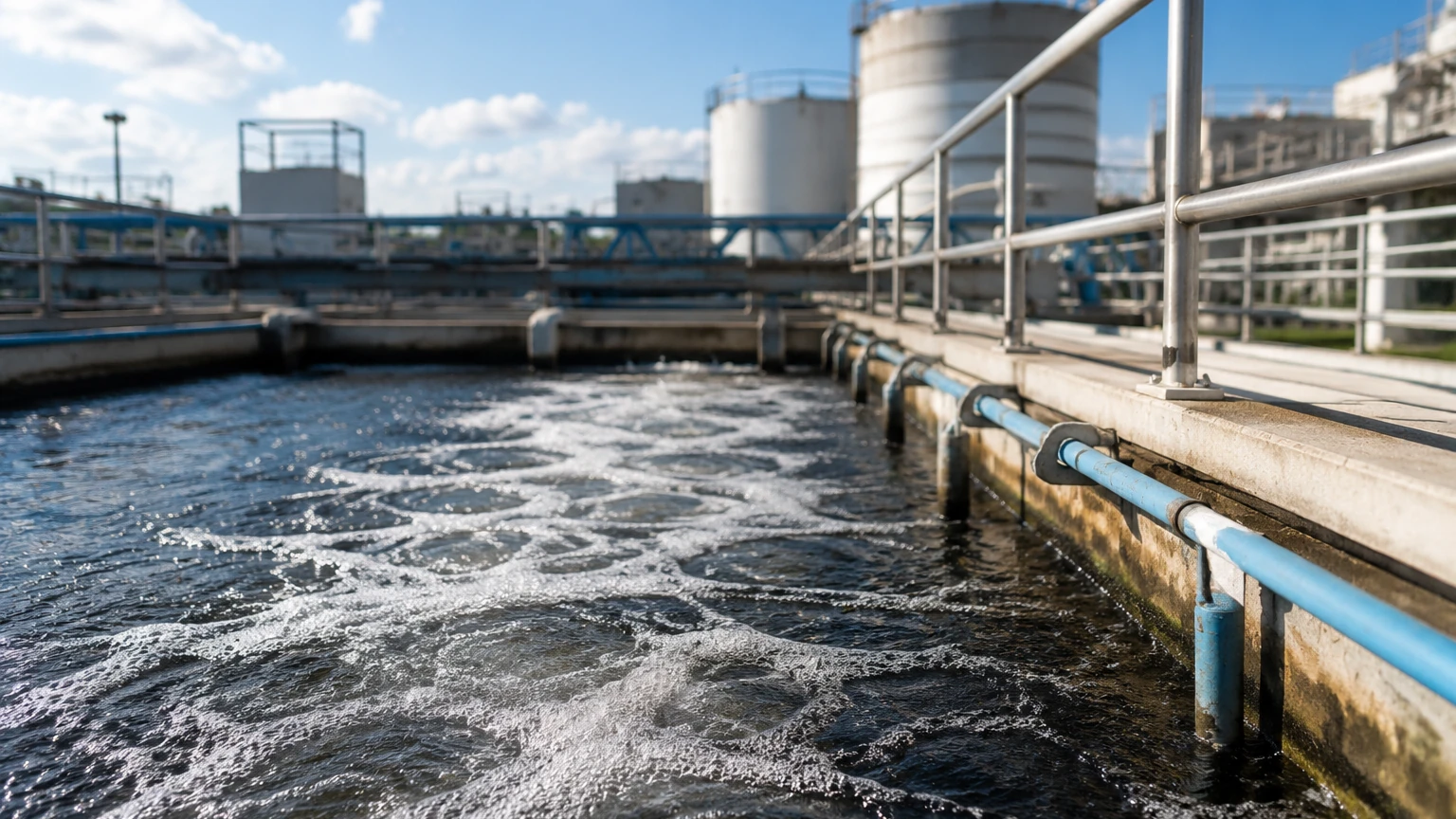
The primary application for a dissolved oxygen meter for wastewater is in the activated sludge process. In aeration tanks, aerobic bacteria break down organic matter (BOD – Biological Oxygen Demand). For these bacteria to thrive, DO levels must typically be maintained between 1.5 mg/L and 2.5 mg/L.
* Under-aeration: If DO levels drop below 1.0 mg/L, the growth of filamentous bacteria may occur, leading to "sludge bulking," where the solids fail to settle in the secondary clarifiers. This can result in effluent permit violations.
* Over-aeration: Maintaining DO levels above 3.0 mg/L provides diminishing returns for biological health and leads to excessive energy expenditure. Furthermore, high DO levels in the return activated sludge (RAS) can interfere with denitrification processes in the anoxic zones.
By integrating a dissolved oxygen meter for wastewater into a Variable Frequency Drive (VFD) control loop for blowers, plants can achieve significant energy savings while maintaining stable process conditions.
Selection Criteria for Industrial Wastewater Environments
When evaluating instrumentation, engineers must look beyond basic accuracy specifications. The harsh environment of a wastewater plant—characterized by fats, oils, grease (FOG), and abrasive solids—demands robust hardware.
| Feature | Polarographic/Galvanic | Optical (LDO) |
| :— | :— | :— |
| Maintenance Frequency | High (Membrane/Electrolyte changes) | Low (Annual cap replacement) |
| Calibration Stability | Moderate (Drifts as electrolyte ages) | High (Minimal drift) |
| Flow Dependency | Requires 0.3 m/s minimum flow | No flow required |
| Response Time | 30–90 seconds | 30–60 seconds |
| Interference | Sensitive to $H_2S$ and $CO_2$ | Immune to most common gases |
| Initial Cost | Lower | Higher |
| Long-term TCO | Higher due to labor and parts | Lower due to reduced maintenance |
For most permanent installations in aeration basins, optical sensors are recommended due to their lower Total Cost of Ownership (TCO) and resistance to fouling.
Installation Considerations and Best Practices
The reliability of a dissolved oxygen meter for wastewater is heavily dependent on its placement within the process stream. Incorrect installation can lead to unrepresentative data and frequent sensor failure.
1. Location Selection: The sensor should be placed in a zone that represents the average oxygen concentration of the tank. Avoid areas immediately adjacent to aeration diffusers (where bubbles will cause erratic high readings) or dead zones with zero flow.
2. Submersion Depth: Sensors should typically be submerged at a depth of 1.0 to 2.0 meters (approximately 3 to 6 feet). This ensures the sensor remains below the surface scum layer but is accessible for maintenance. For deep tanks, ensure the mounting hardware is rigid enough to prevent the sensor from swinging into walls.
3. Mounting Angle: Sensors should be mounted at an angle (usually 45 degrees) rather than vertically. This prevents air bubbles from becoming trapped against the sensor membrane or optical window, which would cause false high readings.
4. Cleaning Systems: In wastewater, biofouling is inevitable. Integrated cleaning systems—such as compressed air blasts or mechanical wipers—are highly recommended. These systems can extend the interval between manual cleanings from days to months.
Integration with Level and Flow Measurement
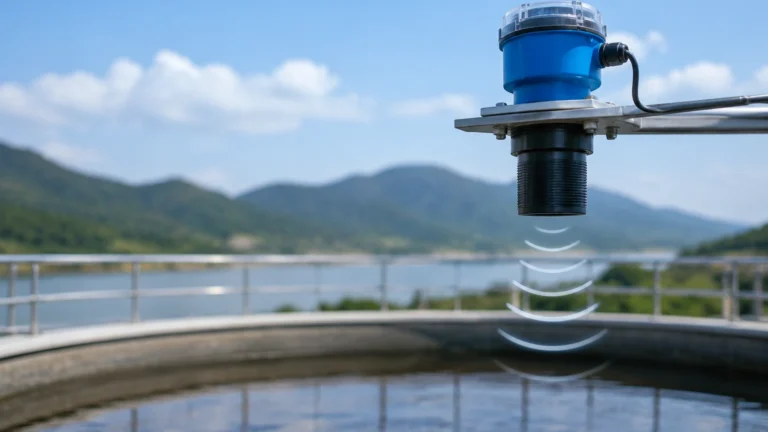
While dissolved oxygen is a chemical parameter, it is inextricably linked to the physical hydraulics of the plant. Effective wastewater management requires a holistic approach to instrumentation. For instance, the volume of the aeration tank, monitored by ultrasonic or radar level sensors, determines the hydraulic retention time (HRT). If the level fluctuates significantly, the aeration demand will shift accordingly.
Welk provides a range of level measurement solutions that complement oxygen monitoring systems. For example, maintaining accurate level control in basins ensures that DO sensors remain at the correct submersion depth. For a complete overview of industrial measurement technologies, including radar and ultrasonic systems, you can visit the Main Page.
Common Risks and Operational Limitations
Despite advancements in technology, users should be aware of specific limitations when deploying a dissolved oxygen meter for wastewater:
* Temperature Sensitivity: Oxygen solubility is highly temperature-dependent. Cold water holds more oxygen than warm water. All professional-grade DO meters must include an integrated temperature sensor (thermistor) for automatic temperature compensation.
* Salinity Interference: In industrial wastewater (e.g., food processing or oil and gas), high salt concentrations reduce oxygen solubility. If the salinity of the wastewater is high or fluctuating, the meter must be calibrated with a salinity correction factor.
* Membrane Fouling: For electrochemical sensors, the accumulation of biofilms or grease on the membrane acts as a barrier to oxygen diffusion. This leads to a slow response time and a downward drift in measured values.
* Optical Cap Degradation: While optical sensors are robust, the luminescent coating on the cap eventually degrades due to exposure to UV light or abrasive solids. Most manufacturers recommend replacing the sensor cap every 12 to 24 months.
Frequently Asked Questions (FAQ)
Q: How often should I calibrate my dissolved oxygen meter for wastewater?
A: For optical sensors, a calibration check every 3 to 6 months is usually sufficient. Electrochemical sensors typically require calibration every 1 to 2 weeks due to electrolyte depletion and membrane fouling. Always perform a calibration check after cleaning the sensor.
Q: Can I use a portable DO meter for process control?
A: Portable meters are excellent for spot-checking and verifying the accuracy of fixed sensors. However, they are not suitable for continuous process control as they lack the ruggedized mounting and automated cleaning features required for 24/7 operation in raw wastewater.
Q: What is the difference between % Saturation and mg/L?
A: % Saturation measures the partial pressure of oxygen relative to the maximum amount the water could hold at that temperature and pressure. Mg/L (or ppm) measures the actual mass concentration. In wastewater treatment, mg/L is the standard unit used for blower control and biological monitoring.
Q: How do I know if my sensor is failing?
A: Common signs of failure include extremely slow response times when moved between high and low oxygen environments, readings that "flatline" at zero or maximum, and the inability to calibrate the sensor to a known standard (such as water-saturated air).
Conclusion
Selecting the right dissolved oxygen meter for wastewater is a fundamental step in optimizing treatment performance and reducing operational costs. While electrochemical sensors offer a lower entry price, the long-term reliability and low maintenance requirements of optical sensors make them the preferred choice for modern industrial and municipal facilities. By adhering to strict installation guidelines and integrating DO data with other process variables like flow and level, plant operators can ensure a stable, compliant, and energy-efficient treatment process.
For engineers seeking to enhance their facility's automation with reliable level measurement and monitoring instruments, exploring professional-grade options is essential. Review product options and application support on the Main Page to find the right balance of accuracy and durability for your specific industrial environment.