Sensus Box
Sensus Box
In the landscape of modern utility management and industrial automation, the integration of precise measurement instruments into protective enclosures—often referred to in the industry as a sensus box or meter pit—is critical for long-term operational reliability. These enclosures serve as the primary interface between the harsh outdoor environment and the sensitive electronic components required to monitor water levels, flow rates, and pressure. For engineers and facility managers, understanding how to effectively deploy level measurement technology within these confined spaces is essential for maintaining data accuracy and system longevity.
Whether used in municipal water distribution, wastewater collection, or industrial process monitoring, the choice of level sensor within a sensus box must account for physical constraints, environmental factors, and the specific characteristics of the medium being measured. This guide explores the principles of level measurement applicable to these environments and provides a framework for selecting the most appropriate technology.
Principles of Level Measurement in Confined Enclosures
Before selecting a sensor for a sensus box application, it is vital to understand the physical principles that govern different measurement technologies. Each method has distinct advantages and limitations when operating in the restricted geometry of a utility box.
Ultrasonic Level Measurement
Ultrasonic sensors operate on the "Time-of-Flight" principle. The sensor emits a high-frequency sound pulse that travels through the air, reflects off the surface of the liquid, and returns to the transducer. The distance is calculated based on the speed of sound and the time elapsed.
In a sensus box, ultrasonic sensors are popular due to their non-contact nature. However, they require a clear path to the liquid surface. Obstructions within the box, such as ladders, pipes, or the walls of the enclosure itself, can cause false echoes. Furthermore, ultrasonic waves are affected by temperature fluctuations and heavy condensation, which are common in underground pits.
Radar (FMCW) Level Measurement
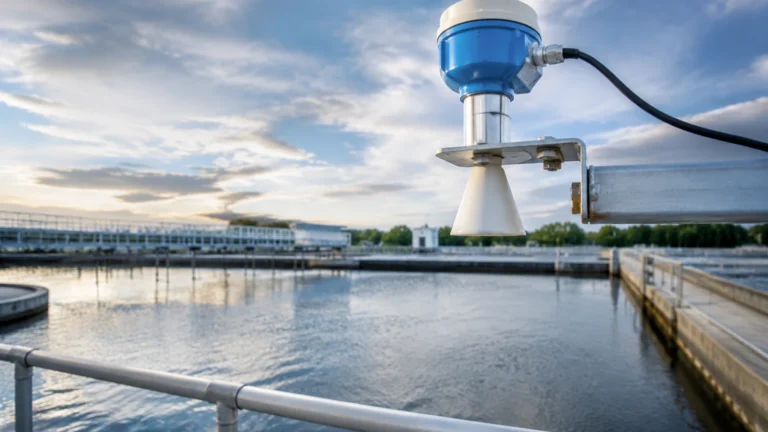
Radar level meters, particularly those using Frequency Modulated Continuous Wave (FMCW) technology, utilize high-frequency microwave pulses (typically 26GHz or 80GHz). Unlike ultrasonic waves, radar signals are largely unaffected by air temperature, pressure, or vapor.
For a sensus box, 80GHz radar is often preferred because it offers a very narrow beam angle (as low as 3 degrees). This allows the sensor to measure accurately even in narrow or cluttered enclosures without interference from the box walls. Radar is a non-contact technology, making it ideal for corrosive or dirty liquids where sensor fouling is a concern.
Hydrostatic Pressure Measurement
Hydrostatic level transmitters measure the pressure exerted by a liquid column. The principle is based on the formula: $P = \rho \cdot g \cdot h$, where $P$ is pressure, $\rho$ is the density of the liquid, $g$ is gravity, and $h$ is the height of the liquid.
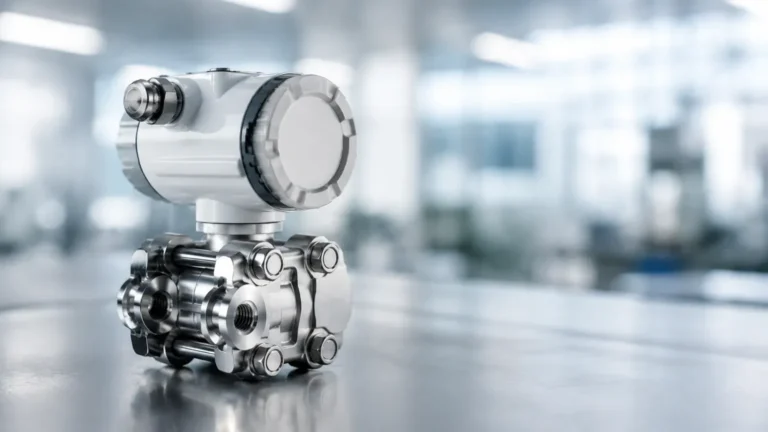
In utility boxes, a submersible pressure transducer is lowered to the bottom of the tank or pit. This method is immune to surface foam, turbulence, or internal obstructions. However, the sensor is in constant contact with the liquid, necessitating compatible materials (e.g., 316L stainless steel or Hastelloy) and a vented cable to compensate for atmospheric pressure changes.
Key Evaluation Criteria for Sensus Box Integration
Selecting the right instrument for a sensus box requires a multi-faceted evaluation. Professionals should consider the following criteria to ensure the chosen solution meets the project's technical demands.
1. Physical Dimensions and Dead Zones
Every non-contact sensor has a "dead zone" or "blanking distance" near the transducer face where measurement is impossible. In a shallow sensus box, a large dead zone (e.g., 300mm) might prevent the system from detecting a high-level alarm condition. Radar sensors typically have smaller dead zones than ultrasonic sensors, making them better suited for compact enclosures.
2. Environmental Protection (IP Rating)
Sensus boxes are frequently subject to flooding or high humidity. Instruments must carry an appropriate Ingress Protection (IP) rating. For sensors that may be submerged, an IP68 rating is mandatory. For those mounted at the top of the box, IP67 is usually the minimum requirement to withstand heavy condensation.
3. Power Consumption and Telemetry
Many remote monitoring boxes operate on battery or solar power. Therefore, the power consumption of the level meter is a critical factor. Modern sensors often feature "sleep modes" and fast start-up times to conserve energy. Integration with a data logger or telemetry unit within the sensus box allows for remote data transmission via NB-IoT, LoRaWAN, or cellular networks.
For a deeper look at specific hardware configurations and telemetry compatibility, engineers can consult the Main Page to review product options and application support.
Practical Selection Table
The following table provides a comparison of the most common level measurement technologies used in industrial and utility box applications.
| Feature | Ultrasonic Sensor | 80GHz Radar | Hydrostatic Transmitter |
| :— | :— | :— | :— |
| Measurement Type | Non-contact | Non-contact | Contact (Submerged) |
| Accuracy | ±0.25% of range | ±1 mm to ±2 mm | ±0.1% to ±0.5% FS |
| Max Range | Up to 15m | Up to 30m+ | Up to 200m H2O |
| Dead Zone | 200mm – 500mm | < 50mm | None |
| Effect of Steam/Vapor | High Interference | Negligible | None |
| Beam Angle | 8° – 12° | 3° – 6° | N/A |
| Power Needs | Moderate | Low (Loop-powered) | Very Low |
Installation Considerations for Sensus Box Environments
Correct installation is as important as selecting the right sensor. In the confined space of a sensus box, several factors can compromise measurement integrity.
* Mounting Position: Non-contact sensors should be mounted perfectly perpendicular to the liquid surface. Even a slight tilt can result in signal loss, especially with radar. In a sensus box, ensure the mounting bracket is rigid and not prone to vibration.
* Internal Obstructions: Ensure the sensor’s signal path is clear of inflow pipes, pump cables, or internal bracing. For ultrasonic sensors, the beam spreads as it travels, so a wider clearance is needed compared to high-frequency radar.
* Venting: For hydrostatic sensors, the vent tube in the cable must be kept clear and protected from moisture. Using a bellows or a desiccant cartridge at the termination point inside the sensus box is recommended to prevent internal condensation from damaging the sensor electronics.
* Cable Management: In utility pits, cables are often exposed to rodents or mechanical stress during maintenance. Using conduit or armored cables can prevent signal failure.
Limitations and Common Risks
While modern level meters are highly advanced, certain risks remain prevalent in sensus box applications:
1. Build-up and Fouling: In wastewater applications, fats, oils, and grease (FOG) can build up on the face of an ultrasonic transducer or around a hydrostatic diaphragm. Regular inspection cycles are necessary to ensure the sensor remains clean.
2. Signal Attenuation: In very deep or narrow boxes, signal attenuation can occur if the walls are made of highly reflective or highly absorptive materials. Radar is generally more resilient here, but proper configuration of "false echo suppression" in the software is often required.
3. Lightning and Surges: Since many of these boxes are part of a larger outdoor network, they are susceptible to lightning strikes. Incorporating surge protection devices (SPD) within the sensus box can save expensive instrumentation from electrical damage.
Frequently Asked Questions (FAQs)
Q: Can a radar sensor measure through the lid of a plastic sensus box?
A: Yes, certain radar frequencies (especially lower frequencies or high-power 80GHz units) can penetrate non-conductive materials like plastic or fiberglass lids. This allows for "hidden" installation where the sensor is protected inside the box while measuring the liquid level below. However, this requires careful calibration and may result in some signal attenuation.
Q: How do I handle condensation on the sensor lens?
A: Condensation is a major issue for ultrasonic sensors, as water droplets can scatter the sound waves. Radar sensors with a PTFE (Teflon) lens are naturally water-repellent. For extreme cases, choosing a sensor with a curved lens design helps droplets roll off, maintaining signal clarity.
Q: What is the typical maintenance interval for a level sensor in a utility box?
A: For non-contact sensors in clean water applications, an annual check is usually sufficient. In wastewater or chemical environments, a quarterly inspection is recommended to check for debris or corrosive damage to the housing.
Q: Is it possible to use a magnetic level gauge in a sensus box?
A: Magnetic level gauges are typically used on the outside of tanks (bypass mounting). While they are extremely reliable, they are usually too bulky for a standard underground sensus box. They are better suited for above-ground industrial storage tanks where visual indication is required alongside electronic transmission.
Conclusion and Next Steps
Integrating level measurement technology into a sensus box requires a balance between precision, durability, and power efficiency. By understanding the fundamental differences between ultrasonic, radar, and hydrostatic technologies, engineers can select a solution that minimizes maintenance and maximizes data reliability.
Before finalizing a project specification, it is recommended to confirm the chemical compatibility of the sensor materials with the liquid being measured and to verify the maximum expected flood level to ensure the IP rating of the enclosure and instruments is sufficient. For comprehensive technical specifications on sensor hardware and to explore the full range of industrial measurement solutions, professionals are encouraged to visit the Main Page for detailed product documentation and engineering support.