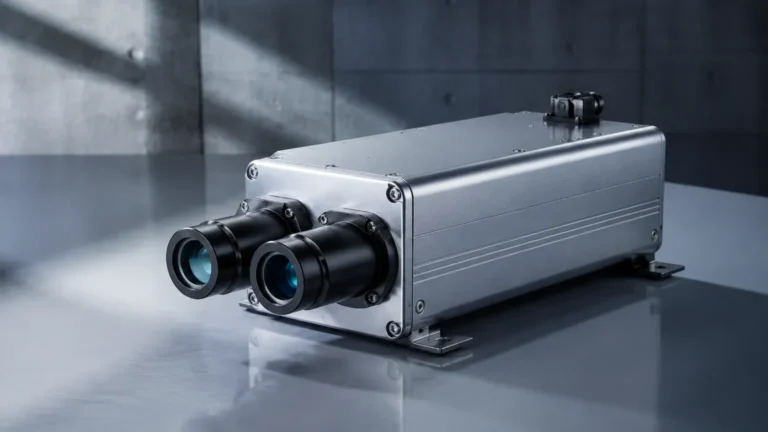
Endress Hauser Mag Meter
Endress Hauser Mag Meter
Electromagnetic flow meters, commonly referred to as mag meters, represent one of the most versatile and accurate technologies for measuring the volume flow of conductive liquids. Within the industrial landscape, the Endress Hauser mag meter series, particularly the Promag line, has established itself as a benchmark for reliability in water management, chemical processing, and hygienic applications. Understanding the technical nuances of these instruments is essential for engineers and procurement specialists who must ensure long-term operational stability in complex process environments.
This guide provides a comprehensive technical overview of electromagnetic flow measurement, focusing on the selection, installation, and application of mag meters. While our primary focus at Welk remains the precision manufacturing of industrial level measurement instruments, such as radar and ultrasonic sensors, we recognize that flow and level measurement often work in tandem to provide a complete picture of process automation. For more information on integrated measurement solutions, you can visit our Main Page.
Understanding the Electromagnetic Measurement Principle
The operation of an Endress Hauser mag meter is based on Faraday’s Law of Induction, a fundamental principle of electromagnetism. This law states that a voltage is induced when a conductive medium moves through a magnetic field.
The Physics of Flow
In a mag meter, the sensor consists of a flow tube lined with a non-conductive material. Two electromagnetic coils are placed outside or within the tube to generate a constant magnetic field ($B$) across the cross-section of the pipe. As a conductive liquid flows through this field at a certain velocity ($v$), it acts as a moving conductor. This movement induces an electrical voltage ($E$) between two electrodes mounted on opposite sides of the pipe wall.
The relationship is expressed by the formula:
E = B · v · d
Where:
* E is the induced voltage.
* B is the magnetic field strength.
* v is the average flow velocity.
* d is the distance between the electrodes (internal diameter of the pipe).
Since the magnetic field strength and the pipe diameter are constant, the induced voltage is directly proportional to the flow velocity. The transmitter then processes this micro-volt signal, converts it into a standardized output (such as 4-20 mA or digital protocols like HART, Modbus, or Profibus), and calculates the volumetric flow rate based on the pipe's cross-sectional area.
Key Components and Design of the Endress Hauser Mag Meter
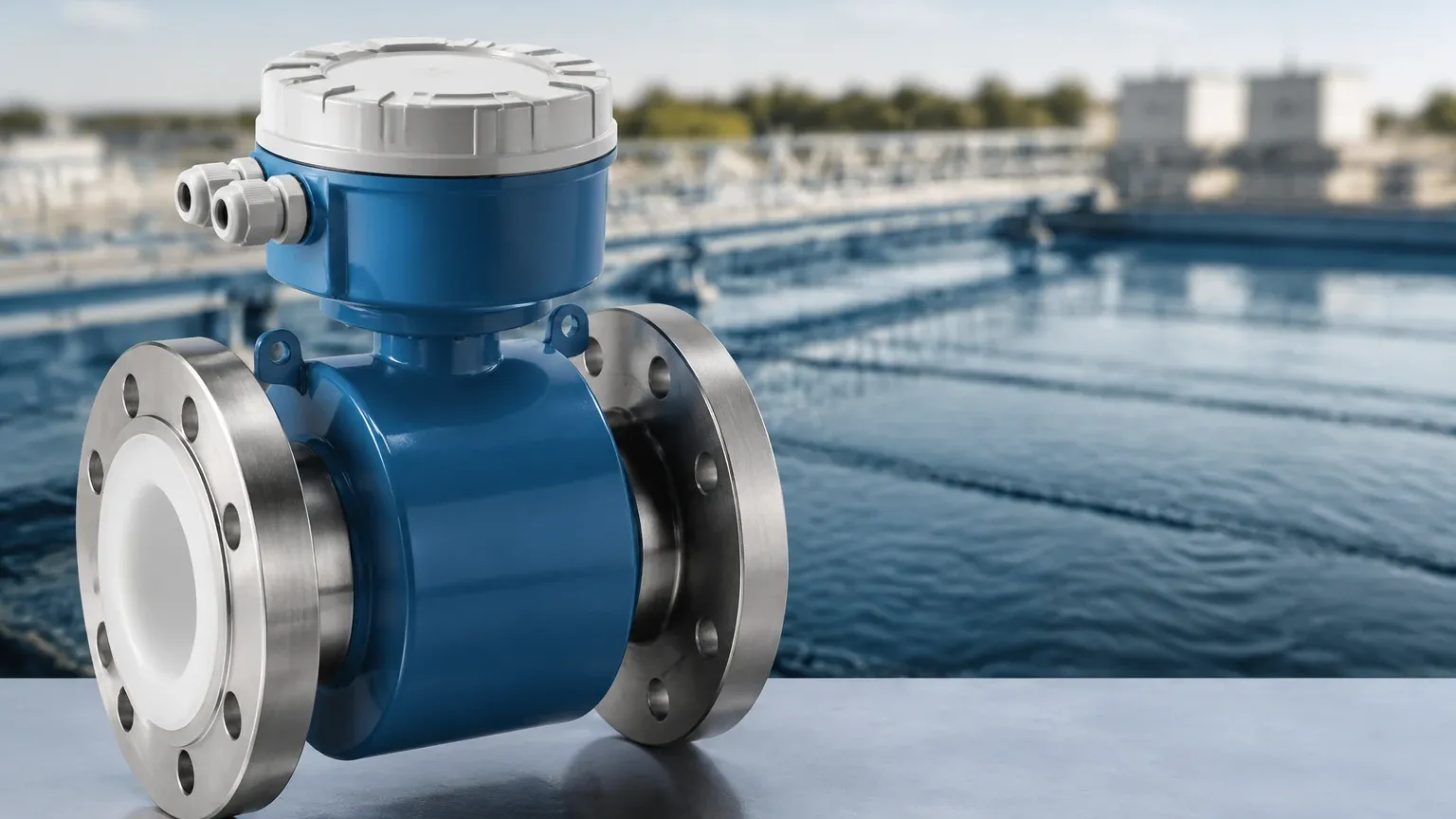
An Endress Hauser mag meter system typically consists of two main components: the sensor (the part in contact with the process) and the transmitter (the electronic unit that processes the signal).
1. The Sensor (Promag Series)
The sensor's construction is critical for chemical compatibility and durability. It includes:
* The Measuring Tube: Usually made of non-magnetic stainless steel.
* The Liner: Since the tube is metal, a non-conductive liner is required to prevent the induced voltage from short-circuiting. Common materials include PTFE, PFA, Polyurethane, and Hard Rubber.
* Electrodes: These pick up the induced voltage. They must be resistant to the process medium. Materials range from 316L Stainless Steel to exotic alloys like Hastelloy C22, Tantalum, or Platinum.
2. The Transmitter
The transmitter provides the power to the coils and amplifies the signal from the electrodes. Endress Hauser offers various transmitter tiers (e.g., Proline 10, 100, 300, 400, 500) depending on the required complexity. Advanced transmitters include "Heartbeat Technology," which allows for continuous self-diagnostics and verification without interrupting the process.
Selection Criteria for Industrial Applications
Choosing the correct Endress Hauser mag meter requires a detailed analysis of the process fluid and environmental conditions. The following table outlines the primary considerations for the most common models:
| Model | Primary Application | Liner Material | Temperature Range | Key Advantage |
| :— | :— | :— | :— | :— |
| Promag W | Water & Wastewater | Polyurethane / Hard Rubber | -20°C to +80°C | Robust, suitable for large diameters. |
| Promag P | Chemical / Process | PTFE / PFA | -40°C to +180°C | High chemical and temp resistance. |
| Promag H | Food / Pharma | PFA | -20°C to +150°C | Hygienic design, CIP/SIP cleanable. |
| Promag D | General Water | Polyamide | 0°C to +60°C | Compact, wafer-style for tight spaces. |
Material Compatibility
* Conductivity: The medium must have a minimum conductivity, typically ≥ 5 μS/cm (or ≥ 20 μS/cm for demineralized water). Mag meters cannot measure hydrocarbons like oil or diesel because they lack the necessary conductivity.
* Abrasiveness: For slurries or fluids with solids, a hard rubber or polyurethane liner is preferred due to its mechanical resilience.
* Corrosiveness: For aggressive acids or bases, PFA or PTFE liners combined with Tantalum or Platinum electrodes are standard.
Installation Best Practices and Pipe Requirements
To ensure the accuracy of an Endress Hauser mag meter (which can reach ±0.2% of the measured value), strict adherence to installation guidelines is mandatory.
1. Pipe Fullness
The measuring tube must always be completely full of liquid. If the pipe is only partially full, the meter will calculate the flow based on the full cross-sectional area, leading to significant overestimation. In gravity-fed systems, the meter should be installed in a U-section (siphon) to ensure it remains submerged.
2. Inlet and Outlet Runs
Flow disturbances caused by valves, pumps, or elbows can create turbulence that affects the magnetic field's interaction with the fluid. Standard requirements include:
* Upstream (Inlet): Minimum 5 × DN (Nominal Diameter).
* Downstream (Outlet): Minimum 2 × DN.
* If a valve is installed, it should always be placed downstream of the meter to prevent vacuum conditions or air bubbles.
3. Orientation
* Vertical Installation: This is the preferred orientation with the flow moving upwards. This ensures the pipe remains full and prevents the accumulation of air bubbles.
* Horizontal Installation: The electrode axis must be horizontal. If the electrodes are positioned vertically, air bubbles at the top or sediment at the bottom could insulate the electrodes, causing signal loss.
4. Grounding
Grounding is perhaps the most critical aspect of mag meter installation. Since the induced voltage is in the millivolt range, any stray electrical currents in the piping system can create noise. The liquid, the sensor, and the transmitter must all be at the same electrical potential. This is achieved using grounding rings (for plastic pipes) or by bonding the sensor flanges to the metal piping.
Limitations and Operational Constraints
While highly effective, the Endress Hauser mag meter is not a universal solution for every fluid. Engineers must be aware of the following limitations:
* Conductivity Threshold: As mentioned, non-conductive fluids (oils, gases, steam) cannot be measured. If the conductivity drops below the threshold, the signal will become unstable.
* Vacuum Sensitivity: Certain liners, particularly PTFE, can collapse or be sucked out of the tube if the process experiences a vacuum. In such cases, a PFA liner with a reinforcing mesh is recommended.
* Solid Content: While mag meters handle solids well, extremely high concentrations of magnetic solids (like magnetite) can interfere with the magnetic field and cause measurement errors.
* Temperature and Pressure: The limits of the liner material define the limits of the instrument. Exceeding the rated temperature of a polyurethane liner will lead to permanent damage and potential leaks.
Integration with Level Measurement Systems
In many industrial setups, flow measurement is only one part of the equation. For example, in a chemical storage tank, an Endress Hauser mag meter might measure the outflow to a reactor, while a Welk radar level meter monitors the remaining inventory in the tank.
Combining these two data points allows for:
1. Mass Balance Verification: Comparing the change in tank level against the totalized flow from the mag meter to detect leaks or pump inefficiencies.
2. Redundancy: Providing a secondary check on process status.
3. Process Optimization: Ensuring that inflow and outflow are balanced to maintain optimal head pressure for pumps.
Reliable level measurement is a cornerstone of industrial safety. For high-precision radar or ultrasonic level sensors that complement your flow infrastructure, please Review product options and application support.
Frequently Asked Questions (FAQ)
Why is my mag meter reading zero when there is flow?
This is often caused by the fluid conductivity falling below the required limit or a failure in the grounding system. Check the fluid properties and ensure the grounding straps are securely connected to the pipe flanges.
Can a mag meter measure flow in both directions?
Yes, most Endress Hauser mag meters are bi-directional. The transmitter can be configured to show forward flow, reverse flow, or the net total.
How often does a mag meter need calibration?
Mag meters have no moving parts, so they do not suffer from mechanical wear. However, in regulated industries (like water billing or pharma), annual or biennial verification is common. Technologies like Heartbeat allow for in-situ verification without removing the meter from the line.
What happens if air bubbles are present in the liquid?
Air bubbles are non-conductive. If they pass over the electrodes, they cause signal "noise." If there are too many bubbles, the meter may report an "empty pipe" error or provide an inaccurate high reading because it perceives the air-liquid mixture as a single fluid moving at a higher velocity.
Is the Endress Hauser mag meter suitable for high-pressure applications?
Yes, but the pressure rating is determined by the flange standard (e.g., PN40, Class 300) and the sensor housing. Always verify the pressure rating on the nameplate before installation.
By understanding these technical parameters, engineers can ensure that their flow measurement systems provide the accuracy and longevity required for modern industrial processes. Whether managing water resources or complex chemical reactions, the integration of high-quality flow and level instrumentation remains vital for operational excellence.