Endress Hauser Promag W400
Endress Hauser Promag W400
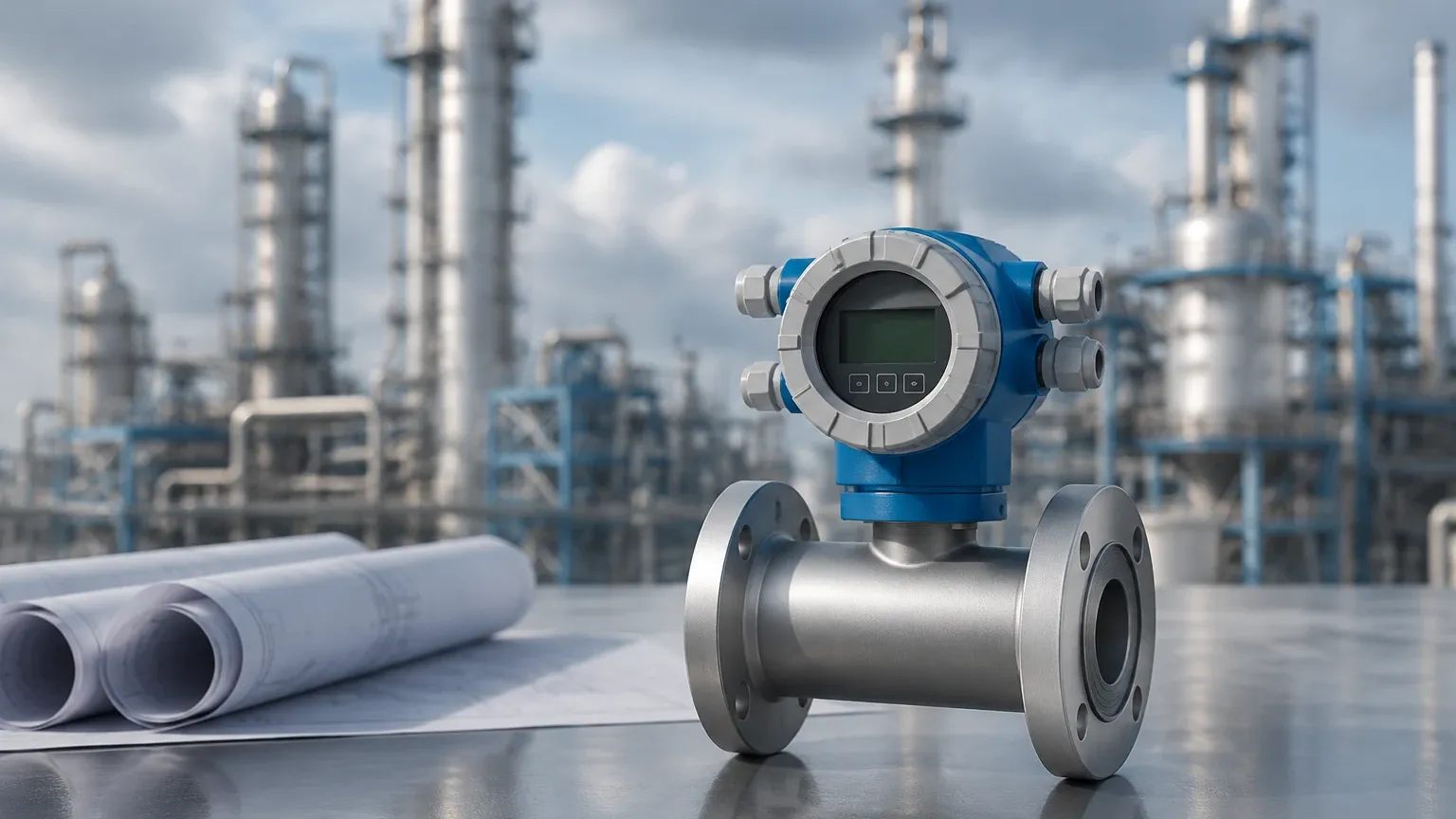
In the realm of industrial process control, the accurate measurement of liquid flow is as critical as monitoring the levels within storage tanks and processing vessels. The Endress Hauser Promag W400 represents a specialized solution within the electromagnetic flowmeter category, designed specifically for the water and wastewater industry. This article examines the technical foundations of electromagnetic flow measurement, the specific engineering advantages of the Promag W400 series, and how these instruments integrate into broader industrial automation frameworks alongside level measurement technologies.
Understanding Electromagnetic Flow Measurement Principles
Before evaluating the specific features of the Endress Hauser Promag W400, it is essential to understand the physics governing its operation. Electromagnetic flowmeters, often referred to as "magmeters," operate based on Faraday’s Law of Induction.
The Faraday Principle
Faraday’s Law states that a voltage is induced when a conductive medium moves through a magnetic field. In the context of a flowmeter like the Promag W400, this is expressed by the formula:
Ue = B · L · v
* Ue: Induced voltage
* B: Magnetic field strength
* L: Distance between electrodes (typically the pipe diameter)
* v: Flow velocity
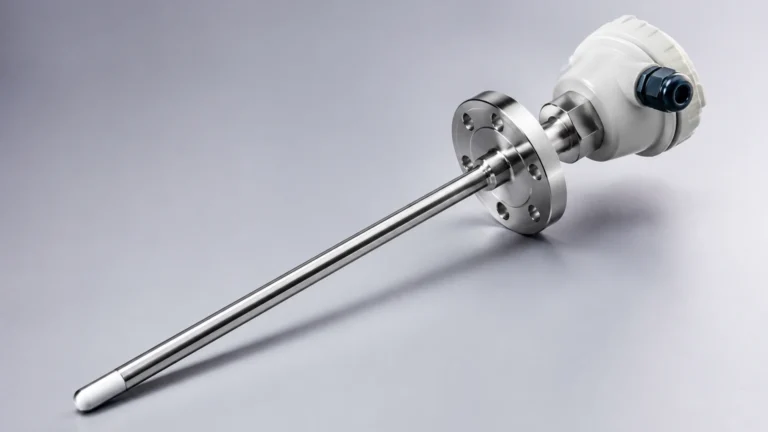
The flowmeter consists of a non-conductive pipe liner, two electromagnetic coils, and two measuring electrodes. As the conductive liquid flows through the pipe, the coils generate a constant magnetic field. The movement of the liquid induces a voltage across the electrodes that is directly proportional to the flow velocity. Because the cross-sectional area of the pipe is known, the transmitter can calculate the volumetric flow rate with high precision.
Conductivity Requirements
For this principle to function, the medium must have a minimum electrical conductivity. Most water-based applications meet this requirement, typically requiring a conductivity of ≥ 5 μS/cm. This makes magmeters ideal for raw water, drinking water, sewage, and industrial wastewater, though they are unsuitable for hydrocarbons or demineralized water.
Key Features of the Endress Hauser Promag W400
The Endress Hauser Promag W400 is distinguished by its "0 x DN full-bore" design and the integrated Proline 400 transmitter. Unlike mechanical flowmeters, it has no moving parts, resulting in zero pressure loss and minimal maintenance requirements.
0 x DN Full-Bore Option
One of the most significant challenges in piping design is the requirement for straight inlet and outlet runs to ensure a stable flow profile. Standard magmeters often require 5 to 10 pipe diameters (DN) of straight pipe upstream to eliminate turbulence. The Promag W400 offers a "0 x DN" version that features a refined sensor design, allowing for installation immediately after pipe bends or T-junctions without compromising accuracy. This is a critical advantage in compact plant layouts or retrofitting scenarios where space is limited.
Heartbeat Technology
To meet regulatory requirements for periodic calibration and verification, the Promag W400 incorporates Heartbeat Technology. This internal diagnostic suite allows for the continuous monitoring of the device’s health. It enables "verification without process interruption," where the instrument performs a self-check of its internal components and generates a report compliant with ISO 9001, reducing the need for costly external wet calibrations.
Digital Integration and Web Server
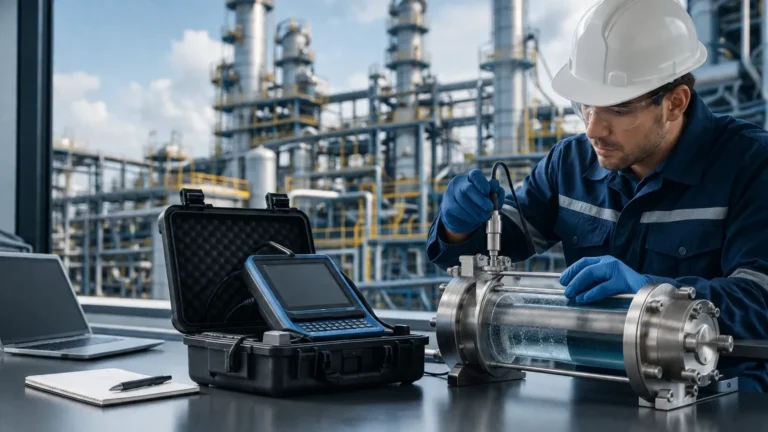
The Proline 400 transmitter is designed for the era of Industrial IoT (IIoT). It includes an integrated web server, allowing technicians to access device parameters, diagnostics, and data logging via a standard laptop and a crossover cable, without needing specialized software. Supported communication protocols include:
* HART
* Profinet
* EtherNet/IP
* Modbus RS485
Practical Selection and Application Engineering
Selecting the correct configuration of a Promag W400 involves matching the liner and electrode materials to the specific chemical and physical properties of the fluid.
Selection Table: Liner Materials
| Liner Material | Temperature Range | Typical Application |
| :— | :— | :— |
| Hard Rubber | 0°C to +80°C | Raw water, process water, large diameters |
| Polyurethane | –20°C to +50°C | Abrasive fluids, wastewater, drainage |
| PTFE | –20°C to +90°C | Corrosive chemicals, high-temperature water |
Electrode Materials
Electrodes are typically manufactured from Stainless Steel (1.4435/316L), but for highly corrosive environments, options such as Alloy C22 or Tantalum are available. Ensuring material compatibility is vital to prevent electrode passivation or corrosion, which would lead to signal drift.
Installation Considerations and Best Practices
While the Promag W400 is robust, its accuracy depends on adherence to fundamental installation engineering principles.
1. Full Pipe Requirement: The sensor must always be completely filled with liquid. If the pipe is only partially full, the velocity calculation will be incorrect. For this reason, magmeters are often installed in a rising pipe section (U-shape) to ensure a permanent liquid seal.
2. Avoid Air Pockets: Installation at the highest point of a piping system should be avoided, as air bubbles can collect in the sensor, causing signal noise or failure.
3. Grounding: Proper grounding is essential for electromagnetic flowmeters. The liquid, the sensor, and the transmitter must be at the same electrical potential to prevent stray currents from interfering with the micro-volt signals generated at the electrodes. This is achieved using grounding rings or grounding electrodes, especially in plastic or lined piping systems.
4. Submersible Versions: For applications in chambers that may flood or for direct burial, the Promag W400 is available with an IP68 (Type 6P) rating. In these cases, the sensor is fully potted and the cables are factory-sealed to prevent moisture ingress.
Limitations and Environmental Factors
Despite its versatility, the Promag W400 has specific limitations:
* Conductivity: It cannot measure non-conductive fluids like oils or pure alcohols.
* Solids Content: While it handles slurries well, extremely high concentrations of magnetic solids (like magnetite) can interfere with the magnetic field.
* Vacuum Stability: In some chemical processes, vacuum conditions can occur. It is important to ensure the chosen liner (particularly PTFE) is rated for vacuum to prevent the liner from collapsing or pulling away from the pipe wall.
Integrating Flow and Level Measurement
In most industrial water applications, flow measurement is only one part of the equation. Accurate level measurement is required to manage inventory, prevent pump run-dry conditions, and monitor open-channel flow in flumes.
For instance, while the Promag W400 handles closed-pipe pressurized flow, technologies such as radar level meters or ultrasonic sensors are used for non-contact level monitoring in storage tanks. In wastewater treatment plants, hydrostatic level transmitters are frequently used in deep wells or lift stations. By combining the high-precision flow data from an electromagnetic meter with the reliable level data from industrial sensors, plant operators can achieve a complete mass balance of their system.
For engineers seeking a comprehensive range of measurement technologies, including radar, ultrasonic, and hydrostatic solutions that complement flow instrumentation, it is helpful to Review product options and application support to ensure all process variables are accurately captured.
Frequently Asked Questions (FAQs)
Q: Can the Promag W400 measure flow in both directions?
A: Yes, electromagnetic flowmeters are inherently bi-directional. The transmitter can be configured to show positive flow, negative flow, or the net totalized value.
Q: What is the maximum flow velocity for the Promag W400?
A: Typically, the devices are calibrated for velocities up to 10 m/s. However, for the best balance between accuracy and pipe wear, most systems are designed for a flow velocity between 2 and 3 m/s.
Q: How often does the unit need to be recalibrated?
A: This depends on local regulations and the criticality of the measurement. With Heartbeat Technology, the interval between formal wet calibrations can often be extended significantly by using the internal verification functions.
Q: Is the Promag W400 suitable for hazardous areas?
A: Yes, the Promag W400 series is available with various international explosion-proof certifications, including ATEX, IECEx, and CSA, making it suitable for zones where explosive gases or dust may be present.
Conclusion
The Endress Hauser Promag W400 is a cornerstone of modern water management, providing the reliability of electromagnetic induction with the convenience of digital diagnostics. Its ability to operate without straight pipe runs and its integration of self-verification technologies make it a preferred choice for complex industrial environments. When paired with high-quality level measurement instruments, it allows for the precise control and optimization of water-based processes across the global industrial landscape. For more information on industrial measurement solutions and technical specifications, visit the Main Page.