Ph Logger
Ph Logger
In industrial process control and environmental monitoring, the ability to track chemical fluctuations over time is as critical as monitoring physical parameters like liquid levels. A pH logger is a specialized electronic device designed to record the acidity or alkalinity of a liquid medium at set intervals. Unlike a simple pH meter, which provides a real-time snapshot, a logger captures a longitudinal dataset, allowing engineers to identify trends, troubleshoot process deviations, and ensure regulatory compliance in water treatment, chemical manufacturing, and pharmaceutical production.
For facilities already utilizing advanced instrumentation such as radar level meters or ultrasonic sensors, integrating a pH logger provides a more comprehensive view of the fluid's state. While level measurement ensures the quantity of the medium is managed, pH logging ensures its quality and chemical stability.
Measurement Principles of pH Logging
To select and deploy a pH logger effectively, one must understand the electrochemical principles that govern its operation. The measurement is primarily based on the potential difference between two electrodes immersed in a solution.
The Nernst Equation
At the heart of pH measurement is the Nernst equation, which describes the relationship between the electric potential of a cell and the concentration of hydrogen ions. A standard pH probe consists of a glass electrode and a reference electrode. The glass electrode has a specialized hydrogen-ion-sensitive glass membrane. When immersed, hydrogen ions in the solution exchange with ions on the membrane surface, creating a millivolt (mV) potential.
The logger’s internal circuitry measures this voltage against the stable potential of the reference electrode (typically silver/silver chloride). At a neutral pH of 7.0, the potential is ideally 0 mV. As the solution becomes more acidic (lower pH), the voltage increases in the positive direction; as it becomes more alkaline (higher pH), the voltage increases in the negative direction. At 25°C (77°F), the theoretical change is approximately 59.16 mV per pH unit.
Temperature Compensation
Temperature significantly affects the electrochemical activity of ions and the sensitivity of the glass membrane. Most industrial pH loggers incorporate Automatic Temperature Compensation (ATC). This involves using an integrated temperature sensor (such as a PT100 or PT1000) to measure the liquid temperature simultaneously. The logger then applies a correction factor to the mV reading to ensure the reported pH value is accurate regardless of thermal fluctuations.
Key Components of a pH Logging System
An industrial-grade pH logging setup is comprised of several critical components that must work in harmony to provide reliable data:
1. The Sensor (Electrode): The primary interface with the fluid. In industrial settings, these are often "combination electrodes" that house both the sensing and reference elements in a single body. Materials range from standard glass to ruggedized versions designed for high-pressure or chemically aggressive environments.
2. The Signal Conditioner: pH electrodes have extremely high impedance (often exceeding 100 MΩ). The logger must include a high-impedance pre-amplifier to convert the weak electrode signal into a robust digital or analog signal without loading the circuit.
3. The Data Processing Unit: This component converts the analog voltage into a digital pH value, applies temperature compensation, and manages the timing of data capture.
4. Internal Memory: Industrial loggers feature non-volatile memory to store thousands of data points, ensuring data integrity even during power interruptions.
5. Housing and Connectivity: For field use, the housing must meet specific Ingress Protection (IP) ratings, such as IP67 or IP68. Connectivity options may include USB for manual downloads, or RS485/Modbus for integration into a broader SCADA system.
Selection Criteria for Industrial pH Loggers
Choosing the right pH logger requires balancing technical specifications with the specific demands of the application environment. Engineers should evaluate the following criteria:
Resolution and Accuracy
For most industrial applications, a resolution of 0.01 pH is standard. However, the system accuracy—which includes the error margins of both the probe and the logger—is more critical. High-end loggers typically offer a system accuracy of ±0.02 pH to ±0.05 pH.
Memory Capacity and Sampling Rates
The memory capacity dictates how long the logger can operate before data must be offloaded. If a process requires sampling every minute, the logger will fill its memory much faster than one sampling every hour. Look for devices that offer "wrap-around" memory (overwriting the oldest data) or stop-when-full modes depending on your data retention policy.
Battery Life and Power Options
In remote water monitoring or large-scale tank farms where level meters and pH sensors are far from power sources, battery life is paramount. Some loggers can operate for several years on a single lithium battery, provided the sampling interval is not excessively frequent.
Environmental Compatibility
Consider the chemical makeup of the liquid. For oily wastewater, a flat-surface electrode may be necessary to prevent fouling. For high-temperature chemical reactions, the electrode and the logger’s submerged components must be rated for the maximum expected temperature (e.g., 80°C or 176°F).
Practical Selection Table
| Feature | Portable/Handheld Logger | Fixed-Mount Industrial Logger | Submersible Data Logger |
| :— | :— | :— | :— |
| Primary Use | Spot checks and temporary audits | Continuous process monitoring | Environmental/Well monitoring |
| Power Source | Internal Rechargeable Battery | 24V DC / 110-220V AC | Long-life Lithium Battery |
| Data Retrieval | USB or Bluetooth | Modbus/4-20mA/HART | Optical or Wireless Link |
| Durability | Moderate (IP65) | High (IP67 + Chemical resistance) | Highest (IP68, Pressure rated) |
| Installation | Manual immersion | Pipe flange or Tank bracket | Suspended by cable |
Installation and Calibration Considerations
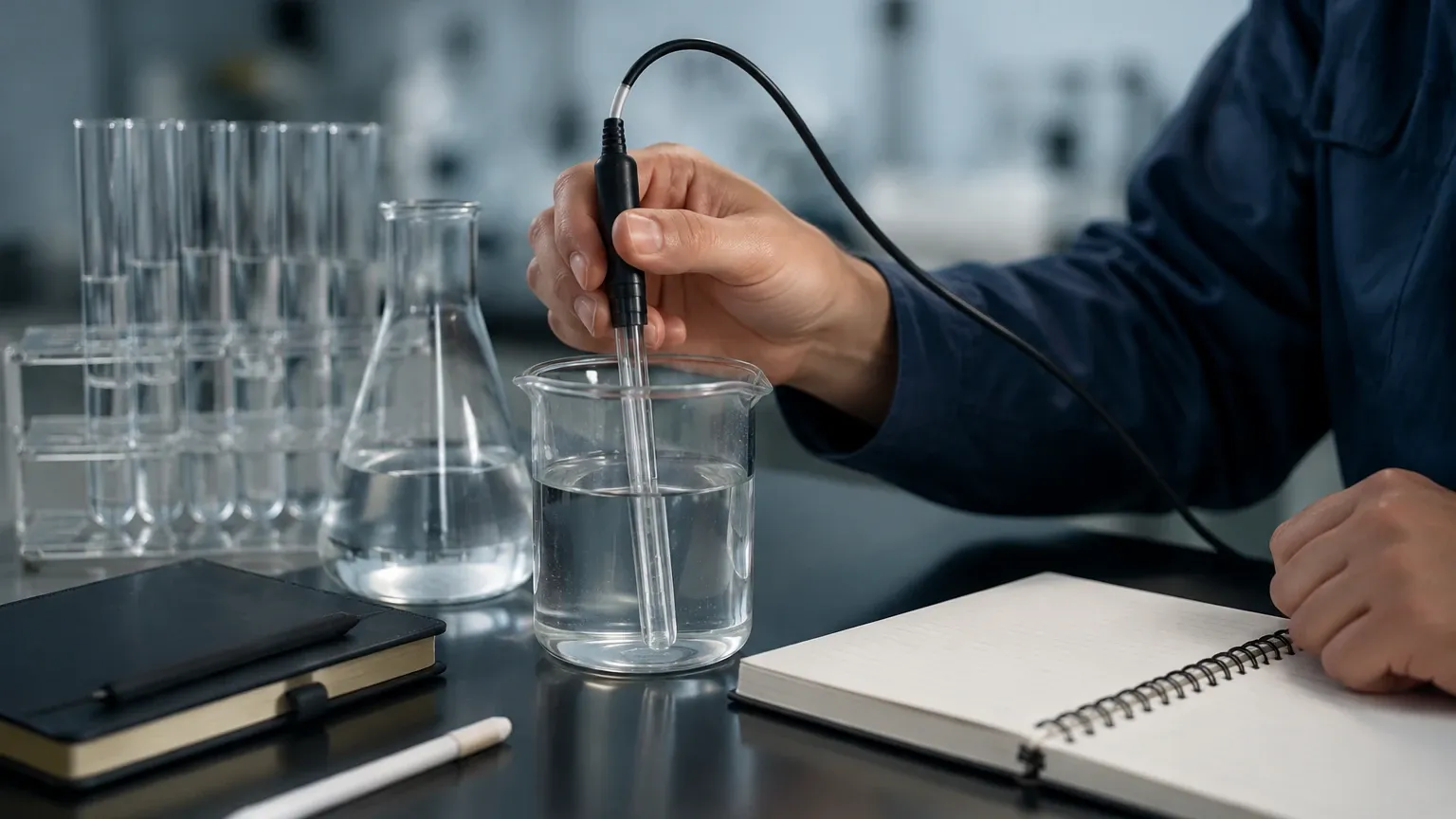
Proper installation is the difference between actionable data and misleading noise. When deploying a pH logger alongside other instruments, such as those found on the Main Page of a professional measurement provider, follow these guidelines:
Sensor Placement
* Avoid Stagnation: Do not place the pH probe in a "dead zone" of a tank where the liquid does not circulate. The logger will record localized chemistry rather than the true state of the bulk fluid.
* Maintain Submergence: Ensure the probe is always submerged. If a pH electrode dries out, the hydrated gel layer on the glass membrane will be damaged, leading to slow response times or permanent failure.
* Flow Velocity: In pipe installations, ensure the flow velocity is not so high that it causes cavitation or physical damage to the glass bulb.
Calibration Protocols
No pH logger is "set and forget." Electrode drift is an inevitable physical phenomenon.
1. Two-Point Calibration: This is the minimum requirement, typically using pH 7.00 and pH 4.01 (for acidic environments) or pH 10.01 (for alkaline environments).
2. Three-Point Calibration: Recommended for processes that span a wide pH range, as it accounts for the non-linearity of the electrode across the full scale.
3. Buffer Freshness: Always use fresh, NIST-traceable buffer solutions. Contaminated buffers will lead to incorrect calibration offsets.
Limitations and Common Risks
While pH loggers are robust tools, they have inherent limitations that engineers must manage:
* Electrode Aging: A pH electrode is a consumable. Over time, the electrolyte in the reference junction depletes, and the glass membrane loses sensitivity. In industrial use, expect to replace electrodes every 6 to 18 months.
* Fouling and Coating: In wastewater or slurry applications, solids can coat the electrode. This creates a barrier between the solution and the sensor, causing significant lag or "frozen" readings. Regular cleaning cycles are mandatory.
* Ground Loops: In large metal tanks, electrical interference or ground loops can introduce "noise" into the pH signal. Using a logger with a differential input or ensuring proper isolation of the sensor is necessary to prevent erratic data.
Frequently Asked Questions (FAQs)
Q: How often should I download data from my pH logger?
A: This depends on the critical nature of the process. For regulatory compliance (e.g., discharge monitoring), weekly downloads are common. For process optimization, real-time integration via Modbus is preferred to avoid the risk of data loss.
Q: Can a pH logger also measure ORP?
A: Many industrial pH loggers are designed as multi-parameter devices. Since both pH and Oxidation-Reduction Potential (ORP) are measured in millivolts, the same logger hardware can often record ORP simply by swapping the probe and changing the internal software settings.
Q: Why does my pH logger reading differ from my handheld meter?
A: This is usually due to temperature differences or calibration variance. Ensure both devices are calibrated using the same buffers and that the logger has had sufficient time to reach thermal equilibrium with the process fluid.
Q: Is it possible to log pH in high-pressure pipelines?
A: Yes, but it requires a specialized housing (a flow cell or retractable probe assembly) and an electrode designed to withstand the process pressure. Standard glass electrodes may implode under high pressure.
Conclusion
A pH logger is an essential instrument for any facility requiring precise chemical documentation and process control. By understanding the underlying electrochemical principles and adhering to strict calibration and installation standards, engineers can secure reliable data that supports both operational efficiency and environmental safety. For those seeking to integrate pH monitoring into a broader instrumentation strategy, including level and flow measurement, it is advisable to Review product options and application support to ensure all sensors are compatible with the site's automation requirements.