Endress Hauser Promag
Endress Hauser Promag
In the landscape of industrial process automation, electromagnetic flow measurement stands as one of the most versatile and reliable methods for monitoring conductive liquids. The Endress Hauser Promag series represents a significant portion of the global installed base for electromagnetic flowmeters (magmeters). These instruments are engineered to handle diverse applications ranging from basic water distribution to complex chemical processing and hygienic food production. Understanding the technical nuances, measurement principles, and selection criteria for the Promag family is essential for engineers tasked with optimizing process efficiency and ensuring long-term instrument reliability.
Measurement Principle: Faraday’s Law of Induction
Before selecting a specific model within the Endress Hauser Promag range, it is fundamental to understand the physical principle governing its operation. Electromagnetic flowmeters operate based on Faraday’s Law of Induction, formulated by Michael Faraday in 1831.
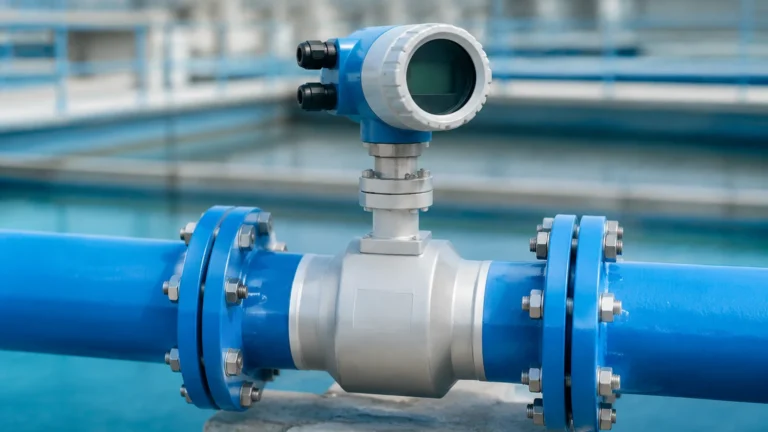
The law states that a conductor moving through a magnetic field induces an electrical voltage. In the context of a Promag flowmeter, the conductive liquid acts as the moving conductor. The device consists of a pipe lined with an insulating material, two electromagnetic coils, and two electrodes.
1. Magnetic Field Generation: The coils, located on opposite sides of the flow tube, are energized by an alternating current to create a constant magnetic field (B) perpendicular to the direction of flow.
2. Induced Voltage: As the conductive liquid flows through this magnetic field with a certain velocity (v), a voltage (U) is induced between the two electrodes.
3. Proportionality: The induced voltage is directly proportional to the flow velocity, the strength of the magnetic field, and the distance between the electrodes (the pipe diameter). The mathematical relationship is expressed as:
U = B · v · d
Where *U* is the induced voltage, *B* is the magnetic field strength, *v* is the average flow velocity, and *d* is the pipe diameter.
Because the magnetic field and the pipe diameter are constant, the voltage is a direct linear measurement of the flow velocity. The transmitter then converts this voltage into a standardized signal (such as 4-20 mA or a digital protocol) and calculates the volumetric flow rate based on the cross-sectional area of the pipe.
The Endress Hauser Promag Product Family
The Promag series is categorized into several sensor types, each optimized for specific industrial environments. Choosing the correct sensor is the first step in a successful flow measurement strategy.
Promag W (The Water Specialist)
Designed primarily for the water and wastewater industry, the Promag W is suitable for raw water, drinking water, and industrial effluent. It often features a wide range of nominal diameters, typically from DN 25 to 2400 (1 to 90 inches). It is known for its robust construction and availability with various drinking water approvals.
Promag P (The Process Specialist)
Targeted at the chemical and process industries, the Promag P is designed for high-temperature applications and corrosive media. It is frequently specified with PTFE or PFA liners to withstand aggressive chemicals. It is the standard choice for applications involving acids, alkalis, and complex chemical mixtures.
Promag H (The Hygienic Specialist)
For the food, beverage, and pharmaceutical sectors, the Promag H offers a hygienic design. It features a stainless steel housing and specialized process connections that comply with 3-A and EHEDG standards. It is designed for Clean-in-Place (CIP) and Sterilization-in-Place (SIP) cycles.
Promag L (The Versatile Specialist)
Promag L is a flexible, weight-optimized sensor designed for standard applications. It often features lap-joint flanges for easy installation, making it a cost-effective solution for general water applications where the extreme robustness of the Promag W is not required.
Technical Selection Criteria
Selecting the appropriate Endress Hauser Promag instrument requires a detailed analysis of the process conditions. The following table provides a general guideline for liner and electrode selection based on common industrial requirements.
| Component | Material | Typical Application | Temperature Range (Approx.) |
| :— | :— | :— | :— |
| Liner | Hard Rubber | Water, Wastewater, Effluent | 0°C to +80°C |
| | Polyurethane | Abrasive slurries, Water | -20°C to +50°C |
| | PTFE | Aggressive chemicals, Acids | -20°C to +130°C |
| | PFA | High-temp chemicals, Hygienic | -20°C to +150°C |
| Electrode | 1.4435 (316L) | Drinking water, Mild chemicals | N/A |
| | Alloy C22 | Corrosive media, Chlorides | N/A |
| | Tantalum | Highly aggressive acids | N/A |
| | Platinum | Highly oxidizing media | N/A |
Conductivity Requirements
For any electromagnetic flowmeter to function, the medium must have a minimum electrical conductivity. Most Promag devices require a conductivity of at least 5 μS/cm. If the liquid is non-conductive, such as hydrocarbons or demineralized water, alternative technologies like ultrasonic or vortex flowmeters must be considered.
Installation Guidelines and Best Practices
Correct installation is critical to achieving the stated accuracy of a Promag flowmeter (typically ±0.5% or better). Failure to follow these guidelines often results in measurement errors or unstable readings.
1. Full Pipe Requirement: The sensor must always be completely full of liquid. If the pipe is partially empty, the cross-sectional area used for calculation will be incorrect, leading to significant measurement errors. For this reason, installation in a vertical pipe with upward flow is the preferred orientation.
2. Inlet and Outlet Runs: To ensure a stable flow profile, straight pipe runs are required before and after the sensor. A general rule of thumb is 5 x DN (nominal diameter) upstream and 2 x DN downstream. If there are heavy disturbances like pumps or multiple bends, longer inlet runs may be necessary.
3. Grounding: Proper grounding is essential for electromagnetic flowmeters. The liquid, the sensor, and the transmitter must be at the same electrical potential to prevent stray currents from interfering with the low-voltage signal generated by the electrodes. This is typically achieved using grounding rings or grounding electrodes.
4. Avoid Vacuum: Certain liners, particularly PTFE, can be damaged or collapsed if the pipe experiences a vacuum. If vacuum conditions are possible, sensors with PFA liners or mechanical reinforcements should be selected.
5. Mounting Position: Avoid installing the meter at the highest point of a piping system, as air bubbles can collect there and interfere with the measurement. Similarly, avoid installation directly before a free pipe outlet in a down-pipe.
Limitations and Process Constraints
While highly versatile, the Endress Hauser Promag series has specific limitations that engineers must account for during the design phase:
* Conductivity: As mentioned, it cannot measure non-conductive liquids like oils or ultrapure water.
* Solids Content: While magmeters handle slurries better than many other technologies, high concentrations of abrasive solids can cause liner wear. In such cases, polyurethane or specialized ceramic liners are required.
* Magnetic Interference: High-power electrical equipment or large motors located in close proximity to the sensor can create electromagnetic interference (EMI), potentially affecting the signal.
* Pressure and Temperature: Every liner material has a specific pressure-temperature curve. Exceeding these limits can lead to liner failure or leakage at the electrodes.
Integrating Flow and Level Measurement
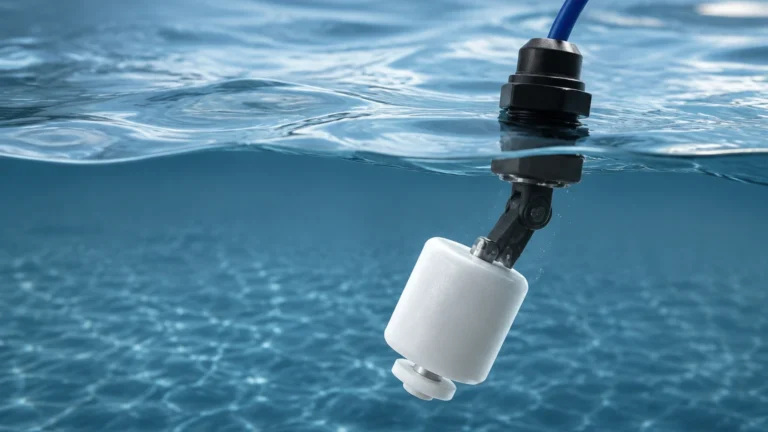
In most industrial automation scenarios, flow measurement is rarely used in isolation. It is typically part of a broader control strategy that includes level measurement. For instance, in a tank farm, flowmeters like the Promag are used to measure the volume of liquid entering or leaving a vessel, while level transmitters provide the real-time inventory status.
Comparing the data from a flowmeter (dynamic measurement) with the data from a level transmitter (static measurement) allows for mass balance calculations and leak detection. For projects requiring comprehensive instrumentation, engineers often look for a range of solutions including radar, ultrasonic, and hydrostatic sensors to complement their flow systems. You can Review product options and application support to find compatible level measurement technologies that integrate seamlessly with flow control loops.
Frequently Asked Questions (FAQ)
Q: How often does an Endress Hauser Promag need to be calibrated?
A: Calibration frequency depends on the industry regulations and the criticality of the measurement. In many water applications, a check every 3 to 5 years is common. In highly regulated industries like pharmaceuticals, annual calibration may be required. Many modern Promag units feature "Heartbeat Technology," which allows for internal verification of the device's health without interrupting the process.
Q: Can a Promag meter measure flow in both directions?
A: Yes, electromagnetic flowmeters are inherently bi-directional. The transmitter can be configured to show positive flow, negative flow, or the net totalized value.
Q: What happens if the electrodes become coated with deposits?
A: Build-up on the electrodes can insulate them from the liquid, leading to a loss of signal or measurement drift. Some Promag transmitters offer electrode cleaning functions or diagnostic alarms to alert operators to coating issues.
Q: Is it possible to use a Promag in hazardous areas?
A: Yes, the Promag series is available with various explosion-proof and intrinsically safe certifications, including ATEX, IECEx, and FM/CSA, making them suitable for use in zones where flammable gases or dusts may be present.
Q: How do I choose between a compact and a remote version?
A: A compact version (where the transmitter is mounted directly on the sensor) is easier to install and more cost-effective. A remote version (where the transmitter is connected via a cable) is preferred if the sensor is located in an inaccessible area, subjected to high vibration, or if the process temperature is high enough to damage the transmitter electronics.
By adhering to these technical principles and selection guidelines, process engineers can ensure that their Endress Hauser Promag installation provides accurate, maintenance-free service for the duration of its operational life. Proper integration with other process variables, such as level and pressure, remains the cornerstone of advanced industrial automation.