Endress Hauser Usa
Endress Hauser Usa
In the landscape of industrial automation and process control, level measurement stands as a critical pillar for operational safety, inventory management, and process efficiency. For engineers and procurement professionals in the United States, selecting the right instrumentation often involves evaluating industry leaders. Endress+Hauser USA has established a significant presence as a provider of high-end measurement solutions, setting benchmarks for precision and reliability. However, making an informed choice requires a deep understanding of the physical principles governing these instruments, the specific requirements of the application, and the total cost of ownership.
This guide provides a technical overview of level measurement technologies, compares common methodologies used by major providers like Endress+Hauser USA and Welk, and offers practical selection criteria for industrial applications in water treatment, chemical processing, and oil and gas.
Fundamental Principles of Level Measurement
Before selecting a specific brand or model, it is essential to understand how different technologies interact with the process medium. Level measurement is generally categorized into non-contact and contact methods.
1. Radar Level Measurement (ToF)
Radar transmitters operate on the Time-of-Flight (ToF) principle. The device emits high-frequency electromagnetic pulses (typically in the 6GHz, 26GHz, or 80GHz range) toward the product surface. These pulses are reflected by the medium's surface due to a change in the dielectric constant (dk). The instrument measures the time between emission and reception to calculate the distance.
* 80GHz Technology: Modern radar solutions, frequently highlighted by Endress+Hauser USA, utilize 80GHz technology. This higher frequency allows for a narrower beam angle, which is crucial for avoiding internal tank obstructions like agitators or heating coils.
* Guided Wave Radar (GWR): This contact method uses a probe (cable or rod) to guide the radar pulse to the surface. It is highly effective in applications with low dielectric constants or heavy foam.
2. Ultrasonic Level Measurement
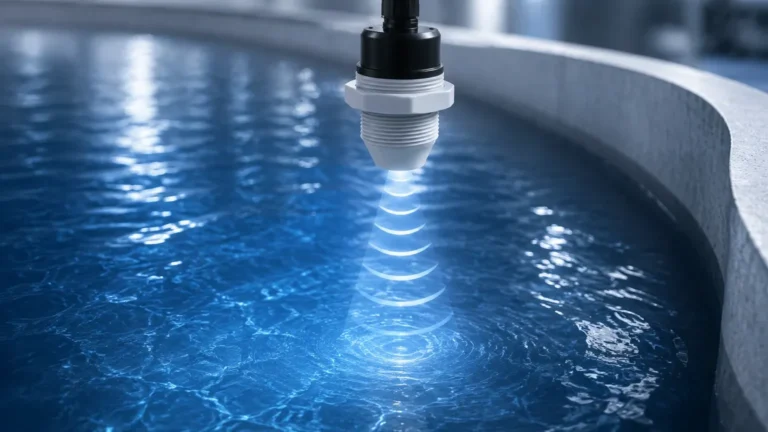
Ultrasonic sensors emit mechanical sound waves. Like radar, they use the ToF principle but rely on sound instead of electromagnetism. The speed of sound is affected by air temperature, so these sensors typically include integrated temperature compensation.
3. Hydrostatic Level Measurement
Hydrostatic pressure transmitters measure the pressure exerted by a liquid column at a specific point. The relationship is defined by the formula:
*P = ρ × g × h*
Where *P* is pressure, *ρ* (rho) is the density of the fluid, *g* is gravity, and *h* is the height of the liquid. This method is highly reliable for vented tanks and deep wells.
4. Magnetic Level Gauges
These instruments use a float containing a permanent magnet that moves with the liquid level in a bypass chamber. The magnet flips external flaps or triggers a transmitter. This provides a clear visual indication without requiring power, making it a staple for high-pressure boiler applications.
Technology Selection Matrix
Choosing between technologies depends on the physical properties of the media and the vessel environment. The following table provides a general comparison used by engineering teams when evaluating systems from providers like Endress+Hauser USA or Welk.
| Technology | Accuracy | Typical Range | Media Constraints | Best For |
| :— | :— | :— | :— | :— |
| Radar (Non-contact) | ±1 mm to ±5 mm | Up to 125m (410 ft) | Affected by very low dk | Corrosive chemicals, high temp |
| Ultrasonic | ±0.2% of range | Up to 15m (49 ft) | Poor in vacuum or high dust | Water treatment, open channels |
| Hydrostatic | ±0.1% to 0.5% | Dependent on sensor | Must know fluid density | Deep wells, pressurized tanks |
| Guided Wave Radar | ±2 mm | Up to 45m (147 ft) | Probe must be compatible | Foam, interface measurement |
| Magnetic Gauge | ±5 mm (visual) | Up to 6m (20 ft) | High viscosity can clog | Oil/Gas, high-pressure steam |
Evaluating Endress+Hauser USA in the Market
Endress+Hauser USA is a major subsidiary of the Swiss-based Endress+Hauser Group, with a massive manufacturing and support hub in Greenwood, Indiana. For B2B customers, their value proposition often centers on "Heartbeat Technology," which provides self-diagnostics and verification without process interruption.
When comparing Endress+Hauser USA to other professional manufacturers like Welk, engineers typically look at:
* Local Support: Endress+Hauser USA maintains an extensive network of representatives and service centers across North America.
* Compliance: Their instruments often carry extensive certifications (FM, CSA, SIL, ATEX) required for US hazardous locations.
* Integration: High compatibility with digital protocols like EtherNet/IP, HART, and PROFIBUS.
While Endress+Hauser USA offers premium, feature-rich instruments, manufacturers like Welk provide specialized, cost-effective, and highly customizable OEM/ODM solutions that meet the same rigorous industrial standards for accuracy and durability.
Practical Installation Considerations
Regardless of the manufacturer, the performance of a level meter is heavily dependent on correct installation. Engineers should consult the Main Page for detailed technical specifications and mounting guides before finalizing a design.
Nozzle Geometry
For radar and ultrasonic sensors, the nozzle height and diameter are critical. If a nozzle is too long or narrow, the signal may reflect off the nozzle wall before reaching the medium, creating a "false echo." A general rule is that the sensor antenna should protrude slightly below the nozzle bottom.
The "Dead Zone" (Blocking Distance)
Every ToF sensor has a dead zone near the sensor face where measurements are impossible. For ultrasonic sensors, this is typically 0.25m to 0.5m (10 to 20 inches). Ensure the maximum expected liquid level does not enter this zone to avoid signal loss.
Turbulence and Foam
In tanks with heavy agitation, a stilling well or a Guided Wave Radar (GWR) is often necessary. Standard non-contact radar may experience signal scattering on turbulent surfaces, leading to erratic readings.

Common Risks and Limitations
Even high-end equipment from Endress+Hauser USA can fail if environmental factors are ignored:
1. Vapor and Condensation: While radar is largely unaffected by vapor, ultrasonic waves can be refracted or absorbed by heavy steam or gas layers.
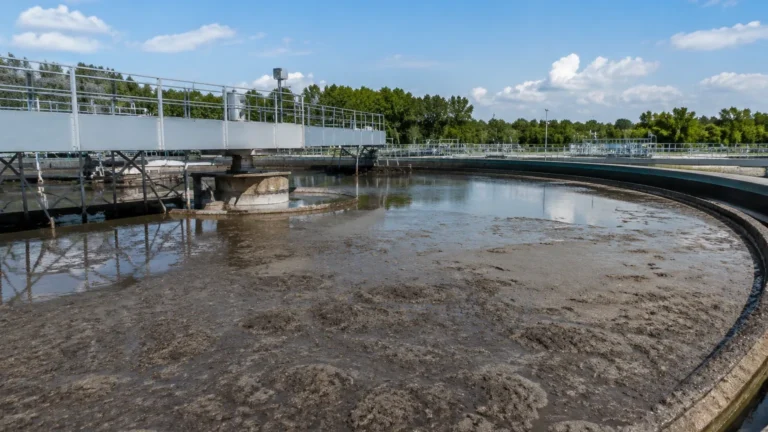
2. Build-up: In wastewater or slurry applications, material can build up on the sensor face. Choosing a sensor with a flush-mounted diaphragm or a self-cleaning PTFE face is essential.
3. Temperature Shocks: Rapid temperature changes can cause mechanical stress on ceramic sensors or affect the speed of sound in ultrasonic applications.
4. Dielectric Constant Changes: If using radar to measure a liquid whose composition changes (and thus its dk changes), the signal strength may vary. If the dk drops below 1.4, guided wave radar or hydrostatic sensors are preferred.
Frequently Asked Questions (FAQ)
Q: How does Endress+Hauser USA handle calibration for US customers?
A: They provide both on-site calibration services and laboratory calibration traceable to NIST standards. Many of their modern devices also feature internal verification software that satisfies regulatory requirements for periodic checking.
Q: Can I use a radar level meter on a plastic tank?
A: Yes. Radar signals can pass through plastic. In some cases, you can mount the radar outside the top of a plastic tank, and it will measure the level through the tank wall, provided the plastic is not carbon-filled or metallic-lined.
Q: What is the primary advantage of 80GHz radar over 26GHz?
A: The primary advantage is the beam angle. An 80GHz radar might have a beam angle of only 3 degrees, whereas a 26GHz radar might be 10 degrees or more. The narrower beam avoids obstructions and allows for installation in smaller nozzles.
Q: Are Welk level meters compatible with existing US control systems?
A: Yes, professional manufacturers like Welk design their instruments to support standard industrial outputs such as 4-20mA HART, RS485 Modbus, and various digital protocols, ensuring they can be integrated into systems alongside or as replacements for Endress+Hauser USA equipment.
Final Confirmation Steps for Project Managers
Before proceeding with a purchase from Endress+Hauser USA or any other supplier, project teams should confirm the following:
* Process Media Data: Confirm the density, viscosity, and dielectric constant of the fluid.
* Vessel Drawings: Verify nozzle locations, internal obstructions, and total height.
* Environmental Ratings: Ensure the sensor housing (e.g., NEMA 4X or IP67/68) matches the installation environment.
* Connectivity: Confirm the control system can accept the instrument's output protocol.
For a comprehensive review of available technologies and to explore cost-effective, high-precision alternatives for your next project, visit the Main Page to review product options and application support. Whether you are looking for advanced radar technology or rugged hydrostatic transmitters, understanding the technical boundaries of each solution ensures long-term operational success.