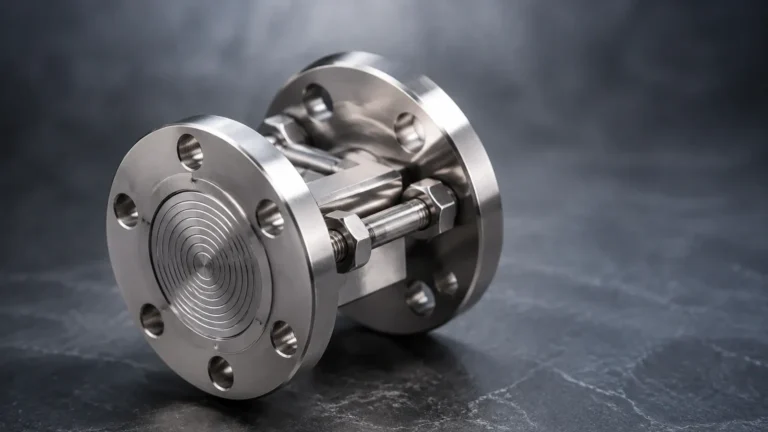
Endress Promag
Endress Promag
In the landscape of industrial process automation, the measurement of liquid flow is as critical as the monitoring of tank levels. Among the most widely recognized technologies for measuring the flow of conductive liquids is the electromagnetic flowmeter, with the Endress Promag series serving as a global benchmark. This family of instruments is engineered to handle a diverse range of applications, from the high-hygiene requirements of the pharmaceutical industry to the rugged demands of wastewater treatment plants.
Understanding the technical nuances of the Endress Promag line is essential for engineers and plant managers who require precise mass balance and process control. While level measurement technologies, such as those detailed on the Main Page, provide data on volume and inventory, electromagnetic flowmeters offer the real-time velocity data necessary for dynamic process adjustments.
Understanding Electromagnetic Flow Measurement Principles
The Endress Promag operates on the physical principle of Faraday’s Law of Induction. This principle states that a voltage is induced when a conductive fluid flows through a magnetic field. To visualize this, consider the flowmeter as a pipe section where two field coils are placed to generate a constant magnetic field perpendicular to the direction of flow.
As a conductive liquid moves through this magnetic field, an electrical voltage is generated. This voltage ($U$) is picked up by two electrodes located on the pipe wall and is directly proportional to the flow velocity ($v$), the magnetic field strength ($B$), and the distance between the electrodes ($D$, which corresponds to the pipe diameter). The governing equation is:
$$U = k \cdot B \cdot v \cdot D$$
Where $k$ is a proportionality constant. Because $B$ and $D$ are known constants within the meter, the induced voltage is a direct representation of the flow velocity. By integrating this velocity with the cross-sectional area of the pipe, the transmitter calculates the volumetric flow rate.
Conductivity Requirements
For the Endress Promag to function, the medium must have a minimum electrical conductivity. Typically, this threshold is $\geq 5 \mu S/cm$ (microsiemens per centimeter). This requirement makes electromagnetic flowmeters ideal for water, acids, alkalis, and slurries, but unsuitable for hydrocarbons like oil or diesel, which lack the necessary conductivity.
The Endress Promag Product Family
The Promag series is categorized into several sub-lines, each optimized for specific environmental conditions and mechanical requirements. Choosing the correct model depends on the chemical compatibility of the liner and the mechanical constraints of the installation site.
Promag W (Water and Wastewater)
Designed specifically for the water industry, the Promag W features a robust design capable of handling large pipe diameters. It is often used in custody transfer of drinking water or the measurement of effluent in treatment plants. It is available with "0 x DN" full-bore options, which allow for installation without straight inlet or outlet runs, a significant advantage in cramped pumping stations.
Promag P (Chemical and Process)
This series is the standard for the chemical industry. It is characterized by high-temperature resistance and compatibility with aggressive media. The liners are typically made of PTFE or PFA, providing excellent resistance to corrosion and vacuum stability. It is frequently used in applications involving concentrated acids or high-pressure process loops.
Promag H (Hygienic)
For the food, beverage, and life sciences sectors, the Promag H offers a specialized sensor design. It features a stainless steel housing and specialized liners that meet 3-A and EHEDG standards. The sensor is designed for Clean-in-Place (CIP) and Steam-in-Place (SIP) cycles, ensuring that no bacteria can accumulate in dead spaces.
Promag L (General Purpose)
The Promag L is a versatile "wafer" or flanged meter often used in utility applications. It is lighter than the W or P series and is designed for applications where weight and space are primary concerns, such as in fire protection systems or basic water distribution.
Key Evaluation Criteria for Flowmeter Selection
Selecting an Endress Promag requires a detailed analysis of the process parameters. Engineers should use the following table as a preliminary guide for matching application needs with the appropriate sensor type:
| Criteria | Promag W | Promag P | Promag H | Promag L |
| :— | :— | :— | :— | :— |
| Primary Industry | Water / Wastewater | Chemical / Oil & Gas | Food / Pharma | Utilities / HVAC |
| Liner Materials | Hard Rubber, Polyurethane | PTFE, PFA | PFA | Polyurethane |
| Max Temperature | Up to 80°C (176°F) | Up to 180°C (356°F) | Up to 150°C (302°F) | Up to 90°C (194°F) |
| Pipe Diameters | DN 25 to 2400 | DN 15 to 600 | DN 2 to 150 | DN 25 to 300 |
| Typical Accuracy | ±0.5% (std) / ±0.2% | ±0.5% (std) / ±0.2% | ±0.5% (std) / ±0.2% | ±0.5% |
Beyond the sensor, the choice of transmitter (Proline 10, 300, 400, or 500) determines the communication capabilities (HART, Modbus, PROFINET) and the level of diagnostic data available through Heartbeat Technology.
Integration with Level Measurement Systems
In industrial automation, flow measurement and level measurement are complementary. While a Promag meter tracks the volume of liquid entering or leaving a vessel, level sensors—such as radar or hydrostatic transmitters found on the Main Page—verify the actual inventory within that vessel.
This dual-monitoring approach is vital for:
1. Leak Detection: Comparing the totalized flow from a Promag meter against the change in level in a storage tank can identify discrepancies that indicate a leak.
2. Pump Control: Using flow rate data to adjust pump speed while using level data as a safety interlock to prevent dry running.
3. Process Efficiency: In chemical blending, the flowmeter ensures the correct ratio of ingredients is added, while the level sensor confirms the final batch volume.

Practical Installation Considerations
The accuracy of an electromagnetic flowmeter is heavily dependent on the installation environment. Even a high-precision instrument like the Endress Promag can provide erroneous data if hydraulic disturbances are present.
Pipe Orientation and Filling
The most critical requirement is that the measuring tube must be completely full of liquid. If air pockets are present, the meter will over-read the flow or fail to provide a stable signal.
* Vertical Installation: The preferred orientation is a vertical pipe with the flow moving upwards. This ensures the pipe remains full and prevents the accumulation of solids.
* Horizontal Installation: If installed horizontally, the electrodes should be positioned on a horizontal plane (at 3 o'clock and 9 o'clock) to prevent air bubbles at the top or sediment at the bottom from interfering with the signal.
Inlet and Outlet Runs
Turbulence caused by elbows, valves, or pumps can distort the flow profile. Standard installations typically require a straight inlet run of 5 x DN (diameter) and an outlet run of 2 x DN. However, certain Promag W models with specialized internal geometries can operate with 0 x DN requirements, allowing for much more flexible system design.
Grounding
Since the induced voltage is often in the millivolt range, electrical noise can easily interfere with the measurement. Proper grounding is mandatory. If the pipe is non-conductive (e.g., plastic or lined), grounding rings must be used to ensure the fluid is at the same potential as the meter housing.
Limitations and Common Risks
While the Endress Promag is exceptionally versatile, it is not a universal solution for every fluid. Understanding its limitations prevents costly specification errors.
1. Non-Conductive Fluids: As mentioned, fluids like demineralized water (with very low conductivity), oils, and gases cannot be measured using electromagnetic technology. In these cases, ultrasonic or vortex flowmeters are required.
2. Vacuum Conditions: In certain chemical processes, pipes may be subjected to a vacuum. If a PTFE liner is used, the vacuum can cause the liner to collapse or pull away from the pipe wall. For these applications, PFA liners with mechanical reinforcement (stainless steel mesh) are necessary.
3. Electrode Coating: In applications involving wastewater or slurries, fats and oils can coat the electrodes over time, insulating them from the fluid. This leads to signal degradation. Regular maintenance or the selection of "bullet-head" electrodes can mitigate this risk.
4. Ambient Temperature: The electronics (transmitter) have temperature limits. In high-heat applications, it is often necessary to use a remote-mount configuration where the transmitter is installed several meters away from the hot sensor.
Maintenance and Calibration
Modern Endress Promag units are equipped with Heartbeat Technology, which provides continuous self-diagnostics. This system monitors the health of the coils, electrodes, and electronics without interrupting the process.
However, for regulated industries, periodic verification is required. Verification is a process where the internal diagnostic data is compared against factory-defined parameters to ensure the device is still within its specified accuracy. This is distinct from a full wet calibration, which involves removing the meter and testing it on a certified flow rig. For most industrial applications, electronic verification is sufficient to extend calibration intervals, significantly reducing operational downtime.
Frequently Asked Questions (FAQ)
Q: Can the Endress Promag measure the flow of steam?
No. Electromagnetic flowmeters require a conductive liquid. For steam measurement, vortex flowmeters or differential pressure (DP) flowmeters are the appropriate technologies.
Q: What happens if the fluid conductivity drops below the threshold?
The meter will likely produce a "low signal" or "empty pipe" error. The measurement will become unstable and eventually drop to zero.
Q: How does the Promag handle solids in the liquid?
Electromagnetic flowmeters are excellent for slurries because they have no moving parts and no obstructions in the flow path. However, abrasive solids can wear down the liner over time. In these cases, a hard rubber or ceramic liner is recommended.
Q: Is it possible to change the transmitter without replacing the sensor?
Yes, in many Proline 300/500 configurations, the transmitter and sensor are separate components. This allows for easy upgrades to newer communication protocols without disturbing the piping.
Q: How does the Promag compare to ultrasonic flowmeters?
Promag meters are generally more accurate and less sensitive to flow profile disturbances than clamp-on ultrasonic meters. However, ultrasonic meters have the advantage of being non-invasive and able to measure non-conductive fluids.
By integrating the Endress Promag into a comprehensive instrumentation strategy—alongside the level measurement solutions found on the Main Page—operators can achieve a high degree of transparency and control over their liquid processes. Whether managing water resources or complex chemical reactions, the combination of electromagnetic flow data and precise level monitoring forms the backbone of modern industrial efficiency.