Flow Meter Application Index
Flow Meter Application Index
In industrial process control, selecting the correct instrumentation is a critical step toward ensuring operational efficiency, safety, and regulatory compliance. A flow meter application index serves as a comprehensive roadmap for engineers and procurement professionals to match specific fluid dynamics with the most effective measurement technology. Because no single flow meter is universal, understanding the nuances of different measurement principles is essential for long-term reliability.
This guide provides a detailed breakdown of flow measurement technologies, their underlying principles, and a structured index for various industrial applications. By evaluating fluid properties, process conditions, and installation requirements, stakeholders can make informed decisions that minimize maintenance costs and maximize accuracy.
Fundamental Flow Measurement Principles
Before consulting a flow meter application index, it is vital to understand how different technologies interact with the process media. Flow measurement is generally categorized into volumetric flow and mass flow.
Differential Pressure (DP) Meters
Differential pressure meters operate on Bernoulli’s principle, which states that as the speed of a moving fluid increases, the pressure within the fluid decreases. By placing a restriction in the pipe (such as an orifice plate or Venturi tube), a pressure drop is created. The square root of this pressure differential is proportional to the flow rate. These are common in steam and high-pressure gas applications.
Electromagnetic Flow Meters (Mag Meters)
Mag meters utilize Faraday’s Law of Electromagnetic Induction. When a conductive liquid flows through a magnetic field, it generates a voltage proportional to its velocity. Because they have no moving parts and offer no obstruction to the flow, they are ideal for slurries and corrosive liquids, provided the medium has a minimum conductivity (typically >5 μS/cm).
Ultrasonic Flow Meters
Ultrasonic meters use sound waves to determine fluid velocity. There are two primary types:
1. Transit-time: Measures the time difference between signals sent upstream and downstream. Best for clean liquids.
2. Doppler: Measures the frequency shift of signals reflected off particles or bubbles. Ideal for aerated liquids or slurries.
Vortex Flow Meters
Vortex meters rely on the von Kármán effect. As fluid flows past a bluff body (a non-streamlined object), vortices are shed alternately on each side. The frequency of this shedding is directly proportional to the flow velocity. These are highly effective for measuring steam, gases, and low-viscosity liquids.
Coriolis Flow Meters
Coriolis meters measure mass flow directly rather than volume. As fluid moves through a vibrating tube, it causes a twist in the tube due to Coriolis forces. This twist is measured and converted into a highly accurate mass flow reading. They are the gold standard for high-precision chemical dosing and custody transfer.
The Flow Meter Application Index
The following index categorizes common industrial scenarios and the recommended flow measurement technologies based on performance and reliability.
| Application Category | Recommended Technology | Fluid Type | Key Advantage |
| :— | :— | :— | :— |
| Water & Wastewater | Electromagnetic | Conductive Liquids | No pressure drop; handles solids |
| Chemical Processing | Coriolis / Mag Meter | Corrosive / Viscous | High accuracy; chemical resistance |
| Oil & Gas (Upstream) | Differential Pressure | Crude Oil / Gas | Robustness in high pressure |
| Steam Generation | Vortex / DP | Saturated/Superheated | High temperature tolerance |
| Pharmaceuticals | Coriolis | High Purity Liquids | Sanitary design; mass accuracy |
| Open Channel Flow | Ultrasonic / Radar | Raw Water / Effluent | Non-contact; handles debris |
| Food & Beverage | Electromagnetic | Milk, Juice, Beer | Hygienic fittings; CIP compatible |
Key Evaluation Criteria for Selection
When utilizing a flow meter application index, engineers must confirm several technical parameters before finalizing a specification. Failure to account for these variables often leads to measurement drift or premature sensor failure.
1. Fluid Properties
* Viscosity: High-viscosity fluids (like heavy oils) may require Coriolis or positive displacement meters, as vortex and turbine meters may struggle with the lack of turbulence.
* Conductivity: Only conductive fluids can be measured by electromagnetic meters.
* Corrosivity: Ensure the wetted materials (liners and electrodes) are compatible with the process media.
2. Process Conditions
* Temperature and Pressure: Standard ultrasonic sensors may have limits, whereas specialized vortex or DP meters can handle extreme thermal loads.
* Flow Range (Turndown Ratio): This is the ratio between the maximum and minimum flow the meter can accurately measure. For example, a 10:1 turndown means a meter rated for 100 m³/h can measure down to 10 m³/h accurately.
3. Accuracy vs. Repeatability
In B2B industrial settings, repeatability (the ability of the meter to provide the same result under the same conditions) is often more critical for process control than absolute accuracy. However, for billing or custody transfer, high accuracy (±0.1% to ±0.5%) is mandatory.
For a comprehensive look at how these instruments integrate into broader industrial systems, professionals can Review product options and application support to ensure the selected hardware aligns with their specific environmental constraints.
Installation and Engineering Considerations
Proper installation is as important as the technology selection itself. Even the most expensive meter will fail to provide accurate data if the hydraulic conditions are poor.
Straight Pipe Run Requirements
Most velocity-based meters (Vortex, Turbine, DP) require a certain length of straight pipe upstream and downstream of the sensor to eliminate turbulence caused by elbows, valves, or pumps. A common rule of thumb is 10 diameters (10D) upstream and 5 diameters (5D) downstream, though this varies significantly by technology.
Orientation and Entrained Air
For liquid applications, the pipe must always be full. Installing a meter in a vertical pipe with upward flow is often preferred to ensure the sensor remains flooded. In horizontal runs, avoid placing sensors at the top of the pipe where air pockets can collect, or at the bottom where sediment might settle.
Grounding and Interference
Electromagnetic flow meters are sensitive to electrical noise. Proper grounding to the process fluid is essential to prevent stray currents from interfering with the low-voltage signals generated by the sensor.

Integration with Level Measurement
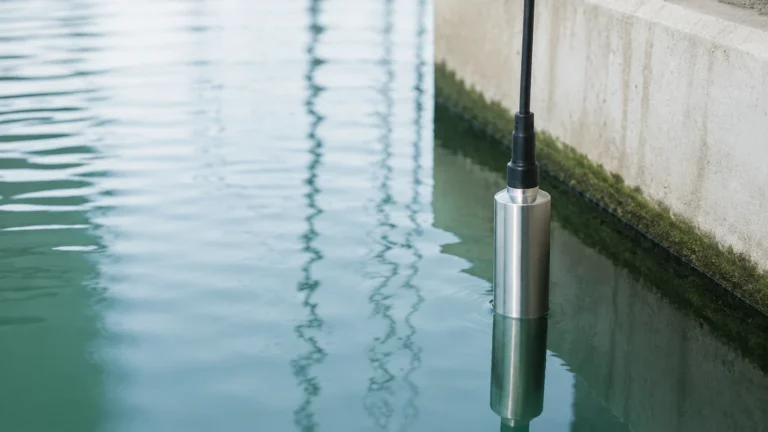
In many industrial contexts, flow and level measurement are inextricably linked. This is most evident in open channel flow applications, such as wastewater treatment plants or irrigation canals. In these scenarios, the flow rate is not measured directly in a closed pipe but is calculated based on the level of the liquid as it passes through a primary device like a flume or weir.
Ultrasonic level sensors and radar level meters are frequently used as the primary sensing element in these applications. By measuring the head (level) of the water and applying a known formula (the Manning equation or specific flume coefficients), the system converts the level reading into a flow rate. This highlights the importance of choosing a versatile instrument provider that understands both flow and level dynamics.
Limitations and Common Risks
Every technology in the flow meter application index has its boundaries. Recognizing these limitations prevents costly misapplications:
* Cavitating Fluids: If the pressure drops below the vapor pressure of a liquid, vapor bubbles form and collapse. This can destroy turbine blades and cause significant errors in ultrasonic and vortex meters.
* Scaling and Coating: In mining or wastewater, materials can build up on the inner walls of the meter. While mag meters can sometimes compensate for this, ultrasonic transit-time meters may lose signal strength entirely.
* Low Flow Sensitivity: Some meters have a "low-flow cutoff." If the velocity is too low to generate a measurable signal (e.g., not enough Reynolds number for a vortex meter), the meter will read zero even if there is actual movement.
Frequently Asked Questions (FAQ)
Q: Can I use one flow meter for both liquid and gas?
A: Some technologies, like Vortex and Thermal Mass meters, can measure both, but they must be calibrated specifically for the medium. A meter calibrated for water will not provide accurate readings for compressed air without reconfiguration and potentially different hardware components.
Q: What is the difference between Volumetric and Mass flow?
A: Volumetric flow (m³/h or L/min) measures the space the fluid occupies. Mass flow (kg/h or lb/min) measures the actual weight of the fluid. Mass flow is preferred for gases because their volume changes significantly with temperature and pressure.
Q: How often should a flow meter be calibrated?
A: This depends on the criticality of the process and the fluid type. For clean water, every 2-3 years may suffice. For corrosive chemicals or custody transfer, annual or even semi-annual calibration is standard practice.
Q: Why is my ultrasonic flow meter not giving a reading?
A: Common causes include an empty pipe, excessive bubbles/solids (for transit-time models), or poor acoustic coupling between the sensors and the pipe wall. Ensure the pipe is full and the surface is clean before applying coupling gel.
Conclusion
Navigating a flow meter application index requires a balance of theoretical knowledge and practical engineering. By understanding the measurement principles—ranging from Faraday’s Law to the von Kármán effect—and strictly adhering to installation best practices, industrial operators can ensure their flow data is both accurate and actionable. Whether managing a simple water line or a complex chemical reactor, the right flow meter is a foundational component of modern industrial automation.