Flow Meter Calibration Service
Flow Meter Calibration Service
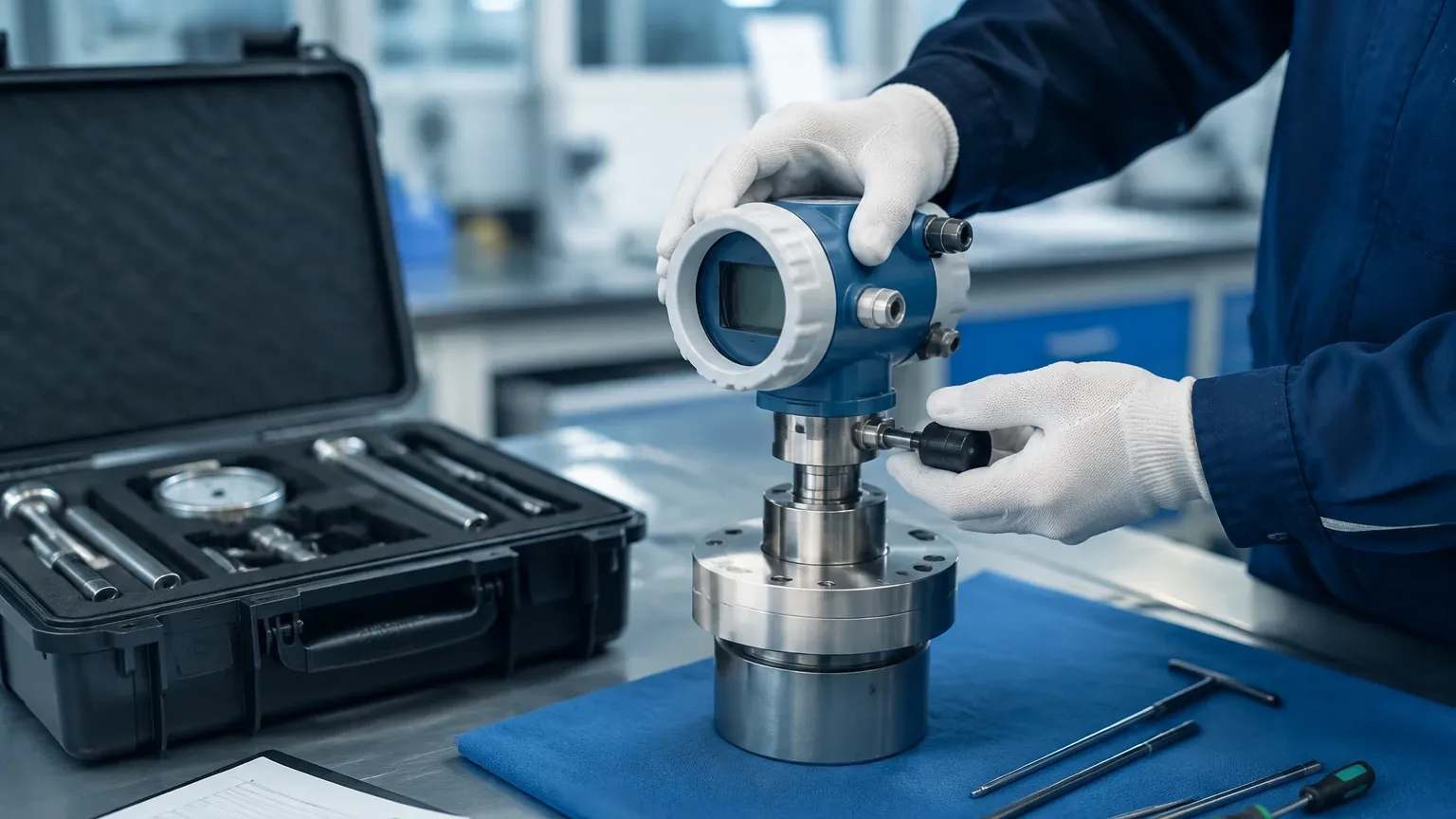
In industrial process control, the accuracy of flow measurement is fundamental to operational efficiency, safety, and regulatory compliance. Whether managing water treatment facilities, chemical processing plants, or oil and gas refineries, engineers rely on precise data to maintain mass balance and optimize throughput. A professional flow meter calibration service ensures that instruments perform within their specified tolerance limits by comparing their output against a known reference standard.
For organizations utilizing advanced instrumentation, such as those found on the Main Page, understanding the nuances of calibration is as critical as the initial selection of the device. This guide explores the technical principles, methodology, and selection criteria essential for maintaining high-performance flow measurement systems.
Understanding Flow Measurement Principles
Before engaging a flow meter calibration service, it is necessary to understand the underlying physical principles of the instruments being tested. Different technologies interact with the fluid media in unique ways, which dictates the appropriate calibration strategy.
Electromagnetic Flow Meters
Electromagnetic meters operate based on Faraday’s Law of Induction. When a conductive liquid flows through a magnetic field, it generates a voltage proportional to its velocity. Calibration for these units focuses on the magnetic field consistency and the integrity of the electrode signal. Since there are no moving parts, shifts in accuracy are often due to coating on the electrodes or changes in the liner material.
Ultrasonic Flow Meters
These instruments typically use the "transit-time" or "Doppler shift" principle. Transit-time meters measure the difference in time it takes for an ultrasonic pulse to travel upstream versus downstream. Because sound speed is influenced by fluid density and temperature, calibration must account for the specific Reynolds number and flow profile of the application. For high-accuracy requirements, multi-path ultrasonic meters are often calibrated at multiple flow points to map the velocity profile accurately.
Differential Pressure (DP) Flow Meters
DP meters, including orifice plates and Venturi tubes, rely on Bernoulli’s equation. They measure the pressure drop across a restriction in the pipe. Calibration involves not only the primary element (the restriction) but also the secondary transmitter that converts the pressure differential into a flow signal. Accuracy here is highly dependent on the sharp edge of the orifice or the smooth contour of the Venturi.
Level-Based Flow Measurement (Open Channels)
In many water treatment applications, flow is measured in open channels using weirs or flumes. Here, the flow rate is a function of the liquid level. Instruments like radar level meters or ultrasonic level sensors measure the head (height) of the liquid. Calibration in this context involves verifying the level-to-flow conversion formula (the Q-vs-H curve) and ensuring the level sensor is zeroed correctly relative to the crest of the weir.
Why Periodic Flow Meter Calibration is Essential
All measurement instruments experience "drift" over time. In industrial environments, factors such as mechanical wear, corrosion, sediment buildup, and electronic component aging contribute to a gradual loss of accuracy.
1. Regulatory Compliance: Many industries, particularly food and beverage and pharmaceuticals, are subject to strict audits. A certified flow meter calibration service provides the documentation (calibration certificates) required to prove that the process remains within legal or safety limits.
2. Cost Control: In custody transfer applications, even a 1% error in flow measurement can result in significant financial discrepancies over a fiscal year. Accurate calibration ensures that the volume of product bought or sold is exactly as recorded.
3. Process Optimization: In chemical dosing or water treatment, over-dosing leads to chemical waste, while under-dosing can result in sub-standard product quality or environmental violations.
Common Methods Used in Calibration Services
Professional calibration facilities utilize several primary methods to verify instrument performance. The choice of method depends on the required uncertainty levels and the type of fluid used.
Gravimetric (Weight-Based) Calibration
This is widely considered the most accurate method. The fluid passing through the meter under test (MUT) is collected in a vessel on a high-precision scale over a timed interval. The mass of the fluid is measured, and when combined with the fluid's density, the actual volume is calculated.
* Pros: Extremely low uncertainty (often <0.1%).
* Cons: Primarily limited to liquids; time-consuming for large pipe diameters.
Master Meter Calibration
In this method, the MUT is placed in series with a "Master Meter"—an instrument that has been calibrated to a very high degree of accuracy and is traceable to national standards (such as NIST or equivalent). The readings from both meters are compared across various flow rates.
* Pros: Faster than gravimetric methods; can be performed with various fluids.
* Cons: The uncertainty of the master meter must be significantly better (usually 3 to 4 times better) than the MUT.
Volumetric Calibration
This involves using a calibrated tank or a "piston prover." The fluid is displaced from a known volume into the meter. This is common for smaller flow rates and high-viscosity fluids.
Selection Criteria for a Flow Meter Calibration Service
When choosing a service provider, engineers should evaluate the following technical criteria to ensure the results are valid for their specific industrial application.
| Feature | Requirement | Importance |
| :— | :— | :— |
| Accreditation | ISO/IEC 17025 | Ensures the laboratory follows a proven quality management system and technical standards. |
| Traceability | National Standards (NIST/PTB) | Confirms that the calibration chain leads back to an absolute physical standard. |
| Uncertainty Ratio | 4:1 Minimum | The reference standard should be at least four times more accurate than the meter being tested. |
| Flow Range | Full Operating Scale | The service must be able to replicate the minimum and maximum flow rates seen in the actual process. |
| Fluid Compatibility | Matching Viscosity/Density | Calibrating a meter with water when it is used for heavy oil can lead to significant Reynolds number errors. |
Installation Considerations and Field Accuracy
One of the most common mistakes in industrial instrumentation is assuming that a laboratory calibration will perfectly translate to field performance. The physical installation significantly impacts the flow profile.
Upstream and Downstream Pipe Runs
Most flow meters require a specific length of straight pipe (e.g., 10 diameters upstream, 5 diameters downstream) to ensure a fully developed, laminar flow profile. If the field installation has elbows, valves, or pumps close to the meter, the turbulence created will cause the meter to deviate from its laboratory-calibrated state.
Fluid Properties
Calibration is typically performed under controlled temperatures (e.g., 20°C). If the actual process operates at 80°C, the change in fluid density and viscosity must be compensated for, either through the meter’s internal electronics or via external flow computers. When reviewing options on the Main Page, check if the instrument supports automatic temperature and pressure compensation.
Orientation
Some meters are sensitive to orientation (horizontal vs. vertical). Calibration should ideally be performed in the same orientation in which the meter is installed in the field to account for any effects of gravity on moving parts or air entrapment in the sensor body.
Limitations and Common Risks in Calibration
While calibration is a vital maintenance task, it is not a cure-all for poorly specified equipment.
* Turndown Ratio Limitations: Every meter has a minimum flow rate below which it cannot measure accurately. Calibration cannot extend the physical limits of the sensor. If a process frequently operates at 5% of the meter's maximum scale, the uncertainty in that region will be significantly higher.
* As-Found vs. As-Left Data: A professional flow meter calibration service should provide both "As-Found" (the state of the meter when it arrived) and "As-Left" (the state after adjustment) data. If a meter is found to be significantly out of spec, the user must perform a retrospective analysis of the data recorded since the last calibration.
* On-Site vs. Laboratory Calibration: On-site calibration using a portable master meter is convenient but often has higher uncertainty than a controlled laboratory environment due to ambient noise, vibration, and less stable flow conditions.
Frequently Asked Questions (FAQ)
Q: How often should I calibrate my flow meter?
A: The frequency depends on the criticality of the process and the stability of the instrument. Most industrial standards recommend an annual calibration, but highly corrosive or abrasive applications may require semi-annual checks.
Q: Can I calibrate a flow meter myself?
A: While you can perform a "verification" or "zero-check" in-house, a formal calibration requires traceable reference standards and a controlled environment that most end-users do not possess. For ISO compliance, third-party certification is usually required.
Q: What is the difference between calibration and validation?
A: Calibration is the act of comparing the instrument to a standard and adjusting it if necessary. Validation (or verification) is the process of proving that the instrument still meets its specified requirements without necessarily making adjustments.
Q: Does a new meter need calibration?
A: Yes. While manufacturers provide factory calibration, shipping and installation can affect the unit. Furthermore, a "witnessed" calibration or a specific multi-point calibration may be required by project specifications to ensure the meter meets the exact conditions of the site.
Conclusion
Maintaining the integrity of flow data is a continuous process that extends far beyond the initial purchase of an instrument. By utilizing a qualified flow meter calibration service, industrial operators can ensure their systems remain efficient, compliant, and cost-effective. When selecting new instrumentation, it is essential to consider not only the measurement technology but also the ease of future calibration and the availability of technical support. For a comprehensive range of reliable level and flow measurement solutions designed for the rigors of industrial automation, professionals are encouraged to Review product options and application support to find the right fit for their specific operational requirements.