Flow Meter Manufacturers
Flow Meter Manufacturers
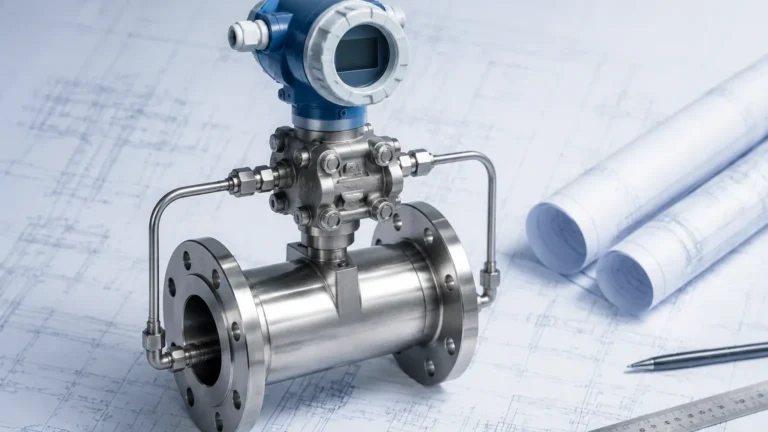
In the landscape of industrial automation and process control, flow measurement stands as a critical pillar alongside level, pressure, and temperature monitoring. Choosing the right flow meter manufacturers is not merely a procurement task; it is a strategic engineering decision that impacts the efficiency, safety, and profitability of a facility. Whether managing water treatment plants, chemical processing units, or oil and gas refineries, the accuracy of flow data determines the success of the entire control loop.
This guide explores the fundamental principles of flow measurement, provides a framework for evaluating manufacturers, and outlines the technical considerations necessary for successful instrument integration.
Understanding Flow Measurement Principles
Before engaging with flow meter manufacturers, it is essential to understand the physics governing different measurement technologies. Flow meters are generally categorized by the physical principle they employ to determine the volume or mass of a fluid passing through a pipe or channel.
Electromagnetic Induction (Magmeters)
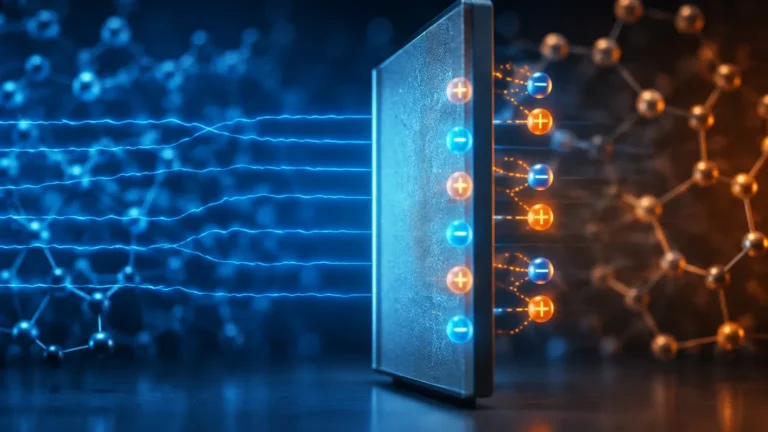
Electromagnetic flow meters operate based on Faraday’s Law of Electromagnetic Induction. This principle states that a conductor (the fluid) moving through a magnetic field generates an electrical voltage. In industrial applications, the meter’s coils generate a magnetic field, and as a conductive liquid flows through the pipe, electrodes detect a voltage proportional to the flow velocity.
Formula: $E = kBDv$
Where:
* $E$ is the induced voltage.
* $B$ is the magnetic field strength.
* $D$ is the distance between electrodes.
* $v$ is the average fluid velocity.
Ultrasonic Transit-Time and Doppler
Ultrasonic flow meters use sound waves to determine velocity.
1. Transit-Time: Two transducers act as both transmitters and receivers. The meter measures the time difference between a pulse traveling with the flow and one traveling against it. This difference is directly proportional to the fluid velocity.
2. Doppler Effect: These meters transmit sound waves into the fluid, which reflect off bubbles or particles. The frequency shift of the reflected signal is used to calculate flow speed.
Vortex Shedding
Vortex meters utilize the Karman Vortex Street principle. When a fluid meets a "bluff body" (a non-streamlined object) placed in the flow stream, it creates alternating vortices. The frequency of these vortices is directly proportional to the flow velocity over a wide range of Reynolds numbers.
Differential Pressure (DP)
DP meters, such as orifice plates or Venturi tubes, create a constriction in the flow path. According to Bernoulli’s equation, the pressure drop across this constriction is proportional to the square of the flow rate. These are among the most established technologies in the industry.
Key Technologies Offered by Flow Meter Manufacturers
Modern flow meter manufacturers provide a diverse array of instruments tailored to specific fluid properties and environmental conditions. Understanding these options is vital for selecting a reliable partner.
Electromagnetic Flow Meters
Ideal for conductive liquids like water, acids, and slurries. They offer no internal obstructions, resulting in zero pressure drop. Manufacturers typically offer various liners (PTFE, PFA, Neoprene) and electrode materials (316L, Hastelloy, Tantalum) to handle corrosive media.
Ultrasonic Level Sensors for Open Channel Flow
While often categorized under level measurement, ultrasonic sensors are a staple for flow measurement in open channels, flumes, and weirs. By measuring the head (level) of the liquid and applying a known formula for the specific flume geometry, the sensor calculates the flow rate. This is a primary solution for wastewater treatment plants.
Coriolis Mass Flow Meters
Coriolis meters provide direct mass flow measurement by utilizing the inertia of the fluid as it flows through vibrating tubes. They are highly accurate and independent of changes in fluid density or viscosity, making them the gold standard for high-value fluids and custody transfer.
Evaluating Flow Meter Manufacturers: Selection Criteria
When sourcing instrumentation, technical specifications are only part of the equation. To ensure long-term reliability, engineers should evaluate flow meter manufacturers based on the following criteria:
1. Calibration Capabilities
Accuracy is only as good as the manufacturer's calibration standards. Inquire if the manufacturer uses "wet calibration" (actual fluid flow tests) and if their laboratory is certified to international standards like ISO/IEC 17025. This ensures that the stated ±0.5% or ±0.2% accuracy is verifiable.
2. Material Compatibility and Build Quality
Industrial environments are harsh. A reputable manufacturer must provide detailed material data sheets. For example, if measuring brackish water, 316L stainless steel may be insufficient, requiring Duplex steel or specialized coatings. Check for IP67 or IP68 ingress protection ratings for outdoor or submersible installations.
3. Certification and Compliance
For hazardous areas, manufacturers must provide ATEX, IECEx, or UL certifications. In the food and beverage or pharmaceutical sectors, 3-A or EHEDG compliance is mandatory to ensure hygienic design and CIP (Clean-in-Place) compatibility.
4. OEM/ODM and Customization Services
Many industrial projects require non-standard pipe sizes, specialized communication protocols (HART, Modbus RS485, Profibus), or unique mounting configurations. Manufacturers like Welk provide customized OEM/ODM services, allowing for the integration of sensors into larger proprietary systems or specific industrial automation frameworks.
Application Selection Matrix
The following table provides a general guideline for matching fluid types with the appropriate measurement technology.
| Fluid Type | Recommended Technology | Advantages | Limitations |
| :— | :— | :— | :— |
| Clean Water | Electromagnetic / Ultrasonic | High accuracy, low maintenance | Requires conductivity (Magmeter) |
| Corrosive Chemicals | Electromagnetic with PTFE Liner | Chemical resistance, no moving parts | Must be conductive |
| Steam / Gases | Vortex / Differential Pressure | High temperature/pressure resistance | Pressure drop (DP) |
| Slurries / Pulp | Electromagnetic | Obstructionless, handles solids | Minimum conductivity required |
| Oil / Hydrocarbons| Coriolis / Ultrasonic | High precision, mass measurement | Higher initial cost (Coriolis) |
| Open Channels | Ultrasonic Level Sensor | Non-contact, cost-effective | Requires specific flume geometry |

Installation Best Practices for Industrial Flow Meters
Even the highest quality instrument from the best flow meter manufacturers will fail to perform if installed incorrectly. Proper installation is the key to achieving the rated accuracy.
* Straight Pipe Runs: Most flow meters require a specific length of straight pipe upstream and downstream to ensure a stable, non-turbulent flow profile. A common rule of thumb is "10D Upstream and 5D Downstream" (where D is the pipe diameter), though this varies by technology.
* Orientation: For liquid applications, the pipe must always be full. Installing meters in vertical lines with upward flow is often preferred to prevent air pockets. For horizontal lines, avoid the very top of the pipe where air might collect and the very bottom where sediment might settle.
* Grounding: Electromagnetic flow meters are sensitive to electrical noise. Proper grounding to the fluid and the pipe is essential to prevent signal interference.
* Environmental Protection: While many sensors are rated for outdoor use, sunshades can prevent electronics from overheating in tropical climates, and heat tracing may be necessary in sub-zero environments to prevent fluid freezing.
Limitations and Common Risks
Awareness of the limitations of flow measurement technology prevents costly errors during the commissioning phase.
1. Conductivity Requirements: Electromagnetic meters typically require a minimum fluid conductivity (often >5 μS/cm). They cannot measure deionized water or hydrocarbons.
2. Reynolds Number: Vortex and DP meters are sensitive to the Reynolds number. If the flow is too slow (laminar flow), these meters may lose accuracy or fail to read entirely.
3. Entrained Air: Bubbles in a liquid line can cause significant errors in ultrasonic and electromagnetic meters. Ensure the system design includes air eliminators if air entrainment is likely.
4. Pressure Drop: Mechanical and DP meters introduce a pressure drop into the system. This must be accounted for in pump sizing and energy consumption calculations.
Frequently Asked Questions (FAQ)
Q: How often should a flow meter be recalibrated?
A: This depends on the application and regulatory requirements. In critical chemical processes, annual calibration is common. In stable water applications, every 2 to 3 years may suffice. Check the manufacturer's recommendations for specific drift rates.
Q: Can I use an ultrasonic level sensor to measure flow in a pipe?
A: Not directly. Ultrasonic level sensors are used for open channel flow (flumes/weirs). For closed pipes, you must use a dedicated transit-time or Doppler ultrasonic flow meter designed for pipe mounting.
Q: What is the difference between a flow meter and a flow transmitter?
A: Technically, the "meter" is the sensor body that interacts with the fluid, while the "transmitter" is the electronic component that processes the signal and outputs it (e.g., 4-20mA). In modern B2B procurement, the terms are often used interchangeably to describe the complete unit.
Conclusion
Selecting from the world's leading flow meter manufacturers requires a balance of technical knowledge and application-specific insight. By understanding the underlying physics of measurement and rigorously evaluating manufacturers on their calibration standards and material quality, engineers can ensure long-term operational success. For those integrating these systems into broader industrial frameworks, it is often helpful to Review product options and application support to ensure that level and flow measurement strategies are fully aligned.
As industrial automation continues to evolve, the integration of smart sensors with digital communication protocols will remain the standard for efficient process management. Partnering with a manufacturer that offers both advanced technology and robust technical support is the most effective way to future-proof your industrial infrastructure.