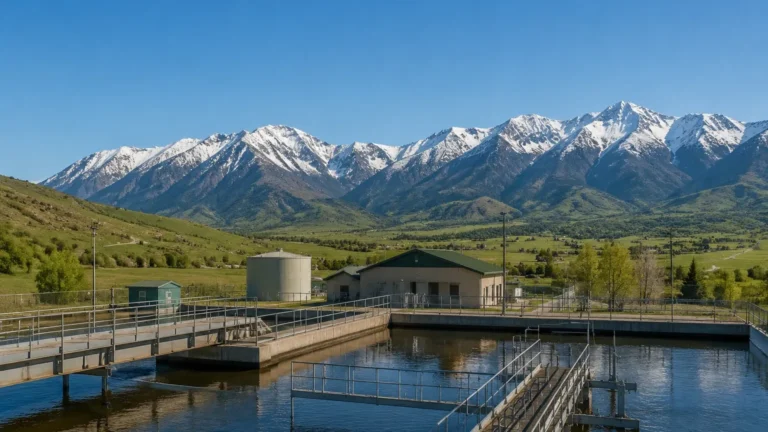
Advanced Treatment of Water
Advanced Treatment of Water
Advanced treatment of water, often referred to as tertiary treatment, represents the final stage of the wastewater cleaning process or a specialized stage in industrial water preparation. Unlike primary treatment (sedimentation) and secondary treatment (biological oxidation), advanced treatment focuses on the removal of specific pollutants that remain after conventional processes. These include dissolved solids, nutrients like nitrogen and phosphorus, heavy metals, and emerging contaminants such as pharmaceuticals or microplastics.
In the context of industrial automation and process control, the advanced treatment of water requires high-precision instrumentation. Level measurement is a critical component of these systems, ensuring that filtration units, chemical dosing tanks, and membrane modules operate within safe and efficient parameters. For engineers and facility managers, selecting the correct level sensor is essential to maintaining the integrity of the Main Page of their water management strategy.
Principles of Level Measurement in Water Treatment
Before selecting instrumentation for advanced treatment applications, it is necessary to understand the physical principles governing common measurement technologies. Each method has distinct advantages depending on the chemical composition, temperature, and physical configuration of the water being treated.
1. Radar Level Measurement (Non-Contact)
Radar level meters operate on the principle of Time of Flight (ToF). The sensor emits a high-frequency electromagnetic wave (typically in the 26GHz or 80GHz range) toward the water surface. The wave is reflected back to the sensor, and the distance is calculated based on the time interval between emission and reception.
* 80GHz Radar: Offers a narrower beam angle (as low as 3°), which is ideal for avoiding internal tank obstructions like agitators or narrow nozzles.
* 26GHz Radar: A robust choice for larger tanks where beam dispersion is less of a concern.
2. Ultrasonic Level Measurement
Ultrasonic sensors also use the ToF principle but utilize sound waves instead of electromagnetic waves. A transducer emits a pulse that bounces off the liquid surface. Because sound speed is affected by air temperature, these sensors usually include integrated temperature compensation. They are cost-effective for open-channel flow measurement and atmospheric tanks but may struggle in the presence of heavy foam or vacuum conditions.
3. Hydrostatic Level Measurement
Hydrostatic transmitters measure the pressure exerted by the liquid column. The principle is based on the formula: $P = \rho \cdot g \cdot h$, where $P$ is pressure, $\rho$ is the density of the liquid, $g$ is gravity, and $h$ is the height of the liquid. These sensors are submerged or mounted at the bottom of a tank. They are highly reliable for deep reservoirs and are unaffected by surface turbulence or foam.
4. Magnetic Level Gauges
Used primarily for visual confirmation in chemical storage tanks, these gauges utilize a float containing a magnet. As the float rises and falls with the liquid level, it flips magnetic flags or moves a follower on the outside of a bypass chamber. This provides a clear, power-free visual indication of the level.
Key Applications in Advanced Treatment of Water
Advanced treatment involves several specialized processes, each presenting unique challenges for level instrumentation.
Membrane Filtration (UF/RO)
Ultrafiltration (UF) and Reverse Osmosis (RO) are cornerstones of the advanced treatment of water. These systems rely on balance tanks to maintain a constant feed pressure. Level sensors here must be highly responsive to prevent pump cavitation. Radar sensors are often preferred because they are unaffected by the slight pressure variations common in membrane skids.
Chemical Precipitation and Dosing
To remove phosphorus or heavy metals, specific coagulants and flocculants are added. These chemicals are often stored in small, concentrated dosing tanks. Because these chemicals can be corrosive (e.g., Ferric Chloride), non-contact radar or hydrostatic sensors with chemically resistant diaphragms (such as Tantalum or Ceramic) are required. Precise level monitoring ensures that the facility never runs out of reagents, which would compromise the treatment quality.
Advanced Oxidation Processes (AOP)
AOP involves the use of ozone ($O_3$), hydrogen peroxide ($H_2O_2$), or UV light to destroy organic contaminants. In ozonation tanks, the environment is highly oxidative. Level sensors must be constructed from compatible materials like 316L stainless steel or PTFE. Non-contact radar is the standard here to avoid direct contact with the aggressive ozone-enriched atmosphere.
Ion Exchange and Activated Carbon
These processes involve passing water through media beds. Level sensors are used to monitor the water level above the media to ensure even distribution and prevent the bed from drying out. Hydrostatic sensors are frequently used in these deep vessels due to their accuracy in high-column applications.
Selection Table for Level Instrumentation
| Technology | Suitability for Foam | Accuracy | Chemical Resistance | Ideal Application |
| :— | :— | :— | :— | :— |
| 80GHz Radar | High (with signal processing) | ±1 mm | Excellent (Non-contact) | RO Feed Tanks, Ozone Contactors |
| Ultrasonic | Low | ±2-5 mm | Good (Plastic housings) | Open Channel Flow, Sump Pits |
| Hydrostatic | Excellent | ±0.1% to 0.5% | Variable (Depends on Diaphragm) | Deep Reservoirs, Media Filters |
| Magnetic Gauge | Excellent | Visual Only | High (Bypass chamber) | Chemical Storage Tanks |
| Level Switch | Excellent | N/A | High | Overfill Protection, Dry-run Prevention |
Engineering and Installation Considerations
Successful implementation of level sensors in the advanced treatment of water requires adherence to specific engineering guidelines:
1. Dead Zones (Blocking Distance): Every non-contact sensor has a minimum distance it cannot measure (the "dead zone"). For ultrasonic sensors, this is typically 0.25m to 0.5m (approx. 0.8ft to 1.6ft). For 80GHz radar, this can be as small as 0.05m (approx. 2 inches). Ensure the sensor is mounted high enough to avoid the liquid entering this zone.
2. Nozzle Interference: When mounting sensors on tank nozzles, the nozzle diameter and height must be considered. If a nozzle is too narrow or too long, it may create false reflections. Radar sensors with narrow beam angles mitigate this risk.
3. Turbulence and Agitation: In mixing tanks, the surface of the water may be turbulent. Using a stilling well or a sensor with advanced signal damping (software-based filtering) is necessary to obtain a stable reading.
4. Vapor and Condensation: In hot water applications or chemical tanks, condensation can form on the sensor face. Radar sensors with PTFE drip-off antennas are designed to shed droplets, preventing signal attenuation.
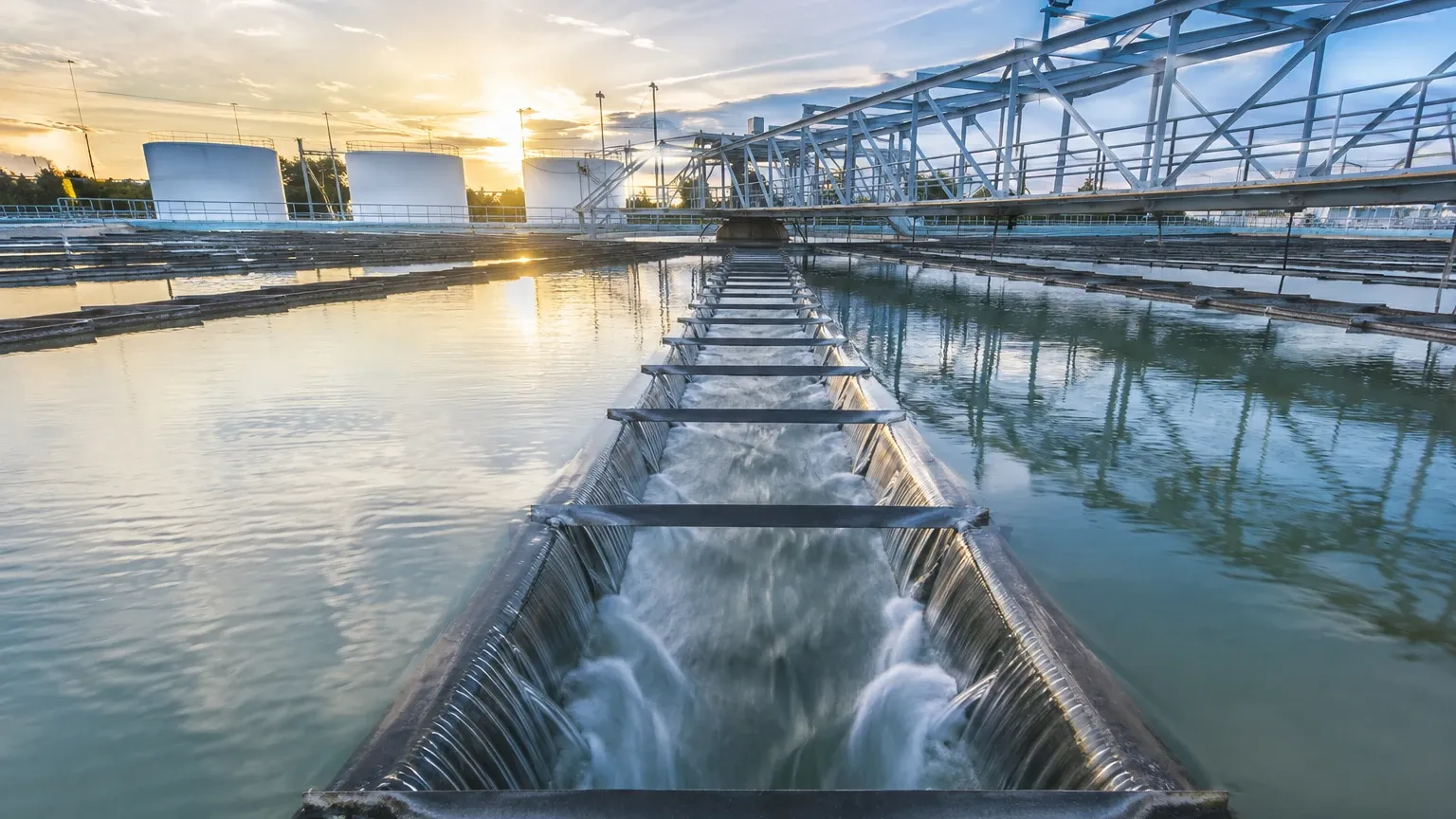
Limitations of Common Technologies
While modern instrumentation is highly advanced, certain limitations must be acknowledged:
* Ultrasonic Limitations: These sensors rely on the speed of sound. If the headspace contains high concentrations of gases other than air (like CO2 or methane), the speed of sound changes, leading to significant measurement errors. They are also prone to signal loss in heavy steam.
* Hydrostatic Limitations: These sensors are density-dependent. If the density of the water changes significantly—due to high salt concentration in brine tanks or temperature fluctuations—the sensor must be recalibrated or use a secondary pressure transmitter for density compensation.
* Radar Limitations: While radar is the most versatile, it can be affected by liquids with very low dielectric constants ($ε_r < 1.4$). However, most water-based applications have a high dielectric constant ($ε_r ≈ 80$), making radar highly effective.
Frequently Asked Questions (FAQ)
Q: How do I handle foam in a wastewater aeration tank?
A: Foam can absorb ultrasonic signals, leading to a "loss of echo." For these applications, high-frequency radar (80GHz) is recommended as it can penetrate light foam. If the foam is extremely thick and dense, a hydrostatic pressure transmitter is the most reliable alternative.
Q: Can I use the same sensor for clean water and chemical dosing?
A: Not necessarily. While the measurement principle remains the same, the materials of construction must change. Clean water can use standard stainless steel or plastic, while concentrated acids or bases in the advanced treatment of water require PTFE, PVDF, or specialized alloys like Hastelloy.
Q: Is 80GHz radar always better than 26GHz?
A: Not always. While 80GHz offers better focus and smaller antennas, 26GHz radar is often more than sufficient for large, open tanks and can be more cost-effective. The choice depends on the tank geometry and the presence of internal obstructions.
Q: What maintenance is required for level sensors in water treatment?
A: Non-contact sensors require very little maintenance beyond occasional cleaning of the antenna/transducer face if buildup occurs. Submerged hydrostatic sensors should be checked periodically for clogging of the pressure port, especially in water with high solids content.
Conclusion
The advanced treatment of water is a sophisticated process that demands precision and reliability. By understanding the principles of radar, ultrasonic, and hydrostatic measurement, engineers can select the most appropriate tools for their specific application. Whether managing membrane filtration or complex chemical dosing, the right level instrumentation ensures process safety, environmental compliance, and operational efficiency. For further technical specifications and product selection, users are encouraged to consult the Main Page to find the ideal solution for their industrial water treatment needs.