Flow Metrology
Flow Metrology
Flow metrology is the specialized science of measuring the movement of liquids, gases, and steam within industrial and scientific systems. In the context of modern process automation, flow metrology is not merely about determining a volume or mass over time; it is about ensuring accuracy, repeatability, and traceability to international standards. For industries ranging from water treatment to chemical processing, the ability to quantify fluid movement is critical for billing (custody transfer), safety, and process efficiency.
While often discussed as a distinct discipline, flow metrology is deeply integrated with level measurement. In many applications, such as open-channel flow or tank inventory management, the two fields overlap. Understanding the principles of flow metrology allows engineers to select the correct instrumentation and maintain the integrity of their data over the long term. For a broader look at how these technologies integrate into industrial systems, professionals often refer to the Main Page of instrumentation providers to compare sensor capabilities.
Understanding the Foundations of Flow Metrology
Metrology is defined as the science of measurement. In flow applications, this involves the determination of the quantity of a fluid passing through a specific cross-section of a pipe or channel. Flow metrology is categorized into three main areas:
1. Scientific Metrology: The development and organization of measurement standards and their maintenance at the highest level.
2. Industrial Metrology: The application of measurement science to manufacturing and other processes, ensuring that instruments are fit for their intended use and calibrated correctly.
3. Legal Metrology: Measurements that influence economic transactions, such as the flow meters at a gas station or the large-scale meters used in oil and gas pipelines for custody transfer.
In flow metrology, the "uncertainty" of a measurement is a key concept. No measurement is perfectly exact; every reading has a margin of error. A metrological approach involves calculating the uncertainty budget, which accounts for variables like temperature fluctuations, pressure changes, fluid viscosity, and the inherent limitations of the sensor itself.
Core Measurement Principles
To apply flow metrology effectively, one must understand the physical principles that allow a sensor to translate fluid movement into an electrical signal. Most industrial flow meters operate based on one of the following principles:
Differential Pressure (DP)
Based on Bernoulli’s principle, DP flow meters place a restriction in the pipe (like an orifice plate or Venturi tube). As the fluid passes through the restriction, its velocity increases and its pressure decreases. The difference in pressure upstream and downstream of the restriction is proportional to the square of the flow rate. This is one of the oldest and most widely understood methods in flow metrology.
Velocity-Based Measurement
These instruments measure the speed of the fluid at one or more points. Common examples include:
* Ultrasonic Flow Meters: These use sound waves to determine velocity. Transit-time meters measure the time difference between signals sent upstream and downstream. Doppler meters measure the frequency shift caused by reflections off particles or bubbles in the fluid.
* Electromagnetic Flow Meters: Based on Faraday’s Law of Induction, these meters measure the voltage generated as a conductive liquid moves through a magnetic field. They are ideal for wastewater and slurries.
* Turbine Meters: The fluid turns a rotor, and the rotational speed is proportional to the flow velocity.
Mass Flow Measurement
In many chemical and pharmaceutical applications, measuring volume is insufficient because volume changes with temperature and pressure. Mass flow metrology focuses on the actual mass of the fluid.
* Coriolis Meters: These use the Coriolis effect to measure mass flow directly by vibrating a tube and measuring the resulting twist caused by the moving mass.
* Thermal Mass Meters: These measure the heat dissipation from a heated element into the fluid stream, which is directly related to the mass flow rate of gases.
The Intersection of Level Measurement and Flow Metrology
In many practical industrial scenarios, flow is derived from level measurements. This is particularly common in two areas: open channel flow and tank-based flow calculations.
Open Channel Flow (Flumes and Weirs)
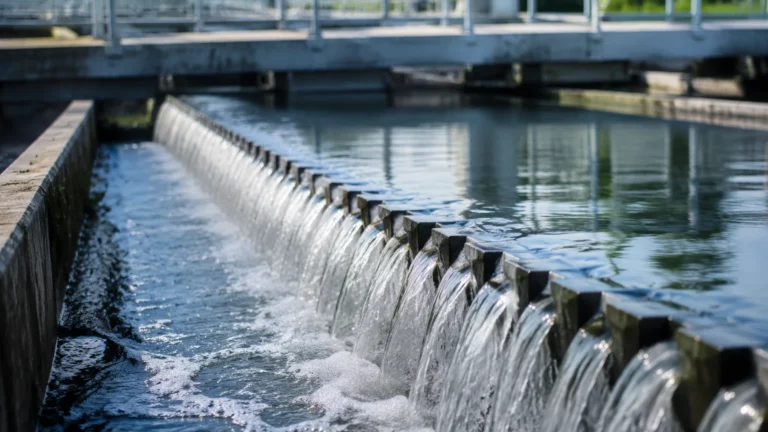
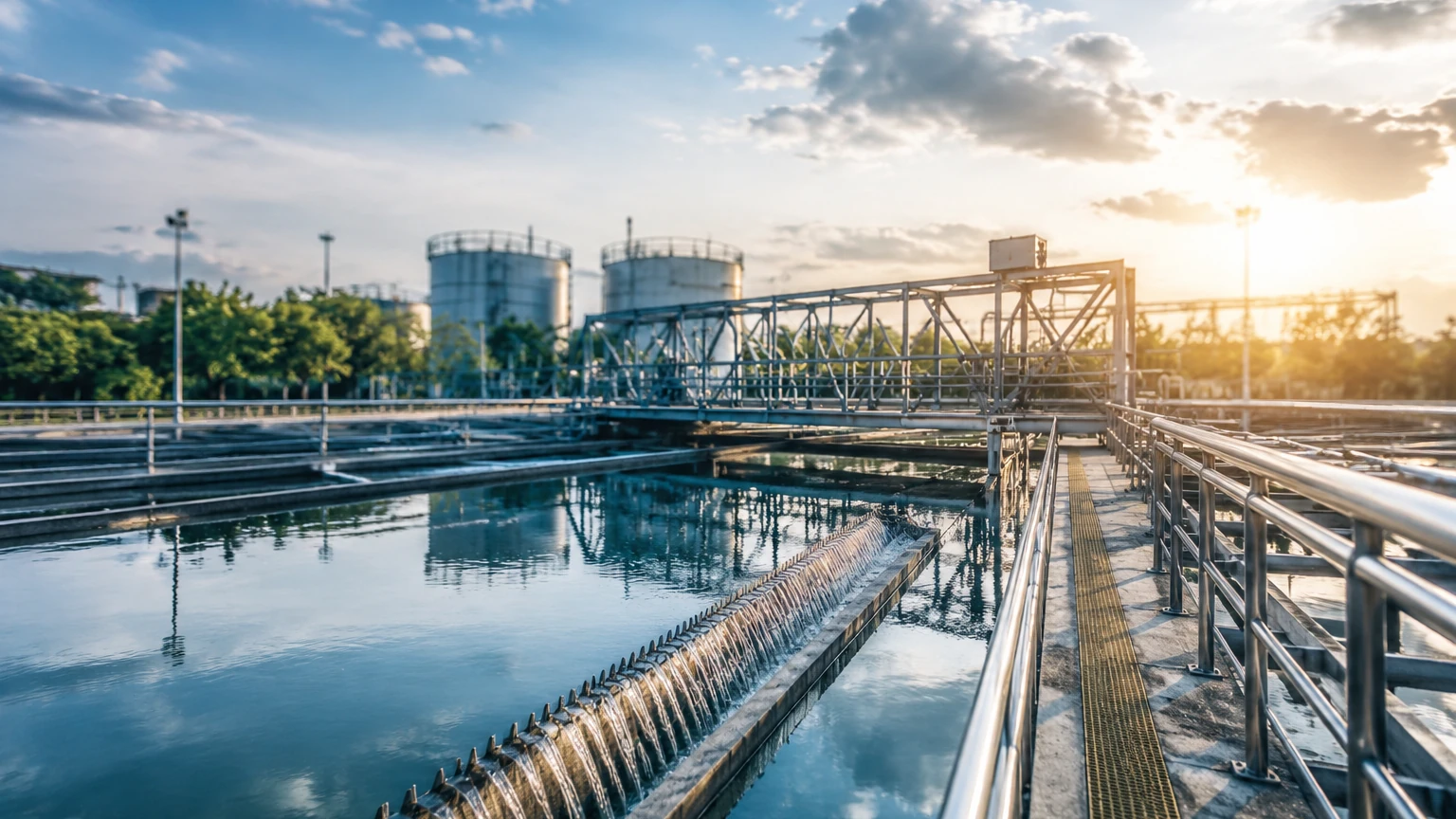
In water treatment and irrigation, fluids often flow in open channels rather than closed pipes. Flow metrology in these environments relies on primary devices like flumes (e.g., Parshall flumes) or weirs (e.g., V-notch weirs). These structures have a known relationship between the liquid level (head) and the flow rate.
By installing an ultrasonic or radar level sensor above the channel, the height of the liquid is measured. The flow rate ($Q$) is then calculated using standardized formulas (such as the Manning equation). For instance, if a level sensor detects a head height of 500 mm (19.68 inches) in a specific weir, the metrological conversion provides the exact flow in cubic meters per hour (m³/h).
Hydrostatic Level and Discharge
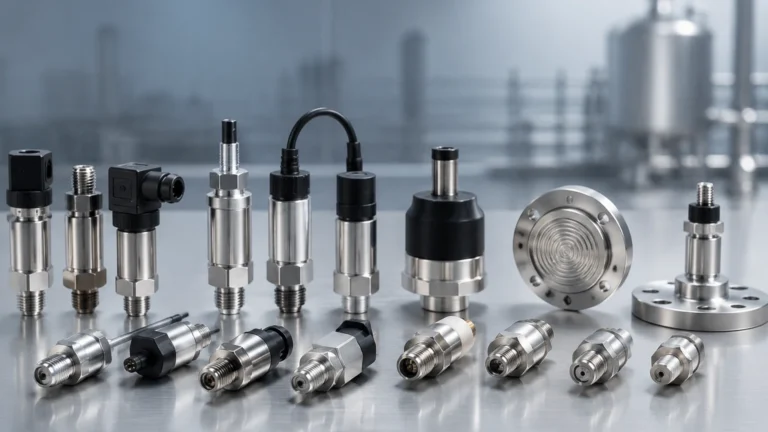
In large storage tanks, hydrostatic pressure sensors measure the weight of the liquid column. If a tank is discharging fluid, the rate of change in the hydrostatic level can be used to calculate the outflow. This method is often used for inventory control where high-precision mass measurement is required. Welk’s range of hydrostatic transmitters and radar level meters are frequently employed in these metrological setups to ensure that volume-to-flow conversions remain accurate despite changes in fluid density.
Technical Selection Criteria for Flow Instrumentation
Selecting the right instrument for a flow metrology project requires a rigorous evaluation of the process conditions. Engineers should consider the following factors:
1. Fluid Properties: Is the fluid a liquid, gas, or steam? Is it conductive, corrosive, or abrasive? For example, electromagnetic meters require a minimum conductivity of 5 μS/cm, making them unsuitable for demineralized water or oils.
2. Flow Range and Turndown Ratio: The turndown ratio is the range between the maximum and minimum flow the meter can measure accurately. If a process varies from 10 m³/h to 100 m³/h, a meter with a 10:1 turndown ratio is required.
3. Accuracy vs. Repeatability: In some processes, knowing the exact volume (accuracy) is paramount. In others, ensuring the same result under the same conditions (repeatability) is more important for process stability.
4. Pipe Size and Material: Flow meters are often sized smaller than the process pipe to increase velocity and improve accuracy, but this increases pressure drop.
5. Environmental Conditions: High ambient temperatures, explosive atmospheres (requiring ATEX/IECEx certification), and potential for heavy vibration must be accounted for.
Comparative Analysis of Flow Technologies
The following table provides a general comparison of common technologies used in industrial flow metrology.
| Technology | Fluid Type | Typical Accuracy | Pressure Drop | Maintenance Level |
| :— | :— | :— | :— | :— |
| Electromagnetic | Conductive Liquids | ±0.5% | Negligible | Low (No moving parts) |
| Ultrasonic | Liquids/Gases | ±1.0% | None | Low (Non-intrusive) |
| Coriolis | Liquids/Gases | ±0.1% | Medium | Low |
| Differential Pressure | Liquids/Gases/Steam | ±1.0% to ±2.0% | High | Medium (Orifice wear) |
| Vortex | Steam/Gases | ±1.0% | Medium | Low |
| Thermal Mass | Gases | ±1.0% | Low | Medium (Probe cleaning) |
Installation Best Practices and Environmental Constraints
Even the most accurate flow meter will fail to meet metrological standards if installed incorrectly. The most critical factor in flow metrology is the "flow profile."
Straight Pipe Runs
Most flow meters require a certain length of straight pipe upstream and downstream to eliminate turbulence caused by elbows, valves, or pumps. A common requirement is 10D (ten times the pipe diameter) of straight pipe upstream and 5D downstream. If these distances cannot be met, flow conditioners or vanes may be necessary to straighten the flow.
Orientation and Filling
For liquid applications, the pipe must always be completely full. Installing a meter in a vertical pipe with upward flow is generally preferred to ensure the sensor is submerged. For horizontal installations, the sensor electrodes (in magnetic meters) should not be at the very top or bottom of the pipe to avoid interference from air bubbles or sediment.
Grounding and Interference
Electromagnetic flow meters are highly sensitive to electrical noise. Proper grounding to the fluid and the pipe is essential to prevent stray currents from distorting the measurement signal. Similarly, ultrasonic meters must be protected from high-frequency acoustic noise generated by nearby control valves.
Common Risks and Limitations in Industrial Flow Measurement
In the field of flow metrology, several factors can compromise the integrity of the data:
* Cavitation: If the pressure in a liquid flow drops below its vapor pressure, bubbles form and then collapse. This not only damages the meter but also creates significant measurement errors.
* Entrained Air: In liquid flow, air bubbles can cause ultrasonic signals to scatter or cause electromagnetic meters to over-read volume.
* Scaling and Buildup: In wastewater or chemical applications, material can build up on the inner walls of the meter or on the sensor electrodes, changing the cross-sectional area or insulating the sensors.
* Viscosity Changes: Many meters, especially turbine and DP meters, are sensitive to changes in viscosity. If the process temperature fluctuates significantly, the fluid's viscosity will change, potentially moving the flow from a laminar to a turbulent state and altering the meter's calibration factor.
Frequently Asked Questions
Q: How often should a flow meter be calibrated?
A: Calibration frequency depends on the criticality of the measurement and the stability of the environment. For custody transfer, annual calibration is often mandated. For general process control, every 2-3 years may suffice, provided the meter has self-diagnostic capabilities.
Q: Can a level sensor replace a flow meter?
A: Yes, in open channel applications (like flumes) or when calculating discharge from a tank of known geometry, a high-precision level sensor is often the most cost-effective and reliable method for flow metrology.
Q: What is the difference between mass flow and volumetric flow?
A: Volumetric flow measures the space the fluid occupies (e.g., liters per minute), while mass flow measures the actual amount of matter (e.g., kilograms per minute). Mass flow is preferred when the fluid's density changes due to temperature or pressure variations.
Conclusion
Flow metrology is a complex but essential discipline that ensures industrial processes remain efficient, safe, and profitable. By understanding the underlying physics of measurement and adhering to strict installation and selection criteria, engineers can achieve high levels of accuracy. Whether utilizing direct flow measurement or deriving flow from advanced level sensing technologies, the goal remains the same: reliable data for informed decision-making. For further technical guidance and to explore instrumentation that meets these rigorous standards, visit the Main Page for comprehensive product details and application support.