Flowmeter Calibration Market
Flowmeter Calibration Market
In the landscape of industrial process control, the accuracy of measurement instrumentation is the cornerstone of operational efficiency, safety, and regulatory compliance. The flowmeter calibration market has emerged as a vital service and equipment sector, driven by the increasing demand for precision in industries ranging from oil and gas to water treatment and chemical processing. Calibration ensures that a flowmeter’s output accurately reflects the actual volume or mass of fluid passing through a system, a requirement that is non-negotiable for custody transfer, chemical dosing, and environmental monitoring.
As industrial automation becomes more sophisticated, the relationship between flow and level measurement has tightened. High-precision level sensors, such as those manufactured by Welk, often work in tandem with flowmeters to provide a holistic view of fluid dynamics within a facility. Understanding the flowmeter calibration market requires a deep dive into the principles of measurement, the methodologies used to verify accuracy, and the market forces shaping the industry today.
Principles of Flow Measurement and Calibration
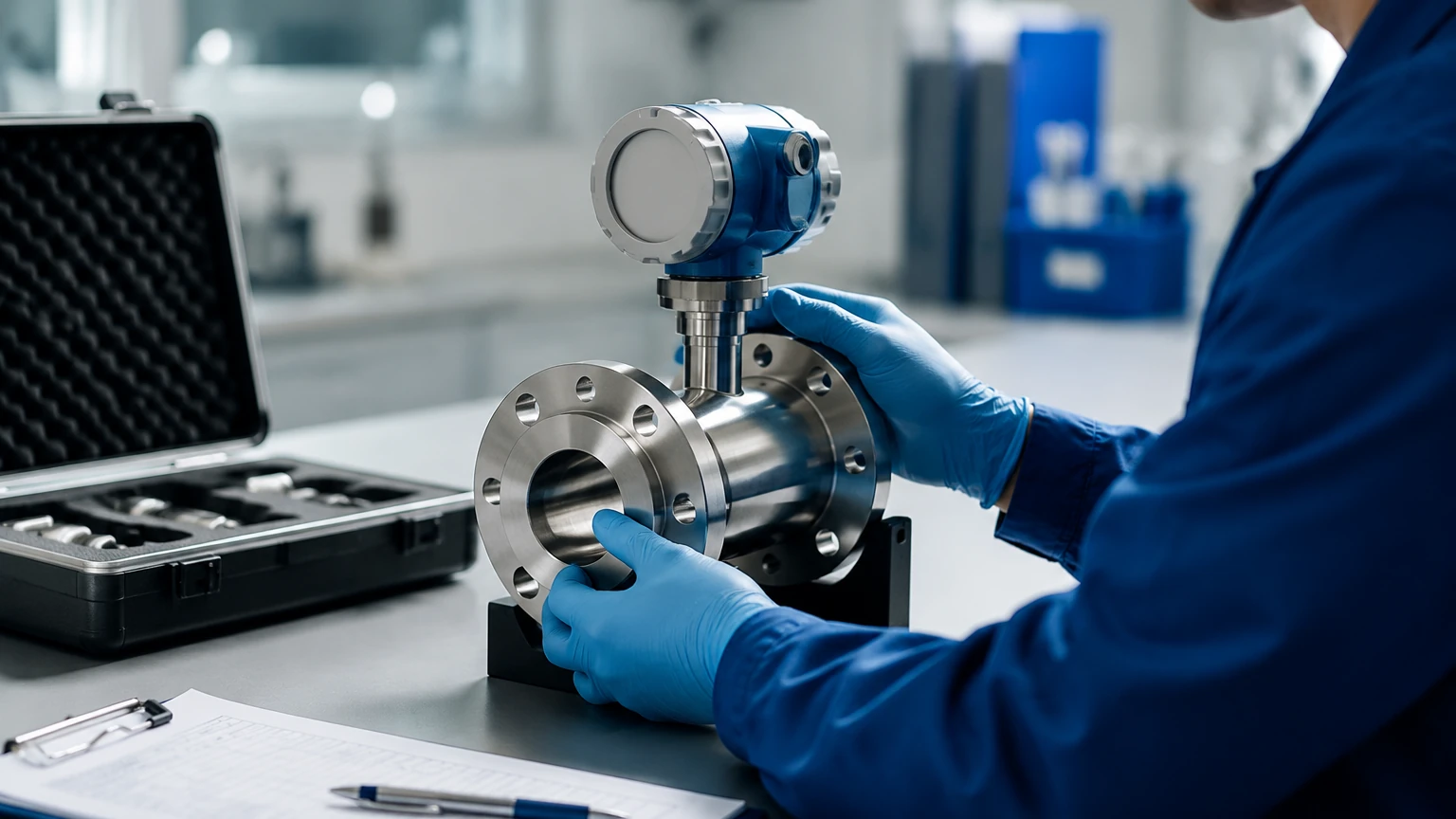
Before exploring market trends, it is essential to understand the underlying principles of flow calibration. Calibration is the process of comparing the readings of a flowmeter (the Device Under Test, or DUT) against a traceable reference standard under controlled conditions. This comparison identifies the degree of error or "uncertainty" in the meter’s performance.
Traceability and Standards
Flowmeter calibration must be traceable to national or international standards, such as those maintained by NIST (National Institute of Standards and Technology) or equivalent bodies. Traceability ensures that the measurement results can be related to stated references through an unbroken chain of comparisons, all having stated uncertainties.
Measurement Variables
Flowmeters measure either volumetric flow (liters per minute, cubic meters per hour) or mass flow (kilograms per hour). Calibration must account for various physical properties of the fluid, including:
- Viscosity: The fluid's resistance to flow, which can change significantly with temperature.
- Density: The mass per unit volume, critical for mass flowmeters.
- Reynolds Number: A dimensionless value that describes the flow regime (laminar, transitional, or turbulent), which is fundamental to the performance of most flowmeters.
Dynamics of the Global Flowmeter Calibration Market
The flowmeter calibration market is currently undergoing a period of significant evolution. Several factors are contributing to its expansion and the increasing complexity of service offerings.
Increased Regulatory Pressure
Environmental regulations regarding wastewater discharge and carbon emissions have become stricter globally. Industries are now required to provide highly accurate data on the volume of fluids processed or emitted. This has led to a surge in the frequency of calibration cycles and a demand for higher-tier calibration services that can guarantee lower uncertainty levels.
Technological Advancements in Instrumentation
The shift from mechanical flowmeters to electronic and ultrasonic versions has changed the calibration landscape. Modern meters often include internal diagnostics, but these do not replace the need for physical calibration. Instead, they provide data that can help predict when a meter is drifting, leading to a move toward "condition-based" calibration rather than fixed-interval schedules.
Growth in Emerging Markets
Rapid industrialization in regions such as Southeast Asia and parts of Africa is driving the construction of new water treatment plants and refineries. These facilities require extensive initial calibration and ongoing maintenance, significantly boosting the regional flowmeter calibration market.
Primary Calibration Methodologies
Choosing the right calibration method depends on the type of meter, the required accuracy, and the fluid being measured. The following table summarizes the most common methods used in the market today.
| Calibration Method | Principle of Operation | Typical Accuracy | Best Suited For |
| :— | :— | :— | :— |
| Gravimetric | Weighing the fluid collected over a specific time interval. | High (0.01% – 0.1%) | High-precision laboratory standards, liquid flow. |
| Volumetric | Measuring the volume of fluid collected in a calibrated tank (prover). | Moderate to High (0.05% – 0.2%) | Custody transfer, water meters. |
| Master Meter | Comparing the DUT against a high-precision reference meter. | Moderate (0.2% – 0.5%) | Field calibration, large pipe diameters. |
| Piston Prover | Using a moving piston to displace a known volume of fluid. | Very High (0.02% – 0.05%) | Low flow rates, gas and liquid calibration. |
Gravimetric Calibration
In this method, the fluid passing through the meter is collected in a vessel on a high-precision scale. By measuring the mass of the fluid and the time taken, the mass flow rate is calculated. If the density is known, the volumetric flow rate can also be derived. This is often considered the "gold standard" in the flowmeter calibration market due to its direct relationship with SI units.
Master Meter Calibration
This is a more practical approach for many industrial applications. A "master meter" with a known, high-accuracy calibration curve is placed in series with the meter being tested. This method is faster and more cost-effective than gravimetric setups, making it a popular choice for on-site service providers.
Key Factors Influencing Calibration Frequency and Accuracy
Determining how often a meter should be calibrated is a critical decision for plant managers. In the flowmeter calibration market, several factors dictate this frequency:
1. Process Criticality: Meters used for billing (custody transfer) or safety-critical dosing require more frequent calibration than those used for general process monitoring.
2. Fluid Characteristics: Abrasive or corrosive fluids can cause physical wear on the internal components of a meter (such as the turbine blades or the lining of a magnetic meter), leading to rapid drift.
3. Environmental Stability: Significant fluctuations in ambient temperature or pressure can affect the electronics and physical dimensions of the meter, necessitating more frequent checks.
4. Historical Performance: If a meter has shown consistent stability over several calibration cycles, the interval may be extended, provided regulatory requirements allow for it.
Installation Considerations and Their Impact
Even the most accurately calibrated meter will provide false readings if it is installed incorrectly. In the context of the flowmeter calibration market, "installation effects" are a major source of measurement error.
Straight Pipe Requirements
Most flowmeters require a certain length of straight pipe upstream and downstream to ensure a stable, fully developed flow profile. Obstructions like elbows, valves, and pumps create turbulence and swirl, which can significantly distort the readings of ultrasonic or turbine meters. Typically, a minimum of 10 pipe diameters upstream and 5 diameters downstream is recommended, though this varies by technology.
Fluid Orientation and Piping
For liquid applications, the pipe must remain full at all times. If air pockets develop, the meter will over-read or fail to function. Conversely, for gas applications, moisture buildup in the line can cause similar issues. Proper drainage and venting are essential components of an accurate measurement system.
Synergy with Level Measurement
In many industrial setups, flow measurement is validated by level measurement. For example, in an open channel flow system, a Welk ultrasonic level sensor might measure the head height over a weir to calculate flow. For those seeking advanced instrumentation solutions, the Main Page of Welk's official site offers a deep catalog of level measurement technologies that complement flow systems, ensuring redundant and reliable data across the process.
Risks and Limitations in Flow Calibration
While calibration is essential, it is not without its challenges. The flowmeter calibration market must address several inherent risks:
- Calibration Uncertainty: No measurement is perfect. Every calibration certificate must state the uncertainty, which represents the range within which the true value lies. If the uncertainty of the calibration facility is too high, the calibration itself may be meaningless for high-precision applications.
- In-Situ vs. Lab Conditions: A meter calibrated in a pristine laboratory environment may behave differently when installed in a vibrating, high-temperature industrial setting. This "installation shift" is a common challenge that requires careful engineering compensation.
- Downtime: Traditional calibration often requires removing the meter from the line, leading to process downtime. This has driven the market toward developing more robust field-verification techniques.
Frequently Asked Questions (FAQs)
Q: What is the difference between calibration and validation?
A: Calibration is the physical comparison of a meter against a standard and the subsequent adjustment (if necessary). Validation (or verification) is a functional check to ensure the meter is still operating within its specified parameters without necessarily adjusting it.
Q: Can I calibrate a flowmeter for a different fluid than the one it will measure?
A: It is possible using Reynolds Number scaling, but it is not ideal. For the highest accuracy, the flowmeter calibration market recommends using the actual process fluid or a surrogate with very similar viscosity and density.
Q: How do I know if my meter needs recalibration?
A: Look for signs such as inconsistent readings, unexpected changes in process efficiency, or alerts from the meter’s internal diagnostics. Regular scheduled intervals based on industry standards are the safest approach.
Conclusion
The flowmeter calibration market is an indispensable part of modern industry, providing the technical assurance needed for complex global supply chains. By understanding the principles of measurement, selecting the appropriate calibration methodology, and ensuring proper installation, engineers can maintain the integrity of their process data. As technologies evolve, the integration of flow and level measurement continues to provide more robust solutions for industrial automation. For those looking to upgrade their measurement infrastructure, exploring the product options and application support available on the Main Page of professional manufacturers like Welk is a recommended next step in achieving operational excellence.