Food Industry Wastewater Treatment
Food Industry Wastewater Treatment
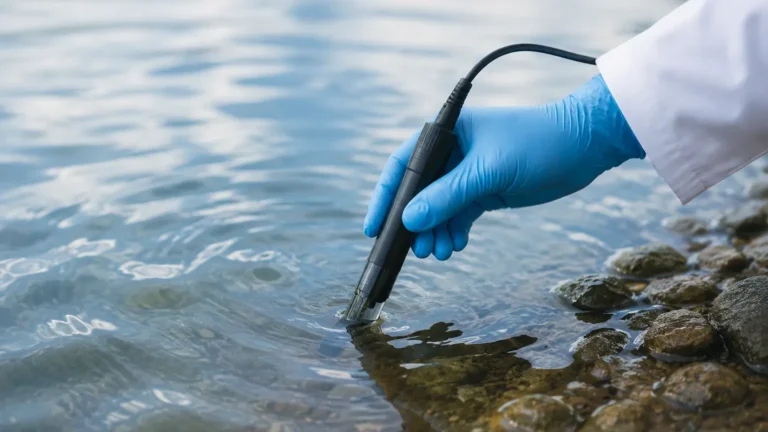
Food industry wastewater treatment represents one of the most challenging sectors in industrial environmental management. Unlike municipal sewage, wastewater from food and beverage processing is characterized by high concentrations of organic matter, fats, oils, grease (FOG), and significant fluctuations in flow and pH levels. Efficient management of these waste streams is not only a regulatory requirement but a critical component of operational cost control and sustainability for modern processing facilities.
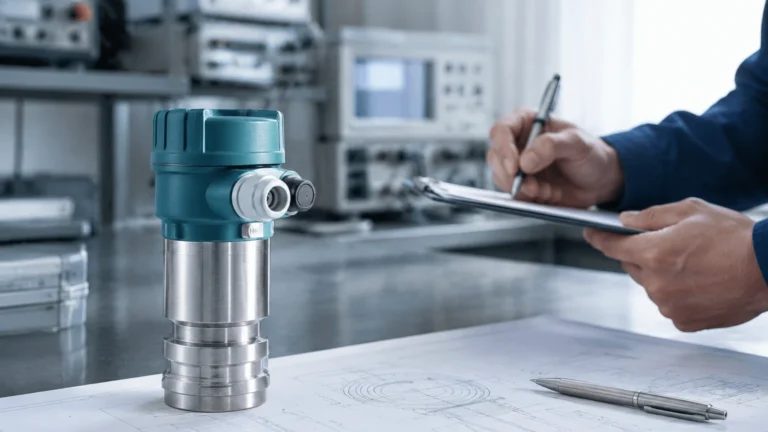
From dairy plants and slaughterhouses to breweries and fruit processing facilities, the diversity of contaminants requires a multi-staged treatment approach. Central to the success of these processes is the precise monitoring and control of fluid levels throughout the treatment plant. Without accurate level measurement, facilities risk tank overflows, pump damage, and inefficient chemical dosing, all of which can lead to environmental non-compliance and costly downtime.
The Complexity of Food Industry Wastewater
Wastewater generated by the food industry is uniquely demanding due to its biological and chemical composition. Key parameters that define these waste streams include:
* Biological Oxygen Demand (BOD) and Chemical Oxygen Demand (COD): These levels are often ten to one hundred times higher than those found in domestic sewage, requiring intensive aeration and biological treatment.
* Suspended Solids (SS): High concentrations of organic solids (e.g., vegetable peels, meat scraps, or grain husks) require robust screening and sedimentation processes.
* Fats, Oils, and Grease (FOG): Common in meat and dairy processing, these substances can coat sensors and clog pipes if not managed through specialized grease traps and dissolved air flotation (DAF) units.
* Variable pH and Temperature: Cleaning-in-place (CIP) cycles often introduce hot, caustic, or acidic streams into the wastewater system, creating a harsh environment for instrumentation.
Effective food industry wastewater treatment relies on the seamless integration of physical, chemical, and biological processes. Monitoring the levels in equalization tanks, aeration basins, and sludge holding tanks is essential to maintain the hydraulic balance of the system.
Core Level Measurement Principles in Wastewater Applications
Before selecting instrumentation for a wastewater facility, it is essential to understand the physical principles governing different measurement technologies. In the context of food processing waste, three primary principles are most prevalent: ultrasonic, radar, and hydrostatic pressure.
Ultrasonic Time-of-Flight
Ultrasonic sensors emit high-frequency sound pulses that reflect off the surface of the liquid. The sensor measures the time it takes for the echo to return. Because this is a non-contact method, it is ideal for corrosive liquids. However, its accuracy can be affected by heavy foam, steam, or significant air temperature fluctuations, which alter the speed of sound.
Radar (Microwave) Technology
Radar level meters, particularly high-frequency 80GHz units, use electromagnetic pulses rather than sound waves. Like ultrasonic sensors, they operate on the time-of-flight principle but are largely unaffected by steam, dust, or temperature changes. Radar is increasingly preferred in food industry wastewater treatment for its ability to "see through" light foam and provide high precision even in turbulent conditions.
Hydrostatic Pressure
This contact-based method measures the pressure exerted by the liquid column above a submerged diaphragm. The pressure is directly proportional to the liquid's height and density ($P = \rho gh$). Hydrostatic transmitters are excellent for deep tanks or underground pits where top-down mounting is difficult, though they require compensation if the liquid density changes significantly (e.g., due to high solids concentration).
Selecting Level Instruments for Treatment Stages
Each stage of the wastewater treatment process presents a different set of environmental challenges for level sensors.
1. Equalization and Buffering
Equalization tanks collect raw wastewater to balance flow rates and nutrient loads before biological treatment. These tanks often experience rapid level changes and turbulence. Non-contact radar is the gold standard here, as it provides reliable data regardless of the varying chemical composition of the influent.
2. Dissolved Air Flotation (DAF)
DAF units remove FOG and solids by injecting micro-bubbles that float contaminants to the surface. The resulting thick layer of surface scum makes ultrasonic measurement difficult. A hydrostatic transmitter or a guided wave radar (GWR) is often more effective in these specific applications, provided the probe material is compatible with the fats and oils.
3. Aeration Basins and Bioreactors
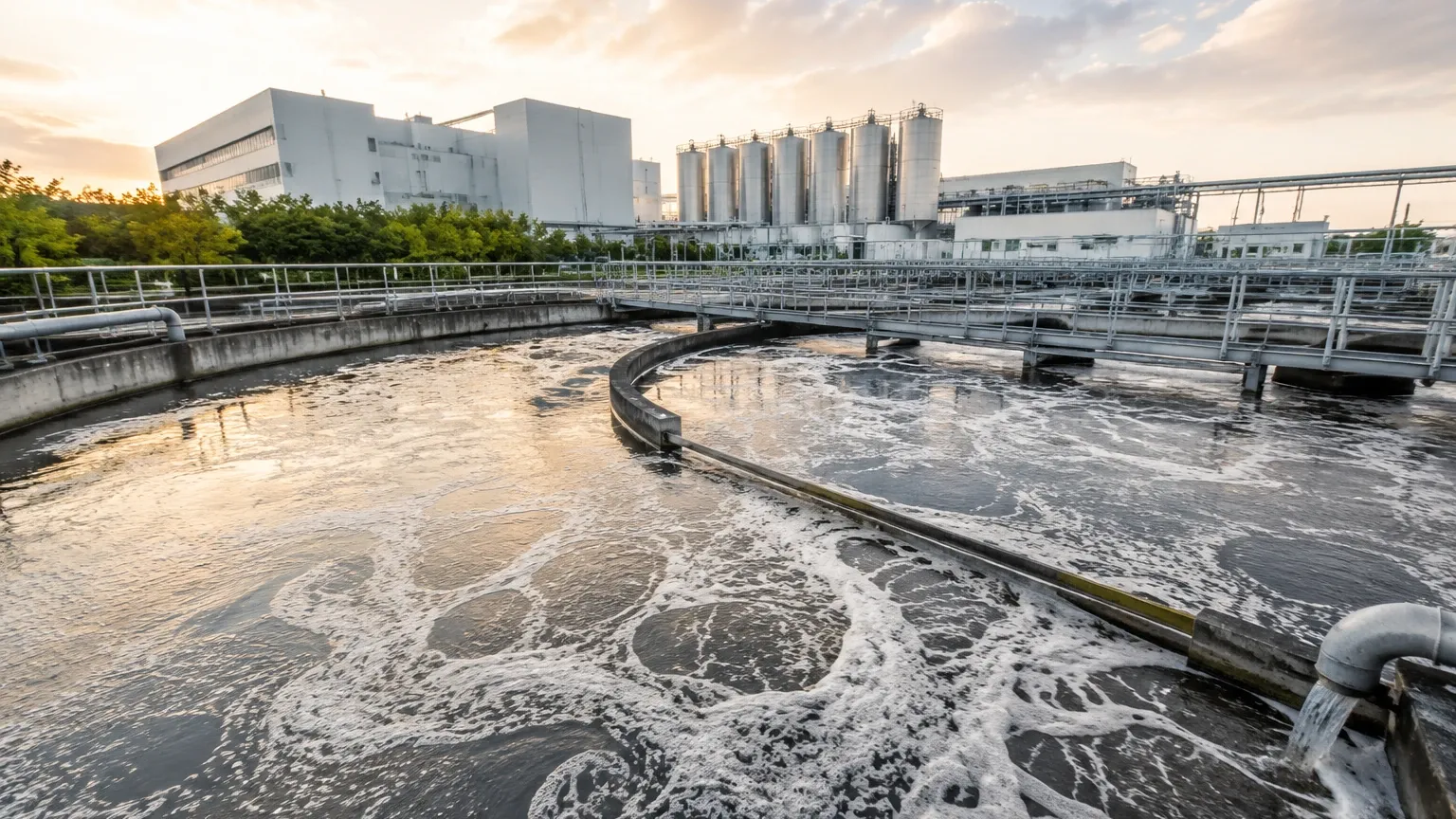
In biological treatment, air is pumped into the water to support oxygen-consuming bacteria. This creates significant surface turbulence and foam. While ultrasonic sensors may struggle with the foam, high-frequency radar can often penetrate the foam layer to measure the actual liquid level, ensuring the aeration process does not overflow.
4. Sludge Thickening and Storage
Sludge is the byproduct of the treatment process and is highly viscous. Level measurement in sludge tanks is vital for managing disposal costs. Hydrostatic sensors with flush diaphragms are often used to prevent clogging, though non-contact radar is also an option if the tank geometry allows for a clear signal path.
Technical Comparison and Selection Table
The following table provides a comparison of the primary level measurement technologies used in the food industry wastewater treatment sector.
| Feature | Ultrasonic Sensors | Radar Level Meters | Hydrostatic Transmitters |
| :— | :— | :— | :— |
| Measurement Type | Non-contact | Non-contact | Contact (Submerged) |
| Typical Accuracy | ±2 mm to ±10 mm | ±1 mm to ±5 mm | ±0.1% to ±0.5% FS |
| Max Range | Up to 15m (typical) | Up to 30m+ | Up to 100m+ |
| Foam Resistance | Poor to Moderate | Good (High Frequency) | Excellent (Unaffected) |
| Steam/Vapor Effect | Significant | Minimal | None |
| Maintenance | Low | Very Low | Moderate (Cleaning required) |
| Cost | Budget-friendly | Mid to High | Mid-range |
For engineers looking to integrate these technologies into a broader automation strategy, reviewing the technical specifications on the Main Page can provide deeper insights into model-specific capabilities and chemical compatibility charts.
Installation Best Practices and Engineering Considerations
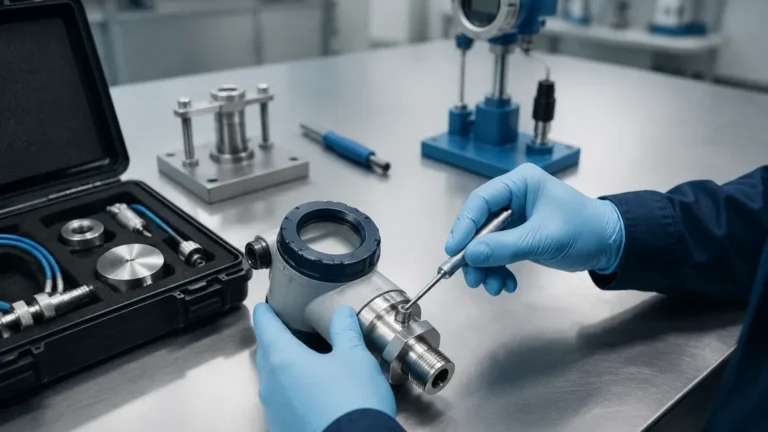
Proper installation is as critical as sensor selection. In food industry wastewater environments, engineers should adhere to the following guidelines:
* Avoid Dead Zones: Every non-contact sensor has a "blocking distance" or dead zone near the sensor face where measurement is impossible. Ensure the sensor is mounted high enough that the maximum liquid level never enters this zone.
* Stilling Wells: In tanks with extreme turbulence or heavy foam, installing the sensor inside a stilling well (a vertical pipe) can provide a calm surface for more accurate readings.
* Beam Angle and Obstructions: Radar and ultrasonic signals spread as they travel. Ensure the path is clear of ladders, agitators, or inlet pipes. A narrower beam angle (common in 80GHz radar) allows for easier installation in narrow tanks or near walls.
* Condensation Management: In food processing, warm wastewater often leads to heavy condensation. Selecting sensors with PTFE-faced antennas or curved faces helps moisture drip off, preventing signal attenuation.
Addressing Common Risks and Limitations
Despite advancements in technology, certain risks remain inherent in food industry wastewater treatment environments:
1. Chemical Attack: The use of strong acids or bases in CIP cycles can degrade sensor housings. Always verify that the wetted parts (e.g., PVDF, PTFE, or 316L Stainless Steel) are compatible with the specific chemicals used in the facility.
2. Build-up and Scaling: High-protein or high-sugar wastewater can leave residues that harden on sensors. While non-contact sensors mitigate this, the antenna or transducer face must still be inspected periodically for "bridging" or heavy coating.
3. Environmental Noise: In large treatment plants, electrical noise from Variable Frequency Drives (VFDs) on pumps can interfere with sensor signals. Using shielded cables and ensuring proper grounding is mandatory for signal integrity.
Frequently Asked Questions (FAQs)
Q: Can I use an ultrasonic sensor in a dairy wastewater tank?
A: It depends on the foam. Dairy waste often produces thick, protein-based foam that absorbs ultrasonic sound waves. If the foam is persistent, a radar level meter or a hydrostatic pressure sensor is a more reliable choice.
Q: How do I handle level measurement in an open drainage channel?
A: For open channels, ultrasonic sensors are the industry standard when paired with a flume or weir. They are cost-effective and provide the necessary accuracy for flow volume calculations based on head level.
Q: Is radar technology worth the higher initial investment?
A: In most food industry wastewater treatment applications, yes. The reduced maintenance requirements and higher reliability in the presence of steam, foam, and vapors typically result in a lower Total Cost of Ownership (TCO) over the life of the instrument.
Q: What is the impact of temperature changes on hydrostatic sensors?
A: Hydrostatic sensors measure pressure, which is affected by liquid density. Since density changes with temperature, significant temperature fluctuations can introduce errors. High-quality transmitters include integrated temperature compensation to mitigate this effect.
Conclusion
Successful food industry wastewater treatment requires a robust approach to process monitoring. By understanding the unique characteristics of the waste stream—such as high organic loads and variable chemical inputs—and matching them with the appropriate level measurement principle, facilities can ensure continuous, compliant operation. Whether utilizing the precision of radar or the simplicity of hydrostatic pressure, the right instrumentation is the foundation of an efficient treatment strategy. For further technical details and product selection support, professionals are encouraged to visit the Main Page to explore the full range of industrial measurement solutions.